Henan Chalco supplies High Power Shielded Aluminum Busbar as part of its broader power battery aluminum material solutions for new-energy vehicle high-voltage connection systems. The product consists of a solid aluminum conductor, an electrical insulation layer and an outer conductive aluminum alloy shielding layer, combining lightweight high-current transmission with high-voltage insulation, EMI shielding and external mechanical protection.
The product is available with round or flat cross-sections. The appropriate structure can be selected according to available vehicle installation space, high-voltage routing, bending requirements and electrical terminal connection methods. It is suitable for fixed high-voltage connections in charging paths, battery systems and BJB / BDU / PDU applications.
This composite structure provides the following functional support for EV high-voltage connections:
- Solid aluminum conductor: Carries high current while reducing conductor weight for the required electrical performance.
- High-voltage insulation: Isolates the internal conductor from the outer metal shielding layer to meet electrical protection requirements for high-voltage connections.
- EMI shielding: The outer conductive aluminum alloy layer helps reduce electromagnetic interference generated during high-voltage, high-current transmission.
- Mechanical protection: The metal shielding layer also provides additional abrasion resistance, compression resistance and external protection for the insulation layer and internal conductor.
If your project is evaluating high-voltage, high-current connections, shielding protection or lightweight conductor solutions, provide the product drawing, high-voltage routing and basic electrical requirements. We can help confirm a suitable product structure based on the actual installation and connection conditions.
Shielded Aluminum Busbar structure
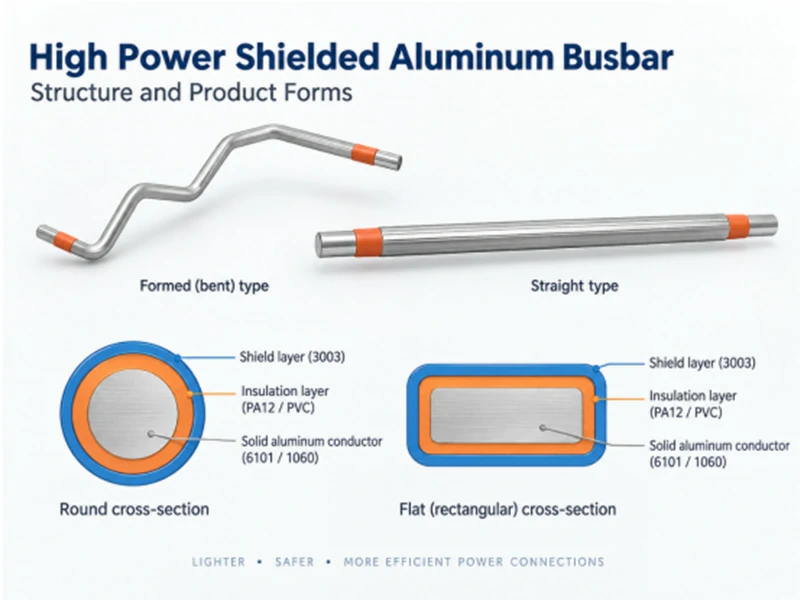
High Power Shielded Aluminum Busbar consists of a solid aluminum conductor, an electrical insulation layer and an outer aluminum alloy shielding layer. Each layer performs a different function, including current conduction, high-voltage insulation, electromagnetic shielding and mechanical protection. Material selection also directly affects electrical conductivity, bending performance and long-term automotive reliability.
-
Solid aluminum conductor
As the main current-carrying component of Shielded Aluminum Busbar, the solid aluminum busbar conductor must balance high conductivity, low temperature rise and forming performance. 6101 provides a better balance of strength and bendability, while 1060 places greater emphasis on high electrical conductivity.
-
Electrical insulation layer
Materials: PA12, PVC
The electrical insulation layer isolates the internal high-voltage conductor from the outer metal shielding layer and must maintain withstand-voltage performance, temperature resistance and insulation integrity after bending. PA12 and PVC can be selected according to operating temperature, bending requirements and service environment.
-
Aluminum alloy shielding layer
Material: 3003 aluminum alloy
The aluminum alloy shielding layer is the key structure for EMI shielding and external mechanical protection. It must balance electrical conductivity, formability and corrosion resistance while maintaining good shielding continuity after bending.
How to choose a round or flat Shielded Aluminum Busbar?
High Power Shielded Aluminum Busbar can use a round or flat / rectangular cross-section. The different structures are mainly used to match different vehicle installation spaces and high-voltage routing paths. Existing product information includes both round and rectangular shielded conductor designs.
-
 Round shielded aluminum conductor
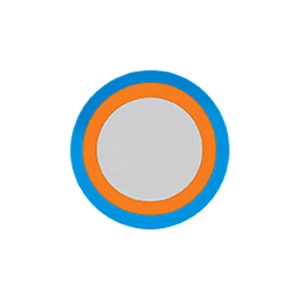
The round structure is closer to the routing method of a conventional high-voltage wiring harness. It is suitable for high-voltage connections with frequent changes in routing direction and fixed routing along the vehicle body, and it can accommodate bending in different directions more easily.
-
 Flat / rectangular shielded aluminum busbar
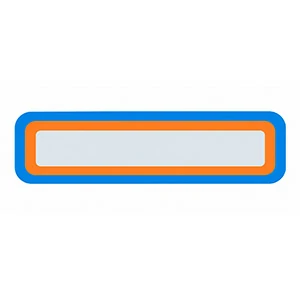
The flat structure is more suitable for areas with limited installation height or where the conductor must be routed close to the vehicle body or battery pack. It can make better use of narrow spaces and can be formed in two or three dimensions along a fixed connection path.
How to choose?
If the project prioritizes low installation height, compact space and forming along a fixed route, the flat design can be evaluated first. If the connection path changes direction frequently and a routing method closer to a conventional wiring harness is preferred, the round design may be more suitable.
Single-core or dual-core? Choose the right connection structure for the EV high-voltage architecture
In addition to conventional single-core Shielded Aluminum Busbar, Henan Chalco can also provide an integrated dual-core design combining positive and negative conductors. Customers can select the more suitable solution according to installation space, high-voltage routing, interface positions and system integration requirements.
Single-core Shielded Aluminum Busbar
The positive and negative poles use separate conductors, making this structure more suitable for projects that require independent high-voltage routing, have dispersed interface positions or need separate control of the two connection paths. Round and flat cross-sections can both be selected according to installation space and forming requirements.
Integrated dual-core Shielded Aluminum Busbar
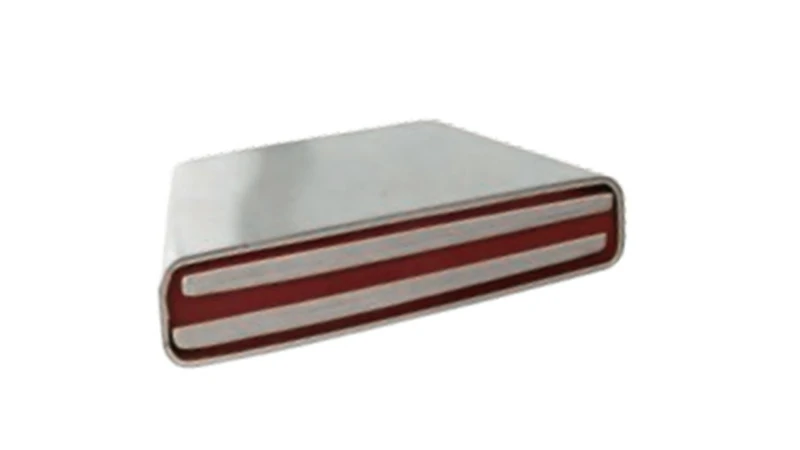
The dual-core structure integrates the positive and negative conductors into one connection assembly, reducing the use of separate connectors and insulation materials while enabling a more compact high-voltage connection in limited space.
While maintaining electrical performance, this design can reduce the use of PA12 and other insulation materials, increase current-carrying capacity by about 25% compared with a copper-wire solution of the same size, and support bending along complex routes, helping further reduce system weight and connection cost.
Why is a dual-core structure more suitable for compact EV high-voltage systems?
For projects with limited battery-pack space, similar positive and negative routing paths or a need to reduce the number of connection components, the integrated dual-core structure can concentrate the two high-voltage paths in one assembly, reducing space usage, component count and system-integration complexity. It is particularly suitable for compact battery packs and high-voltage fast-charging architectures.
| Comparison item | Single-core structure | Integrated dual-core structure |
| Conductor layout | Positive and negative conductors routed separately | Positive and negative conductors integrated |
| Routing design | Two paths designed separately | More centralized routing |
| Space utilization | Depends on space for separate routing | Better suited to compact spaces |
| Connection components | Configured separately | Can reduce connection components |
| Insulation material | Configured separately | Can reduce use of PA12 and other insulation materials |
| Primary value | Flexible routing | Space optimization, lightweighting and lower system complexity |
Core advantages of Henan Chalco High Power Shielded Aluminum Busbar
Henan Chalco High Power Shielded Aluminum Busbar is designed for high electromagnetic interference and demanding automotive environments, integrating high-current transmission, high-voltage insulation, EMI shielding and mechanical protection into a lightweight aluminum conductor structure.
Three-layer structure with shielding effectiveness above industry requirements
The product uses a three-layer structure consisting of an aluminum core conductor, PA12 insulation and aluminum alloy armor. Full-band electromagnetic shielding effectiveness can exceed 75 dB, meeting and exceeding industry requirements and providing additional EMI protection margin for EV high-voltage systems.
High-current transmission with controlled temperature rise
The conductor provides conductivity of ≥59% IACS, supports a peak current of 800 A and controls temperature rise to ΔT ≤55 K, combining high-power transmission with system thermal management.
About 50% lighter than conventional copper cable
The aluminum conductor structure significantly reduces the weight of the high-voltage connection system. Compared with a conventional copper-wire solution, it can reduce weight by about 50% while maintaining reliable power transmission, supporting vehicle lightweighting and high-voltage routing optimization. For material-level trade-offs rather than a direct comparison of shielded assemblies, see the copper, aluminum and CCA busbar comparison.
Wide automotive operating temperature range from -40°C to 150°C
The product can operate across a temperature range of -40°C to 150°C and withstand complex battery-pack vibration and long-term mechanical stress, making it suitable for long-term, high-load operation in new-energy vehicles.
Flame retardancy and salt-spray corrosion protection
The product provides V-0 flame-retardant performance together with salt-spray corrosion resistance, helping it withstand humid, salt-spray and complex road environments and improving long-term environmental reliability of the high-voltage connection system.
Armor structure improves mechanical durability
The outer aluminum alloy armor provides not only EMI shielding but also compression, abrasion and bending protection. The product can withstand a 5 kN compressive load and supports a bend radius of ≥5D without cracking, making it more suitable for long-term automotive use along fixed high-voltage routing paths.
Key performance of High Power Shielded Aluminum Busbar
Based on ongoing R&D and technical accumulation in aluminum conductors, insulation covering and shielding structures, Henan Chalco can deliver High Power Shielded Aluminum Busbar with strong overall performance. The product combines high conductivity, high-current transmission, EMI shielding, high-voltage insulation and automotive mechanical durability, with the following key performance indicators.
| Conductor conductivity | ≥59% IACS |
| Shielding effectiveness | ≥70 dB (30 MHz-1 GHz) |
| Surface transfer impedance | ≤50 mΩ/m |
| Flammability rating | V-0 |
| Armor compression resistance | Deformation ≤5% under 5 kN load |
| Withstand voltage | 4000 V DC, 1 min, no breakdown |
| Vibration fatigue life | ≥200,000 cycles (10-2000 Hz) |
| Bending performance | Bend radius ≥5D, no cracking |
| Abrasion resistance | Wear depth ≤0.1 mm (500 g / 1000 cycles) |
| Peak current / temperature rise | Supports 800 A peak current, ΔT ≤55 K |
If your project has higher requirements for EMI shielding, current-carrying temperature rise, withstand voltage or mechanical durability, Henan Chalco can provide a targeted High Power Shielded Aluminum Busbar solution based on the actual operating conditions and system requirements.
Typical applications of High Power Shielded Aluminum Busbar
When an EV high-voltage system must simultaneously address high current, EMI, compact installation space and lightweighting, conventional high-voltage connection solutions often require trade-offs among weight, routing and shielding. Henan Chalco High Power Shielded Aluminum Busbar integrates conduction, insulation and shielding into one structure, making it better suited to these demanding fixed connection points.
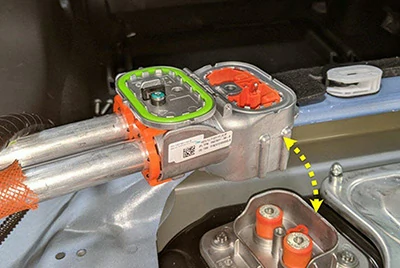
EV fast-charging high-voltage connection
Designed for high-current fast-charging paths, combining stable power transmission with EMI shielding and a lightweight aluminum conductor to support compact EV high-voltage system layouts.
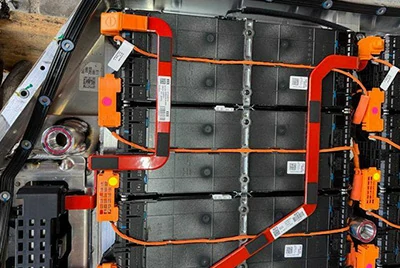
Battery-pack high-voltage connection
Flat shielded aluminum busbars follow fixed routing paths inside battery packs, helping save installation space while providing insulation, EMI shielding and mechanical protection. The connection interfaces should be matched to appropriate aluminum, copper or bimetal terminal options based on the mating materials and assembly design.
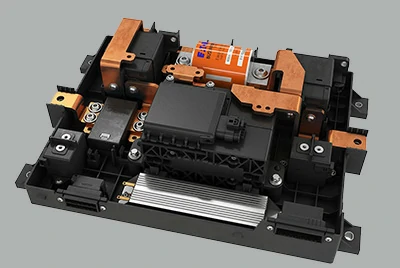
BJB / BDU high-voltage connection
Integrates high-current conduction, insulation and shielding into a compact structure, helping simplify routing and improve space utilization around BJB and BDU connection areas. The end-interface design can be reviewed alongside busbar connector assemblies for the required joint layout.
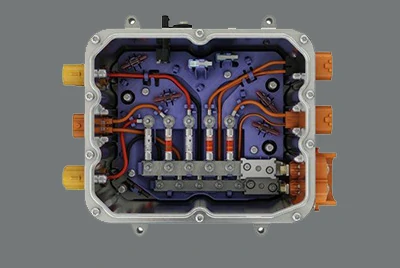
PDU high-voltage power distribution connection
Preformed shielded aluminum busbars can match different PDU interface directions, improving routing efficiency and space utilization while maintaining stable high-voltage and shielding performance. They are a specialized fixed high-voltage connection option within broader electrical busbar system solutions.
How does Henan Chalco ensure the performance and reliability of Shielded Aluminum Busbar?
High performance should be supported by more than a datasheet. Henan Chalco verifies key factors affecting EV high-voltage connection reliability through current-density simulation, electromagnetic shielding testing and nondestructive inspection after forming, providing stronger engineering evidence for product performance and customer project evaluation.
Electromagnetic shielding test
For EMI risks in high-voltage, high-current environments, actual electromagnetic shielding tests are used to verify the effectiveness of the aluminum alloy shielding structure. Full-band shielding attenuation can exceed 75 dB, while transfer impedance at 0.1 MHz can be below 10 mΩ/m, providing additional shielding margin for EV high-voltage system EMC design.
Current-density simulation
Current-density distribution simulation can visually analyze current distribution in round and flat conductors under high load. It provides a basis for cross-section design, current-carrying capacity and temperature-rise control, helping reduce localized current concentration and potential thermal risks.
Nondestructive testing
For Shielded Aluminum Busbar requiring bending and forming, Henan Chalco can use nondestructive testing to further inspect the structural condition of the formed area, identifying potential abnormalities without damaging the sample and adding another layer of reliability verification before assembly and long-term automotive use.
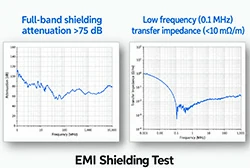
Electromagnetic shielding test
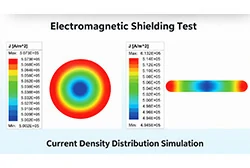
Current-density simulation
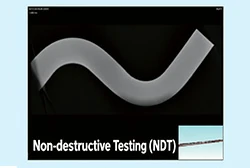
Nondestructive testing
Related Aluminum Conductor Products
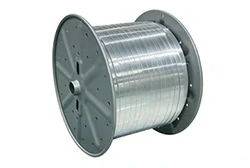
Coiled aluminum busbar
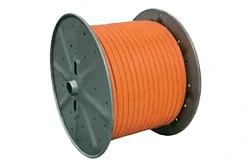
Insulated coiled aluminum busbar
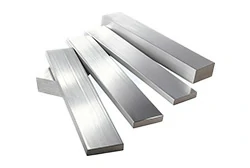
6101 busbar
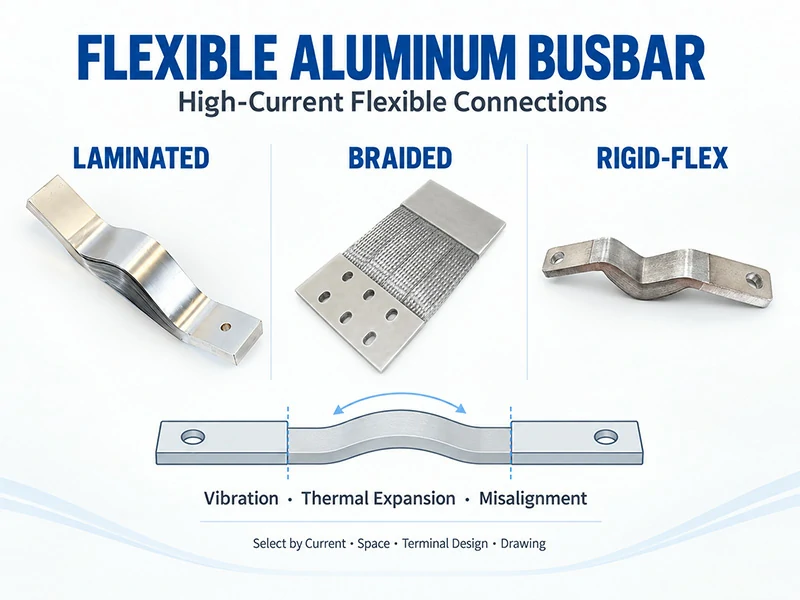
Flexible Aluminum Busbar
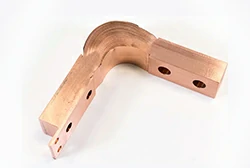
Flexible Busbar
Tin-Plated Aluminum Busbar
Manufacturing, Quality and R&D Support
Stable delivery of high-performance Shielded Aluminum Busbar depends on more than individual performance values. It requires coordinated support from material R&D, manufacturing processes and quality verification. Henan Chalco uses specialized conductive-material manufacturing and R&D resources to support EV high-voltage connection projects from material development and product manufacturing through inspection and validation.
Smart manufacturing and stable delivery
Supporting manufacturing resources include a 10,000+ m² modern production base, dedicated conductive-material workshops and 10+ intelligent manufacturing lines. These resources cover continuous production from base-material processing through precision manufacturing, providing a stable manufacturing foundation for samples, small batches and volume projects.
Automotive quality management systems
Manufacturing and quality systems are certified to IATF 16949, ISO 9001, ISO 14001 and ISO 45001, with full-process quality control used to support batch consistency and delivery stability.
CNAS laboratory and R&D testing capabilities
The R&D and testing system includes a CNAS-accredited laboratory and 50+ sets of high-precision R&D and testing equipment for product development and validation involving electrical conductivity, shielding, mechanical properties and material performance, providing stronger technical support for customer projects.
Patents and standards development experience
The related technical system has accumulated 50+ core patents and has participated in or led the development of six industry and group standards, including Aluminum Alloy Busbars for Electric Vehicles. For new-energy vehicle high-voltage connection projects, this technical accumulation supports not only product development but also faster understanding of customer performance and validation requirements.
Packaging and Shipment
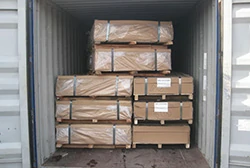
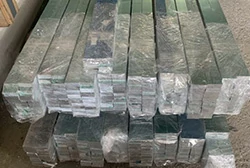
The outer aluminum alloy shielding layer and insulation structure of Shielded Aluminum Busbar also require protection during transportation. Henan Chalco can configure packaging according to product dimensions, supply form and transportation requirements to minimize damage to product surfaces and structures during handling and long-distance shipment.
Multi-layer transport protection
Products can use protective wrapping, strapping and wooden-pallet support to reduce the risk of damage caused by movement, impact and surface friction during transport. For products supplied on reels, suitable reel packaging can also be configured according to coil dimensions.
Packaging matched to the order
Packaging can be determined according to product cross-section, length, unit or coil weight and transportation method so that it protects the product while also facilitating customer handling, storage and production-line use.

FAQ
Can High Power Shielded Aluminum Busbar support 800 A?
The product can support a peak current of 800 A while controlling temperature rise to ΔT ≤55 K. Continuous current-carrying capacity in an actual project still needs to be determined based on conductor cross-section, connection method, installation environment and heat-dissipation conditions. Henan Chalco can therefore provide a more suitable current-carrying solution for the actual operating conditions.
What level of EMI shielding can the product achieve?
Shielding effectiveness can reach ≥70 dB from 30 MHz to 1 GHz, while actual full-band shielding tests can exceed 75 dB. Surface transfer impedance is ≤50 mΩ/m, and measured values at the low frequency of 0.1 MHz can be below 10 mΩ/m, providing substantial shielding margin for EV high-voltage system EMC design.
How should I choose between round and flat Shielded Aluminum Busbar?
If installation height is limited, the routing path is fixed or the conductor needs to fit closely against the battery pack or vehicle body, the flat structure generally offers advantages. If the path changes direction frequently and greater multidirectional routing flexibility is required, the round structure can be evaluated first. Final busbar selection should also consider current-carrying requirements, bending direction and terminal connections.
Can Shielded Aluminum Busbar be bent and formed?
Yes. The product supports a bend radius of ≥5D without cracking. During actual forming, not only the conductor geometry but also the integrity of the insulation layer and outer aluminum alloy shielding layer after bending must be maintained to preserve high-voltage insulation and EMI shielding performance.
Is the product suitable for demanding battery-pack and automotive environments?
The product covers an operating temperature range of -40°C to 150°C and provides V-0 flame retardancy, salt-spray corrosion resistance, compression resistance, abrasion resistance and vibration durability. It can adapt to temperature changes, mechanical stresses and long-term automotive service in battery-pack and high-voltage systems.
Why use an aluminum conductor instead of conventional copper cable?
An aluminum conductor can significantly reduce high-voltage connection-system weight. Compared with a conventional copper-wire solution, this product can achieve about 50% weight reduction while using a solid conductor, insulation layer and aluminum alloy shielding structure to provide current carrying, EMI protection and mechanical protection, making it suitable for EV high-voltage systems with clear lightweighting requirements.
How does Henan Chalco verify product reliability?
In addition to conventional performance indicators, Henan Chalco uses electromagnetic shielding testing, current-density distribution simulation and nondestructive testing to verify EMI protection, high-current performance and the structural condition after forming. This provides engineering validation beyond the datasheet values.
What materials and structures are available?
The conductor can use 6101 or 1060 aluminum alloy, the insulation layer can use PA12 or PVC, and the outer shielding layer uses 3003 aluminum alloy. Round and flat / rectangular cross-sections are available. The final combination can be selected according to current-carrying requirements, available space, bending needs and the operating environment.
Request a quote
When requesting a quote for High Power Shielded Aluminum Busbar, please provide the following information where possible so Henan Chalco can match the conductor structure, shielding solution and product specification more quickly:
- Product form: round or flat / rectangular
- Conductor size: diameter, width × thickness or cross-sectional area
- Electrical requirements: operating current, peak current and system voltage
- Shielding requirements: EMI shielding effectiveness or transfer-impedance requirement
- Insulation requirements: PA12 / PVC, operating temperature and withstand-voltage requirement
- Forming requirements: bend radius, bending direction and target installation path
- Connection requirements: terminal structure, hole positions and connection method
- Operating environment: temperature, vibration, salt spray, flame-retardancy and other special requirements
- Quantity: sample, small-batch or volume requirement
- Drawing / specification: product drawing, technical specification or other acceptance requirements
If some parameters have not yet been determined, Henan Chalco can work from your EV high-voltage system, current-carrying requirements and installation conditions to help develop a more suitable Shielded Aluminum Busbar solution.
Chalco can provide you the most comprehensive inventory of aluminum products and can also supply you customized products. Precise quotation will be provided within 24 hours.
Get a quote