B93 aluminum alloy (GOST) is a Russian-standard high-strength forged aluminum alloy used for high-load, pressure-bearing structural components. It is suitable for projects with high requirements for strength, reliability, and weight reduction.
V93 is commonly used in critical parts such as aerospace, transport equipment, and mechanical structural components. It has high reference value in Russian-standard material selection, legacy drawing verification, and approximate substitute evaluation.
B93 aluminum alloy standards and implementation specifications
- GOST 4784-97 — Grades and basic composition system for wrought aluminum alloys.
- OST 1 92014-90 — A commonly used industry technical document for B93 alloy, used for further verification of composition and technical requirements.
- GOST 21631-76 — Applicable to B93 aluminum sheet / thin sheet.
- GOST 17232-99 — Applicable to B93 plate.
- GOST 21488-97 — Applicable to B93 extruded bars.
Available product forms of B93 aluminum alloy
We can provide a range of pressure-processed semi-finished product options based on the project's load-bearing requirements, processing route, and subsequent part manufacturing method.
For customers who need to balance strength, weight reduction, subsequent machining, and structural reliability, B93 is more suitable for purchase and further processing in the form of sheet, plate, strip, and forging billets.
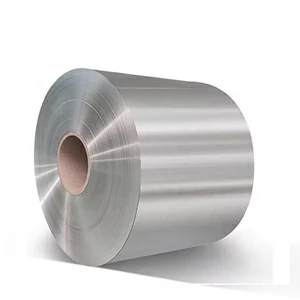
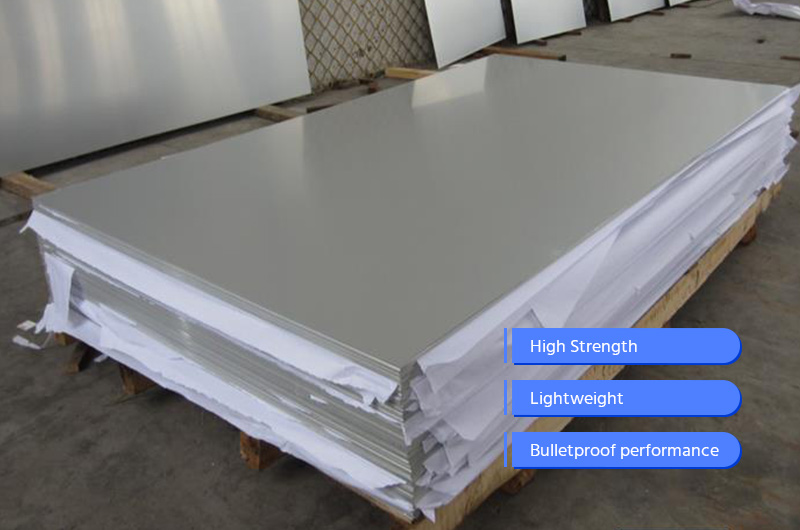
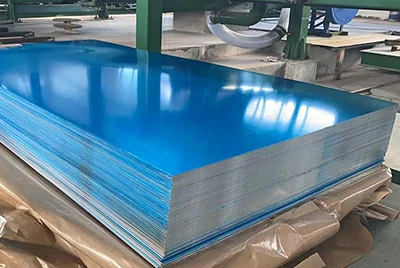
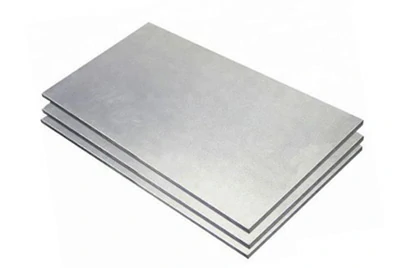
B93 aluminum thin sheet
Suitable for subsequent cutting, bending, machining, fastener manufacturing, and supporting processing for various high-strength structural components.
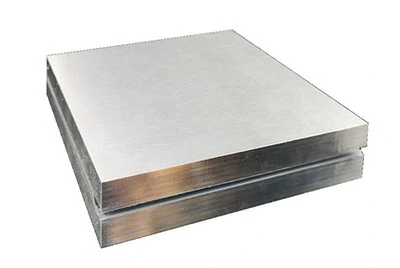
B93 plate / high-strength slab
Suitable for load-bearing structural components, machining blanks, large-section parts, and billets for further processing.
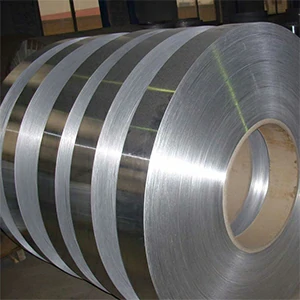
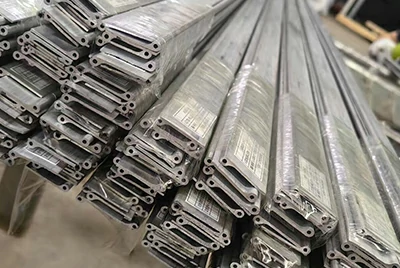
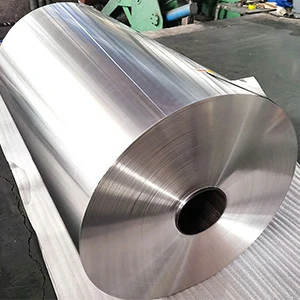
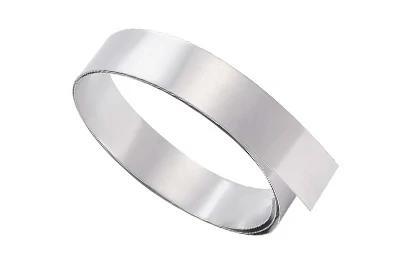
B93 aluminum strip / strip stock
Suitable for subsequent slitting, stamping, forming, fastener manufacturing, and the processing of some thin-gauge structural components.
For bulk purchasing, project support, and follow-up deep-processing orders, customers are advised to provide the target thickness, width, length, quantity, application part, and processing method first, as this helps confirm the most suitable supply form more quickly.
Common sizes and custom supply capabilities of B93 aluminum alloy
B93 aluminum sheet is usually produced through process routes such as hot rolling and cold rolling.
Different thicknesses, sheet sizes, and delivery conditions can be confirmed according to project requirements for subsequent cutting, milling, drilling, fastener manufacturing, and structural component processing.
For projects with requirements for surface quality, dimensional stability, or subsequent processing, a more suitable supply solution can also be further confirmed.
Size range
| Sheet thickness range | 0.5–210 mm |
| Common thicknesses of aluminum strip | 0.5 mm,1 mm,1.2 mm,1.4 mm,1.5 mm,1.8 mm, |
| Common thicknesses of aluminum plate | 100 mm,105 mm,110 mm,115 mm,120 mm,124 mm,125 mm,130 mm,135 mm,140 mm,145 mm,150 mm,155 mm,160 mm,210 mm |
| Sheet width range | 250–420 mm |
| Sheet length range | 250–2500 mm |
Actual supply also needs to be further confirmed based on the product condition, applicable standard, dimensional tolerance, machining allowance, quantity, and subsequent process provided by the customer.
Common sizes
| Product | Common specifications (mm) | Description |
| B93 aluminum sheet | 1 × 1000 × 2000 | Common thin sheet specification, suitable for subsequent cutting and general structural component processing |
| B93 aluminum sheet | 1.2 × 1000 × 1200 | Suitable for matching projects with relatively thin specifications |
| B93 aluminum sheet | 1.4 × 1200 × 1500 | Suitable for lightweight parts and cover panels |
| B93 aluminum sheet | 1.5 × 1200 × 2000 | One of the common sheet specifications |
| B93 aluminum sheet | 1.8 × 1500 × 2500 | Suitable for larger-format thin sheet applications |
| B93 aluminum sheet | 4 × 4000 × 1200 | Suitable for processing larger-size structural plates |
| B93 aluminum sheet | 6 × 3000 × 1000 | Common medium-thickness plate specification |
| B93 aluminum sheet | 9 × 2500 × 2500 | Suitable for load-bearing structural components or blanking processing |
| B93 aluminum sheet | 12.5 × 1700 × 2500 | Common specification for medium-thickness plates |
| B93 aluminum sheet | 19 × 4000 × 1500 | Large-size medium-thickness plate |
| B93 aluminum sheet | 25 × 4000 × 120 | Suitable for machining blanks and load-bearing parts |
| B93 aluminum sheet | 31 × 4000 × 1500 | Relatively thick plate |
| B93 aluminum sheet | 43 × 4200 × 2100 | Large-size thick plate |
| B93 aluminum sheet | 50 × 300 × 600 | Small-format processing billet for thick plate |
| B93 aluminum sheet | 1 mm | Common strip thickness, suitable for separate confirmation based on subsequent processing requirements |
In addition to standard specifications, we can also help confirm a more suitable supply method based on project requirements, for example:
- Confirming the product form and cross-section according to drawings.
- Cut-to-length cutting and blanking.
- Reserving machining allowance.
- Batch supporting delivery.
- Matching the supply solution based on condition, dimensions, and subsequent processing route
Chemical composition of B93 aluminum alloy
B93 aluminum alloy is a typical high-strength aluminum alloy in the Al-Zn-Mg-Cu system.
| Element | Content (%) |
| Al (aluminum, balance) | 88.35–91.1 |
| Zn (zinc) | 6.3–7.3 |
| Mg (magnesium) | 1.6–2.2 |
| Cu (copper) | 0.8–1.2 |
| Fe (iron) | 0.2–0.45 |
| Si (silicon) | ≤ 0.2 |
| Mn (manganese) | ≤ 0.1 |
| Ti (titanium) | ≤ 0.1 |
| Impurities (single / total) | ≤ 0.05 / ≤ 0.1 |
Note: The Al (aluminum) content is an approximate range. Its actual value will vary accordingly with changes in the contents of zinc, magnesium, copper, and other elements.
Mechanical properties of B93 aluminum alloy
B93 aluminum alloy has a high strength level at 20°C under ambient temperature conditions, making it suitable for critical structural components that bear compressive loads and large mechanical loads.
| Tensile strength σb (MPa) | 490 |
| Yield strength σ0.2 / σT (MPa) | 450 |
| Elongation after fracture δ5 (%) | 7 |
| Brinell hardness (HB) | 125 |
Physical properties of B93 aluminum alloy
| Temperature | 20°C | 100°C |
| Elastic modulus E | 0.7 × 10⁵ MPa | — |
| Coefficient of linear expansion α | — | 23.8 × 10⁻⁶ /°C |
| Thermal conductivity λ | — | 151 W/(m·°C) |
| Density ρ | 2840 kg/m³ | — |
| Specific heat capacity C | — | 880 J/(kg·°C) |
| Electrical resistivity R | 40.8 × 10⁻⁹ Ω·m | — |
Application fields of B93 aluminum alloy
Based on its high strength and pressure-bearing properties, B93 alloy can also be used to manufacture the following products:
- Complex-shaped forgings and stamped parts.
- Load-bearing elements in frames and skeleton structures.
- Various support parts and connecting units.
- Structural components in chassis and assemblies.
- High-strength fasteners.
- Critical structural parts subjected to compressive loads.
- Structural elements in aerospace equipment
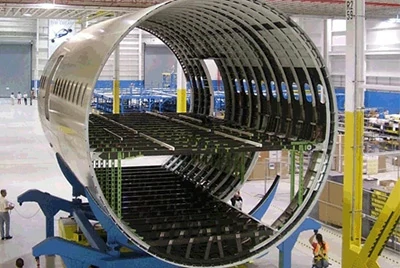
Aircraft manufacturing
Suitable for manufacturing fuselage structural components, frames, stringers, fasteners, and other compression-loaded parts.
For parts in aircraft structures that need to balance strength, weight, and long-term service stability, B93 has high application value.
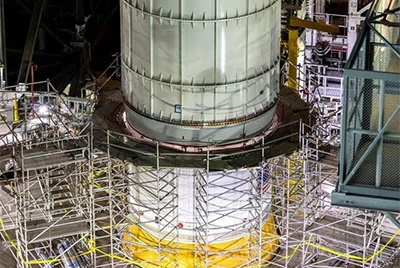
Rocket and space technology
Can be used to produce rocket body structural components, frames, support structures, chassis elements, and related components.
In aerospace applications with high requirements for structural reliability and high strength, B93 is more suitable for use in key load-bearing or auxiliary load-bearing component systems.
Transportation engineering
Suitable for frame parts, support structures, connecting elements, and high-load supporting components.
For transportation equipment projects that require both weight reduction and improved load-bearing capacity, B93 offers good material compatibility.
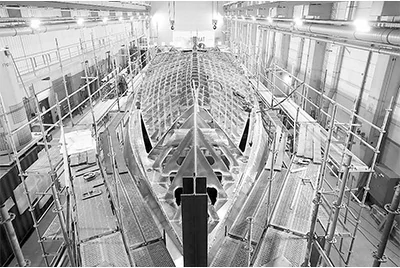
Shipbuilding
Can be used to manufacture high-load parts and some hull structural elements.
In marine engineering projects that need to balance strength and structural stability, B93 can be one of the material options for specific load-bearing components.
Power engineering
Suitable for structural components subjected to vibration loads and static loads.
For engineering parts that need to maintain structural stability over long-term operation, B93 provides a solid strength base.
General mechanical engineering
Can be used to produce mechanical parts that require high strength while also aiming to reduce weight.
For projects involving machined parts, connecting parts, support parts, and load-bearing parts, B93 is more suitable for high-performance structural applications.

Advantages of B93 aluminum alloy
- High strength and relatively light weight, suitable for structural components that require both weight reduction and load-bearing capacity.
- Good pressure processing performance, making it suitable for forging, stamping, and the manufacture of complex parts.
- Can withstand static loads and dynamic loads, suitable for high-load working conditions.
- Has a certain degree of plasticity and can be used to produce complex-shaped parts.
- Stable mechanical properties, suitable for projects with requirements for long-term service reliability.
- Can be further strengthened through heat treatment, making it easier to adjust the material condition according to performance requirements.
- Has a certain degree of corrosion resistance and can meet the service requirements of some engineering environments.
- Good machinability, suitable for subsequent machining and structural component manufacturing.
Limitations of B93 aluminum alloy
- Corrosion resistance is limited in highly corrosive environments, and additional surface protection measures are recommended when necessary.
- It is relatively sensitive to overheating during welding and heat treatment, so process control requirements are high.
- Processing conditions need to be strictly controlled to avoid affecting the final microstructure and performance stability.
- There is no directly corresponding registered foreign grade, which makes material conversion more difficult in export projects and import substitution.
Similar grades in other countries and guidance on substitute material selection
At present, B93 aluminum alloy (В93) has no widely recognized one-to-one corresponding registered foreign grade.
In international material communication, 7050, 7075, and other 7xxx series high-strength aluminum alloys can be used as approximate reference options, but they should not be simply regarded as directly equivalent substitutes.
For export projects, drawing conversion, or substitute material evaluation, it is recommended to focus on checking whether the chemical composition, heat treatment condition, mechanical properties, product form, and applicable standards match.
If the project requires a high level of substitution accuracy, material selection should be carried out only after reviewing the drawings, material certificates, and supplier technical confirmation.
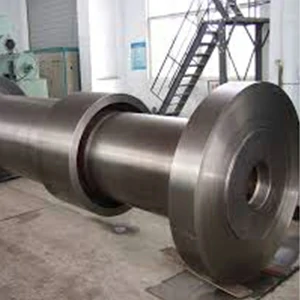
Key points for B93 aluminum alloy forgings production
B93 aluminum alloy is commonly used to manufacture high-load forgings and pressure-bearing structural components. Its final properties are closely related to the uniformity of the microstructure formed during forging.
If deformation is uneven, it can not only reduce plasticity but also lead to inconsistent recrystallization, which in turn affects the mechanical properties and reliability of the forgings.
For high-strength aluminum alloys such as B93, the original cast ingot structure, deformation route, rotary forging method, and hot forging temperature control are all very important.
In actual production, alternating rotation and all-round forging are usually used to improve microstructural uniformity. A more suitable forging plan is then selected based on billet type, degree of deformation, and the target forging shape.
For high-requirement projects, in addition to confirming the grade and dimensions, special attention should also be paid to the forging process, heat treatment route, and final performance verification.
Related products
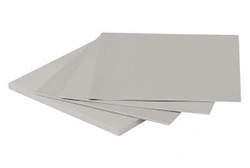
We also supply other Russian standard wrought aluminum alloys for comparison and alternative material selection, including 1145, 1163, 1420, 1901, 1920, and 1980 aluminum alloys.
1145 aluminum
1163 aluminum
1420 aluminum
1901 aluminum
1920 aluminum
1980 aluminum
Related questions
What is B93 aluminum alloy?
B93 is a Russian-standard high-strength wrought aluminum alloy mainly used for critical structural components that bear compressive loads and high mechanical loads.
Can B93 components be welded?
Yes, but the welding process must be strictly controlled to reduce the risks of overheating, cracking, and strength loss.
What heat treatment method is recommended for B93?
Quenching + artificial aging is usually recommended to achieve better overall mechanical properties.
What working conditions is B93 best suited for?
It is suitable for structural components subjected to compressive loads, high static loads, and certain dynamic loads, such as aerospace and high-strength mechanical components.
How is the corrosion resistance of B93 alloy?
It has a certain degree of corrosion resistance, but in humid or corrosive environments, additional surface protection measures are recommended.
Does B93 have operating temperature limits?
Yes. Strength may decrease during long-term use above 120–150°C.
Does B93 have a corresponding foreign grade?
At present, there is no widely recognized one-to-one corresponding registered foreign grade. 7050 and 7075 can only be used as approximate references.