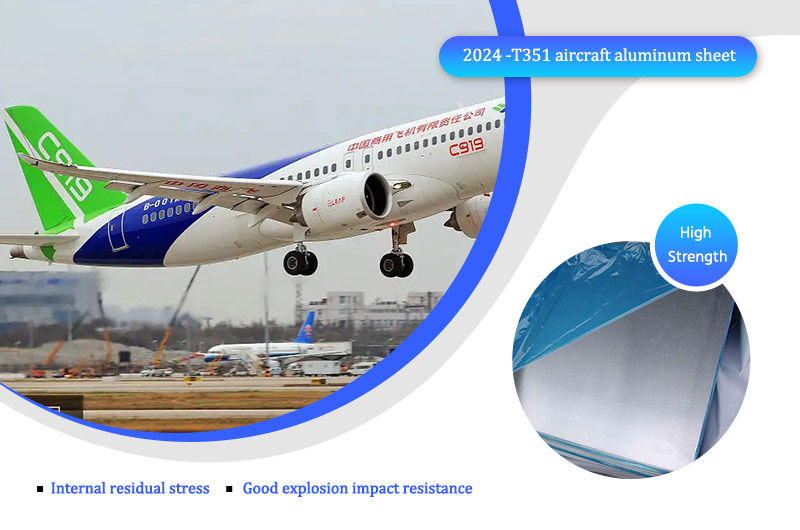
Сил1С aluminum alloy (GOST) is suitable for projects in the aerospace and related industries that have high requirements for material standards, chemical composition, and process compatibility.
We can provide Сил1С material information verification, project material confirmation, and supply support to help customers make pre-purchase decisions more efficiently, from material selection to inquiry.
If you are looking for a Russian-standard material option for aerospace structural parts and related aluminum alloy applications, Сил1С is a grade worth focusing on.
Standards and execution specifications
- OCT 1 92014-90: The core execution standard, confirming the grade, composition, and technical requirements.
- TU 1-9-555-77: Applicable to strip and band supply.
- GOST 1521-76: Applicable to silicon aluminum alloy ingots.
- GOST 1583-93: Can be used as a reference standard for the Al-Si system.
Available product forms
We can provide Сил1С alloy products, mainly used for aluminum structural joining in aerospace and related industries, matching for brazing strip materials, and follow-up processing projects.
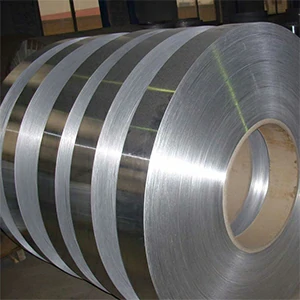
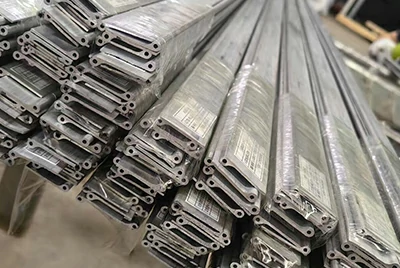
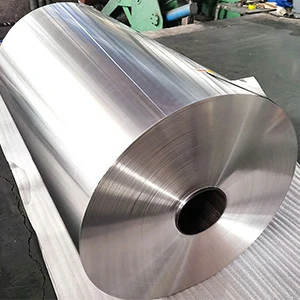
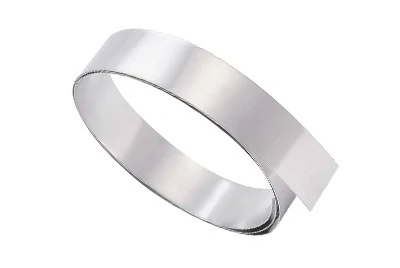
Сил1С brazing strip / band strip
Suitable for aerospace aluminum structures and various brazing joining projects, with matched supply available according to thickness, width, and length requirements.
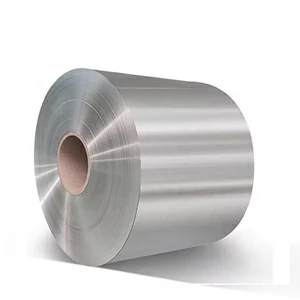
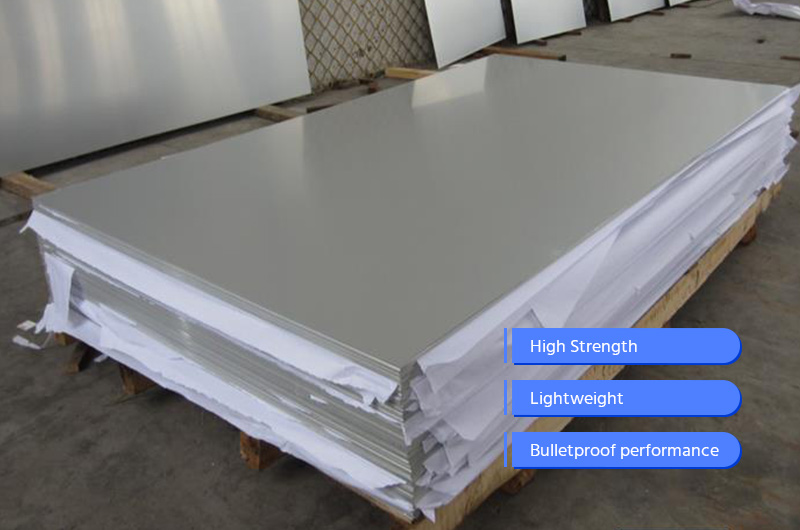
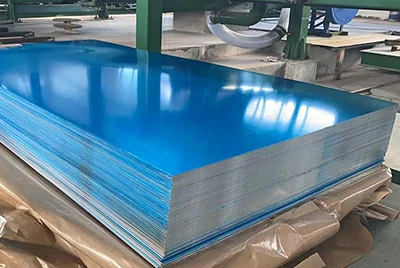
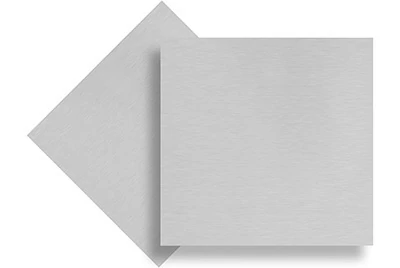
Сил1С foil / sheet / cut-to-length material
Suitable for blank cutting, local joining, drawing-based processing, and project-based orders. The supply method can be confirmed according to actual specification requirements.
Common sizes and custom supply capabilities
| Product | Available size range | Popular sizes |
| Сил1С brazing strip / band strip | Thickness 0.5–1.2 mm, width 500 mm | 0.5 × 500 mm; 1.2 × 500 mm |
| Сил1С foil / sheet / cut-to-length material | Thickness 0.1–6 mm, common size range 200 × 500 mm–1500 × 3000 mm | 0.1 × 200 × 500 mm; 0.2 × 300 × 600 mm; 1 × 1500 × 3000 mm; 6 × 1500 × 3000 mm |
- Support is available for supply confirmation by thickness, width, and length.
- Support is available for cut-to-length cutting, sheet blanking, and drawing-based processing.
- Support is available for small-batch samples, batch supporting supply, and project-based orders.
- If your project has requirements for delivery condition, packaging method, or single-sheet dimensions, these can be further confirmed based on the actual application scenario.
Chemical composition
Сил1С is a high-silicon aluminum-based material. Its composition is characterized by a high Si content, while other alloying elements and impurities are tightly controlled.
| Element | Content (%) |
| Al (aluminum, base metal) | 86.1–90.0 |
| Si (silicon) | 10.0–12.5 |
| Fe (iron) | ≤ 0.5 |
| Mn (manganese) | ≤ 0.5 |
| Ti (titanium) | ≤ 0.15 |
| Ca (calcium) | ≤ 0.1 |
| Zn (zinc) | ≤ 0.08 |
| Mg (magnesium) | ≤ 0.05 |
| Cu (copper) | ≤ 0.02 |
| Impurities (single item) | ≤ 0.05 |
Mechanical properties of Сил1С aluminum alloy
| Property | Typical values |
| Tensile strength σb | 180–220 MPa |
| Yield strength σT | 90–120 MPa |
| Elongation after fracture δ5 | 2–5 % |
| Reduction of area ψ | 1–3 % |
| Impact toughness KCU | ≥10 kJ/m² |
| Brinell hardness HB | 50–70 HB |
Note: The above values may vary depending on material condition, processing method, and specific heat treatment conditions.
Physical properties of Сил1С aluminum alloy
Сил1С has low density, good thermal conductivity, and stable thermal expansion characteristics, which give it good process compatibility in aerospace and related industrial applications.
| Property | Typical values |
| Density ρ | 2650–2700 kg/m³ |
| Elastic modulus E | 68000–72000 MPa |
| Linear expansion coefficient α | 22–24 × 10⁻⁶ 1/°C |
| Thermal conductivity λ | 150–170 W/(m·°C) |
| Specific heat capacity C | 900 J/(kg·°C) |
| Electrical resistivity ρe | 0.040–0.045Ω·mm²/m |
Brazing / welding performance
An important feature of Сил1С is that its composition is close to the aluminum-silicon binary eutectic range. As a result, it offers process advantages such as a narrow melting range, good fluidity, and a relatively small overheating effect on the base metal.
| Property | Typical values | Notes |
| Solidus temperature | 577 °C | Close to the Al-Si eutectic temperature |
| Working brazing temperature | 580–600 °C | Conducive to full melting and reduced base metal overheating |
| Density | 2650 kg/m³ | Approx. 2.65 g/cm³ |
| Joint tensile strength | 147 MPa | Typical reference value |
| Seam hardness | 50 HB | Typical reference value |
| Elastic modulus | Approx. 70 GPa | Under conditions from -40 to +50 °C |
| Shear modulus | Approx. 27 GPa | Typical reference value |
| Linear expansion coefficient | 21–23 × 10⁻⁶ °C⁻¹ | Within the range of -70 to +100 °C |
Application fields of Сил1С aluminum alloy
Common component application directions
- Fuselage panels and related brazed joint structures.
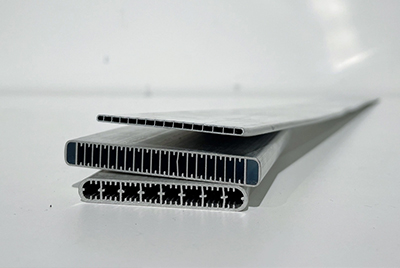
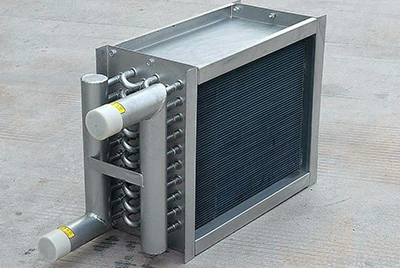
- Cooling system heat exchanger components.
- Components and pipelines related to fuel systems and hydraulic systems.
- Flanges, brackets, connectors, and fastening units.
- Stiffeners, stringer supporting parts, and some complex-shaped parts.
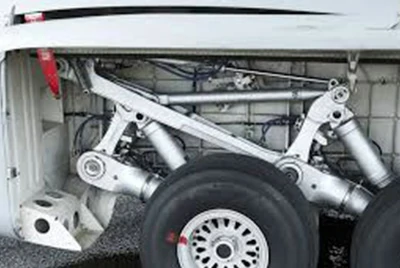
Aerospace equipment and aerospace structural parts
Suitable for fuselage-related structural parts, skin joint areas, reinforcements, supports, and other aerospace equipment parts.
Heat exchange equipment
Suitable for radiators, condensers, evaporators, and other aluminum brazed structures that require sealing performance and joint stability. Aluminum brazed heat exchangers themselves are also a mature industrial application field.
Instrument manufacturing and precision structural parts
Suitable for aluminum alloy housings, structural units, and assemblies with high requirements for joint geometric accuracy.
General machinery and vehicle supporting applications
Can be used for aluminum pipe fittings, connectors, brackets, and some lightweight structural components.


Advantages of Сил1С aluminum alloy
- Low density helps reduce structural weight and makes it suitable for aerospace and related industrial projects with lightweighting requirements.
- The high silicon content provides good process compatibility, making it suitable for brazing joints, strip material matching, and related processing applications.
- It has a certain strength base and can meet the application needs of some aerospace parts, connectors, and supporting components.
- It has good corrosion resistance in general atmospheric environments, which helps improve the service stability of components.
- It offers good dimensional stability under thermal cycling and is suitable for projects with requirements for assembly accuracy and joint quality.
- It has good machinability, making it convenient for blanking, stamping, pressing, and subsequent forming operations.
- It is suitable for aluminum and some aluminum alloy joining applications, and offers good application value under relevant process conditions.
Limitations of Сил1С aluminum alloy
- Compared with high-strength structural aluminum alloys, it has lower strength and hardness and is not suitable as a direct substitute for high-load primary load-bearing materials.
- It is relatively sensitive to overheating and thermal deformation, so temperature and process conditions must be controlled during processing and joining.
- Its ductility is more limited than that of pure aluminum, so process feasibility should be confirmed in advance for some complex forming scenarios.
- Its fatigue resistance is limited, so it is generally not recommended for working conditions with high dynamic loads or strong vibration.
- There is a lack of directly equivalent foreign grades. In export projects, standard conversion, and substitute material selection, it is often necessary to further verify the match in composition, properties, and application.
Key points for the joining process
- Before joining, the surface oxide film and oil contamination must be cleaned off, which helps improve wettability and joint quality.
- Appropriate preheating is recommended first, as it can help reduce thermal stress and lower the risk of deformation.
- Common fluxes include F-34A, AF-4A, FTKA, and FTBf. The specific choice should be confirmed based on the process and base metal.
- After joining, flux residues should be cleaned in time to reduce subsequent corrosion effects on the aluminum surface.
- For aerospace parts, heat exchangers, or projects with high sealing requirements, process verification is recommended before arranging batch production.
Common heating methods
Gas flame heating: Suitable for single-piece and small-batch processing. The equipment is flexible, but uniform heating and strict temperature control are required to avoid overheating the base metal.
Furnace heating: Suitable for batch production of large or complex parts. Heating is more uniform and is more suitable for heat exchanger and aerospace parts projects.
Molten salt dip brazing: Suitable for small- to medium-batch production. It combines heating and fluxing functions, which helps improve joint quality and batch consistency.
Notes on similar materials and substitute selection
At present, Сил1С does not have a widely recognized one-to-one corresponding foreign registered grade. In export projects, standard conversion, and substitute material selection, it is usually not appropriate to make a direct match based only on the grade name.
From the alloy system and composition range, Сил1С is closer to materials with about 12% Al-Si. For approximate material selection, Al-Si materials such as EN AC-44200 / AlSi12(a), G-AlSi12, AC3A, and ZL102 may be used for reference.
However, these materials can mostly serve only as approximate references in terms of composition and alloy system.
For actual procurement and substitute evaluation, it is still recommended to focus on whether key composition ranges such as Si, Fe, and Cu, as well as the applicable standard, processing method, and actual application, are matched, so as to avoid affecting subsequent processing and project use.
Related products
We also supply other Russian standard wrought aluminum alloys for comparison and alternative material selection, including 1145, 1163, 1420, 1901, 1920, and 1980 aluminum alloys.
1145 aluminum
1163 aluminum
1420 aluminum
1901 aluminum
1920 aluminum
1980 aluminum
Frequently asked questions
Can Сил1С be used for welded or brazed structures?
Yes. Сил1С is suitable for aluminum and some aluminum alloy joining applications. For formal projects, however, it is recommended to first carry out sample testing or process trials before confirming batch use.
What should be noted about the working temperature of Сил1С?
The joining process temperature is usually 580–600°C. If the part needs to be used for a long time in a high-temperature environment, it is recommended to verify service stability and strength requirements in advance.
Can Сил1С products be anodized?
Yes. Anodizing can be used to improve the surface condition and further enhance corrosion resistance and appearance.
What are the common processing methods for Сил1С?
Common processing methods include machining, stamping, pressing, and cut-to-length blanking. For strip, band strip, and sheet projects, a more suitable supply form can also be confirmed according to subsequent processing requirements.
Can the thickness of Сил1С be customized?
Yes. The actual available thickness usually depends on the product form, process capability, and order requirements. The specification range may vary for different strip, band strip, and sheet products.
What information should be prioritized when purchasing Сил1С?
It is recommended to focus on confirming the applicable standard, chemical composition, product form, dimensions, and actual application. If the project has high requirements for joining quality or batch consistency, it is also recommended to confirm the process requirements at the same time.