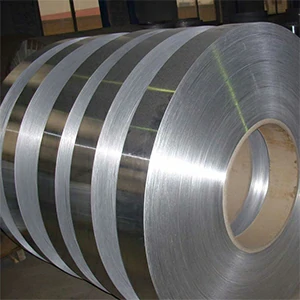
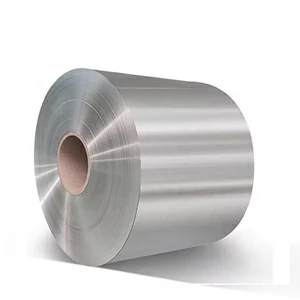
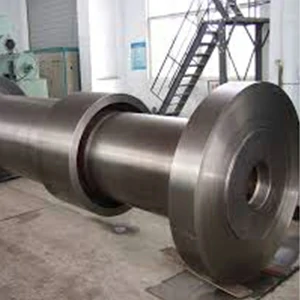
1920 aluminum alloy is a Russian-standard wrought aluminum alloy suitable for producing slab ingots, rolled products, and various extruded profiles.
It offers relatively high strength, good weldability, corrosion resistance, and machinability, making it suitable for projects in mechanical engineering, construction, transportation, and other fields that require structural strength, formability, and service stability.
For customers looking for Russian-standard 1920 aluminum alloy material solutions, profile processing capabilities, or engineering material support, 1920 alloy can not only meet the manufacturing needs of complex sections and components, but also help achieve a better balance among strength, durability, and processing efficiency.
Standards and specifications for 1920 aluminum alloy
To ensure that the chemical composition, supply condition, dimensional accuracy, and product suitability of 1920 aluminum alloy (B92 / В92) meet project requirements, the relevant products are usually verified in accordance with the following standards and specifications.
- OST 1-92014-90: Chemical composition and basic technical requirements for B92 (1920) alloy.
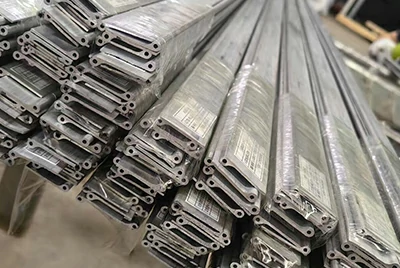
- GOST 13617-97—13624-90: Standards for extruded profiles such as angle profiles, Z profiles, T profiles, and channel profiles.
- GOST 13737-90—50077-92: Standards for extruded structural profiles and special-shaped profiles.
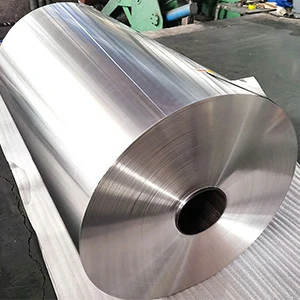
- GOST 21488-97 / OST 1-92006-79: Standards for bars, strips, and coils.
Available 1920 aluminum alloy products
We can supply a wide range of semi-finished and profile products in 1920 aluminum alloy (B92 / В92) to meet material selection and processing needs for different projects in machinery manufacturing, building structures, transportation, and industrial supporting applications.
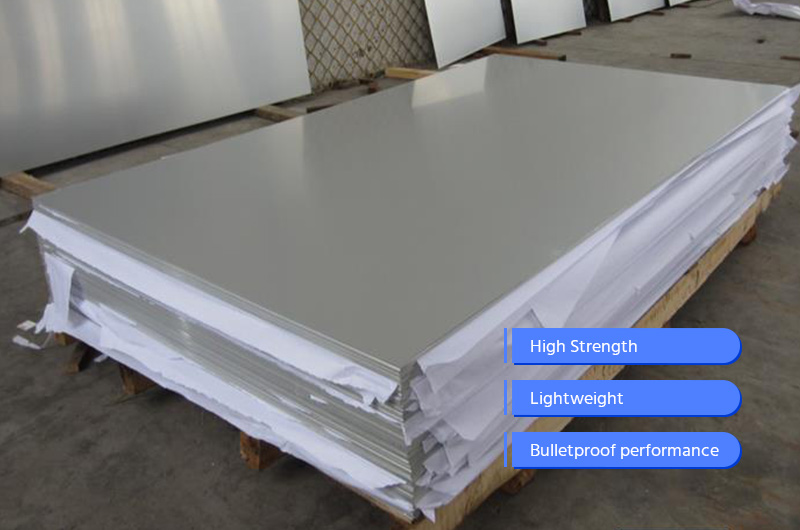
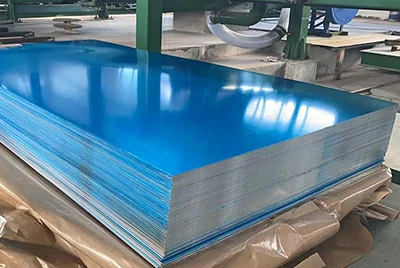
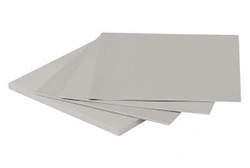
1920 aluminum plate / sheet
Suitable for structural parts, housing parts, cover parts, and subsequent cutting processing.
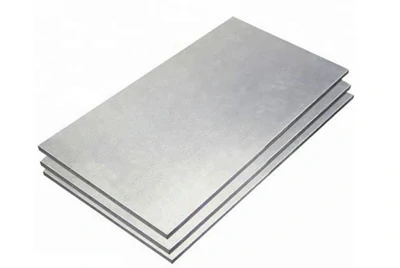
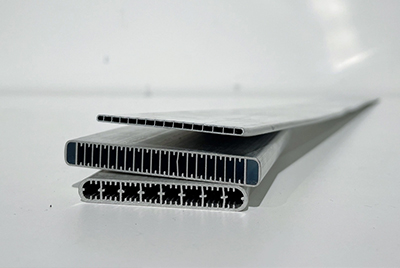
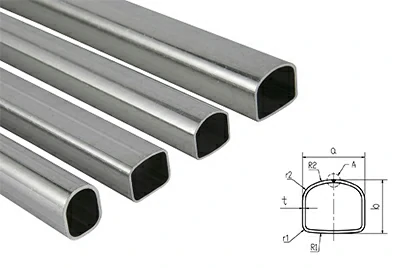
Complex geometric section products can be provided according to project drawings to meet the needs of special structural components and engineering supporting applications.
Common sizes and custom supply capabilities of 1920 aluminum alloy
The size ranges we can provide:
| Product form | Common specifications (mm) |
| 1920 Aluminum Plate | Thickness: 0.3–10.5 mm, width: 600–2000 mm, length: 2000–7000 mm |
| 1920 Round Disc / Round blank | 8 / 10 / 12 / 16 / 20 / 30 / 40 / 50 / 60 / 80 / 100 / 120 / 150 / 200 / 250 / 300 |
In addition to standard specifications, we also support the following services based on project requirements:
- Cut-to-length
- Processing based on drawings
- Supply by length, cross-section, or weight
- Machining allowance reservation
- Confirmation of special-shaped profile sections
- Confirmation of batch supporting shipment and packaging requirements
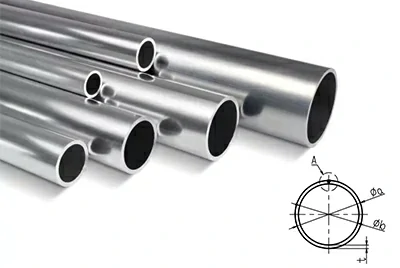
For plates, aluminum tubes, and various structural profiles, customers can directly provide drawings, target dimensions, application location, processing method, and purchase quantity.
We can then help confirm more suitable supply specifications and cutting solutions based on actual project requirements.
Instant QuoteChemical composition of 1920 aluminum alloy
According to OST 1-92014-90, 1920 aluminum alloy (B92 / В92) is a high-strength Al-Zn-Mg-Mn wrought aluminum alloy.
Its chemical composition is based on aluminum, with magnesium, zinc, manganese, and other main alloying elements.
While ensuring relatively high strength, it also takes corrosion resistance, welding adaptability, and processing performance into account.
| Element | Content (%) |
| Al (aluminum, base metal) | 89.94–92.49 |
| Mg (magnesium) | 3.9–4.6 |
| Zn (zinc) | 2.9–3.6 |
| Mn (manganese) | 0.6–1.0 |
| Fe (iron) | ≤ 0.3 |
| Si (silicon) | ≤ 0.2 |
| Ti (titanium) | ≤ 0.2 |
| Cu (copper) | ≤ 0.05 |
| Be (beryllium) | 0.0001–0.005 |
| Impurities (each) | ≤ 0.05 |
| Impurities (total) | ≤ 0.1 |
Mechanical properties of 1920 aluminum alloy
The mechanical properties of 1920 aluminum alloy vary depending on the supply condition, heat treatment process, and product form.
For materials in annealed, quenched, aged, or different processing conditions, their strength, plasticity, and hardness will differ.
| Property | Typical values |
| Tensile strength (σb) | 250–350 MPa |
| Yield strength (σ0.2 / σT) | 180–250 MPa |
| Elongation after fracture (δ5) | 8–15 % |
| Brinell hardness (HB) | 70–100 HB |
| Impact toughness (KCU) | ≥20 kJ/m² |
With its relatively high strength level and stable overall properties, 1920 aluminum alloy is suitable for load-bearing structural components, frame parts, support parts, and other industrial components that require strength and reliability.
Physical properties of 1920 aluminum alloy
The physical properties of 1920 aluminum alloy mainly affect weight control, thermal conductivity performance, dimensional stability, and electrical performance compatibility during actual use and processing.
| Property | Typical value |
| Density (ρ) | 2720 kg/m³ |
| Elastic modulus (E) | 70000 MPa |
| Coefficient of linear expansion (α) | 23.5 × 10⁻⁶ 1/°C |
| Thermal conductivity (λ) | 130–150 W/(m·°C) |
| Specific heat capacity (C) | 900 J/(kg·°C) |
| Electrical resistivity (ρe) | 0.035 × 10⁻⁶ Ω·m |
Applications of 1920 aluminum alloy
1920 aluminum alloy combines relatively high strength, good corrosion resistance, and processing adaptability. It can be used for manufacturing a wide range of industrial structural components, support parts, and functional parts.
For projects that focus on both material performance and forming, processing, and follow-up supporting capabilities, 1920 alloy can be used in the following fields:
Mechanical engineering
Suitable for the manufacture of power structural parts, load-bearing elements, support parts, and various mechanical components.
Building structures
Can be used for frame profiles, enclosure structures, ceiling structural parts, facade components, and decorative profiles.
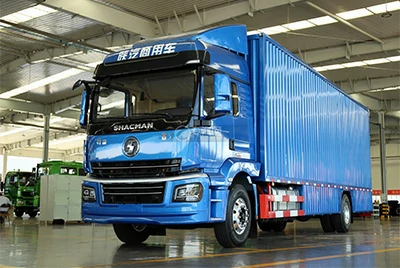
Transportation
Suitable for body parts, truck parts, bus parts, and structural parts for special equipment.
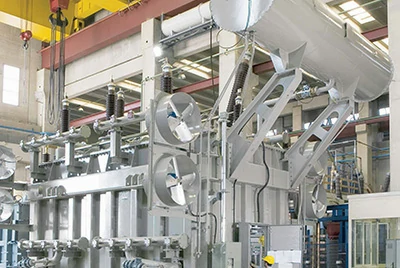
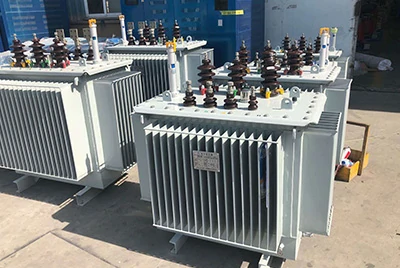
Power and thermal equipment
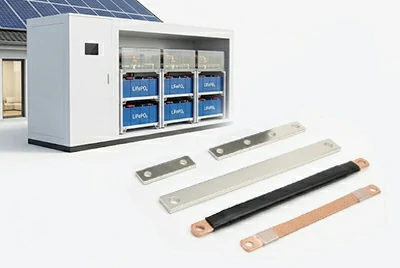
Can be used for heat exchangers, radiators, electrical equipment housings, and some conductive supporting parts.
Shipbuilding and marine engineering
Can be used for superstructure components, deck structures, internal partition profiles, and marine supporting parts.
Aerospace industry
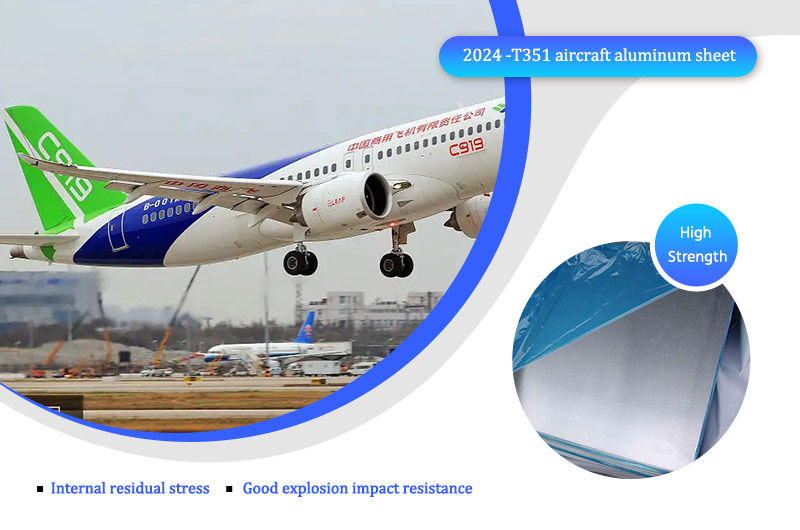
Can be used for secondary load-bearing fuselage parts, skin-related parts, and process profiles.
Chemical and industrial equipment
Suitable for some housing parts, vessel components, and industrial supporting products that require corrosion resistance and machinability.
Food and light industry equipment
Can be used for some containers, equipment parts, and structural supporting parts.

Advantages of 1920 aluminum alloy
1920 aluminum alloy combines relatively high strength with relatively low density, making it suitable for industrial projects that require weight reduction, load-bearing capacity, and processing adaptability. Its main advantages include:
- High strength and light weight, suitable for projects that require both weight reduction and load-bearing capacity.
- Good corrosion resistance, suitable for a wide range of industrial and outdoor service environments.
- Good welding and processing performance, making it convenient for extrusion, forming, and subsequent structural processing.
- Suitable for manufacturing complex profiles and able to meet various cross-sectional and structural design requirements.
- Stable overall performance, suitable for long-term applications that require material reliability.
- Good electrical conductivity and processing adaptability, suitable for various industrial components and functional parts.
Limitations of 1920 aluminum alloy
- Limited heat resistance. It is generally not recommended for long-term use in working conditions above 150°C.
- Processing must be properly controlled. Otherwise, the risk of intergranular corrosion may increase.
- There are few international equivalent grades, so material conversion can be more difficult in some export or substitution projects.
Similar grades in other countries and guidance on alternative material selection
1920 aluminum alloy (B92 / В92) does not have a widely recognized one-to-one equivalent grade in commonly used international standard systems such as ISO, EN, and ASTM.
1920 belongs to the Al-Zn-Mg high-strength wrought aluminum alloy series, core standard based on OST 1-92014-90.
Material substitution usually cannot be made directly based only on the grade name.
Points to check carefully:
- Whether the chemical composition is close.
- Whether the mechanical properties meet the application requirements.
- Whether the supply condition and heat treatment condition are consistent.
- Whether corrosion resistance, weldability, and processing adaptability match.
- Whether the applicable standards, certification system, and actual application scenario allow substitution.
For projects that require international standard conversion or approximate material selection, it is recommended to carry out a comprehensive evaluation based on composition, properties, condition, and specific application in order to select an alternative material that is closer to the project requirements.
Related products
We also supply other Russian standard wrought aluminum alloys for comparison and alternative material selection, including 1145, 1163, 1420, 1901, 1920, and 1980 aluminum alloys.
1145 aluminum
1163 aluminum
1420 aluminum
1901 aluminum
1105 aluminum
1980 aluminum
Frequently asked questions
Can 1920 alloy be welded?
Yes, 1920 alloy can be easily welded using all major aluminum welding methods, including argon arc welding and resistance welding.
Which heat treatment method is recommended to increase strength?
Artificial aging after quenching is recommended to increase strength and achieve the best mechanical properties.
Can 1920 alloy products be anodized?
Yes, 1920 alloy can be anodized easily, which can further improve its corrosion resistance and decorative performance.
What profiles can 1920 alloy be made into?
1920 alloy can be produced into various extruded profiles: angle profiles, channel profiles, T profiles, Z profiles, I-beam profiles, and other special-shaped products.
What is the maximum thickness of 1920 alloy slab ingots?
The thickness of slab ingots depends on the order specifications and equipment capacity, but it is usually between 20 and 300 mm.