What is anti-fouling self-cleaning anodized aluminum?
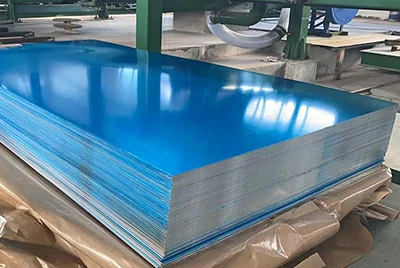
Anti-fouling self-cleaning anodized aluminum is a functional aluminum sheet material used in building exteriors and curtain wall systems. It features an anti-fouling, self-cleaning treatment applied to the anodized aluminum surface, making it resistant to dust, rain stains, urban pollutants, and everyday surface grime. This helps building facades maintain a cleaner, more consistent metallic appearance over time.
Compared to standard anodized aluminum sheets, the core advantage of anti-fouling self-cleaning anodized aluminum lies in its superior surface resistance to soiling. When rain or water droplets land on the surface, they do not spread into a film but instead form rounded beads that quickly roll off. As they roll away, these droplets carry away loose dust and contaminants, reducing rain streaks, dust accumulation, and stain residue.
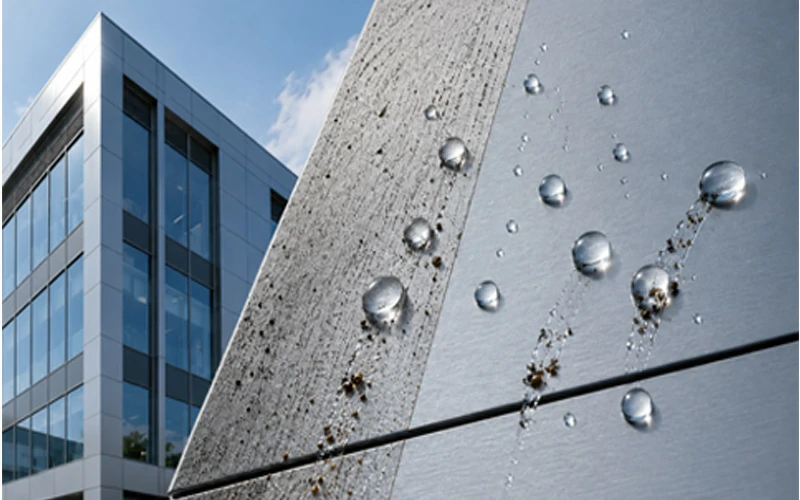
This surface behavior stems from a lotus-leaf-inspired hydrophobic and anti-fouling principle, often referred to as the "lotus effect." It minimizes contact and adhesion between pollutants and the aluminum surface, allowing the facade to regain cleanliness more easily through rainfall or routine cleaning.
Anti-fouling self-cleaning anodized aluminum is not "completely dirt-proof," but it enables building facades to achieve the following:
- Reduce dust and pollutant adhesion
- Minimize rain streaks and runoff marks
- Enhance surface hydrophobicity and ease of cleaning
- Reduce facade cleaning frequency and maintenance burden
- Maintain the metallic luster and decorative appearance of anodized aluminum over the long term
For high-rise buildings, public facilities, commercial curtain walls, complex-shaped facades, and large-scale aluminum cladding projects, anti-fouling self-cleaning anodized aluminum offers both aesthetic appeal and reduced long-term maintenance-making it especially suitable for projects demanding high visual cleanliness, weather resistance, and cost efficiency over time.
Chalco provides tailored solutions for anti-fouling self-cleaning anodized aluminum sheets as part of broader aluminum anodizing solutions, based on requirements for architectural curtain walls, exterior cladding, rainscreen systems, and custom facade projects, with customization options for thickness, dimensions, surface finish, fabrication methods, packaging, and delivery documentation.
Related Anodized Aluminum Products
Why do building facades need anti-fouling anodized aluminum surfaces?
Building facades are continuously exposed to outdoor elements and are prone to dust, rain, vehicle exhaust, industrial pollutants, airborne particulates, and acid rain. Once ordinary aluminum panels accumulate dust, rain streaks, or contaminant residues, their metallic sheen and overall visual quality noticeably deteriorate.
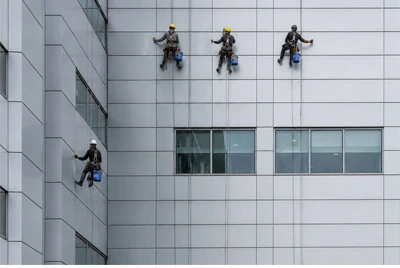
For high-rise buildings, large curtain walls, complex-shaped facades, and public structures, facade cleaning is typically costly, time-consuming, and requires suspended platforms, high-altitude work, or specialized maintenance crews. If the aluminum surface is prone to soiling, ongoing maintenance demands will continue to rise.
The value of anti-fouling self-cleaning anodized aluminum lies in its ability to reduce pollutant adhesion, enabling rainwater to bead up and carry away loose dust-helping building facades retain a cleaner appearance.
It is particularly well-suited for the following project types:
High-rise building facades
Cleaning high-rise facades is challenging and expensive. Using anti-fouling anodized aluminum sheets reduces the long-term buildup of dust and rain streaks, easing the need for frequent washing.
Large-scale curtain wall projects
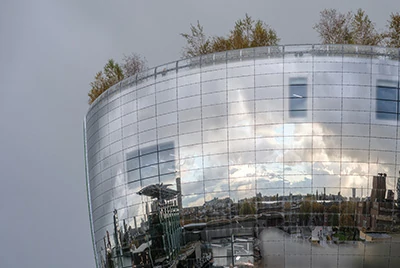
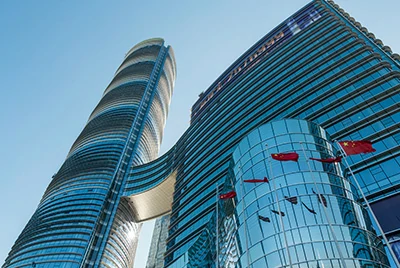
Office towers, commercial complexes, airports, train stations, exhibition centers, and sports venues feature extensive facades with high demands for visual uniformity. Anti-fouling surfaces help minimize discoloration caused by localized staining, runoff marks, and dust accumulation.
Buildings with complex or irregular geometries
Curved curtain walls, folded panels, perforated aluminum sheets, and intricate facade structures often create hard-to-clean zones. Anti-fouling self-cleaning surfaces reduce stain retention and improve post-installation cleaning efficiency.
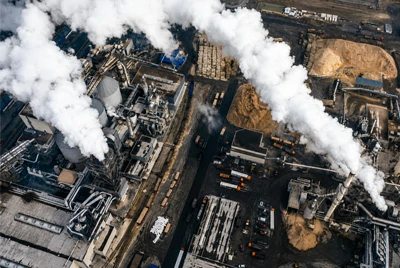
Urban areas with heavy pollution or traffic
Buildings along streets, in commercial districts, industrial zones, or near major roadways face higher levels of airborne pollutants and particulates. Anti-fouling anodized aluminum sheets help reduce dust deposition and contaminant buildup on facades.
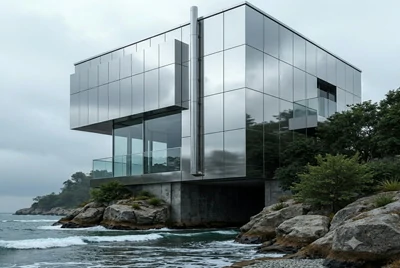
Coastal and humid environments
In coastal, humid, or rainy regions, building facades are more susceptible to water spots, salt residue, and surface grime. Anti-fouling self-cleaning anodized aluminum enhances surface hydrophobicity and cleanability, enabling better performance in demanding outdoor conditions.
How does the anti-fouling self-cleaning surface work?
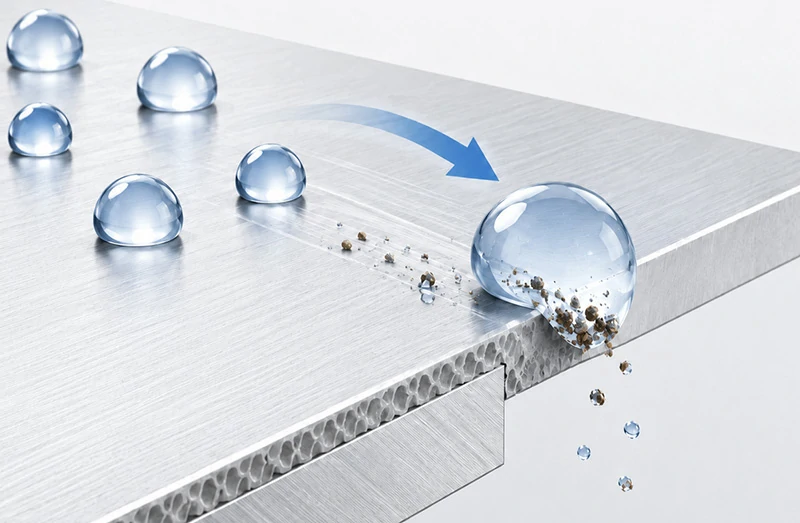
Anti-fouling self-cleaning anodized aluminum uses a specialized surface structure that reduces adhesion of water and contaminants. When rain or water droplets hit the surface, they do not spread into a film but instead form spherical beads that rapidly roll off.
As these beads roll away, they carry off loose dust, fine particles, and some pollutants, reducing dust buildup, rain streaks, and runoff marks-helping the facade stay cleaner longer.
Lotus effect reduces stain adhesion
This anti-fouling mechanism mimics the self-cleaning phenomenon observed on lotus leaves, also known as the "lotus effect." Lotus surfaces resist wetting; water forms beads that roll off and remove dust.
Anti-fouling anodized aluminum applies a similar hydrophobic strategy, preventing rain, dust, and pollutants from lingering on the surface and thereby slowing down facade soiling.
Superhydrophobic surface enables rapid water beading and runoff
On standard aluminum panels, water tends to spread out, forming films or streaks. After evaporation, airborne dust, pollutants, and minerals often remain on the surface, causing rain marks, spots, or stained areas.
The anti-fouling self-cleaning anodized aluminum surface exhibits enhanced hydrophobicity, allowing water to maintain a beaded shape and roll off quickly-reducing water dwell time and limiting opportunities for contaminant deposition.
Anti-fouling surface simplifies cleaning
Anti-fouling self-cleaning anodized aluminum doesn't make facades completely immune to dirt, but it prevents dust and pollutants from bonding strongly. Even after prolonged outdoor exposure, light soiling can be more easily removed by rain or standard cleaning methods.
This surface type is ideal for projects where facade cleaning is difficult, maintenance intervals are long, and high visual cleanliness is required. It helps reduce long-term cleaning demands while preserving the stable, natural metallic finish of anodized aluminum.
Core advantages of anti-fouling self-cleaning anodized aluminum
Anti-fouling self-cleaning aluminum anodized sheets retain the authentic metallic look of anodized aluminum while enhancing resistance to dust, rain streaks, and pollutants. When used on building facades, they help maintain a cleaner appearance and reduce long-term cleaning and maintenance efforts.
Stronger anti-fouling performance
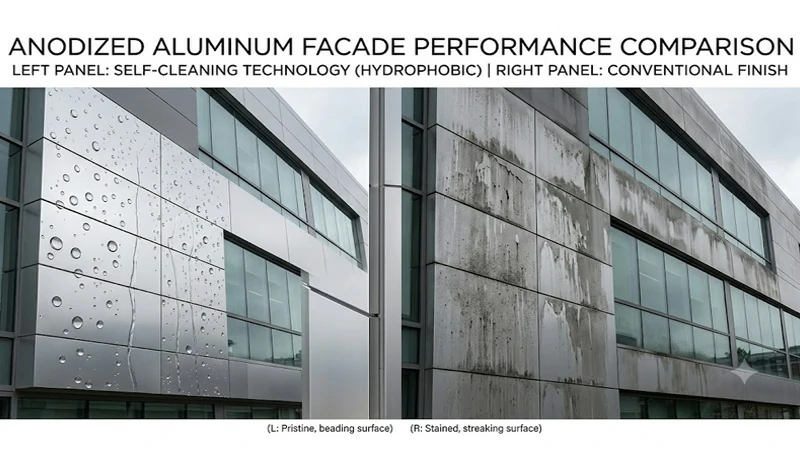
The anti-fouling surface reduces adhesion of dust, rain-borne pollutants, and airborne particles. After rainfall, the surface shows fewer visible runoff marks or stain deposits-making it ideal for facades exposed to outdoor environments over extended periods.
Improved hydrophobic effect
Water droplets landing on the panel form beads and roll off rather than spreading into a film. As they roll, they carry away loose dust and fine contaminants, minimizing water spots, rain streaks, and dust accumulation.
Easier cleaning and maintenance
While anti-fouling self-cleaning anodized aluminum isn't entirely maintenance-free, surface contaminants don't adhere firmly. During cleaning, ordinary dust and light stains can be more readily removed by rain, water rinsing, or standard cleaning methods-making it suitable for high-rises, large curtain walls, and hard-to-access facades.
Preserves the metallic finish of anodized aluminum
Anodized surfaces offer a natural, refined metallic aesthetic. The anti-fouling self-cleaning treatment does not alter the original premium metallic appearance and is compatible with satin, semi-mirror, and high-gloss finishes for various architectural applications.
Reduces facade maintenance costs
Facade cleaning typically requires high-altitude access, specialized equipment, and trained personnel. Using anti-fouling self-cleaning aluminum anodized sheets slows soiling accumulation, extends cleaning intervals, and lowers long-term maintenance frequency and cleaning expenses.
Ideal for complex facade designs
Curved curtain walls, folded panels, irregular facades, perforated sheets, and large public building exteriors often feature hard-to-reach zones and maintenance challenges. Anti-fouling surfaces reduce long-term stain retention in these areas, helping complex architectural forms maintain a tidy appearance.
Functional anodized surfaces can also be selected around other project priorities. High-adhesion aluminum is more relevant where bonding, lamination, printing, or overlay performance is important, while antimicrobial anodized aluminum is intended for hygiene-sensitive and high-contact environments. Where the requirement shifts from cleanability to a Type III hard-anodizing route in bar form, Type III hard-anodized aluminum bar provides a separate material option.
How does anti-fouling anodized aluminum differ from nano-PVDF aluminum panels?
Both anti-fouling self-cleaning anodized aluminum sheets and nano-PVDF aluminum panels can be used on building facades and improve surface anti-fouling and cleanability-but they differ in surface structure, visual appearance, and ideal applications.
Anti-fouling anodized aluminum is better suited for projects seeking authentic metallic aesthetics, durable appearance, and low-maintenance curtain walls. Nano-PVDF aluminum panels are preferable for projects requiring vibrant colors, coated decorative effects, and large-scale colored facades.
| Comparison criteria | Anti-fouling self-cleaning aluminum anodized sheet | Nano-PVDF aluminum panel |
| Base surface | Anodized aluminum surface | PVDF-coated surface |
| Anti-fouling mechanism | Reduces dust and pollutant adhesion through a hydrophobic, anti-fouling surface | Typically uses nano-coatings or self-cleaning coatings to enhance surface cleanliness |
| Visual appearance | More natural metallic finish, ideal for premium curtain walls and modern facades | Wider color selection, suitable for colorful building exteriors |
| Surface characteristics | Retains the metallic texture and luster of aluminum anodized sheet | The coating coverage effect is more noticeable |
| Suitable applications | Curtain wall panels, metal cladding, public buildings, high-rise buildings, custom-shaped aluminum panels | ACP curtain walls, colored exterior cladding, commercial buildings, decorative panels |
| Procurement considerations | Anodizing thickness, stain resistance, surface appearance, panel dimensions, processing requirements | PVDF coating system, coating thickness, color, coating weather resistance |
Chalco's stain-resistant self-cleaning aluminum anodized sheet is not a conventional painted aluminum panel. Its surface appearance primarily comes from the anodized layer and stain-resistant self-cleaning surface treatment, rather than relying on a polymer organic coating to cover the aluminum substrate. Therefore, it preserves the inherent decorative metallic texture while enhancing stain resistance and ease of cleaning for exterior surfaces.
Available surface finishes and application scenarios
Chalco's stain-resistant self-cleaning aluminum anodized sheet can be used in various building facade projects. It maintains the metallic character of anodized aluminum while improving surface stain resistance, water repellency, and cleanability. Different anodized surface finishes can be selected based on project aesthetics, architectural style, and maintenance requirements.
Satin anodized surface
The satin finish offers soft luster with minimal glare, making it ideal for modern commercial buildings, office towers, public facilities, and large-scale curtain wall projects.
Stain-resistant self-cleaning treatment reduces adhesion of dust, rain streaks, and airborne pollutants, helping large metal facades maintain a consistently clean visual appearance.
Bright anodized surface
Bright anodized aluminum delivers a stronger metallic reflective effect, suitable for projects that emphasize a sense of technology, modernity, and architectural identity.
When used on exteriors, the stain-resistant surface minimizes the impact of water spots and stains on the bright finish, helping the building retain a fresher appearance over time.
Semi-mirror anodized surface
The semi-mirror finish offers more luster than standard satin but is softer than a full mirror, making it ideal for premium commercial facades, hotels, exhibition centers, airports, train stations, and public building exteriors.
Stain-resistant self-cleaning performance reduces residual surface contaminants, lowering long-term cleaning and maintenance demands.
Brushed anodized surface
The brushed finish features distinct metallic grain, ideal for architectural projects emphasizing linear aesthetics and premium metallic decorative effects.
Stain-resistant treatment reduces accumulation of dust and rain streaks along the grain direction, making the surface easier to clean and maintain.
Custom anodized surface
For special building facades, custom-shaped aluminum panels, curved curtain walls, or unique aesthetic requirements, Chalco can confirm surface finish, color direction, gloss level, panel dimensions, and processing methods based on drawings, samples, or project specifications.
Quality inspection and performance verification
When using stain-resistant self-cleaning aluminum anodized sheet for building exteriors, in addition to visual appearance, it is essential to verify surface stain resistance, water repellency, anodizing quality, dimensional accuracy, and batch consistency. Comprehensive test documentation supports reliable decision-making during material selection, sample approval, bulk procurement, and final acceptance.
Stain resistance testing
Stain resistance tests evaluate how easily stains, dust, and contaminants adhere to the aluminum panel surface. By comparing standard anodized aluminum with stain-resistant self-cleaning surfaces, one can clearly observe differences in stain retention and how readily the surface returns to a clean state after cleaning.
Common test methods include:
- Dyne pen mark test
- Oil-based marker or contaminant wipe test
- Dust adhesion comparison test
- Surface comparison before and after cleaning
- Rain streak simulation test
A stain-resistant surface does not mean it will never show any marks; rather, it prevents stains from adhering firmly, making subsequent cleaning easier.
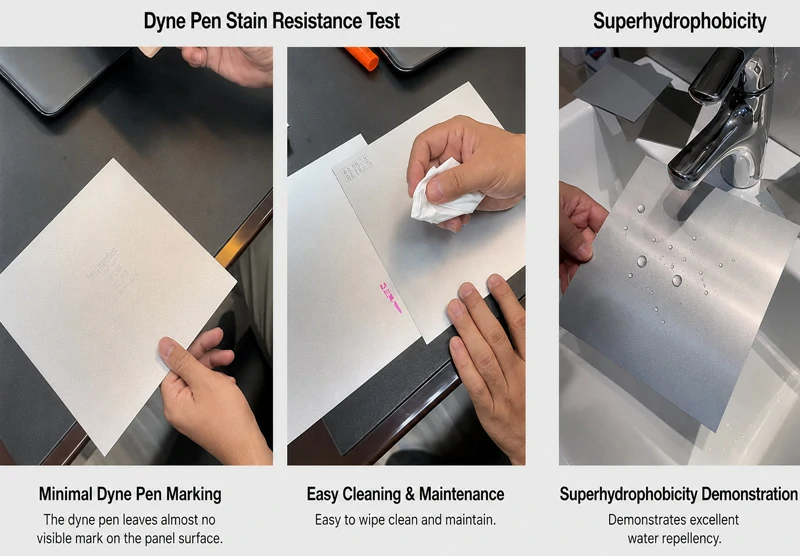
Water repellency testing
Water repellency is a key characteristic of self-cleaning anodized aluminum. If water droplets remain spherical and roll off quickly upon contact, the surface demonstrates good water repellency and cleanability.
Verification methods include:
- Water droplet roll-off demonstration
- Water contact angle measurement
- Water spray rinse test
- Observation of residual water film on the surface
- Comparison of stain residue after rinsing with clean water
The more pronounced the water repellency, the less likely water is to spread into a film on the surface, thereby reducing rain streaks, water spots, and pollutant buildup.
Anodizing thickness inspection
The anodized layer forms the foundation for weather resistance, corrosion resistance, and appearance stability of aluminum panels. For exterior building applications, anodizing thickness should be confirmed according to project requirements to ensure suitability for long-term outdoor exposure.
Inspection typically includes:
- Anodizing thickness
- Coating uniformity
- Surface integrity
- Edge and processed area inspection
For high-rise curtain walls, coastal projects, public buildings, and long-term outdoor facades, anodizing requirements must be clearly confirmed prior to order placement.
Color difference and gloss inspection
Building curtain walls typically demand high visual consistency. After installation of large aluminum panel areas, noticeable batch-to-batch color shifts, gloss variations, or inconsistent surface textures can significantly compromise facade aesthetics.
It is recommended to confirm:
- Intra-batch color difference control
- Inter-batch color consistency for replenishment orders
- Gloss measurement
- Surface grain direction consistency
- Sample approval records
For satin, bright, semi-mirror, and brushed finishes, physical samples should be approved prior to mass production.
What information is needed for a quotation?
To expedite solution confirmation and pricing, please provide the following basic information:
- Application: curtain wall, exterior cladding, public building, high-rise building, etc.
- Specifications: alloy, thickness, width, length, or finished dimensions
- Surface finish: satin, bright, semi-mirror, brushed, or sample-based requirements
- Processing: whether cutting, bending, punching, grooving, or drawing-based customization is required
- Quantity: purchase volume or project usage
- Inspection requirements: whether anodizing thickness, stain resistance, water repellency, color difference, or dimensional inspection is needed
You may also directly send drawings, sample images, or dimension tables. Chalco can then propose a tailored solution for stain-resistant self-cleaning aluminum anodized sheet based on your project needs.
FAQs
Will stain-resistant self-cleaning aluminum anodized sheet stay completely clean?
No. The stain-resistant self-cleaning surface primarily reduces adhesion of dust, rain streaks, and pollutants, allowing rainwater or routine cleaning to remove them more easily. It lowers maintenance demands but does not eliminate the need for periodic facade cleaning.
Where is the stain resistance most evident?
It is primarily evident in water repellency, reduced stain adhesion, and ease of cleaning. Water droplets form beads and roll off more readily, carrying away loose dust and minimizing rain streaks and contaminant buildup.
Is this aluminum panel suitable for outdoor curtain walls?
Yes. Stain-resistant self-cleaning aluminum anodized sheet is suitable for building curtain walls, exterior cladding, rainscreen systems, high-rise buildings, public facilities, and complex architectural facades.
Can surface finishes be customized?
Yes. Chalco can provide satin, bright, semi-mirror, brushed, and other anodized surface finishes per project requirements, and can also develop custom solutions based on samples or drawings.
Can it be bent or fabricated into custom shapes?
Yes. Cutting, bending, grooving, punching, curving, and custom-shaped fabrication can be performed according to drawings. Specific processing methods depend on panel thickness, dimensions, surface requirements, and technical drawings.
Can samples be provided?
Samples can be provided based on project needs. They allow evaluation of color, gloss, surface finish, water repellency, and stain resistance, facilitating material approval prior to bulk procurement.
What is the difference between stain-resistant anodized aluminum and standard anodized aluminum?
Standard anodized aluminum primarily provides metallic decorative effects and surface protection. Stain-resistant self-cleaning anodized aluminum adds enhanced stain resistance and water repellency, making it better suited for building projects where facade cleanliness and maintenance costs are critical concerns.