Henan Chalco provides specification review and supply support for hard anodized aluminum rods and bars (Type III / hardcoat) to industrial procurement teams, serving applications requiring wear resistance, lightweight design, and precision machining.
These materials are suitable for wear-resistant, lightweight, precision-machined parts and represent the Type III hardcoat route within broader aluminum anodizing solutions, rather than decorative anodizing, cookware, or alumina ceramic rods.
Customers can submit requirements for alloy, diameter, coating standard, and final tolerance based on alloys such as 6061-T6, 7075, and 2024, and shapes including round, hex, square, and flat, for drawing review.
Commonly requested rod & bar
The following dimensions represent commonly requested and market-popular specifications, and do not reflect Henan Chalco's actual inventory.
| Form | Common Alloy-Temper | Diameter / Width Range | Type III Hardcoat Thickness | Length |
| Round bar / rod | 6061-T6 / 6061-T6511, 7075-T651, 2024 | 1/8″–3″ / 4.7–200 mm commonly requested | 25–100 µm | Cut-to-length |
| Hex bar | 6061-T6 / 6061-T6511, 7075-T651 | Available to specification | 25–100 µm | Cut-to-length |
| Square bar | 6061-T6 / 6061-T6511, 6063-T5 | Available to specification | 25–100 µm | Cut-to-length |
| Flat bar | 6061-T6 / 6061-T6511, 6063-T5, 2024 | Available to specification | 25–100 µm | Cut-to-length |
Actual available dimensions, cut lengths, wall thickness, inner/outer diameter tolerances, and MOQ must be confirmed based on alloy, temper, coating thickness, and order quantity.
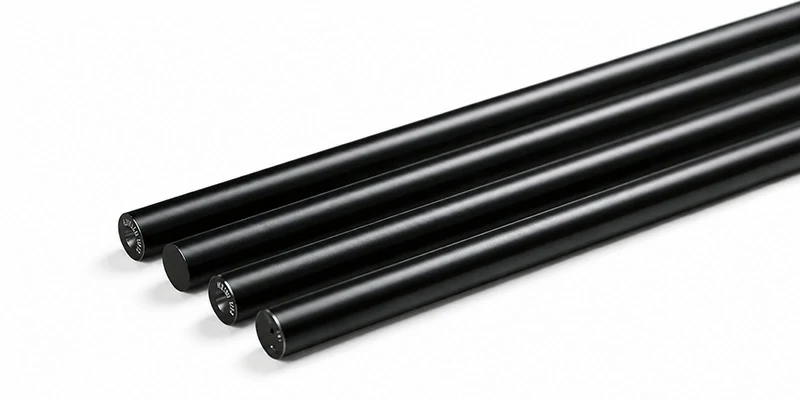
Choosing the alloy for hard anodized rods
When selecting hard anodized aluminum rods, the strongest aluminum round bar and the most suitable alloy for hard anodizing are often not the same.
7075-T6 / T651 is commonly used for high-strength aluminum round bars, with a typical tensile strength of approximately 572 MPa;
however, if the customer prioritizes uniformity, adhesion, color stability, and overall machinability of the Type III hardcoat, 6061-T6 is often the more reliable choice, with a typical tensile strength of about 310 MPa.
6061 / 6082 - general engineering & best Hardcoat
6061-T6 and 6082 are the most commonly used general engineering choices for hard anodized aluminum rods, with 6061 aluminum bar providing the corresponding 6061 bar-stock route.
They offer a balanced combination of strength, machinability, weldability, and hardcoat response, making them suitable for guide rods, fixtures, automation parts, and lightweight wear components requiring Type III hardcoat. Where the project instead requires a flat 6xxx material form, high-strength 6000-series aluminum sheet provides the corresponding sheet-form option.
For most projects that require both wear resistance and controlled cost and lead time, 6061-T6 is typically the preferred alloy for initial review.
7075 / 7050 - high strength
7075 aluminum rod and 7050 aluminum bar are better suited for components demanding high strength, lightweight design, and higher structural load capacity.
They are used in aerospace hardware, defense components, high-load fixtures, and precision-machined parts.
However, due to their higher alloying element content, 7075 / 7050 may exhibit differences in hardcoat layer color, adhesion, brittleness, and corrosion resistance compared to 6061. Therefore, selection should not be based solely on strongest aluminum round bar."
If the drawing specifies a thicker Type III coating, alloy temper, coating thickness, sealing, and final tolerance should all be confirmed together.
2024 / 2A12 - high-copper, handle with care
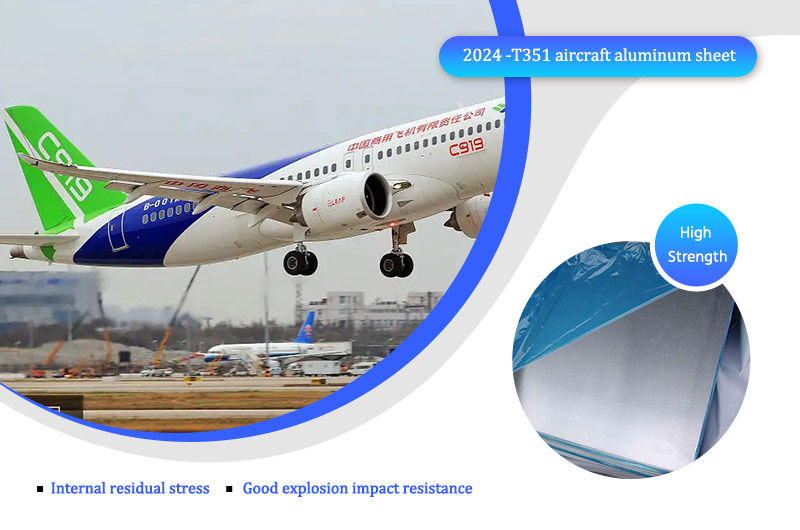
2024 / 2A12 aluminum is a high-copper alloy suitable for certain high-strength aerospace and structural applications, but requires greater caution during hard anodizing.
Published research on 2A12 hard anodizing reports that Cu-rich second phases can affect film growth, reduce coating uniformity, and make process control more sensitive.
6063 for appearance · 7068 for ultra-high-strength requests
6063 aluminum alloy is better suited for projects emphasizing appearance, extruded surface finish, and anodized aluminum aesthetics, and is generally not selected for maximum strength. For projects specifying this alloy in rod or bar form, 6063 aluminum rod provides the corresponding product route.
7068 can be used for ultra-high-strength requests, but availability, temper, diameter range, hardcoat response, and cost must be confirmed individually.
Send your load, wear, machining, and finish requirements to Henan Chalco, and we can review the alloy–temper–Type III combination before quotation.
Related Anodized Aluminum Products
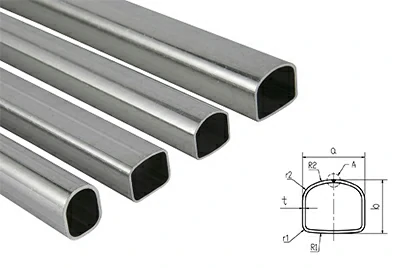
Anodized Aluminum Extrusions
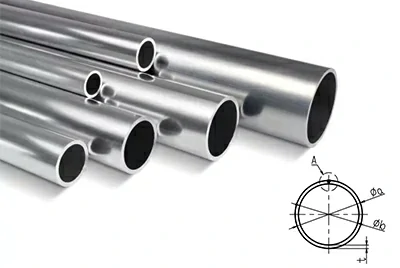
Anodized Aluminum Tubing

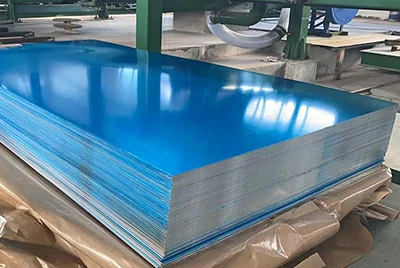
Anodized Aluminum Sheet
Anodized Aluminum Wire
What is hard anodizing? Type I, II & III (MIL-PRF-8625) explained
Hard anodizing, Type III anodizing, and hardcoat anodizing typically refer to the same functional anodizing process used to form a thicker, harder oxide layer on aluminum surfaces.
For hard anodized aluminum rods and bars, the focus is not on decorative color, but on wear resistance, surface hardness, dimensional control, and compliance with engineering drawings.
In North American drawings, MIL-PRF-8625 is the common specification; older drawings may reference MIL-A-8625. This standard covers electrolytic anodic coatings on aluminum and aluminum alloys, defining six Types and two Classes. ISO 10074 specifies requirements and test methods for hard anodic oxidation coatings on aluminum and its alloys.
| Item | Type II Anodizing | Type III Hardcoat Anodizing |
| Main purpose | Decorative color, general corrosion protection | Wear resistance, functional hard surface |
| Typical process family | Sulfuric acid anodizing | Hardcoat / Type III anodizing |
| Coating thickness | Usually thinner than Type III | Commonly specified around 25–100 µm |
| Surface hardness | Lower than hardcoat | Commonly discussed around HV 400–600, final value per test report |
| Color control | Better for dyed decorative finishes | Usually gray, dark gray, or black; color varies by alloy and thickness |
| Dimensional impact | Lower | Higher; final OD and tolerance must be planned |
| Cost | Usually lower | Usually higher due to process control and thickness |
Type I / IB / IC primarily relates to chromic acid or alternative processes, Type II / IIB is typically used for sulfuric acid anodizing, and Type III refers to hardcoat. Class 1 usually indicates a non-dyed / undyed finish, while Class 2 indicates a dyed finish.
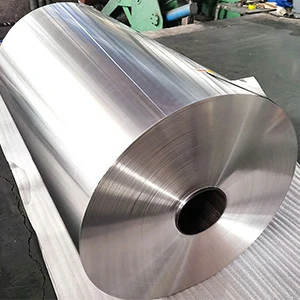
Hard anodized aluminium is not automatically better" than regular anodized aluminum. If the part requires wear resistance, sliding surfaces, electrical insulation, or specifies Type III in the drawing, hard coat anodizing is more appropriate; if the goal is decorative color, low cost, mild corrosion protection, or fatigue-sensitive structures, Type II anodizing may be more suitable. For continuous flat-product applications centered on surface finish and decorative anodizing, anodized aluminum coil provides a related Type II product route.
Applications of hard anodized aluminum rods
Hard anodized aluminum rods are suitable for industrial components requiring lightweight construction, wear resistance, low friction, or electrically insulating surfaces.
Compared to standard aluminum bars, the primary value of Type III hardcoat lies not in aesthetic color, but in enabling the working surfaces of aluminum rods, bars, or tubes to better perform in sliding, guiding, sealing, clamping, and wear-resistant applications.
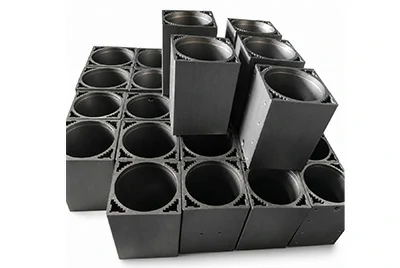
Fluid Power Components
Lightweight hard anodized aluminum tubes for cylinder barrels and low-friction sealing surfaces.
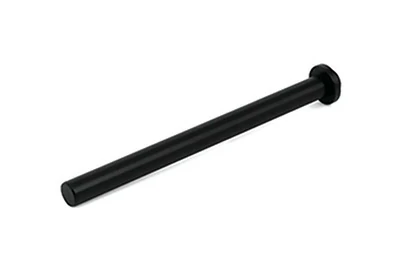
Automation & Linear Motion
Wear-resistant hard anodized aluminum rods for guide rods, sliding rails and lightweight linear shafts.
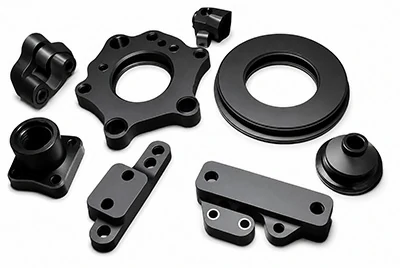
Semiconductor, Medical & Marine
Hard anodized aluminum parts for lightweight, insulating and corrosion-exposed precision components.
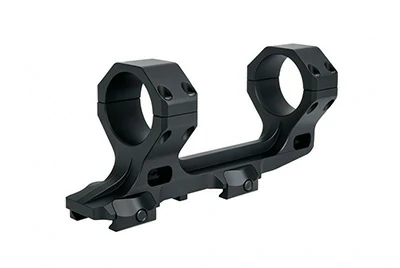
Firearms & Defense
Type III hard anodized aluminum rods and bars for firearms accessories and defense hardware.
Thickness, color, sealing & PTFE options
For wear-resistant bars, guide components, sliding parts, and precision-machined bars, Type III hardcoat typically ranges from 25–100 µm in thickness, with hardness commonly discussed in the range of HV 400–600.
However, the final coating thickness, hardness value, and test method must be confirmed based on alloy, process, drawing requirements, and inspection reports.
Color options can be reviewed as natural, dark gray, or black hard anodized aluminum, and Class 1 / Class 2 requirements should also be confirmed.
Note to customers: hardcoat color does not offer the high consistency of decorative anodizing. Alloys such as 6061, 7075, and 2024 may exhibit different gray or black tones even at the same target coating thickness.
Therefore, if color is critical, customers should specify color tolerance or request sample approval in their RFQ.
Sealing is recommended for applications prioritizing corrosion resistance; if wear resistance or friction behavior is more critical, unsealed hardcoat may be considered.
For sliding components, low-friction surfaces, or self-lubricating requirements, PTFE-impregnated hard anodizing can also be evaluated, but specific availability and process windows must be confirmed on a project-by-project basis.
Customers are advised to provide coating thickness, color, sealing / PTFE option, final tolerance, and drawings simultaneously. Henan Chalco can review the appropriate Type III hardcoat specification prior to quoting.
Dimensional growth, machining & masking
Hard anodizing is not a dimensionally neutral surface treatment.
For hard-anodized aluminum rods, shafts, guide components, and mating parts requiring tight tolerances, customers should confirm coating build-up, final OD, pre-anodize diameter, and masking requirements during the RFQ stage. Otherwise, issues such as increased outer diameter, reduced bore size, tightened threads, or insufficient assembly clearance may occur after hard anodizing.
Coating build-up & final OD
Type III hardcoat typically grows partially outward from the surface and partially inward into the substrate. The common engineering assumption in the industry is approximately 50% outward growth / 50% inward penetration.
Within typical hard anodizing ranges, the single-side outward build-up is approximately 13–38 µm (0.0005–0.0015 in). The exact value should be reviewed based on coating thickness, alloy, process parameters, and drawing tolerance.
| Type III Thickness | Approx. Outward Build-Up Per Side |
| 25 µm | about 13 µm / 0.0005 in |
| 50 µm | about 25 µm / 0.0010 in |
| 75 µm | about 38 µm / 0.0015 in |
| 100 µm | project-specific review |
Therefore, customers are advised to specify not only the as-received rod dimensions but also clarify whether the final OD refers to the dimension before or after hard anodizing.
If the drawing specifies a target final outer diameter after hard anodizing, Henan Chalco needs to review machining allowance, target coating thickness, and final tolerance prior to quoting.
Machine before anodizing
Most precision projects complete machining prior to Type III hardcoat anodizing. This is because the hard anodized layer forms a ceramic-hard surface; post-anodizing operations such as turning, drilling, or polishing hard-anodized aluminum may damage the coating, expose the substrate, or compromise the wear-resistant surface.
For components such as shafts, bushings, spacers, fixtures, and guide rods, it is recommended to include stock allowance during machining and clearly indicate coating thickness, final dimension, and critical tolerance on the drawing.
This approach minimizes rework after hard anodizing and avoids misinterpretations among raw material MTCs, machined dimensions, and final coating reports.
Masking threads, bores & bearing surfaces
Not all surfaces should be covered by hard anodizing. Threads, bores, bearing surfaces, electrical contacts, tight-fit faces, and areas requiring electrical conductivity or press-fitting typically need masking confirmation in advance.
Otherwise, the hard anodized layer may cause thread binding, undersized holes, abnormal wear on bearing surfaces, or electrical contact failure.
Customers should provide Henan Chalco with masking areas, final OD, hole tolerance, thread requirements, and bearing surface requirements upfront.
We can conduct a drawing review to determine the appropriate machining route for hard-anodized aluminum, coating build-up allowance, and final tolerance.
Limitations & engineering notes
Hard anodizing significantly enhances the wear resistance, surface hardness, and corrosion resistance of aluminum rods, but it is not always the optimal finish for every application.
For procurement purposes, understanding the limitations of hard anodizing in advance helps avoid incorrect selections of alloy, coating thickness, sealing method, and processing sequence.
Hard anodizing is not always the best finish
Type III hardcoat forms a hard yet brittle aluminum oxide layer with low ductility. Under impact, bending, thermal cycling, or stress concentration at sharp edges, it may develop crazing, microcracks, or edge delamination.
Independent and published research on anodized aluminum coatings has reported fatigue debit in tested specimens: conventional anodizing has been associated with approximately 8–50% fatigue strength reduction, and hard anodizing (Type III) with approximately 50–62%, depending on coating thickness and alloy.
Hard anodizing improves surface wear resistance but does not increase the tensile strength of aluminum rods, nor can it be locally repaired like metallic plating.
Therefore, if a component is primarily subjected to repeated bending, impact loading, or high fatigue demands, Type III hardcoat should be jointly reviewed with the design engineer.
Corrosion resistance, salt spray & sealing
Aluminum does not rust like steel, but it can corrode. Hardcoat combined with sealing typically significantly enhances corrosion resistance. Actual performance depends on salt spray exposure, strong acids or alkalis, scratches, edge exposure, dissimilar metal contact, and sealing quality.
For parts used in marine, outdoor, fluid power, or salt spray environments, the RFQ should clearly specify alloy, coating thickness, sealed hard anodize requirements, edge condition, and required test documentation.
Thicker is not always better
Hard anodizing does not necessarily improve with greater thickness; salt spray resistance does not increase monotonically with coating thickness. Excessively long anodizing times may reduce coating uniformity and corrosion performance. Bore diameter, depth, sealing density, and surface quality all influence final corrosion resistance.
Therefore, when procuring hard-anodized aluminum rods, coating thickness should be determined based on a balanced assessment of wear, corrosion, tolerance, and application requirements-not solely by pursuing maximum thickness.
High-copper & die-cast considerations
Published academic research on 2A12 hard anodizing has reported that Cu-rich second phases (such as CuAl₂) can inhibit film growth and reduce coating uniformity; solid solution treatment prior to anodizing has been shown to improve film thickness and density.
FAQ
Is hard anodized aluminum better than regular anodized aluminum?
Not necessarily. Choose hard-anodized aluminum for wear resistance, hardness, and Type III hardcoat requirements; select Type II anodizing for decorative coloring, lower cost, or light-duty protection.
What is the strongest aluminum round bar?
Common high-strength aluminum round bars include 7075-T6 / T651, with a typical UTS of approximately 572 MPa; however, 6061-T6 is generally more suitable for hard anodizing.
Does anodized aluminum rust?
Aluminum does not rust like steel, but it can corrode. Hard anodizing can enhance corrosion resistance, but performance must still be evaluated based on alloy, sealing, and service environment.
Is Type III the same as hardcoat anodizing?
Yes. Type III, hardcoat anodizing, and hard anodizing generally refer to the same type of hard anodic oxidation process. RFQs should also specify Class, thickness, and sealing requirements.
Should aluminum rods be machined before hard anodizing?
Most precision parts are machined before hard anodizing. Buyers should confirm final OD, holes, threads, masking, and coating build-up in advance.
Is hard anodized aluminum suitable for firearms components?
It is suitable for firearm accessories, optics mounts, and defense hardware requiring Type III hardcoat per drawings; alloy, standard, tolerance, destination, and end-use must be confirmed through review.
What to send for a fast quote
To expedite the quotation process for hard-anodized aluminum rods or 6061 / 7075 aluminum round bars, customers should provide the following information in their RFQ:
- alloy + temper, e.g., 6061-T6, 6061-T6511, 7075-T651, 6063-T5, or 2024;
- diameter / width + length, preferably specifying both inch and mm;
- Type III thickness in µm, indicating Class 1 or Class 2;
- color requirement, e.g., gray, black, or natural;
- sealing / PTFE requirement;
- machining allowance, final tolerance, and final OD;
- quantity, destination, and required documents, such as MTC, CoC, coating thickness report, or mill cert.