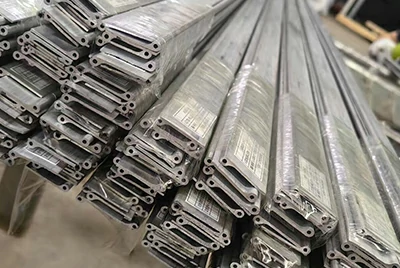
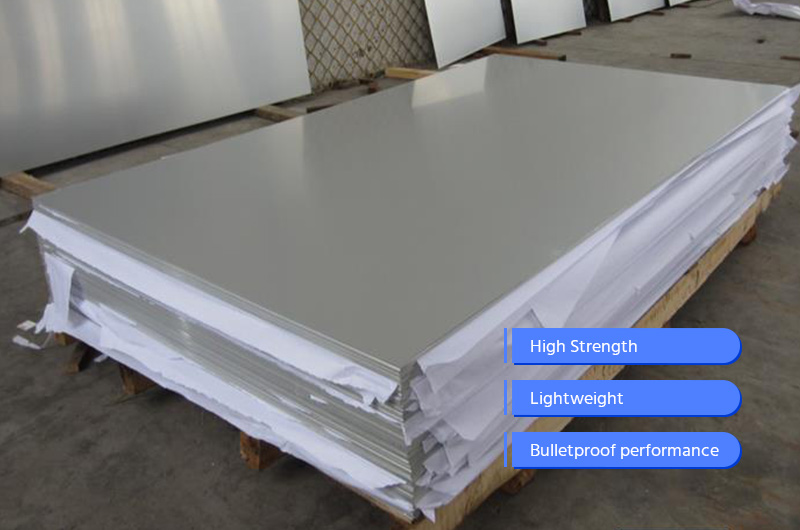
1105 aluminum alloy is a wrought aluminum alloy that complies with the GOST 4784-2019 standard. It is mainly used to produce rolled semi-finished products such as aluminum sheets and strips, and is widely applied in construction, industrial equipment, agriculture, and general engineering.
Based on high-purity aluminum, this alloy contains elements such as copper, magnesium, manganese, and silicon. While maintaining good formability and weldability, it also offers stable mechanical properties and excellent corrosion resistance.
1105 aluminum alloy standards and specifications (GOST system)
To ensure that material properties, chemical composition, and supply quality meet project requirements, the production and supply of 1105 aluminum alloy are usually carried out in accordance with the following GOST standards and technical specifications:
- GOST 4784-2019 Aluminum and wrought aluminum alloys — Grades
- GOST 1131-76 Wrought aluminum alloy ingots
- GOST 21631-76 Aluminum and aluminum alloy sheets — Technical requirements
- 1105 / VD1 alloy base composition: compliant with GOST 1131-76
- Cladding layer (such as composite or clad materials): compliant with GOST 4784-2019
Available product forms of 1105 aluminum alloy
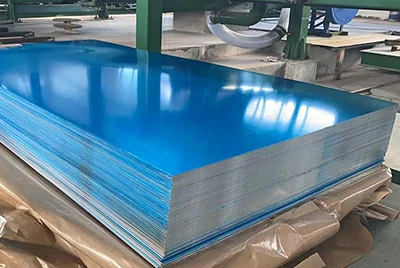
1105 aluminum alloy is available in aluminum plates, embossed aluminum plates, aluminum strips, aluminum coil strips, thin-gauge strips, and some round products. Different tempers, sizes, and custom cutting services can also be provided based on project requirements.
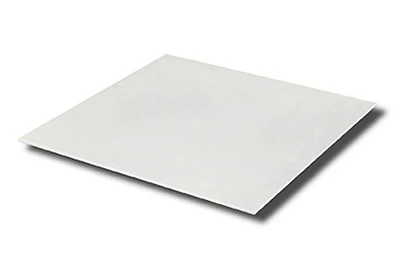
1105 aluminum plate / aluminum sheet
Available in soft, half-hard, hard, and other tempers, it is suitable for stamping, bending, cladding, structural part processing, and general industrial applications.
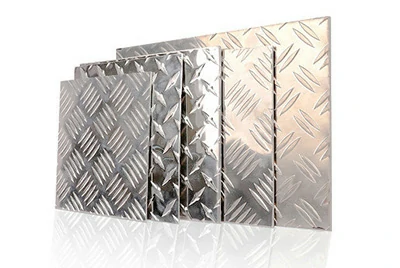
1105 embossed aluminum plate / anti-slip aluminum plate
Available with surface patterns such as diamond tread and five-bar / five-rib patterns, it is suitable for anti-slip treads, equipment platforms, vehicle floor panels, decorative applications, and functional cover panels.
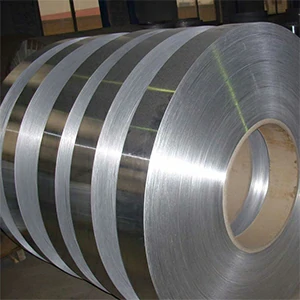
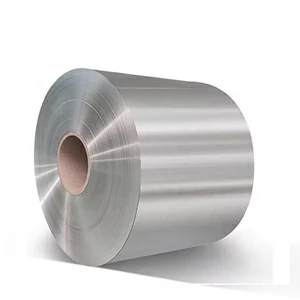
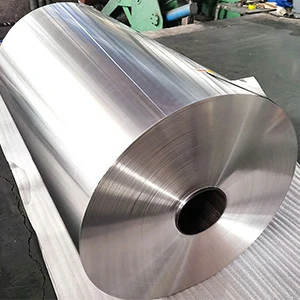
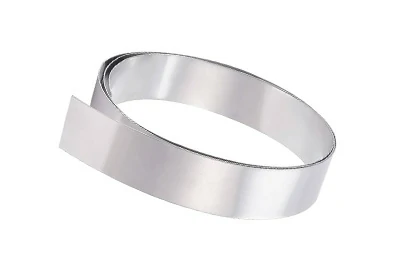
1105 aluminum strip / aluminum coil strip
Suitable for subsequent slitting, stamping, cladding, laminating, and continuous processing, and can be supplied according to required thickness and width.
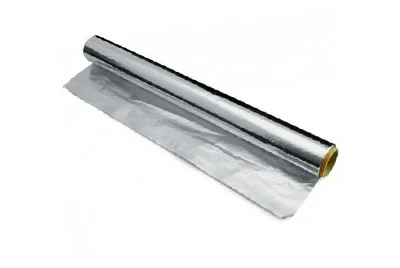
1105 aluminum foil
Suitable for lightweight application scenarios that require material softness, formability, and downstream processability.
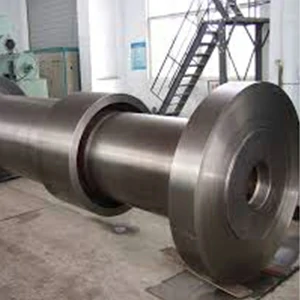
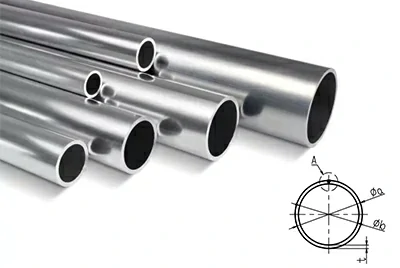
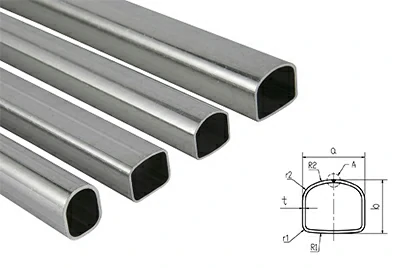
1105 round aluminum products
Corresponding round products are also available for machining, matching components, and the manufacture of specific structural parts.
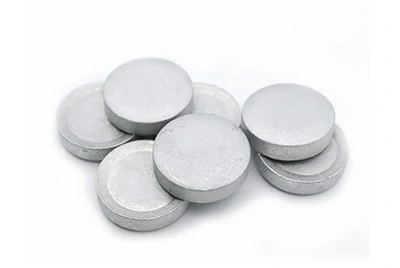
In addition to standard sizes, fixed-length cutting, leveling, slitting, and drawing-based processing services can also be provided according to project requirements, making it easier for customers to move directly into the next production stage.
Instant QuoteCommon supply tempers of 1105 aluminum alloy
1105 aluminum alloy can be supplied in different tempers according to processing method and performance requirements.
1105AM: Annealed / soft temper
Offers better plasticity and strong processing adaptability. It is suitable for applications with higher requirements for bending, stamping, and forming performance.
1105AN: Cold-work hardened temper
Provides higher strength and hardness. It is more suitable for applications with certain requirements for material rigidity and load-bearing performance.
1105AN2: Half-hard temper
Balances formability and strength. It is suitable for products that require certain processing performance while also maintaining a certain level of rigidity.
1105AT: Hardened and artificially aged temper
Suitable for applications with higher strength requirements. It can be used for the manufacture of semi-finished products or parts with higher mechanical performance requirements.
Cladding layer
Some 1105 aluminum products can adopt a cladding layer design to further improve corrosion resistance. For projects involving humid environments, outdoor use, or requirements for resistance to media, whether the product has a cladding layer is also one of the important items you need to confirm in advance during procurement.
Common sizes and custom supply capabilities of 1105 aluminum plate
According to different product forms and processing requirements, 1105 aluminum plate can cover a wide range of specifications:
- Standard thickness range: 0.5–10 mm
- Extended thickness range: 0.3–10.5 mm
- Width range: 600 mm–1800 mm
- Length range: up to 7000 mm
In actual procurement, the following specifications are more common and are suitable for general processing, slitting, bending, stamping, and engineering support applications:
| Thickness (mm) | Width (mm) | Length (mm) | Common specifications |
| 0.5 | 1200 | 2000 | 0.5 × 1200 × 2000 mm |
| 0.5 | 1200 | 3000 | 0.5 × 1200 × 3000 mm |
| 1.0 | 1500 | 3000 | 1.0 × 1500 × 3000 mm |
| 2.0 | 1500 | 4000 | 2.0 × 1500 × 4000 mm |
| 3.0 | 1500 | 3000 | 3.0 × 1500 × 3000 mm |
| 6.0 | 1500 | 3000 | 6.0 × 1500 × 3000 mm |
For non-standard size projects, we can provide fixed-length cutting, made-to-order production, and supporting supply services.
If your project has specific requirements for sheet size, machining allowance, or packing method, 1105 aluminum plate can be adjusted according to the actual application scenario rather than being limited to fixed standard sizes.
Chemical composition of 1105 aluminum alloy
According to GOST 4784-97 and GOST 1131-76 standards, the chemical composition range of 1105 aluminum alloy is as follows.
| Element | Content (%) |
| Al (aluminum, base metal) | 86.5–97.3 |
| Cu (copper) | 2.0–5.0 |
| Mg (magnesium) | 0.4–2.0 |
| Mn (manganese) | 0.3–1.0 |
| Si (silicon) | ≤ 3.0 |
| Fe (iron) | ≤ 1.5 |
| Zn (zinc) | ≤ 1.0 |
| Ni (nickel) | ≤ 0.2 |
| Impurities (single) | ≤ 0.05 |
| Impurities (total) | ≤ 0.2 |
| Ti + Cr + Zr | < 0.2 |
Note: The aluminum content is an approximate range. Its actual value will vary according to the content of alloying elements and impurity elements.
Mechanical properties of 1105 aluminum alloy
The mechanical properties of 1105 aluminum alloy vary significantly depending on the supply temper, heat treatment method, and semi-finished product form. Therefore, when selecting materials, you should not look at the alloy grade alone, but also confirm the temper and product form.
| Tensile strength (σb) | Approx. 120–220 MPa |
| Yield strength (σT) | Approx. 60–150 MPa |
| Elongation after fracture (δ5) | Approx. 8–20% |
| Brinell hardness (HB) | Approx. 30–60 |
| Impact toughness (KCU) | Approx. 0.2–0.4 kJ/m² |
Physical properties of 1105 aluminum alloy
| Density | Approx. 2800 kg/m³ |
| Elastic modulus | Approx. 68,000–72,000 MPa |
| Coefficient of linear thermal expansion | Approx. 23–25 × 10⁻⁶ /°C |
| Thermal conductivity | Approx. 150–180 W/(m·K) |
| Specific heat capacity | Approx. 900 J/(kg·K) |
| Resistivity | Approx. 0.035–0.045 Ω·mm²/m |
| Melting point | Approx. 643–657°C |
| Electrical conductivity | Approx. 61% IACS |
Processing properties of 1105 aluminum alloy
- Easy to roll, press, and forge, making it suitable for producing wrought semi-finished products such as plates and strips.
- Easy to cut, drill, and machine, meeting the manufacturing needs of common parts and structural components.
- Has good ductility and fracture toughness, with more stable performance during bending and forming.
- Suitable for stamping, bending, and subsequent structural processing, making it easier to match different processing scenarios.
- Has good welding adaptability and can be used for manufacturing general welded structural components.
In welding applications, 1105 aluminum alloy can use 1100, 4043, or 5356 type filler materials, and can be processed with common methods such as gas arc welding or arc welding.
For welded structural projects, it is recommended to further confirm process parameters according to the specific welding method, joint design, and weld performance requirements.
If the project has higher requirements for welding reliability, necessary weld crack testing or process validation can also be carried out at the early stage.
Application fields of 1105 aluminum alloy
Construction and decoration
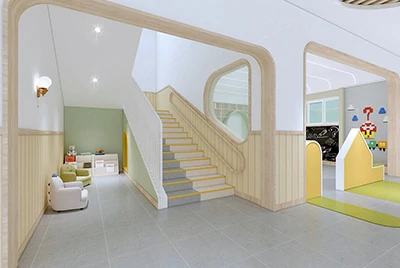
1105 aluminum alloy can be used to manufacture components related to building exteriors and interior decoration. Common applications include:
- Roofing materials
- Corrugated sheets
- Sandwich panels
- Facade components
- Architectural decorative parts
- Sheets and profiles for interior decoration

Transportation and machinery manufacturing
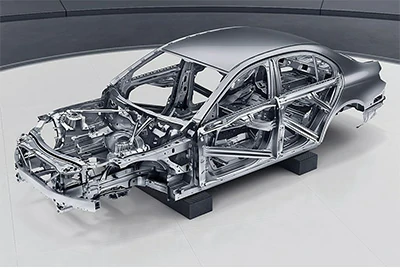
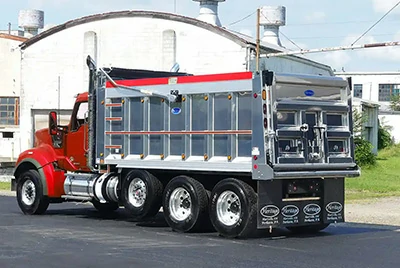
1105 aluminum plates and strips are widely used in transportation and general machinery manufacturing. They are suitable for producing parts with low to medium strength requirements, while also requiring reduced weight and efficient processing.
- Body parts
- Panels
- Brackets
- Cladding elements
- General equipment parts
- Supporting parts for transportation equipment
Electrical, chemical, and industrial equipment
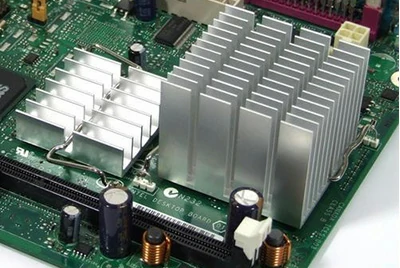
With good electrical conductivity compatibility, corrosion resistance, and welding performance, 1105 can also be used in some electrical, chemical, and industrial equipment-related products.
- Enclosures
- Housings
- Conductive elements
- Supporting products for welding materials and welding processes
- Raw materials for the production of sheet materials and foil

Semi-finished products and downstream processing
Another important use of 1105 is as a base material for further pressure processing and downstream manufacturing. Common forms include:
- Ingots
- Plates
- Strips
- Bars
- Semi-finished products for further pressure processing
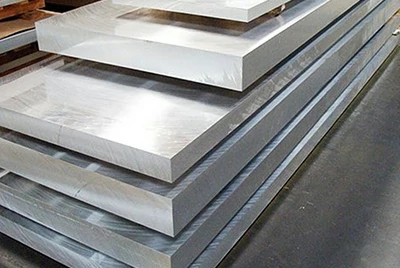
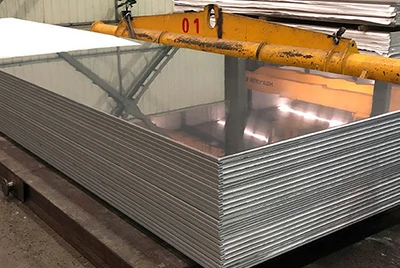
1105 aluminum alloy is generally suitable for working environments from -80°C to +150°C, and offers good corrosion resistance, excellent welding performance, and good dimensional stability.
Therefore, in projects that need to balance lightweight design, downstream processing convenience, and adaptability to the service environment, 1105 is a practical material choice.
Advantages of 1105 aluminum alloy
- Easy to machine. 1105 has good adaptability for cutting, drilling, and general machining, which helps support downstream manufacturing processes.
- High plasticity. The material has good forming performance and is suitable for pressure processing, bending, stamping, and various downstream processing methods.
- Good fracture toughness. It performs relatively stably during processing and use, making it suitable for applications with requirements for forming and structural transition.
- Offers a certain level of corrosion resistance. It has some corrosion resistance in general atmospheric environments, and its environmental adaptability can also be further improved through a cladding layer when necessary.
- Suitable for pressure processing and various downstream manufacturing methods. It can be supplied as semi-finished products such as plates and strips, and is also suitable for further manufacturing of structural parts, cladding parts, and welded parts.
- High processing efficiency. From rolling to forming and then to downstream assembly processing, 1105 has good compatibility throughout common process chains.
- Balances cost-effectiveness and supply flexibility. In many general manufacturing and project procurement scenarios, 1105 offers a good overall balance among performance, processability, and available product forms.
Limitations of 1105 aluminum alloy
- Limited strength compared with high-strength aluminum alloys. 1105 is more suitable for medium- to low-load applications or applications focused on processing and forming, and is not suitable as a direct substitute for high-strength materials.
- Not recommended for high-load critical components. For key structural parts with high load-bearing requirements, long-term heavy stress, or high safety grades, it is usually necessary to further verify whether a higher-strength alloy should be used instead.
- Relatively sensitive to overheating and thermal deformation. Under high-temperature processing conditions or in applications with significant heat effects, confirmation should be made based on the specific process and service conditions.
- No directly corresponding foreign grade in many cases. In export projects, standard conversion, or import substitution scenarios, additional comparison of composition and properties is usually required.
Similar grades in other countries and notes on alternative material selection
For 1105 aluminum alloy, there is currently no widely recognized foreign registered grade that can directly correspond to it on a one-to-one basis.
In actual procurement and technical communication, some projects may refer to certain Al-Cu aluminum alloys in the ASTM system in the United States or the EN AW system in Europe as approximate materials for comparison.
However, these materials often still show clear differences in chemical composition, mechanical properties, heat treatment response, and actual applications, so they cannot be simply regarded as equivalent substitutes.
Procurement support
- Spot supply and pre-order arrangements are supported, with supply scheduled according to specification, temper, and quantity.
- Cutting and custom processing are supported, making it easier to place orders based on actual project requirements.
- Warehousing and delivery coordination are supported, facilitating batch shipments and regional logistics arrangements.
- Certificates and necessary documents can be provided to help verify material, standards, and batch information.
- Multiple payment methods and commercial negotiation are supported, making them more suitable for project-based and ongoing procurement needs.
Related Russian standard aluminum alloy products
In addition to 1105 aluminum products, we can also supply a variety of Russian standard and commonly used wrought aluminum alloy products, making it easier for customers to compare and select alternative materials based on strength, processability, corrosion resistance, and specific application scenarios.
1145 aluminum
1163 aluminum
1420 aluminum
1901 aluminum
1920 aluminum
1980 aluminum
Frequently asked questions
Can 1105 alloy be used for welded structures?
Yes, 1105 alloy can be welded using most standard methods, but crack testing of the weld is recommended.
What heat treatment method is used for 1105 alloy?
Annealing is most commonly used to relieve internal stress and improve the ductility of semi-finished products.
Can 1105 alloy be used in corrosive environments?
In moderately corrosive environments, this alloy shows good corrosion resistance. However, when used in seawater or acidic environments, additional protective measures are recommended.
Which processing methods are suitable for 1105 alloy?
This alloy is easy to roll, press, forge, cut, and drill.
Can 1105 alloy be used for casting?
Its main purpose is to produce ingots for further pressure processing, but it can also be used in foundries to produce blanks.