Carbon Fiber Honeycomb Panels Overview
Designed with carbon fiber face sheets and lightweight honeycomb cores, these panels are used where low weight, panel stiffness, and configuration flexibility all matter. Chalco Aluminum supports custom panel build-up based on application requirements, including aluminum or aramid honeycomb core selection, panel thickness design, finished dimensions, and drawing-based fabrication.
- Aluminum and aramid honeycomb core options
- Flexible panel build-up and thickness combinations
- Cut-to-size fabrication, cutouts, and edge treatment
- Drawing-based quotation and project support
What Are Carbon Fiber Honeycomb Panels?
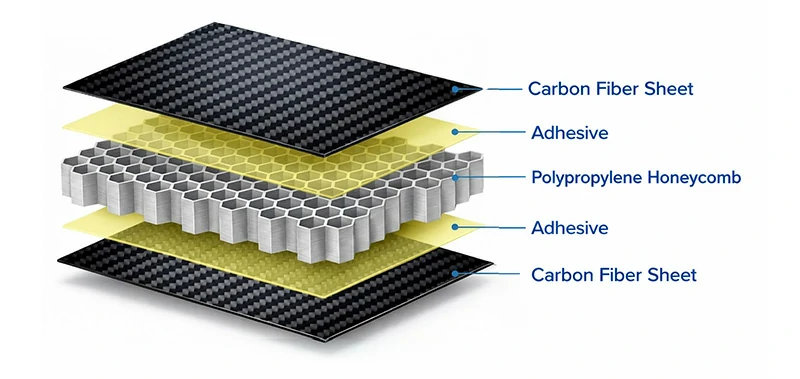
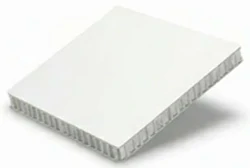
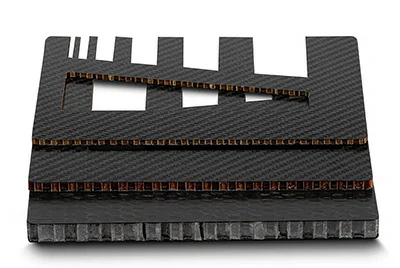
Carbon fiber honeycomb panels are sandwich composite panels made by bonding carbon fiber face sheets to a honeycomb core. This structure combines the low weight of honeycomb materials with the stiffness and surface strength of carbon fiber.
Unlike solid carbon fiber sheets, these panels use a lightweight core between two face layers. This sandwich construction reduces overall panel weight while delivering better stiffness efficiency, especially in larger panel formats and lightweight structural applications.
- Face sheet options
- Honeycomb core choices
- Flexible panel thickness
- Processing and machining support
When low weight and stiffness efficiency matter, honeycomb construction offers a clear structural advantage.
Why Use Honeycomb Instead of Solid Carbon Fiber Sheets?
For lightweight panel applications, honeycomb construction usually provides better stiffness efficiency than solid carbon fiber sheets.
| Comparison | Carbon Fiber Honeycomb Panel | Solid Carbon Fiber Sheet |
| Structure | Face sheets + honeycomb core | Solid laminate |
| Weight efficiency | Better for larger lightweight panels | Higher weight in larger formats |
| Stiffness efficiency | Higher for sandwich construction | More dependent on solid thickness |
| Best suited for | Engineered lightweight panels | Compact or fully solid parts |
The next step is defining the panel build-up, especially the face-sheet construction and honeycomb core route.
For a broader overview of honeycomb core materials and sandwich panels, different core and finished-panel routes can be reviewed according to project requirements.
Structure & Core Options
Carbon fiber honeycomb panels combine carbon fiber face sheets, a lightweight honeycomb core, and structural adhesive bonding in one sandwich construction.
Carbon Fiber Face Sheets
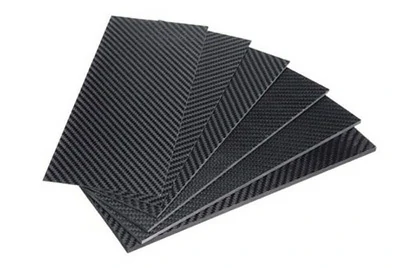
Carbon fiber face sheets provide the outer surface, panel stiffness, and finished appearance. Chalco Aluminum offers face-sheet options in commonly used carbon fiber grades and surface styles to match both structural and visual requirements.
Face Sheet Reference:
| Item | Options |
| Carbon fiber grade | T300 / T700 |
| Fabric style | 3K |
| Weave | Plain / Twill |
| Surface finish | Glossy / Matte |
| Single prepreg layer reference | 0.2–0.25 mm |
Honeycomb Core
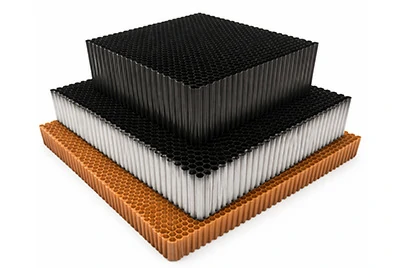
The honeycomb core is the lightweight support structure inside the panel. Chalco Aluminum offers two core options for carbon fiber honeycomb panels: aluminum honeycomb core and aramid honeycomb core.
Aluminum honeycomb core
Aramid honeycomb core
-
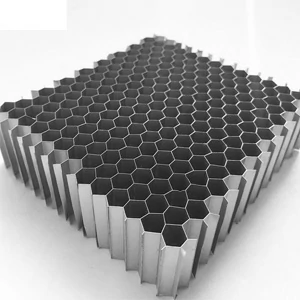
Aluminum honeycomb core is a strong option for panels that require stable support, higher rigidity, and reliable structural performance.
Alloy: 3003 / 5052 / 5056
Cell size: 3–34 mm
Foil thickness: 0.036–0.08 mm
-
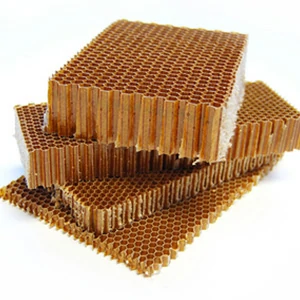
Aramid honeycomb core is better suited to lighter-weight, higher-performance sandwich structures.
Core type: Meta-aramid / Phenolic
Cell size: 1/8″–3/8″
Density: 1.8–9.0 pcf
In addition to finished carbon fiber honeycomb panels, aluminum and aramid honeycomb cores can also be supplied separately for customers with their own sandwich-panel fabrication capabilities.
For projects using aramid core as the primary sandwich structure, see our aramid honeycomb panels for related finished-panel configurations.
Bonding Method
Carbon fiber honeycomb panels are bonded using structural adhesive systems rather than welding. This honeycomb core bonding method creates a stable connection between the honeycomb core and the carbon fiber skins across the full panel area, making it well suited to sandwich panel construction.
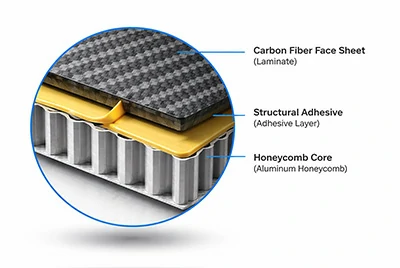
Different panel structures can look similar, but core selection often determines how the panel performs in use.
Related Products & Materials
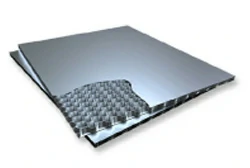
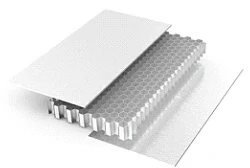
Choosing the Right Honeycomb Core
Aluminum honeycomb core and aramid honeycomb core are both used in carbon fiber sandwich panels, but they are usually selected according to different design priorities.
| Comparison | Aluminum Honeycomb Core | Aramid Honeycomb Core |
| Weight | Higher core weight | Lower core weight |
| Rigidity & support | Better for stronger support and panel rigidity | Better for lightweight sandwich structures |
| Insulation | Conductive metal core | Good dielectric performance |
| Typical applications | Industrial panels, transportation structures | Aerospace panels, high-performance composite structures |
| Better choice when | Rigidity and structural stability matter more | Lightweight and insulation matter more |
Quick Selection Tips:
- Choose aluminum honeycomb core if your project requires stronger support, higher rigidity, and more stable panel construction.
- Choose aramid honeycomb core if your project prioritizes lightweight design, dielectric performance, and high-performance sandwich structures.
Still comparing the two options? Read our full guide: Aluminum Honeycomb Core vs Aramid Honeycomb Core.
Technical Specifications
| Item | Aluminum Honeycomb Core | Aramid Honeycomb Core |
| Face Sheet Material | Carbon Fiber Laminate | |
| Carbon Fiber Grade | T300 / T700 | |
| Fabric Style | 3K | |
| Weave | Plain / Twill | |
| Surface Finish | Glossy / Matte | |
| Face Sheet Thickness | Approx. 0.2–0.25 mm and above / Customizable | |
| Core Type | 3003 / 5052 / 5056 Aluminum Honeycomb | Aramid / Phenolic Honeycomb |
| Cell Size | 3–34 mm | 1/8″–3/8″ |
| Foil / Core Structure | Foil Thickness: 0.036–0.08 mm | Density: 1.8–9.0 pcf |
| Core Thickness | Customized to project requirements | Customized to project requirements |
| Standard Reference Size | 1220 × 2440 mm | 1250 × 2500 mm |
| Custom Size | Available | Available |
| Total Panel Thickness | Customizable according to panel structure | Customizable according to panel structure |
| Processing Options | Cut-to-size / Drawing-based fabrication / Edge treatment | Cut-to-size / Drawing-based fabrication / Edge treatment |
Final panel dimensions, total thickness, and laminate build-up can be further adjusted according to the core route, face-sheet design, and application requirements.
Applications of Carbon Fiber Honeycomb Panels
Aerospace & UAV
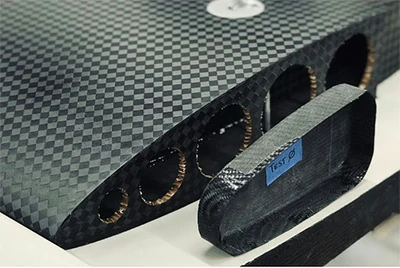
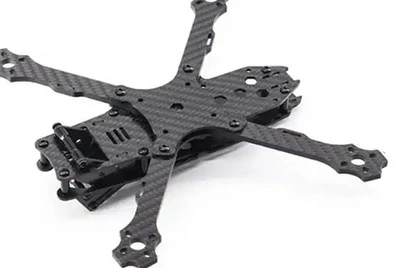
Carbon fiber honeycomb sandwich panels are used in aerospace applications for components such as interior panels, fairings, and floor panels. 5052 aluminum honeycomb core provides a good balance of strength and lightweight performance for general aerospace applications, while 5056 aluminum honeycomb core is used for higher-performance parts such as radomes. For applications requiring lower weight and thermal insulation, aramid honeycomb core is often preferred.
Rail Transit & Transportation Interiors
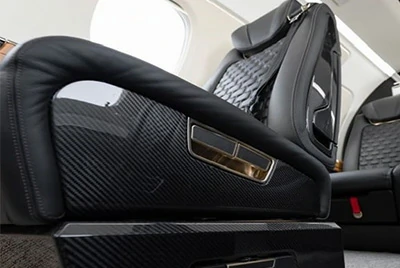
Carbon fiber honeycomb sandwich panels are used for flooring, partitions, and interior wall panels. 3003 aluminum honeycomb core is suitable for general interior applications, while 5052 aluminum honeycomb core is used where higher rigidity is required. For applications that focus on weight reduction and sound insulation, aramid honeycomb core is an ideal option.

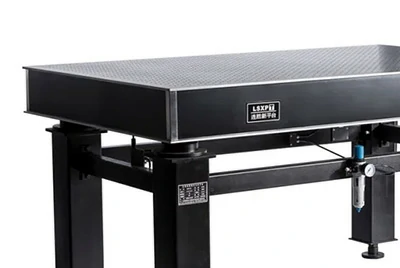
Industrial Equipment & Specialized Panels
Used for equipment housings, robotic structural parts, and cabinet panels. 3003 aluminum honeycomb core is suitable for general-purpose applications, while 5052 aluminum honeycomb core is used for projects requiring higher strength. For projects that require electrical insulation and lightweight performance, aramid honeycomb core is an ideal choice.
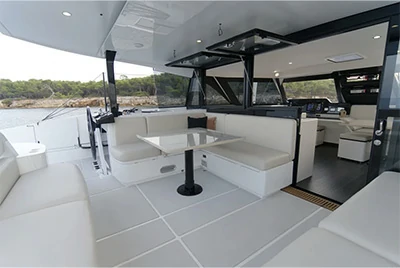
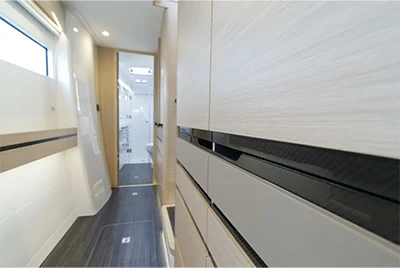
Marine & Other Lightweight Composite Applications
Used for interior structures, bulkheads, and deck components. 5052 aluminum honeycomb core provides strength and corrosion resistance, while aramid honeycomb core is suitable for applications that require weight reduction and sound insulation.
Custom Support for Carbon Fiber Honeycomb Panels
Carbon fiber honeycomb sandwich panels are typically supplied on a project basis. In addition to panel structure and technical specifications, the final panel form should also be confirmed according to the intended application.
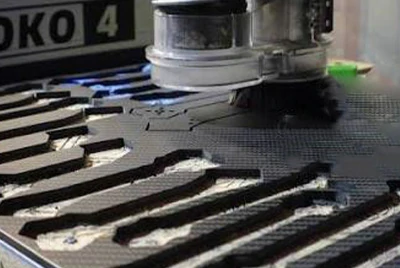
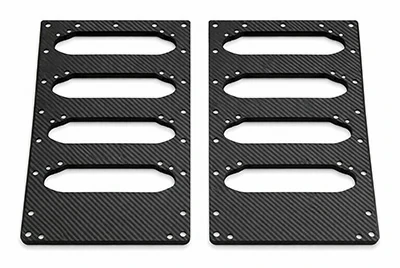
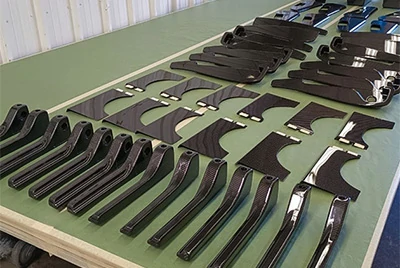
Panels are usually delivered as finished panels based on project requirements. In addition to panel structure and specifications, installation method, size requirements, and local structural reservations can all affect the final panel configuration.
Quality Control for Carbon Fiber Honeycomb Panels
Quality control for carbon fiber honeycomb sandwich panels typically covers three key stages: raw material verification, process control, and finished panel inspection. In project-based delivery, Chalco Aluminum verifies panel structure, dimensions, and finished-panel consistency to meet the quality requirements of different applications.
Raw Material Verification & Process Control
During production, quality control begins with verification of the carbon fiber face sheets, honeycomb core, and adhesive system. For engineered projects, Chalco Aluminum places strong emphasis on consistency in panel construction, process parameters, and critical production steps to reduce dimensional deviation, bonding instability, and finished-panel variation.
- Incoming inspection of face-sheet materials and honeycomb core
- Consistency control of panel construction and process parameters
- Verification of bonding process and critical production steps
- Process control during machining and assembly
- Segregation and handling of nonconforming materials or abnormal processes
Finished Panel Inspection & Pre-Delivery Verification
At the finished-product stage, the focus is on confirming that the carbon fiber honeycomb sandwich panel meets project requirements in terms of dimensions, thickness, surface appearance, edge integrity, and conformity with drawings or assembly requirements. For drawing-based fabrication and project-based delivery, Chalco Aluminum also carries out additional pre-delivery verification according to the specific application.
- Inspection of finished panel dimensions and thickness
- Inspection of surface appearance and edge integrity
- Verification of bonding condition and structural consistency
- Confirmation of local cutouts, reserved features, and assembly fit
- Pre-delivery inspection and document verification according to project requirements
Stable quality control affects not only the panel itself, but also the reliability of downstream assembly, installation, and final project delivery. Chalco Aluminum carries out full-process verification based on the structural and delivery requirements of each project.
Frequently Asked Questions (FAQ)
What is a carbon fiber honeycomb sandwich panel?
A carbon fiber honeycomb sandwich panel is a sandwich-structure panel made of carbon fiber face sheets, a honeycomb core, and a bonding layer. It combines lightweight construction, stiffness, and structural stability, making it suitable for engineered applications that require a high strength-to-weight ratio.
What is the difference between a carbon fiber honeycomb sandwich panel and a solid carbon fiber sheet?
A solid carbon fiber sheet is a solid laminate structure and is generally more suitable for smaller parts or components that require solid load-bearing performance. In contrast, a carbon fiber honeycomb sandwich panel is better suited to larger-format, lightweight panel applications where higher stiffness efficiency is required.
What honeycomb core options can you provide?
Chalco Aluminum can provide two common core options for carbon fiber honeycomb sandwich panels:
- Aluminum honeycomb core
- Aramid honeycomb core
How do I choose between aluminum honeycomb core and aramid honeycomb core?
In general, aluminum honeycomb core is better suited to applications that require stronger support, higher rigidity, and greater structural stability. Aramid honeycomb core is more suitable for applications that place greater emphasis on lightweight performance and high-performance sandwich construction. The final core selection should be confirmed according to panel size, installation method, service environment, and project requirements.
Do you support drawing-based fabrication?
Yes. For engineered projects, carbon fiber honeycomb sandwich panels can usually be supplied with cut-to-size fabrication, cutouts, edge treatment, and finished-panel delivery confirmation based on project drawings in order to meet downstream assembly and installation requirements.
What is usually confirmed before delivery of the finished panel?
For drawing-based custom fabrication and project-based delivery, the following items are usually confirmed before shipment:
- Finished panel dimensions and total thickness
- Surface appearance and edge integrity
- Cutouts, reserved features, and local structural requirements
- Bonding condition and structural consistency
- Conformity with drawings or assembly requirements
What information should be provided if the panel configuration is still under evaluation?
If the project is still at the evaluation stage, it is recommended to first confirm the following information:
- Application type
- Panel dimensions
- Total panel thickness
- Main requirements for weight reduction or stiffness
- Whether cutouts, edge treatment, or finished panel delivery are required
Get Advice on Carbon Fiber Honeycomb Panel Solutions
If you are evaluating a carbon fiber honeycomb sandwich panel project, you can provide the application type, panel dimensions, total thickness, and drawing requirements. Chalco Aluminum can then help confirm a suitable panel solution based on your specific project needs.