Copper bonding wire is a copper-based semiconductor bonding wire used to connect die pads to lead frames or package substrates, suitable for IC, LED, and discrete device packaging. Compared to gold bonding wire, copper offers cost advantages, excellent electrical and thermal conductivity, and higher mechanical strength-making it ideal for gold wire replacement and cost optimization in high-volume packaging.
Within Chalco's broader die-to-package bonding materials range, we supply bare copper, coated copper, and specialty copper-based bonding wires, covering standard fine wires and power-device-grade products. Leveraging capabilities in vacuum melting, multi-stage fine drawing, protective atmosphere annealing, precision spooling, and real-world bonding validation, we match products to your current specifications, package design, wire bonder equipment, and reliability requirements-supporting sample testing, alternative supplier evaluation, and volume ramp-up. Standard fine wires range from 18–50 μm; special thick wires and copper alloy products are available upon project-specific confirmation.
Available Copper Bonding Wire Types
Our copper-based bonding materials fall into three categories: bare copper, coated copper, and specialty copper-based bonding wires-addressing cost optimization, oxidation resistance and process stability, and high-strength, high-current, or specialized reliability packaging needs, respectively.
Bare Copper Bonding Wire
Bare copper bonding wire features high conductivity, low resistivity, and cost efficiency. Available in various diameters, BL, EL, and mechanical conditions for IC, LED, and discrete device packaging.
Contact us now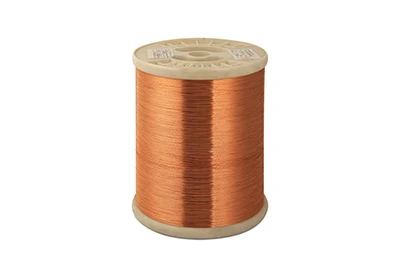
- High-purity copper core: supports stable electrical interconnects and low-resistance requirements
- No surface coating: suitable for production lines with mature protective gas environments and established bare copper bonding processes
- Adjustable mechanical properties: BL, EL, and hardness can be tailored to match loop profile, pad structure, and bonding process
- Ideal for high-volume packaging: suited for projects focused on material cost, continuous production, and alternative supplier assessment
Product Showcase
4N/≥4N High-Purity Copper Wire
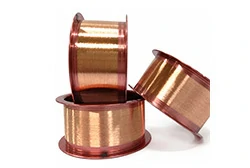
3N Copper Alloy Wire
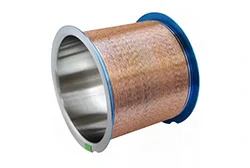
2N Copper Alloy Wire
Coated Copper Bonding Wire
Coated copper bonding wire combines the cost and conductivity benefits of copper with enhanced oxidation resistance, storage stability, and consistent bonding performance-ideal for applications requiring wider process windows and higher packaging reliability.
Contact us now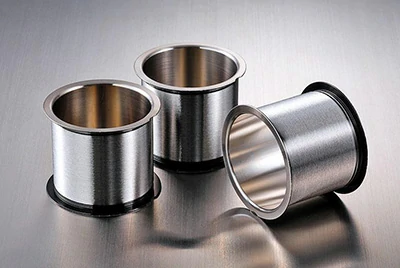
- Oxidation protection: reduces surface oxidation of the copper core
- More stable bonding: improves first bond (FAB) and second bond performance
- Balanced cost-performance: retains copper's conductivity and cost advantages
- Suitable for high-reliability packaging: enhances storage life, corrosion resistance, and long-term stability
Product Showcase
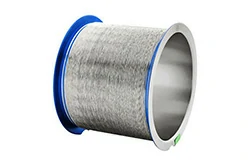
Pd Coated Copper Wire
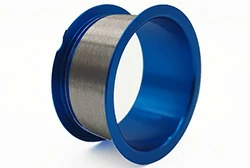
Au-Pd Coated Copper Wire
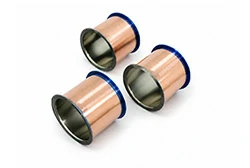
PCAR High-Reliability Copper-Based Bonding Wire
Specialty Copper-Based Bonding Wire
Specialty copper-based bonding wires are designed for power semiconductor and power module packaging, high-current interconnects, and packages requiring high mechanical reliability. They can be matched by wire diameter, alloy system, and mechanical properties.
Contact us now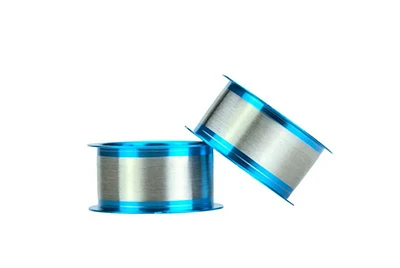
- High-current interconnects: larger diameters support higher current capacity
- High mechanical strength: improves tensile strength and loop stability
- Tunable performance: diameter, hardness, and BL/EL can be customized
- Specialized packaging compatibility: suitable for power devices and high-stress interconnects
Product Showcase
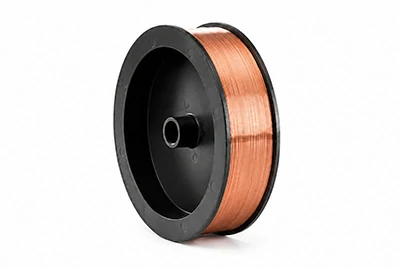
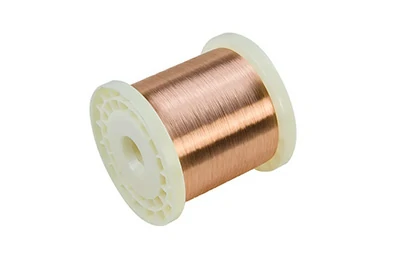
Copper Bonding Wire Specifications
Our copper-based bonding wires include bare copper, coated copper, and specialty copper alloy systems, customizable by material purity, surface structure, diameter, mechanical condition, and packaging requirements. Specific parameters vary by product series and are detailed in corresponding model datasheets.
Product Type: Bare copper, coated copper, specialty copper-based wire
Material: High-purity copper or copper alloy
Surface Structure: Bare, Pd-coated, Au-Pd-coated
Mechanical Condition: Standard, soft, high-strength
Fine Wire Diameter: 18–50 μm for CP/CS 4N copper wire
Power Wire Diameter: 5–20 mil for selected power-device copper wire
Customization: Diameter, BL, EL, hardness and winding format
Copper Bonding Wire Technical Parameters
The following parameters are based on CP (standard hardness) and CS (soft condition) 4N bare copper bonding wires referenced in documentation. Both have 99.99% copper content with total impurities below 0.01%. Mechanical properties for other copper-based products depend on specific models.
| Grade | Category | Key Features | Applications |
| CP | Pure Copper Bonding Wire | Good electrical and thermal performance; slower intermetallic compound growth; lower material cost | Discrete devices: TO, SOT, SOD; Integrated circuits: DIP, SIP, SOP, QFP; TR: DIP, SIP, SOP, QFP |
| CS | Soft Copper Bonding Wire | Good electrical and thermal performance; slower intermetallic compound growth; lower material cost; softer wire condition | Discrete devices: TO, SOT, SOD; Integrated circuits: DIP, SIP, SOP, QFP; TR: DIP, SIP, SOP, QFP |
Mechanical Properties:
| Diameter | mil | CP Minimum Breaking Load | CS Minimum Breaking Load | CP Elongation | CS Elongation |
| 18 μm | 0.7 | 3.0 gf | 3.0 gf | 8.0–14.0% | 8.0–15.0% |
| 20 μm | 0.8 | 4.0 gf | 4.0 gf | 9.0–15.0% | 9.0–16.0% |
| 23 μm | 0.9 | 6.0 gf | 6.0 gf | 9.0–17.0% | 9.0–18.0% |
| 25 μm | 1.0 | 8.5 gf | 8.5 gf | 9.0–18.0% | 9.0–19.0% |
| 28 μm | 1.1 | 10.0 gf | 10.0 gf | 9.0–19.0% | 9.0–20.0% |
| 30 μm | 1.2 | 10.0 gf | 10.0 gf | 10.0–20.0% | 10.0–22.0% |
| 35 μm | 1.4 | 11.0 gf | 11.0 gf | 12.0–22.0% | 12.0–23.0% |
| 38 μm | 1.5 | 15.0 gf | 15.0 gf | 13.0–23.0% | 13.0–24.0% |
| 50 μm | 2.0 | 28.0 gf | 28.0 gf | 15.0–25.0% | 15.0–26.0% |
Physical Properties:
| Density | 8.96 g/cm³ |
| Melting Point | 1083°C |
| Electrical Resistivity at 20°C | 1.75 μΩ·cm |
| Thermal Conductivity at 20°C | 401 W/m·K |
| Young's Modulus | 129.8 kN/mm² |
Wire diameter, breaking load, elongation, mechanical condition, and spooling format can be matched to your current specifications, package structure, and bonding process requirements. Final parameters are subject to product model and technical confirmation.
Copper Bonding Wire Advantages
- Made from 99.99% high-purity copper, offering excellent electrical and thermal conductivity along with material cost savings-ideal for gold wire replacement in high-volume packaging.
- Available in CP standard and CS soft variants, covering 18–50 μm diameters, with BL and EL tailored to pad design, loop profile, and bonding process.
- Controlled mechanical properties support low-loop, long-loop, and fine-pitch bonding while enhancing wire stability during molding.
- Backed by fine drawing, protective atmosphere annealing, precision spooling, and real-world bonding validation-to enable specification matching, sample testing, and volume production ramp-up.
Copper Bonding Wire Applications
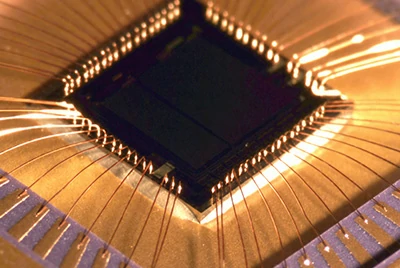
Copper bonding wire is used in IC, LED, and discrete device packaging. The appropriate product type and mechanical properties should be selected based on package design, pad metallization, wire diameter, and reliability requirements.
IC Packaging
Suitable for IC packaging interconnects in lead-frame-based packages such as DIP, SIP, SOP, SOIC, QFP, QFN, and DFN-including analog ICs, control ICs, power management ICs, and consumer electronics components.
LED Packaging
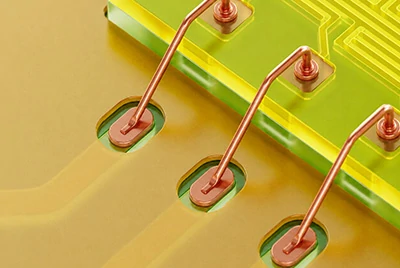
Applicable to LED packages already using copper wire or seeking to reduce gold wire material costs. Selection must consider chip pad metallization, loop geometry, and reliability requirements.
Discrete Device Packaging
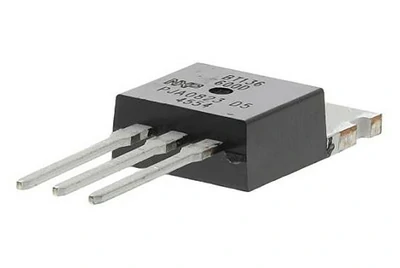
Used in TO, SOT, SOD packages for internal interconnects of diodes, transistors, rectifiers, and certain MOSFETs.
Automotive and Industrial Electronics
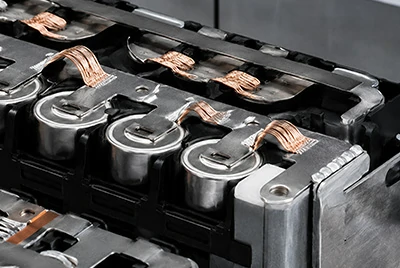
Applicable to select sensors, driver ICs, industrial control chips, and automotive electronic components-with specialized selection and validation based on temperature, humidity, lifetime, and batch traceability requirements.
Copper bonding wire selection must account for pad metallization, package structure, loop profile, and wire bonder compatibility. Chalco provides specification matching and sample validation based on your current wire diameter, breaking load, elongation, and equipment conditions.
Comparison of Bare Copper and Palladium-Coated Copper Bonding Wires
Bare copper bonding wire is better suited for projects focused on material cost reduction and already equipped with mature copper wire bonding processes. Palladium-coated copper bonding wire improves oxidation resistance and process stability through its surface palladium layer, making it more suitable for high-reliability packaging applications requiring stringent storage, continuous bonding, and long-term reliability.
| Comparison Criteria | Bare Copper Bonding Wire | Palladium-Coated Copper Bonding Wire |
| Primary Objective | Reduce bonding material cost | Enhance oxidation resistance and process stability |
| Surface Structure | Bare copper surface | Copper core with palladium coating |
| Material Cost | Relatively lower | Higher than bare copper wire |
| Oxidation Resistance | Sensitive to storage and handling conditions | Better surface protection capability |
| Forming Gas Requirement | Typically requires controlled forming gas atmosphere | Still requires evaluation based on equipment and process parameters |
| Stability After Package Opening | More dependent on packaging, storage, and on-site management | Generally offers more stable performance after opening |
| Bonding Process Window | Suitable for established bare copper bonding processes | Better suited for projects prioritizing continuous bonding stability |
| Typical Applications | IC, LED, and discrete device packaging | High-reliability ICs, automotive electronics, and demanding packaging applications |
| Selection Priorities | Cost and compatibility with existing processes | Oxidation resistance, storage stability, and long-term reliability |
When to Choose Bare Copper Bonding Wire: Bare copper bonding wire is ideal for projects primarily targeting material cost reduction and already equipped with mature copper wire bonding capabilities and controlled forming gas environments. It is particularly well-suited for high-volume packaging of standard ICs, LEDs, and discrete devices, and can be easily matched to existing specifications for rapid integration.
When to Evaluate Palladium-Coated Copper Bonding Wire: Consider palladium-coated copper bonding wire when your project prioritizes oxidation resistance, post-opening stability, FAB formation, second bond performance, wider process windows, or higher reliability-especially in automotive electronics and other stringent packaging applications.
Copper Bonding Wire Production and Customization Capabilities
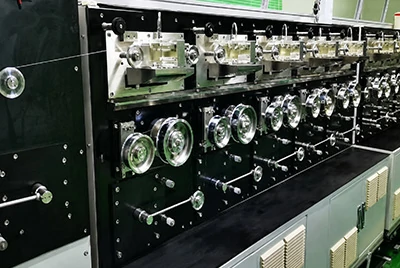
Chalco offers a complete production capability-from raw material melting and casting, multi-stage fine drawing, protective atmosphere annealing, to precision spooling and surface coating-and can tailor copper-based bonding wire solutions to match your package design, wire bonder, and current product specifications.
Full Manufacturing Capability: Covers melting/casting, coarse and fine drawing, annealing, coating, spooling, and final packaging.
Precise Diameter Control: Offers standard fine copper wires as well as thicker wires for power devices.
Mechanical Property Tuning: Can adjust diameter, breaking load, elongation, and temper (hard/soft condition).
Multiple Material Systems: Supports bare copper, palladium-coated copper, gold-palladium coated, and specialty copper alloy wires.
Custom Spooling Specifications: Can match spool type, winding pattern, and payout requirements to your wire bonding equipment.

Copper Bonding Wire Quality Control
Chalco implements quality control across material composition, dimensional accuracy, mechanical properties, electrical performance, and actual bonding behavior to ensure batch consistency and full traceability.
- Chemical composition, purity, and impurity analysis
- Diameter, surface finish, and spooling quality inspection
- Breaking load, elongation, and hardness testing
- Electrical resistivity and related electrical property verification
- FAB ball shape and bond pad appearance inspection
- Pull force, ball shear strength, and overall bonding performance validation



To minimize risks associated with new material introduction, we can supply copper bonding wire samples matched to your current wire diameter, breaking load (BL), elongation (EL), spool type, and package requirements for equipment compatibility, bond quality, loop profile, pull strength, and continuous bonding tests. Engineering or volume production batches are confirmed only after successful validation.
FAQ
Can copper bonding wire replace gold bonding wire?
Copper bonding wire can substitute gold wire in certain IC, LED, and discrete device packaging applications to reduce material costs. However, direct parameter-for-parameter replacement is not recommended. A broader gold, silver, copper, and aluminum bonding wire comparison should consider material characteristics together with the package and bonding process. Other material systems such as aluminum bonding wire should likewise be evaluated against the actual package conditions rather than treated as a parameter-for-parameter substitute. Sample validation is required, considering chip pad metallization, package structure, wire diameter, bonder type, and reliability requirements.
What's the difference between standard and soft temper copper bonding wire?
Standard temper copper wire offers higher mechanical strength, which helps maintain stable loop profiles. Soft temper copper wire provides greater flexibility and elongation, making it better suited for applications sensitive to pad stress or requiring fine loop adjustments. Selection should consider breaking load, elongation, pad structure, and bonding parameters together.
Does bare copper wire bonding require forming gas?
Yes. In ball bonding with bare copper wire, a controlled forming gas atmosphere is typically required during FAB formation to minimize oxidation at the wire tip, which can affect ball shape and bond stability. The specific gas type, flow rate, and EFO parameters should be optimized based on your wire bonder, capillary, and copper wire grade.
What wire diameters are available for copper bonding wire?
Standard CP and soft temper CS 4N bare copper bonding wires are commonly available in 18–50 μm (0.7–2.0 mil). Coated copper wires, thick wires for power devices, and specialty copper alloy wires have different diameter ranges, which can be confirmed based on your specific package and current-carrying requirements.
Can you provide copper bonding wire samples for testing?
Yes. Upon receiving your current wire type, diameter, breaking load, elongation, spool specification, package type, and wire bonder details, we can supply matched samples for FAB formation, bond quality, loop profile, pull strength, and continuous bonding performance validation.
Request Copper Bonding Wire Selection Support or Quotation
Please share your package type, wire bonder model, current bonding wire material (or target performance requirements). Chalco can recommend the optimal solution-whether bare copper, soft temper copper, palladium-coated copper, or specialty copper alloy-based on your package design, cost targets, oxidation resistance needs, and reliability criteria, and support sample testing through to volume supply.
- Package Type and Target Devices
- Current Bonding Wire Material or Part Number
- Wire Diameter, Breaking Load (BL), Elongation (EL), or Target Mechanical Properties
- Wire Bonder Model and Spool Specifications
- Required Sample Quantity or Estimated Annual Volume
Chalco can provide you the most comprehensive inventory of aluminum products and can also supply you customized products. Precise quotation will be provided within 24 hours.
Get a quote