Aramid honeycomb is a lightweight, non-metallic sandwich core material used in aerospace, rail transit and marine applications where weight reduction, electrical insulation and structural stability are required.
Chalco supplies both bare aramid honeycomb core and finished aramid honeycomb sandwich panels, with cut-to-size and contour machining support available based on customer drawings.
Product densities range from 29 to 144 kg/m³, with standard cured block dimensions of 2440 × 1220 × 914 mm.
What is aramid honeycomb?
Aramid honeycomb is a lightweight, non-metallic cellular material formed by impregnating aramid fiber paper with phenolic resin and curing it. Its hexagonal cell structure delivers excellent support and stability at low weight, making it widely used in composite sandwich constructions.
Unlike metallic cores, aramid honeycomb does not cause galvanic corrosion when paired with carbon fiber skins. It also offers good electrical insulation and low thermal conductivity. Due to its non-metallic nature and low dielectric properties, it is well-suited for radomes, antenna covers, and other electromagnetic-transparent structures.
Compared to aluminum honeycomb, aramid honeycomb is lighter, non-conductive, and eliminates the risk of galvanic corrosion in carbon fiber or composite structures. Compared to foam core, it generally offers better temperature resistance and higher specific strength-making it ideal for sandwich structures demanding lightweight design, flame retardancy, and structural stability.
The node adhesive and resin system can be selected to be mildew-resistant and non-corrosive to metal materials, making the core suitable for metal-skin sandwich panel structures.
Aramid honeycomb products available from Chalco
Chalco offers aramid honeycomb core, aramid honeycomb sandwich panels, and custom cutting and contour machining services tailored to procurement and processing requirements.
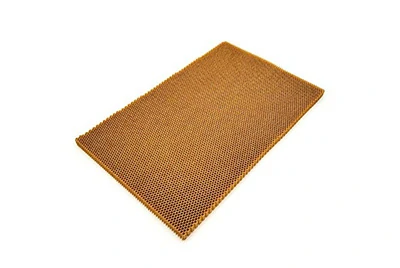
Aramid honeycomb core
Chalco provides aramid honeycomb core with densities from 29 to 144 kg/m³, cell wall lengths from 1.83 to 5.50 mm, seven cell sizes, and four cell shapes. Cut-to-size, slitting, and contour machining services are available per customer drawings.
Aramid honeycomb core is a bare cellular core material for composite panel manufacturers who bond it with aluminum sheets, composite skins, GFRP sheets or other skin materials to produce lightweight sandwich panels.
Aramid honeycomb sandwich panels
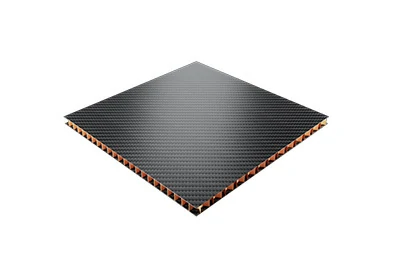
Aramid honeycomb sandwich panels are finished sandwich panels, also referred to as aramid honeycomb panels.
These panels are used in rail transit interiors, aircraft cabin components, marine bulkheads, and architectural interior systems.
Aramid honeycomb sandwich panels consist of an aramid honeycomb core, skin materials, and an adhesive system, forming a ready-to-use structural panel for direct application.
Cut-to-size and contour machining
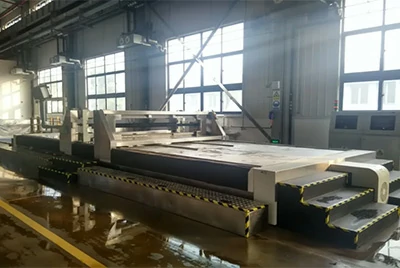
For projects requiring secondary panel fabrication, assembly, or structural component processing, Chalco provides cut-to-size, slitting, and contour machining services based on customer drawings.
Machined aramid honeycomb cores or panels can better match customer requirements for dimensions, shape, installation position and assembly needs, reducing the need for secondary processing.
Key characteristics of aramid honeycomb
Aramid honeycomb delivers strong structural support, electrical insulation, and environmental stability at low weight.
Chalco's aramid honeycomb products have a density range of 29–144 kg/m³, operate reliably between -55°C and 180°C, and exhibit a dielectric constant below 1.50 per GB/T 5597-making them suitable for lightweight sandwich structures, insulating cores, and electromagnetic-transparent applications.
| Advantage | What it means for your project |
| Lightweight and high strength | Helps reduce structural weight while maintaining the load-bearing capacity required for sandwich constructions. |
| Flame retardancy | The material is self-extinguishing and can support EN45545-compliant fire-resistant sandwich panel designs upon request. |
| Electrical insulation | Ideal for composite structures requiring non-metallic, insulating cores-especially those using carbon fiber or operating in electrically sensitive environments. |
| Low dielectric constant | Aramid honeycomb has a dielectric constant below 1.50, making it suitable for radomes, antenna covers, and electromagnetic-transparent structures. |
| Dimensional stability | Maintains structural integrity across a wide temperature range from -55°C to 180°C. |
| Environmental resistance | Resists moisture, acidic/alkaline environments, and typical corrosion factors encountered in non-metallic core applications. |
Final panel performance depends on density, cell size, skin material, and adhesive system.
Performance under temperature and moisture:
The ability of aramid honeycomb to retain performance under varying environmental conditions is a key consideration for material selection in aerospace, rail transit, and marine projects.
Chalco's aramid honeycomb core retains over 65% of its room-temperature flatwise compressive and shear properties at 180°C, over 80% at -55°C, and over 90% under wet-condition testing.
For high-temperature applications, grade 1.83-96 aramid paper honeycomb retains approximately 67.3% of its compressive strength at 177°C, providing a reliable reference for high-temperature sandwich structure design.
For complete typical or minimum mechanical property data, please visit Chalco's aramid honeycomb core product page or submit your project requirements to receive material selection support.
Aramid honeycomb vs aluminum honeycomb: when to choose which
Both aramid honeycomb and aluminum honeycomb are common lightweight sandwich cores, but they suit different application scenarios.
Material selection should consider not only weight and strength, but also skin compatibility, electromagnetic performance, fire safety, stiffness needs, cost, and downstream honeycomb core joining methods.
Chalco supplies both aramid and aluminum honeycomb, supporting customers who need to compare or combine both core types within a single project.
| Selection criterion | Aramid honeycomb | Aluminum honeycomb |
| Density | 29–144 kg/m³ | Typically 30–200 kg/m³ |
| Compressive performance | Good strength-to-weight performance; final value depends on density and cell size | Good compressive performance; widely used in metal-skin sandwich panels |
| Galvanic corrosion with carbon fiber | No galvanic corrosion risk | Isolation layer may be needed when used with carbon fiber skins |
| Electromagnetic transparency | Excellent; dielectric constant < 1.50 | Electrically conductive, not suitable for electromagnetic-transparent structures |
| Flame resistance | Self-extinguishing and suitable for fire-resistant sandwich design when specified | Does not combust, but aluminum may lose strength or melt at high temperature |
| Shear modulus | Lower than aluminum honeycomb in many stiffness-critical designs | Higher shear modulus, suitable for applications requiring higher panel stiffness |
| Cost | Usually higher | Usually more cost-effective |
| Best suited for | Radome, aerospace interiors, rail transit panels, composite sandwich panels | Architecture, metal-skin panels, energy absorption and stiffness-critical structures |
If your project prioritizes lightweight design, electrical insulation, electromagnetic transparency, or compatibility with carbon fiber composites, aramid honeycomb is typically the better choice. If stiffness, cost efficiency, metal-skin bonding, or energy absorption are primary concerns, aluminum honeycomb may be more suitable.
If you're comparing aramid honeycomb core and aluminum honeycomb core, please share your application scenario, panel materials, thickness, density, and operating environment. Chalco can help evaluate both core options and recommend a suitable structural solution.
Applications of aramid honeycomb
Aramid honeycomb is suitable for projects requiring lightweight construction, flame retardancy, electrical insulation, electromagnetic transparency, or non-metallic sandwich structures.
Selection for different applications can be tailored based on density, cell size, skin material, adhesive system, and certification requirements.
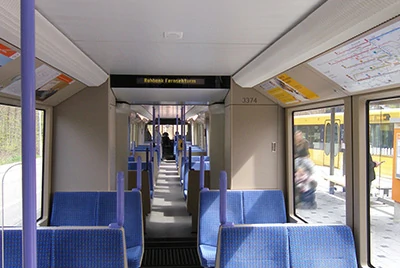
Rail Transit
Used in side walls, ceilings, partitions, and floor substrates of rail vehicles to reduce overall weight. The material can meet EN 17460 Class A1 or EN45545 fire safety requirements upon specification.

Aerospace and Aviation Interiors
Suitable for aircraft interior sandwich structures such as overhead bins, partitions, flooring, door liners, and cabin panels. Low density, flame retardancy, and dimensional stability support lightweight design goals.
Marine and Yacht
Used in marine bulkheads, yacht decks, hull liners, and interior composite panels. Its non-metallic structure avoids metal corrosion risks; however, proper edge sealing and moisture protection should be implemented in actual use.


Motorsport and Sports Equipment
Suitable for motorsport body panels, lightweight enclosures, sports equipment, and energy-absorbing structures. Aramid honeycomb delivers structural support and energy absorption performance at low weight.
Radome and Antenna Structures
Aramid honeycomb features a low dielectric constant-typically below 1.50-making it ideal for radomes, antenna covers, communication panels, and other electromagnetic-transparent sandwich structures.

For density, cell size, thickness, and performance selection tailored to your specific application, please review the Chalco aramid honeycomb core product page or send your project drawings and requirements for expert recommendations.
Related honeycomb product solutions
In addition to aramid honeycomb core and aramid honeycomb sandwich panels, Chalco offers a range of honeycomb core materials and sandwich panels, along with custom fabrication solutions based on your structural design, face sheet material, operating environment, and performance requirements.
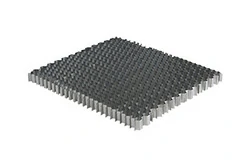
Aluminum Honeycomb Core
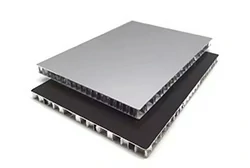
Stainless Steel Honeycomb
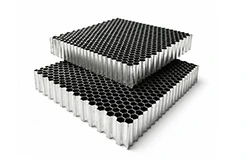
Carbon Fiber Honeycomb
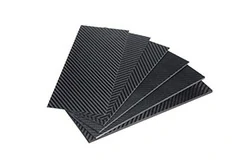
Honeycomb Seal
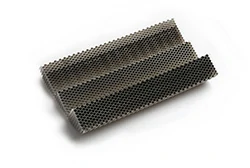
High Temperature Honeycomb
Unsure whether to choose aramid, aluminum, stainless steel, or carbon fiber honeycomb structures?
Provide your application scenario, face sheet material, thickness, density, operating temperature, and drawing requirements. Chalco can help match the right honeycomb core, sandwich panel configuration, or custom fabrication solution.
FAQs about aramid honeycomb
What is aramid honeycomb?
Aramid honeycomb is a lightweight, non-metallic cellular material made from aramid fiber paper and phenolic resin, featuring a hexagonal cell structure.
It is commonly used as a core material in composite sandwich structures for aerospace, rail transit, marine, radomes, and lightweight panels.
What are the disadvantages of aramid honeycomb?
Aramid honeycomb has an open-cell structure and requires proper edge sealing and moisture protection in real-world applications. Compared to aluminum honeycomb, it typically has a higher cost. If continuous service temperatures exceed 180°C, the compatibility of the material, adhesive, and face sheets should be re-evaluated.
What is aramid material?
Aramid material refers to aromatic polyamide fibers, commonly available as para-aramid and meta-aramid. It offers high strength, heat resistance, and flame-retardant properties.
Aramid honeycomb is one of the key applications of aramid materials in lightweight sandwich structures.
What is the difference between aramid honeycomb core and aramid honeycomb panels?
Aramid honeycomb core is the bare honeycomb material, intended for customers who bond their own skins, adhesives, and face sheet systems. Aramid honeycomb sandwich panels-also referred to as aramid honeycomb panels-are finished composite panels that include the core, face sheets, and adhesive system, ready for direct installation or further assembly.
Is aramid honeycomb better than aluminum honeycomb?
It's not a matter of which is better, but which suits your project needs. Aramid honeycomb is preferred for lightweight, electrically insulating, RF-transparent, carbon fiber-reinforced, and fire-resistant sandwich structures. Aluminum honeycomb is typically better suited for applications requiring higher stiffness, cost efficiency, metal face sheet bonding, or energy absorption.
What industries use aramid honeycomb?
Aramid honeycomb is widely used in rail transit, aerospace, marine, motorsport, sports equipment, radomes, and antenna structures.
Appropriate specifications can be selected based on density, cell size, thickness, face sheet material, and certification requirements for each project.
Request aramid honeycomb specifications or a quote
Chalco supplies aramid honeycomb core and aramid honeycomb sandwich panels for aerospace, rail transit, marine, and composite sandwich panel projects.
For bare core material, please specify your required cell size, density, thickness, cell shape, and quantity. For finished panels, provide the application, panel construction, skin material, and performance requirements.
For custom sizes, cut-to-size parts, or contour-machined honeycomb components, you may also submit drawings or samples.
Chalco can review feasibility and provide suitable aramid honeycomb specifications for your RFQ.
Chalco can provide you the most comprehensive inventory of aluminum products and can also supply you customized products. Precise quotation will be provided within 24 hours.
Get a quote