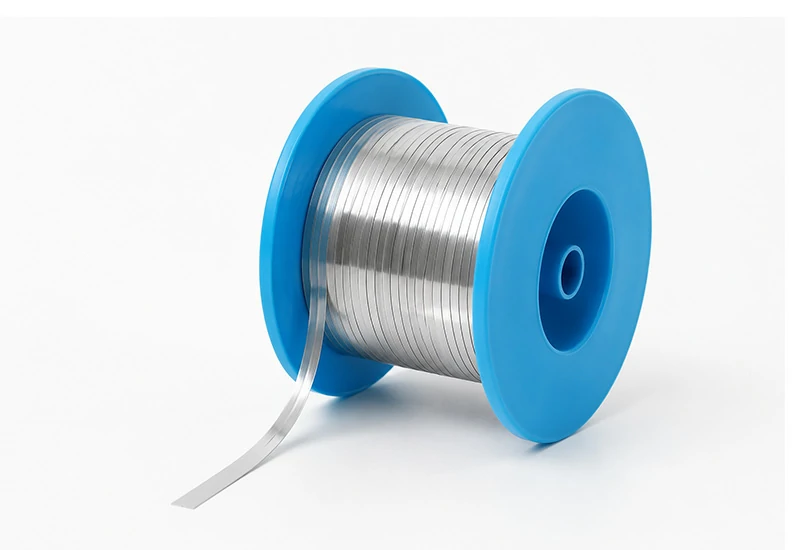
Bonding ribbon is a semiconductor interconnect material with a rectangular cross-section, establishing high-current, low-inductance electrical connections between dies and substrates, lead frames, or terminals via ultrasonic wedge bonding.
Within Chalco's broader die-to-package bonding materials range, Henan Chalco supplies bonding ribbon in four materials-aluminum, gold, copper, and silver-and provides engineering review and quotations based on width × thickness × spool specifications, compatible with mainstream wedge bonders.
This page refers specifically to bonding ribbon for semiconductor packaging-not PV solar ribbon for photovoltaic modules, grounding strap for electrical engineering, or adhesive tape.
What is ribbon bonding?
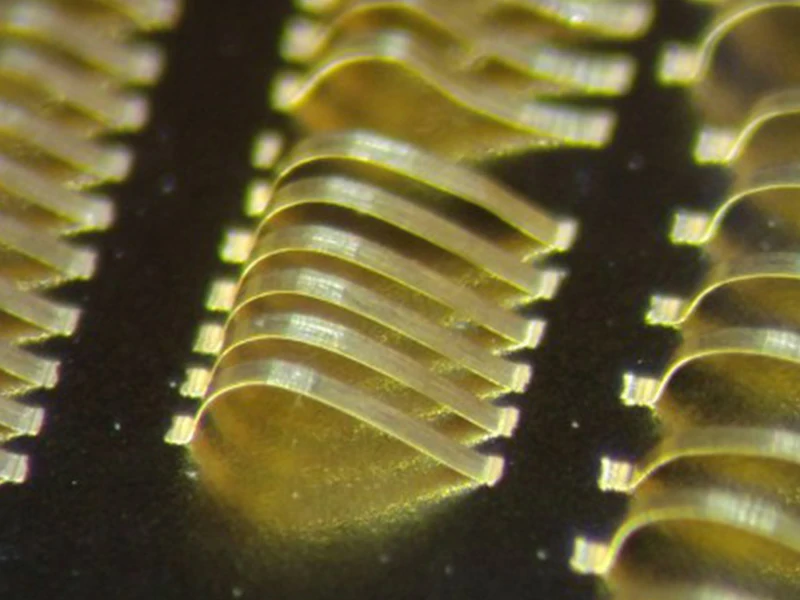
Ribbon bonding is a type of wedge bonding that uses flat, rectangular metal ribbon instead of traditional round wire for interconnects. Under the same current requirements, a single ribbon can often replace multiple wires, reducing the number of bonds, loop height, and improving stability.
Published comparative studies on ball bonding versus wedge bonding also indicate that wedge bond pads can be as small as approximately 1.2 times the ribbon width, enabling more compact bond pad layouts.
Aluminum, gold, copper and silver bonding ribbon at a glance
Henan Chalco supplies bonding ribbon in four materials, each suited to a different point in the packaging chain.
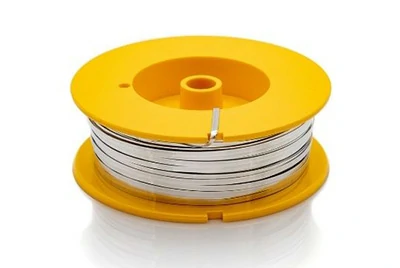
Power modules and battery packs; room-temperature ultrasonic bonding.
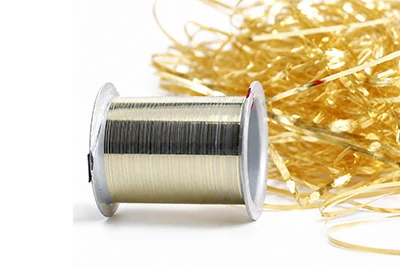
Gold ribbon
The standard above 10 GHz, where surface area drives high-frequency performance.
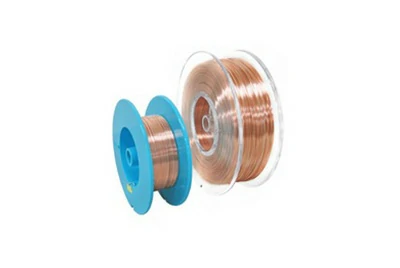
Copper ribbon
Higher conductivity than gold, at lower cost.
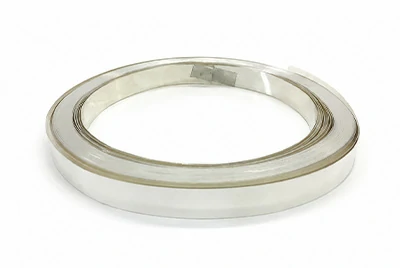
Silver ribbon
High conductivity and thermal performance in one material.
Each material is available across the width, thickness, tolerance and spool ranges below - jump to a specific material for application detail, or go straight to the specification table to size your ribbon.
Bonding ribbon specifications, sizes and tolerances
Standard supply ranges for all four materials
Dimensions are primarily in mm, with mil equivalents provided for easy conversion:
| Material | Width | Thickness | Spool length | Spool type |
| Aluminum ribbon | 0.50–2.03 mm (approx. 20–80 mil) | 0.076–0.305 mm (3–12 mil) | 90–300 m | 88/120, 3.5″ |
| Gold ribbon | 0.05–1.5 mm (approx. 2–60 mil) | 0.013–0.05 mm (approx. 0.5–2 mil) | 100 m | AL-2 / AL-4 |
| Copper ribbon | 0.50–2.00 mm | 0.1–0.3 mm | 300 m | 88/120 |
| Silver ribbon | 0.50–2.00 mm | 0.1–0.3 mm | 300 m | 88/120 |
Dimensional tolerances
Aluminum and copper ribbon: width tolerance ±0.05 to ±0.10 mm, thickness tolerance ±0.01 to ±0.03 mm;
Gold ribbon offers higher precision, with narrow-width options achieving width tolerance down to ±0.005 mm and thickness tolerance down to ±0.0013 mm (corresponding to the 0.0127 mm or 0.5 mil thickness range).
Mechanical properties of aluminum ribbon
| Width × Thickness (mm) | Width × Thickness (mil) | Tensile strength | Elongation | Spool length |
| 0.508 × 0.1016 | 20 × 4 | ≥250 cN | ≥15% | 100 m |
| 1.016 × 0.1016 | 40 × 4 | 420–720 cN | ≥15% | 300 m |
| 1.524 × 0.1524 | 60 × 6 | 1050–1450 cN | ≥15% | 200 m |
| 2.032 × 0.3048 | 80 × 12 | 2200–3700 cN | ≥15% | 90 m |
The mechanical properties listed above are standard values and can be adjusted according to customer requirements. Final specifications are subject to batch-specific shipping documentation.
What to Send for a Quote: material (Al / Au / Cu / Ag), width × thickness, tolerance requirements, spool type, bonder model, and monthly volume.
Have your specs ready? Send us your required width × thickness and spool type for a quick engineering review.
Aluminum bonding ribbon for power modules and battery interconnects
Aluminum bonding ribbon is the primary interconnect material in power semiconductor packaging. Typical bonding locations include connections between IGBT die electrodes and terminals, between die electrodes and DBC substrates, and in sensors and various power device packages.
On a single bond pad, one wide aluminum ribbon can typically replace multiple heavy aluminum wires, reducing the number of bonds, shortening cycle time, and decreasing the number of interfacial connections.
Aluminum ribbon supports room-temperature ultrasonic wedge bonding, eliminating the need for heated stages and simplifying production line configuration.
The ribbon features smooth, burr-free edges and tightly controlled width consistency-critical for high-volume manufacturing stability. Uniform width and absence of burrs help reduce wedge snagging and associated unplanned downtime.
In battery module production lines, aluminum ribbon is also used for interconnecting cells to busbars and for sampling connections in CCS integrated busbars, making it an increasingly common interconnect choice in EV and energy storage packaging. The base material is high-purity aluminum and is available to specification.
Gold bonding ribbon for RF and microwave applications
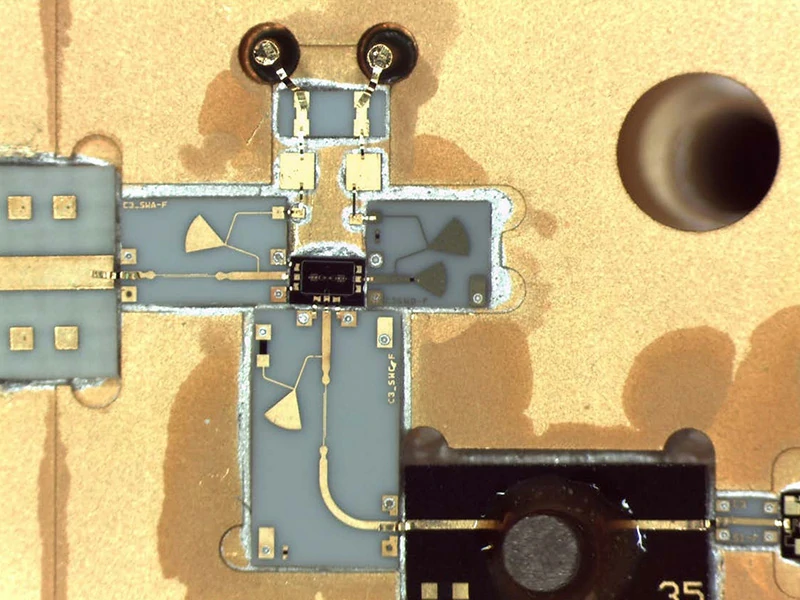
In high-frequency applications, gold bonding ribbon benefits from the skin effect: above 10 GHz, the skin depth of gold and copper conductors is less than 1 µm, confining current flow to the conductor surface, rendering the core of round wires ineffective for high-frequency transmission.
The rectangular cross-section provides greater surface area, resulting in lower effective resistance. Published research measuring various bonding structures up to 20 GHz further confirms that high-frequency performance depends primarily on conductor surface area, not cross-sectional area. This means gold ribbon can achieve comparable high-frequency performance with a smaller cross-section than thick round wire, helping reduce gold usage per bond-a direct cost advantage for material-sensitive RF production lines.
Available in widths from 0.05–1.5 mm (approx. 2–60 mil) and thicknesses from 0.0127–0.05 mm (approx. 0.5–2 mil), with thickness tolerance down to ±0.0013 mm, suitable for MMICs, microwave components, laser and optical communication devices, and SAW devices.
Note that gold ribbon bonding typically employs thermosonic bonding (requiring a heated stage), unlike aluminum ribbon's room-temperature process. Purity is as specified, and final mechanical parameters are provided per batch documentation.
Copper and silver bonding ribbon
Copper bonding ribbon offers higher electrical conductivity than gold and significantly lower cost, making it ideal for high-current, cost-sensitive power packaging applications.
Published studies on rolled and annealed copper bonding ribbon show that rolling and annealing parameters directly determine mechanical properties, surface quality, and resistance consistency. Annealed copper ribbon exhibits resistivity on the order of 3.5×10⁻⁸ Ω·m (per published research), forming the basis for consistent mass production. Supplied in widths of 0.50–2.00 mm and thicknesses of 0.1–0.3 mm.
Silver bonding ribbon delivers excellent electrical and thermal conductivity, with the same supply dimensions as copper ribbon (0.50–2.00 × 0.1–0.3 mm). Detailed finished product parameters are available upon request. Copper, silver, and aluminum ribbons all support room-temperature ultrasonic bonding.
Ribbon bonding vs wire bonding and other interconnects
The choice between ribbon and wire depends on four key factors: current capacity, frequency, bond pad layout, and equipment compatibility:
| Interconnect method | Current capacity | Loop height | High-frequency performance | Bonds per pad | Typical applications |
| Bonding ribbon | High | Low and stable | Good (large surface area) | Few | Power modules, RF/microwave, battery interconnects |
| Heavy Al wire | Medium (multiple wires in parallel) | Medium | Average | Multiple | Traditional power modules |
| Fine wire ball bonding | Low | Medium | Design-dependent | Multiple | Fine-pitch, high I/O ICs |
| Cu clip | Very high | Low | - | Single-step forming | High-current discrete devices (requires die development) |
| Cu pillar / flip-chip | High density | No loop | Good | - | Advanced packaging (non-wire-bond family) |
Fine-pitch, high I/O IC packaging should still use fine wire ball bonding or flip-chip solutions; ribbon is not a substitute for these.
Ribbon bonding requires deep-access wedge bond heads; existing ball bonders cannot be directly retrofitted.
Ultra-wide ribbons have limited spool lengths, so ultra-high-throughput lines should factor in spool change frequency during evaluation.
Process and equipment compatibility
Henan Chalco bonding ribbon is compatible with mainstream deep-access wedge bonders.
Temperature windows vary by material: aluminum / copper / silver ribbon supports room-temperature ultrasonic bonding; gold ribbon typically uses thermosonic bonding. Wedge tools are selected per industry practice: tungsten carbide wedges are commonly used for aluminum ribbon, while titanium carbide or ceramic tools are commonly used for gold ribbon (commonly used options-final selection subject to equipment and process validation).
Available spool types include 88/120, 3.5″, and AL-2/AL-4, compatible with mainstream ribbon feeders; aluminum/copper/silver ribbons are supplied in reels up to 300 m to help reduce spool change frequency (gold ribbon is 100 m per spool).
Quality assurance, supply options and RFQ boundaries
Supply is based on customer specifications: delivered according to width × thickness × tolerance and designated spool type.
- Bonding ribbon product series have been verified by third-party inspection from China CEPREI Laboratory;
- Quality and environmental management systems are certified to ISO 9001 / ISO 14001;
- Our team has actively participated in drafting multiple national standards for bonding materials.
- A dimensional inspection report and COC can be provided with each lot (each lot can be quoted with dimensional inspection report and COC).
- MOQ and lead time are confirmed during order review.
Products on this page are supplied based on specification review, targeting high-volume semiconductor packaging production lines-not spot-market retail spools.
Related products
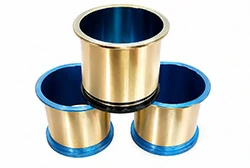
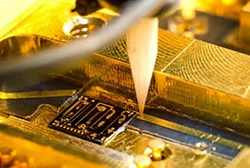
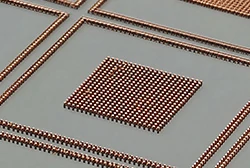
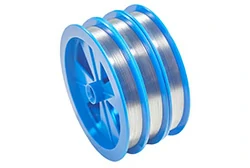
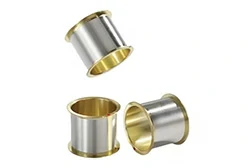
Bonding ribbon covers the wide, flat end of interconnect - for round-wire and finer-pitch needs, Henan Chalco supplies the full bonding wire range in the same four metals, plus copper pillar for advanced flip-chip-style packaging:
FAQ
What is bonding ribbon?
Bonding ribbon is a rectangular-cross-section interconnect material used in wedge bonding to establish high-current, low-inductance connections between die and substrate/terminals. Materials include aluminum, gold, copper, and silver.
Is bonding ribbon the same as PV solar ribbon or grounding bonding straps?
No. PV solar ribbon is tinned copper strip used for interconnecting photovoltaic cells; grounding bonding strap is a flat conductor used in electrical grounding systems. The bonding ribbon on this page is a semiconductor packaging interconnect material-these three serve entirely different applications.
Can one ribbon replace multiple bonding wires?
Typically, yes. A single wide ribbon on the same bond pad can often replace multiple thick aluminum wires, reducing bonding cycles and interface count. The specific replacement solution depends on current-carrying requirements and bond pad design-please submit your specifications for review.
Why is gold ribbon preferred above 10 GHz?
Due to the skin effect: at high frequencies, current concentrates near the conductor surface. The rectangular cross-section provides greater surface area, resulting in lower effective resistance. Published studies show skin depth falls below 1 µm above 10 GHz.
Does ribbon bonding require heat?
It depends on the material: aluminum, copper, and silver ribbon support room-temperature ultrasonic bonding; gold ribbon typically uses thermosonic bonding, which requires a heated stage.
What spool formats and lengths are available?
Spool types include 88/120, 3.5″, and AL-2/AL-4; reel lengths range from 90–300 m (gold ribbon is 100 m per spool), matched to specifications and equipment feeder compatibility.
What tolerances are achievable?
Aluminum / copper ribbon width tolerance ranges from ±0.05 to ±0.10 mm; narrow-width gold ribbon can achieve width tolerance down to ±0.005 mm and thickness tolerance down to ±0.0013 mm.
Do you supply aluminium bonding ribbon in custom sizes?
Yes. Aluminium (aluminum) ribbon is available within the range of 0.50–2.03 mm width × 0.076–0.305 mm thickness per specification, with mechanical properties adjustable upon request.
Request a quote
Send your ribbon specification-material, width × thickness, tolerance, spool type-for an engineering review and quotation.
Including your bonding equipment model and monthly usage volume will accelerate specification matching and sample arrangement.