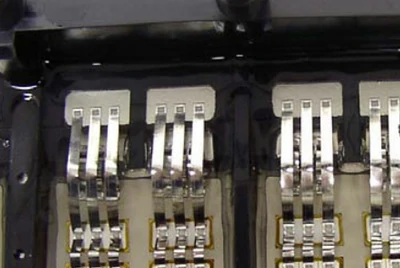
Aluminum bonding ribbon is a flat, rectangular semiconductor bonding ribbon used for internal interconnects in power semiconductors. It is typically bonded via ultrasonic wedge bonding to connect power dies, DBC/AMB substrates, lead frames, and module terminals. Its larger conductive cross-section and wider bond interface make it suitable for high-current connections in IGBTs, SiC devices, power MOSFETs, and high-power modules.
Within Chalco's broader die-to-package bonding materials range, specifications for aluminum bonding ribbon can be matched based on connection current, pad size, module space, and existing ribbon wedge-bonding equipment. We also support material substitution, sample bonding trials, second-source verification, and volume production ramp-up.
Aluminum Bonding Ribbon Products
We supply flat, high-purity aluminum bonding ribbon and optional aluminum alloy ribbon. Specifications cover a range of widths, thicknesses, breaking loads (BL), elongation (EL), spool types, and single-spool lengths. Material temper and mechanical properties can be adjusted to meet specific requirements.
Material Type: High-purity aluminum and optional aluminum alloys
Standard Width: 20–80 mil (approximately 0.508–2.032 mm)
Standard Thickness: 3–12 mil (approximately 0.0762–0.3048 mm)
Breaking Load: Matched to width, thickness, and material temper
Elongation: Minimum 15% for standard grades
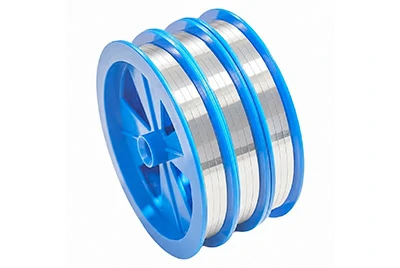
Spool Options: 3.5A and 3.5B
Single-Spool Length: Standard range from 90 to 300 m
Customization: Width, thickness, BL, EL, spool type, and single-spool length
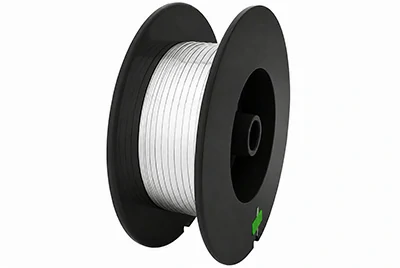
High-Purity Aluminum Bonding Ribbon
Made from high-purity aluminum, this ribbon offers excellent electrical conductivity, ductility, and softness. It is ideal for high-current applications and power packages requiring low pad stress and stable wedge bonding performance.
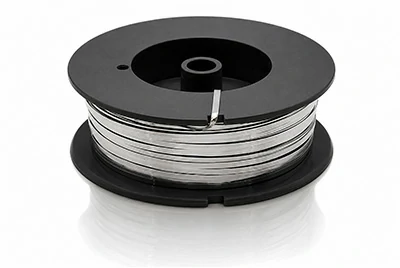
Aluminum Alloy Bonding Ribbon
Strength, elongation, and environmental resistance are tuned through alloy composition and temper. This option suits power modules demanding enhanced mechanical stability, corrosion resistance, or long-term reliability.
Aluminum Bonding Ribbon Aluminum Bonding Ribbon
| Width (mil) | Width (mm) | Thickness (mil) | Thickness (mm) | Spool | Breaking Load (cN) | Elongation | Single-Spool Length (m) |
| 20 | 0.508 | 4 | 0.1016 | 3.5B | 250 min | 15% min | 100 |
| 30 | 0.762 | 3 | 0.0762 | 3.5B | 275–400 | 15% min | 100 |
| 30 | 0.762 | 4 | 0.1016 | 3.5B | 300–580 | 15% min | 100 |
| 40 | 1.016 | 4 | 0.1016 | 3.5A | 420–720 | 15% min | 300 |
| 40 | 1.016 | 6 | 0.1524 | 3.5A | 600–1100 | 15% min | 150 |
| 60 | 1.524 | 4 | 0.1016 | 3.5A | 600–1100 | 15% min | 250 |
| 60 | 1.524 | 6 | 0.1524 | 3.5A | 1050–1450 | 15% min | 200 |
| 80 | 2.032 | 6 | 0.1524 | 3.5A | 1800–2200 | 15% min | 150 |
| 80 | 2.032 | 8 | 0.2032 | 3.5A | 1450–2450 | 15% min | 100 |
| 80 | 2.032 | 10 | 0.2540 | 3.5A | 1800–3100 | 15% min | 100 |
| 80 | 2.032 | 12 | 0.3048 | 3.5A | 2200–3700 | 15% min | 90 |
Custom Specification Notes
Breaking load, elongation, spool type, and single-spool length vary with width, thickness, alloy composition, and mechanical property requirements. Specifications can be matched to existing ribbon grades, samples, pad dimensions, and ribbon wedge-bonding equipment. Final parameters are subject to the approved product specification sheet.
Advantages of Aluminum Bonding Ribbon
Aluminum bonding ribbon delivers high-current, compact internal interconnects for power modules through its flat cross-section, wide-thick geometry, and tunable mechanical properties.
Broad specification coverage: widths from 20–80 mil, thicknesses from 3–12 mil.
Selectable material performance: high-purity aluminum and optional aluminum alloys available.
Adjustable mechanical properties: BL, EL, and temper can be tailored to process requirements.
Stable surface and edges: flat, smooth, and low-burr profile ensures reliable unwinding and consistent wedge bonding.
Simplified internal interconnects: can replace multiple parallel thick aluminum wires in suitable designs.
Project integration support: sample bonding trials and substitution validation available with your equipment, wedge tools, and pad layout.
Selection and Wedge-Bonding Compatibility for Aluminum Bonding Ribbon
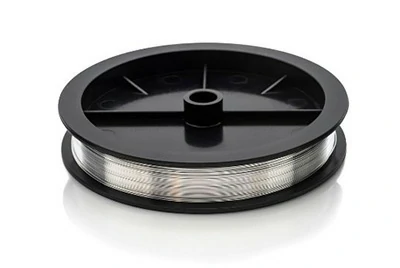
Aluminum bonding ribbon selection should consider connection current, pad structure, module space, mechanical requirements, and existing wedge-bonding equipment. For projects that are still comparing conductor material systems before fixing an aluminum-ribbon route, a broader comparison of gold, silver, copper, and aluminum bonding wires can provide additional material-selection context before ribbon-specific geometry and process requirements are evaluated.
1. Select Width and Thickness Based on Current
Determine the required cross-sectional area based on connection current, die power, and temperature rise limits. Then choose an appropriate width-thickness combination.
2. Match Pad and Module Structure
Confirm ribbon width, thickness, and routing layout based on pad size, terminal position, bond direction, and internal clearance.
3. Match Mechanical Properties
Define breaking load, elongation, and material temper based on bonding force, loop height design, and reliability requirements.
4. Confirm Equipment and Tooling
Verify compatibility with your ribbon bonder, wedge tool, guide, spool type, and unwinding direction. Validate process suitability through sample bonding trials.
For a broader wire-versus-ribbon comparison, choose Aluminum Bonding Wire when flexible routing and established multi-wire parallel structures are needed. Choose aluminum bonding ribbon when a flat cross-section, wide bond interface, and compact power interconnect are required.
Application Solutions for Aluminum Bonding Ribbon
Aluminum bonding ribbon is suitable for various power semiconductor packaging applications and high-power conversion modules. Specifications can be matched to die current, pad layout, module space, and wedge-bonding process.
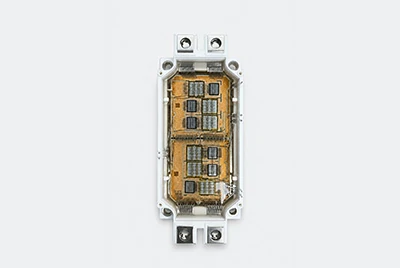
IGBT Power Modules
Used for high-current interconnects between IGBT dies, diodes, substrates, and module terminals.
Match width and thickness to die current and pad size
Supports die-to-substrate, die-to-terminal, and internal module interconnects
SiC Power Modules
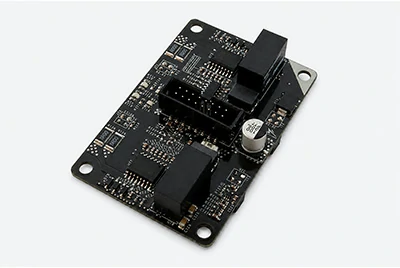
Designed for high-power-density SiC modules; ribbon specifications are matched to module architecture, operating temperature, and thermal cycling reliability.
Cross-sectional area, BL, EL, and temper can be adjusted
Sample bonding and packaging process validation supported
Power MOSFET and Diode Modules
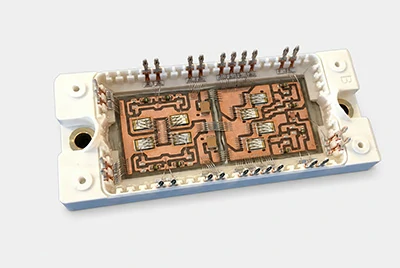
Offers various width-thickness combinations to match power die pads and connection current.
Suitable for die-to-lead-frame or die-to-terminal connections
Can reduce the number of parallel thick aluminum wires in certain designs
Automotive Power Electronics
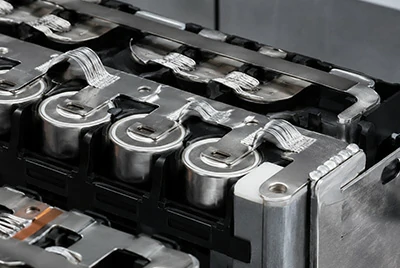
Applicable to traction inverters, onboard chargers, DC-DC converters, and other automotive power modules.
Supports automated wedge bonding and batch consistency requirements
Compatible with second-source qualification and existing specification substitution validation
Industrial Inverters and Motor Drives
For industrial inverters, motor drives, and high-power control modules, cross-sectional area can be matched to current rating and module space constraints.
Spool types and single-spool lengths optimized for continuous production
Enhances unwinding, routing, and ribbon wedge-bonding compatibility
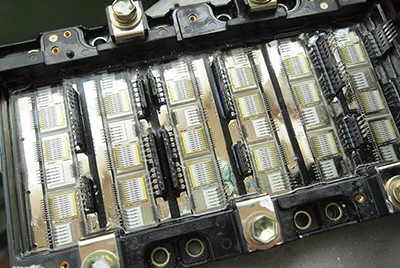
Renewable Energy and Traction Power Modules
Suitable for inverters, energy storage, wind power, and rail traction systems.
Material and mechanical properties can be matched to long-term operating environments
Supports high-current, compact internal interconnects in power modules
Production Capacity and Quality Control
We operate integrated facilities for melting, precision rolling, annealing, edge conditioning, spooling, and spool cleaning. Batch consistency is ensured through material analysis, dimensional inspection, tensile testing, and bonding validation. Key process controls include width, thickness, cross-sectional stability, BL, EL, surface cleanliness, flatness, edge burr, spooling quality, and full batch traceability.
Raw Material and Process Control: Full-process management from alloy composition and rolling through annealing to precision spooling.
Dimensional and Mechanical Testing: Verification of width, thickness, breaking load, elongation, and cross-sectional uniformity.
Surface and Edge Inspection: Control of cleanliness, flatness, edge quality, and burr levels.
Spooling and Bonding Validation: Assessment of spool integrity, unwinding direction, winding stability, and sample bonding performance.
Sample Trial Support: Samples matched to existing specifications are available for small-batch ribbon wedge-bonding evaluation.
Second-Source and Volume Ramp-Up: Formal specifications, packaging, traceability, and volume supply plans are confirmed after successful validation.
Samples and bonding trials are available prior to volume ramp-up for specification matching, process evaluation, and second-source verification. Contact us for details.
FAQ
1. What is aluminum bonding ribbon used for?
What is aluminum bonding ribbon primarily used for?
Aluminum bonding ribbon is primarily used for high-current internal interconnects in IGBTs, SiC devices, power MOSFETs, diodes, and other power modules. It connects dies, DBC/AMB substrates, lead frames, and module terminals.
2. What aluminum bonding ribbon sizes are available?
What specifications are available for aluminum bonding ribbon?
Standard width ranges from 20–80 mil (approximately 0.508–2.032 mm); standard thickness ranges from 3–12 mil (approximately 0.0762–0.3048 mm). Spool, BL, EL, and single-axis lengths can be matched to specific requirements.
3. How do I select aluminum bonding ribbon width and thickness?
How do I select the width and thickness of aluminum bonding ribbon?
Select the cross-sectional area and width-thickness combination based on connection current, allowable temperature rise, pad size, module space, and bonding equipment. Existing product specifications or samples can also serve as a reference for matching.
4. Is aluminum bonding ribbon suitable for ultrasonic wedge bonding?
Is aluminum bonding ribbon suitable for ultrasonic wedge bonding?
Yes. During selection, confirm compatibility with the ribbon bonding machine, wedge tool, guide, spool, payout direction, and ultrasonic process parameters. Sample trial bonding is recommended to verify suitability.
5. What is the difference between aluminum bonding wire and ribbon?
What is the difference between aluminum bonding wire and aluminum bonding ribbon?
Within the broader semiconductor bonding wire family, aluminum bonding wire has a circular cross-section, offering flexible routing and suitability for multi-wire parallel bonding. Aluminum bonding ribbon features a flat rectangular cross-section, providing a wider bond interface and lower profile. In compatible module designs, a single aluminum ribbon can replace multiple large-diameter aluminum wires.
6. Can you match an existing specification and provide samples?
Can you match an existing specification and provide samples?
We can match specifications based on your existing ribbon width, thickness, BL, EL, spool type, and single-axis length. We also support sample or small-batch ribbon wedge bonding tests for material replacement and second-source validation.
Send your aluminum bonding ribbon specifications
Please provide your existing specification sheet, sample details, or power module application requirements. We can match aluminum bonding ribbon based on width, thickness, material, BL, EL, spool type, and bonding equipment, and support sample trial bonding, existing material replacement, and second-source validation.
When requesting a quote, please provide:
- Application device or module type
- Width and thickness
- Material or purity requirements
- Tensile strength and elongation
- Spool and single-axis length
- Ribbon bonding machine, wedge tool, or pad information
- Sample and purchase quantity
Chalco can provide you the most comprehensive inventory of aluminum products and can also supply you customized products. Precise quotation will be provided within 24 hours.
Get a quote