Gold bonding wire is a high-purity gold wire consumable within the semiconductor bonding wire family used for wire bonding in semiconductor packaging.
Henan Chalco supplies 4N (Au≥99.99%) and 2N (Au≥99%) pure gold bonding wire, with diameters covering 15–50 μm (0.6–2.0 mil), available in four grades — medium-high loop, medium-low loop, low-loop long-span, and low-elongation — matched to the different loop and span requirements of sensors, high-end LEDs, ICs, and high-reliability packaging.
Available for review and supply by diameter, purity, standard, or customer drawing, with inspection data provided per batch.
Gold bonding wire diameter, purity, and mechanical specifications
The gold bonding wire supplied by Henan Chalco covers two purity grades — 4N (Au≥99.99%, total impurities <0.01%) and 2N (Au≥99%) — with other purity levels available for review per project requirements.
Higher purity translates directly into more stable conductivity and more consistent free air ball (FAB) formation — the foundation for ball-size consistency and bonding yield in fine-pitch packaging.
2N provides a second purity tier while retaining the bonding maturity of gold-based material.
Gold bonding wire grade selection by loop height and application
By loop height and mechanical properties, 4N pure gold wire is divided into four grades, covering the loop requirements of different package types:
| Grade | Category | Loop height range | Characteristics | Typical package types |
| GDN | Medium-high strength gold wire | Above 180 μm | Medium-to-high strength, meets most packaging requirements | Sensors, high-end LED, IC (SOT / DIP / SOP / TSOP / TQFP / TSSOP / LOC, etc.) |
| GDU | Medium-low loop gold wire | 120–200 μm | Higher strength, low loop, longer span | IC packaging (QFN / LQFP / QFP / BGA / SBGA / TQFP / TSOP / CSP / PKG, etc.) |
| GDH | Low-loop gold wire | 80–150 μm | Low loop, long span | Large-scale integrated circuit packaging (QFP / BGA / SBGA / TQFP / TSOP / CSP / PKG, etc.) |
| GDL | Low-elongation gold wire | Above 180 μm | Maintains good, stable mechanical properties at low elongation | Military-grade sensors, discrete semiconductors, and similar packaging |
Break load reflects post-bond tensile and wire-breakage resistance, while elongation determines loop formability and the stability of long-span loops — matching the two is the core basis for grade selection.
For the low-elongation grade (GDL), elongation ranges from 1.0–3.0% (smaller diameters) to 2.0–10.0% (larger diameters), for packaging with tighter loop deformation control requirements.
Bonding performance
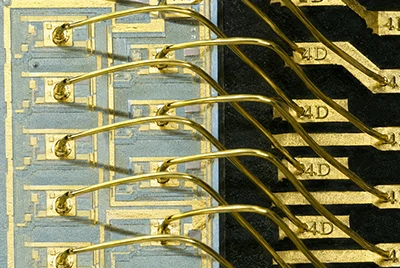
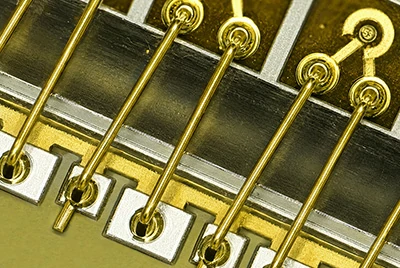
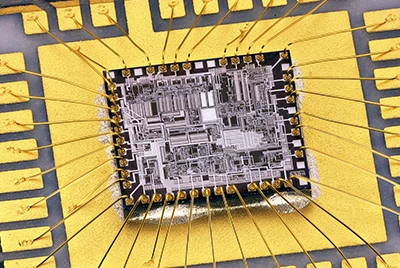
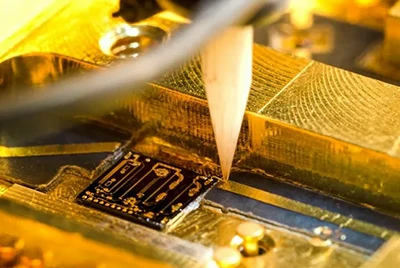
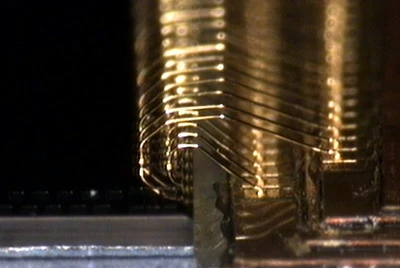
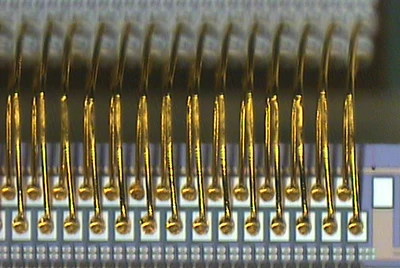
Gold bonding wire primarily uses the ball bonding process: the wire end is melted by electronic flame-off into a free air ball (FAB), forming the first bond (ball bond) on the chip pad; a capillary then routes the wire into a loop and forms the second bond (stitch / wedge bond) on the lead frame or substrate.
Bonding performance:
- Suited to large-scale, fine-pitch bonding;
- High strength and good loop stability;
- Reliable first-bond connection and high-strength second-bond connection;
- Wide bonding parameter window, with strong adaptability across different bonding equipment and process conditions.
Post-bond pull strength and shear strength both increase with wire diameter and can be matched to specific process acceptance criteria by diameter.
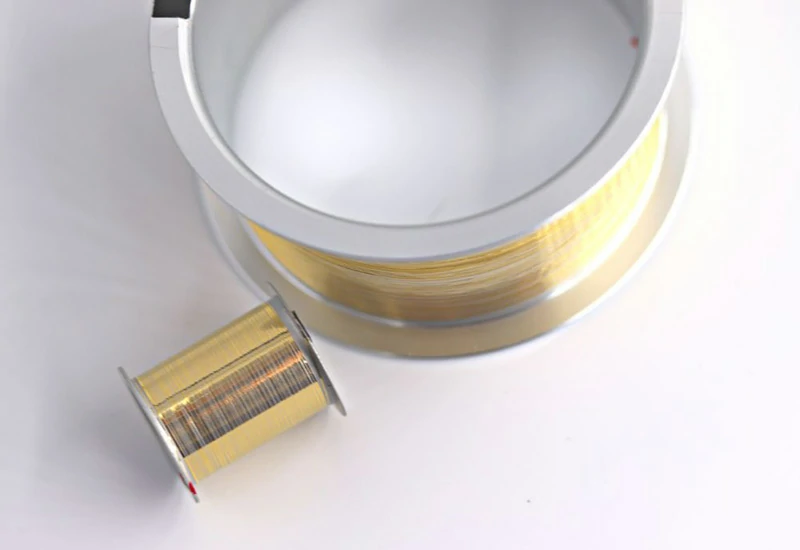
Gold bonding wire diameter and engineering parameters
Pure gold wire engineering parameters by diameter (diameter tolerance ±1.0 μm):
| Diameter μm (mil) | Weight per meter mg/m | Minimum break load gf (GDN / GDU / GDH / GDL) | Elongation % (GDN/GDU/GDH) | Fusing current A | Resistance per meter Ω/m |
| 15 (0.6) | 2.97–3.89 | 3.0 / 3.0 / 3.5 / 2.0 | 2.0–5.0 | 0.3 | 140–150 |
| 18 (0.7) | 4.39–5.48 | 4.0 / 4.0 / 4.5 / 3.0 | 2.0–5.0 | 0.4 | 90–101 |
| 20 (0.8) | 5.48–6.69 | 5.0 / 5.5 / 7.0 / 4.0 | 2.0–6.0 | 0.5 | 75–81 |
| 23 (0.9) | 7.34–8.74 | 7.0 / 8.0 / 9.0 / 6.0 | 2.0–7.0 | 0.7 | 55–61 |
| 25 (1.0) | 8.74–10.26 | 9.0 / 10.0 / 10.0 / 8.0 | 2.0–8.0 | 0.8 | 45–51 |
| 30 (1.2) | 12.76–14.58 | 11.0 / 12.0 / 12.0 / 10.0 | 3.0–8.0 | 1.2 | 30–35 |
| 38 (1.5) | 20.77–23.08 | 16.0 / 17.0 / 15.0 / 15.0 | 3.0–10.0 | 2.0 | 19–21 |
| 50 (2.0) | 34.94–41.03 | 30.0 / 32.0 / 34.0 / 28.0 | 3.0–12.0 | 3.5 | 11–13 |
Test conditions:
Break load and elongation measured with a 100 mm gauge-length tensile tester;
Fusing current measured with a digital power supply, 3 mm sample length, and 10 s energization (different sample lengths yield different fusing current values).
Fusing current and resistance per meter reflect current-carrying capacity — larger diameters mean lower resistance and higher current-carrying capability, which is especially important for power devices and high-brightness LED packaging.
General physical, electrical, and hardness properties
General physical, electrical, and hardness properties of pure gold wire and gold alloy wire:
| Item | 4N pure gold wire | 2N pure gold wire | Gold alloy wire (Au-Ag Alloy) | Notes |
| Gold content | Au ≥99.99% | Au ≥99% | GA08: 80±1% / GA06: 60±1% | Purity positioning difference |
| Density | 19.32 g/cm³ | 19.32 g/cm³ | 19.31 g/cm³ | per ASTM |
| Resistivity @20°C | Approx. 2.4 μΩ·cm | Approx. 2.9 μΩ·cm | Approx. 2.5 μΩ·cm | 4N has slightly better conductivity |
| Elastic modulus | 75–95 GPa | 75–95 GPa | 75–95 GPa | Affects loop stability |
| Melting point | Approx. 1063°C | Approx. 1063°C | Depends on alloy composition | Affects ball formation and thermal stability |
| Recrystallization temperature | Approx. 200–300°C | Approx. 250–350°C | - | 2N recrystallization temperature is slightly higher than 4N |
| FAB hardness | 30–55 HV | 30–55 HV | 35–55 HV | Corresponds to first-bond ball formation |
| HAZ hardness | 40–90 HV | 40–90 HV | 45–85 HV | Corresponds to heat-affected zone (HAZ) integrity |
| Wire body hardness | 60–85 HV | 60–85 HV | 75–95 HV | Corresponds to the overall bonding window |
| HAZ length | max 110 μm | max 100 μm | - | Corresponds to the length of the heat-affected zone after ball formation; slightly shorter for 2N |
| Silver migration resistance | Excellent | Excellent | Excellent | Gold-based material carries no inherent silver migration risk |
Test conditions: resistivity, recrystallization temperature, and HAZ length are 4N/2N comparison items; density, elastic modulus, and hardness are common test items for pure gold and gold alloy wire. Fusing current is not included in this table due to differing sample-length conditions, to avoid confusion with the values in the diameter engineering parameters table.
Choosing between pure gold, gold alloy, and silver alloy bonding wire
In selecting materials, the customer's real question is usually not "is gold good" but "should this application use pure gold, gold alloy, or silver alloy."
Henan Chalco supplies a broader range of die-to-package bonding materials across this cost-reliability ladder, and can match material to application rather than defaulting to the most expensive option.
Choosing between 4N and 2N
The difference between 2N and 4N is concentrated in purity positioning rather than a performance trade-off. Recrystallization temperature is slightly higher for 2N than 4N (approx. 250–350°C vs. 200–300°C), and HAZ length is slightly shorter for 2N (max 100 μm vs. 4N's max 110 μm), while ball shape, softness, and process window are comparable between the two. Gold-based material carries no inherent silver migration risk, so both are equally reliable in this dimension.
2N is therefore the second choice in purity positioning, suited to cost-sensitive scenarios that still require gold-based bonding maturity.
Gold alloy bonding wire (Au-Ag alloy)
Positioned between pure gold and silver alloy, gold alloy wire significantly lowers cost relative to pure gold wire while offering higher strength, greater elongation, lower loop height (loop height range 60–150 μm), and a more stable loop shape. It supports ultra-fine-pitch and high-frequency, high-speed bonding, with pure nitrogen shielding used during bonding.
Primarily targeted at LED, MEMS, sensor, optical communication, and IC packaging (TO / SOT / DIP / SOP / TSOP / TQFP, etc.):
| Model | Au content | Ag content | Other elements | Positioning |
| GA08 | 80±1% | 20±1% | <0.5% | Higher gold content, with performance closer to pure gold, suited to applications with higher stability requirements |
| GA06 | 60±1% | 40±1% | <0.5% | Higher silver content and lower cost, suited to packaging that places greater emphasis on cost reduction |
Gold alloy wire engineering parameters by diameter (diameter tolerance ±1.0 μm; elongation increases with diameter from 2.0–5.0% to 3.0–13.0%):
| Diameter μm (mil) | Minimum break strength gf (GA08 / GA06) | Fusing current A | Resistance per meter Ω/m |
| 15 (0.6) | 4.5 / 3.5 | 0.2 | 140–150 |
| 18 (0.7) | 6.5 / 5.5 | 0.4 | 90–101 |
| 20 (0.8) | 7.5 / 6.5 | 0.4 | 75–81 |
| 23 (0.9) | 9.0 / 8.0 | 0.6 | 55–61 |
| 25 (1.0) | 11.0 / 10.0 | 0.7 | 45–51 |
| 28 (1.1) | 13.0 / 12.0 | 0.9 | 35–40 |
| 30 (1.2) | 15.5 / 14.5 | 1.0 | 30–35 |
| 35 (1.4) | 21.0 / 19.0 | 1.4 | 23–25 |
| 38 (1.5) | 24.0 / 22.0 | 1.7 | 19–21 |
| 50 (2.0) | 39.0 / 37.0 | 2.9 | 11–13 |
Gold-based material vs. silver alloy / copper wire
When comparing gold, silver, copper, and aluminum bonding wires, silver alloy bonding wire has lower resistivity and a more pronounced cost advantage, making it a common cost-reduction option for LED and some IC packaging;
however, published research has documented that the silver migration resistance of silver-based material is weaker than that of gold-based material, requiring additional corrosion control through alloy design and packaging process under high-temperature, high-humidity, or sulfur-containing conditions. Gold wire and gold alloy wire have a natural advantage in this dimension.
Gold has long been one of the most widely used materials in wire bonding due to its stable chemical properties, excellent ball-forming performance, and mature looping behavior. Aluminum wire, by comparison, typically requires silicon alloying to meet break load and elongation requirements, and silicon-aluminum grains are prone to forming stress-concentration points under heat;
Copper bonding wire offers good conductivity and strength at lower cost, but the material is harder and more prone to oxidation, making the bonding process more difficult; some scenarios also require a barrier layer to prevent copper atoms from diffusing into silicon devices.
Gold-based material is not the optimal solution on every dimension. In cost-sensitive, high-volume scenarios where a supplier's process is already validated and mature, silver alloy or copper-based bonding wire may offer better value.
Material selection should return to the reliability requirements, environmental conditions, and cost targets of the specific application, rather than defaulting to the most expensive option.
Applications in IC, LED, and Sensor Packaging
IC packaging interconnects are a primary application for gold bonding wire, spanning analog integrated circuits (audio electronics such as TVs, audio equipment, and communications devices) and digital integrated circuits (smart devices such as automobiles, smartphones, computers, and medical equipment), covering package types including SOT, DIP, SOP, TSOP, TQFP, TSSOP, QFN, LQFP, QFP, BGA, SBGA, and CSP.
Gold ball bonding provides the electrical, mechanical, and conductive connection between the chip pad and the lead frame or substrate in these package types.
Bonding wire for LED packaging is another major application area, covering high-end LEDs, displays, decorative lighting, and traffic signal imaging devices. Gold alloy wire (GA series) balances bonding stability and material cost in this field, making it a common choice alongside pure gold wire.
Sensor and MEMS packaging: this includes scenarios with higher reliability requirements — the low-elongation grade (GDL) is specifically designed for military-grade sensors and discrete semiconductor packaging. Gold wire is also used in discrete device and power device packaging, typically with larger diameters selected for higher current-carrying capacity.
Manufacturing process
The manufacturing process consists of eight stages:
- Raw material — controlling gold purity, impurities, and batch-to-batch consistency;
- Melting (continuous casting) — controlling alloy composition, melt purity, and temperature to ensure uniform ingot structure;
- Composition analysis — confirming Au content (4N ≥99.99% / 2N ≥99%) and total impurities on a per-batch basis;
- Drawing — multi-pass drawing down to micron-scale diameter, controlling diameter precision, surface quality, and roundness;
- Annealing — adjusting break load, elongation, and loop-forming capability, and relieving work hardening;
- Rewinding (winding) — controlling winding tension and traverse uniformity to ensure smooth wire feed on the customer's bonding equipment;
- Vacuum individual packaging — protecting against moisture, contamination, and oxidation;
- Exit inspection — diameter, pull strength, elongation, resistance, appearance, and packaging checked item by item before release.
The annealing stage merits particular attention: industry studies on bonding wire shelf life indicate that hard-drawn wire that has not undergone stress relief can lose 5%–15% of its break load within weeks of production, while gold wire that has been annealed and stress-relieved maintains markedly more stable mechanical properties over long-term storage.
The combination of the annealing process and vacuum individual packaging described above is intended to use process control to ensure the bonding wire is ready for stable use on arrival, rather than relying on a shortened shelf life.
Product design and inspection are governed by ASTM F72 (Standard Specification for Gold Wire for Semiconductor Lead Bonding), which sets requirements for gold wire used in semiconductor lead bonding in terms of chemical composition, break load, elongation, dimensions, and appearance.



Quality control, traceability, and compliance
Bonding wire is enclosed inside the device and not visible to the naked eye, so batch consistency and traceability are the customer's most critical trust concerns.
Henan Chalco's supply system is built around this point:
Process control
A process data analysis platform has been established to evaluate process capability indices;
A manufacturing execution system (MES) is applied to key process parameters — including current, voltage, purity, dopants (PPM), temperature, time, diameter, length, surface, coating, and weight — to continuously improve product consistency, stability, and traceability.
Quality system framework
Covers product development validation, first article inspection at key process steps, in-process patrol inspection, dedicated product inspection, and final finished-goods management;
Supplier management follows a "search — background investigation — on-site audit — trial production — comprehensive review — qualification" process, with qualified suppliers periodically assessed for continued compliance.
Quality planning follows the APQP (advanced product quality planning) framework, covering DFMEA / PFMEA (design and process failure mode analysis), MSA / SPC (measurement system analysis and statistical process control), and PPAP (production part approval process), forming a closed loop of feedback and continuous improvement.
System certification and standards participation
Certified to ISO 9001:2015 (GB/T 19001-2016) quality management system and ISO 14001 environmental management system;
and is one of the drafting units for national standards covering bonding gold wire, palladium-coated copper wire, gold-coated silver wire, and silver alloy wire for semiconductor packaging.
Inspection capabilities
Equipped with ICP-OES spectrometers, vacuum scanning electron microscopes, infrared carbon-moisture analyzers, pull/push force testers, universal material testing machines, high-precision electronic balances, and other analytical and inspection equipment, supporting per-batch verification of composition and mechanical properties.
Traceability
Exit inspection covers diameter, pull strength, elongation, resistance, appearance, and packaging, checked item by item;
Each batch carries a lot number, and composition and mechanical property inspection data can be provided per batch, enabling lot-level traceability.

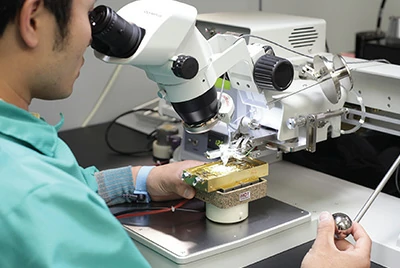
Trusted across IC, LED, and power module packaging
The bonding wire product line has served customers across the IC packaging, LED packaging, and power module packaging industries, entering their packaging supply chains:
IC packaging
onsemi, JCET, UTAC, SPIL, CR Anst, Forehope, and other packaging and test houses;
LED packaging
Philips, LG, OSRAM, Samsung, Seoul Semiconductor, Nationstar, Sanan Optoelectronics, MLS, Refond, and among other LED manufacturers;
Power module packaging
onsemi, BYD, , and , among other power device and module companies.
Supply options, packaging, and RFQ information
Supply
Available for review and supply by diameter, purity grade (4N / 2N pure gold / gold alloy), standard, or customer drawing (to drawing / part number / standard).
Customization
Diameter, break load (BL), elongation (EL), and other parameters can all be customized and reviewed per customer requirements;
The specific combination of specifications, quantities, and delivery arrangements are confirmed at order.
Inspection documents
Composition, dimensional, and mechanical property inspection data can be provided per batch, with lot traceability; required document types can be confirmed at the time of quotation.
Packaging specifications
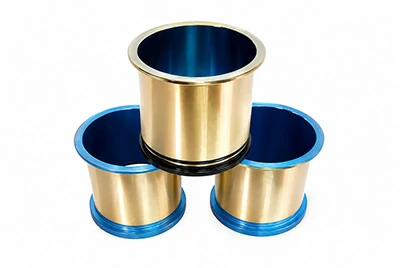
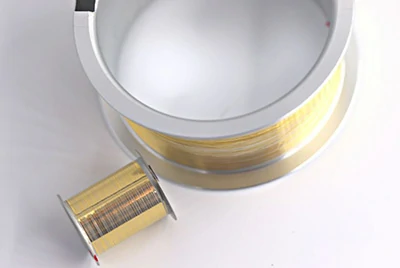
Supplied on 2-inch aluminum alloy spools with vacuum individual packaging, protecting against moisture, contamination, oxidation, and mechanical damage:
| Spool type | Spool model | Length per spool | Packaging method |
| 2-inch low-profile spool | 2"-Al-DF (double groove) / 2"-Al-SF (single groove) | 500 / 1000 / 2000 m | Vacuum individual packaging |
| 2-inch tall spool | 2"-Al-DF-W | 2000 / 3000 / 5000 m | Vacuum individual packaging |
Related products
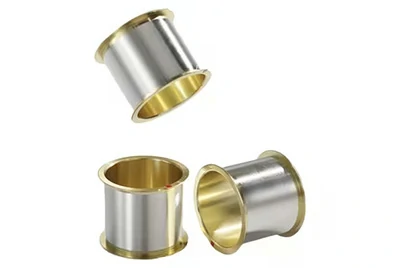
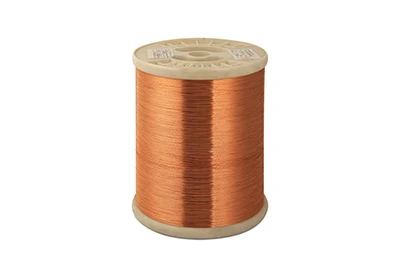
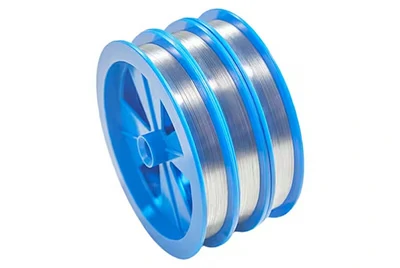
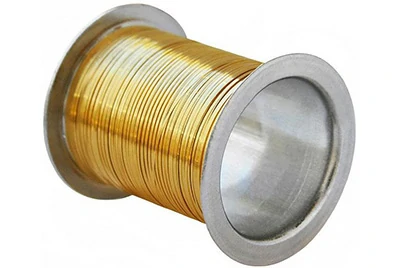
Henan Chalco provides one-stop supply of silver alloy bonding wire, copper bonding wire, aluminum bonding wire, gold bonding ribbon and other semiconductor packaging interconnect materials.
FAQ
Q1. What purity levels are available for gold bonding wire?
Grades available include 4N (Au≥99.99%, total impurities <0.01%) and 2N (Au≥99%) pure gold wire, plus Au80% and Au60% gold alloy wire; other purity levels can be reviewed per project requirements.
Q2. What diameter range is available?
Pure gold wire diameter covers 15–50 μm (0.6–2.0 mil), with a tolerance of ±1.0 μm; gold alloy wire additionally includes 28 μm and 35 μm diameters. Other diameters can be customized and reviewed by specification.
Q3. Is gold bonding wire the same as gold alloy bonding wire?
No. Pure gold bonding wire (4N/2N) has a gold content close to 100%; gold alloy bonding wire is a gold-silver alloy (e.g., Au 80%/Ag 20%) that balances cost and performance. The two suit different application scenarios.
Q4. What is gold wire bonding?
Gold wire bonding is a process that uses fine, high-purity gold wire, combined with heat, pressure, and ultrasonic energy, to form an electrical interconnect between a semiconductor chip and a package lead or substrate — primarily in the form of ball bonding.
Q5. What is gold bonding wire used for?
Used in IC, LED, sensor, and other packaging to connect the chip pad to the lead frame or substrate, relying on its conductivity, corrosion resistance, and mature bonding reliability to provide a stable interconnect inside the package.
Q6. When should gold bonding wire be used instead of copper or silver alloy wire?
High-reliability, corrosion-sensitive, or harsh-environment applications generally favor gold wire first; copper wire and silver alloy wire are common cost-optimized alternatives, suited to scenarios with controllable processes and comparatively relaxed requirements. Gold-based material carries no silver migration risk, which is one of its core advantages over silver alloy.