Aluminum bonding wire is a round semiconductor bonding wire used for internal interconnects in semiconductor packaging. It is typically bonded via ultrasonic wedge bonding to connect die pads, lead frames, ceramic substrates, or power module terminals. Depending on wire diameter and mechanical properties, it supports precision signal transmission, discrete device interconnection, and high-current interconnects in power semiconductors.
Within Chalco's broader die-to-package bonding materials range, we supply both fine and heavy aluminum bonding wire, matched to your package structure, pad size, wedge bonding equipment, and application requirements-including wire diameter, aluminum purity or alloy system, breaking load, elongation, temper (soft/hard), and spool specifications. We also support sample evaluation, material matching, and volume ramp-up.
Aluminum Bonding Wire Types
Aluminum bonding wire features a round cross-section and is primarily used for ultrasonic wedge bonding within semiconductor devices and modules. Based on wire diameter, mechanical properties, and current-carrying capacity, it is categorized into fine and heavy aluminum bonding wire-suited respectively for precision signal interconnects and high-current connections in power devices.
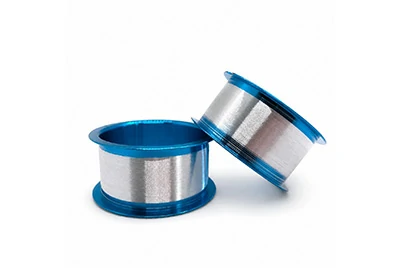
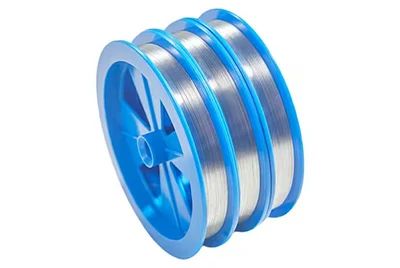
Fine Aluminum Bonding Wire
Designed for small pads and fine-pitch packaging, with consistent diameter, smooth unwinding, and stable wedge bonding.
Bonding performance: supports consistent loop formation and reliable bond strength
Heavy Aluminum Bonding Wire
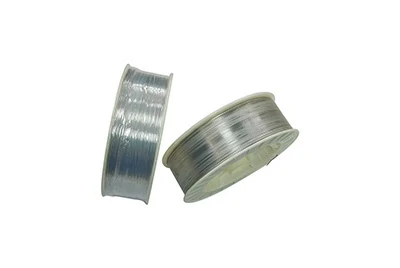
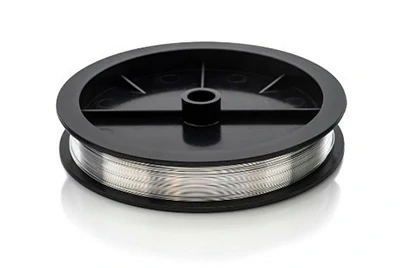
Designed for high-current interconnects in power semiconductor and power module packaging, with a large conductive cross-section, stable mechanical properties, and reliable wedge bonding.
Multi-wire bonding: supports power pads, module terminals, and complex interconnect layouts
Aluminum Bonding Wire Materials and Grades
Aluminum purity, alloy composition, and material temper directly affect the wire's electrical conductivity, softness, mechanical strength, corrosion resistance, and wedge bonding performance-further influencing wire diameter selection, pad compatibility, and reliability validation.
We offer high-purity aluminum, AlSi1, and various customized aluminum alloy bonding wires, tailored to precision signal interconnects, power applications, and specific environmental conditions. Available material options include 4N6, 5N, and 5N5 high-purity aluminum, as well as Al-Cu, Al-Ni, Al-R, and other doped aluminum alloy systems-selected to meet requirements for conductivity, softness, mechanical strength, corrosion resistance, and wedge bonding stability.
-
4N6 Al 99.996% High-Purity Aluminum Bonding Wire
Suitable for standard semiconductor packaging applications requiring high-purity aluminum bonding wire, balancing conductivity, softness, and process compatibility.
-
5N Al 99.999% High-Purity Aluminum Bonding Wire
Designed for aluminum wire bonding applications demanding tighter impurity control, stable unwinding, and consistent bond quality.
-
5N5 Al 99.9995% Ultra-High-Purity Aluminum Bonding Wire
Ideal for semiconductor packaging projects with stringent requirements on material purity, impurity control, and reliability validation.
-
AlSi1 Aluminum Bonding Wire
Contains approximately 1% silicon to enhance wire strength and mechanical stability, suitable for fine-diameter bonding, continuous unwinding, and precision ultrasonic wedge bonding.
-
Corrosion-Resistant Aluminum Bonding Wire
Formulated with corrosion-resistant aluminum alloys for power devices and specialized electronic packaging exposed to high humidity, corrosive environments, or demanding long-term reliability requirements.
-
Customized Aluminum Alloy Bonding Wire
Al-Cu, Al-Ni, Al-R, or custom alloy compositions can be evaluated based on required mechanical strength, corrosion resistance, wedge bonding performance, and reliability criteria.
Chalco evaluates aluminum bonding wire alloy systems based on conductivity, softness, mechanical strength, corrosion resistance, and wedge bonding performance. High-purity aluminum, AlSi1, Al-Cu, Al-Ni, Al-R, and other custom alloy compositions can be selected according to existing specifications, samples, or reliability requirements.
Aluminum Bonding Wire Specifications and Mechanical Properties
- Product form: round aluminum bonding wire
- Product types: fine aluminum bonding wire, heavy aluminum bonding wire
- Material types: high-purity aluminum, AlSi1 aluminum-silicon alloy, and other optional aluminum alloys
- Wire diameter range: standard offerings cover 18–500 μm
- Mechanical properties: breaking load and elongation are matched to wire diameter and material grade
- Spool options: 2-inch, 3.5A, 3.5B, and other available configurations
- Customization options: wire diameter, BL, EL, spool type, single-spool length, and winding method
Standard Specifications for Aluminum Bonding Wire
| Diameter (μm) | Tolerance (μm) | Breaking Load (cN) | Elongation (%) | Single Spool Length 0.5" (m) | Single Spool Length 2" (m) |
| 38 | ±1.1 | 17–19 | 1–4 | 100 | 300 |
| 40 | ±1.2 | 19–21 | 1–4 | 100 | 300 |
| 45 | ±1.4 | 21–23 | 1–4 | 100 | 300 |
| 50 | ±1.5 | 23–25 | 1–4 | 100 | 300 |
| 60 | ±1.8 | 25–35 | 2–8 | 100 | 300 |
| 63 | ±1.8 | 35–45 | 1–4 | 100 | 300 |
| 70 | ±2.1 | 35–40 | 2–8 | 100 | 300 |
| 75 | ±2.2 | 40–50 | 2–8 | 100 | 300 |
| 80 | ±2.4 | 40–50 | 2–8 | 100 | 100 |
| 100 | ±3.0 | 50–90 | 5–15 | 100 | 100 |
| 120 | ±5.0 | 80–90 | 5–10 | 100 | 100 |
| 125 | ±5.0 | 110–150 | 2–8 | 100 | 100 |
Properties for Fine Aluminum Bonding Wire
| Diameter (μm) | Diameter (mil) | Tolerance (mil) | Finished Spool | Breaking Load (cN) | Elongation (%) |
| 18 | 0.70 | ±0.02 | 2-inch | 7–10 | 1–4 |
| 20 | 0.80 | ±0.03 | 2-inch | 9–12 | 1–4 |
| 23 | 0.90 | ±0.03 | 2-inch | 11–13 | 1–4 |
| 25 | 1.00 | ±0.03 | 2-inch | 13–15 | 1–4 |
| 25 | 1.00 | ±0.03 | 2-inch | 15–18 | 1–4 |
| 32 | 1.25 | ±0.04 | 2-inch | 19–21 | 1–5 |
| 38 | 1.50 | ±0.04 | 2-inch | 22–32 | 2–6 |
| 50 | 2.00 | ±0.06 | 2-inch | 38–55 | 2–8 |
Properties for Heavy Aluminum Bonding Wire
| Diameter (μm) | Diameter (mil) | Tolerance (mil) | Finished Spool | Breaking Load (cN) | Elongation (%) |
| 100 | 4 | ±0.2 | 3.5B | 50–90 | 10–30 |
| 125 | 5 | ±0.2 | 3.5B | 70–120 | 10–30 |
| 150 | 6 | ±0.2 | 3.5B | 110–150 | 10–30 |
| 175 | 7 | ±0.2 | 3.5B | 150–250 | 10–30 |
| 200 | 8 | ±0.2 | 3.5B | 150–250 | 10–30 |
| 250 | 10 | ±0.2 | 3.5B | 300–400 | 10–30 |
| 300 | 12 | ±0.2 | 3.5A | 350–450 | 10–30 |
| 300 | 12 | ±0.2 | 3.5A | 500–700 | 10–30 |
| 380 | 15 | ±0.3 | 3.5A | 500–700 | 10–30 |
| 380 | 15 | ±0.3 | 3.5A | 700–900 | 10–30 |
| 450 | 18 | ±0.3 | 3.5A | 700–850 | 10–30 |
| 500 | 20 | ±0.4 | 3.5A | 700–900 | 10–30 |
| 500 | 20 | ±0.4 | 3.5A | 800–1100 | 10–30 |
For upstream material preparation or intermediate wire processing, larger aluminum wire rods or drawn forms (e.g., φ1–6 mm) can be evaluated based on production routes. Final bonding wire diameters are supplied according to finished bonding specifications.
Aluminum Bonding Wire Advantages
- Comprehensive coverage of fine and heavy diameters for both precision signal interconnects and power applications.
- Compatible with mature ultrasonic wedge bonding processes.
- Available in high-purity aluminum, AlSi1, and corrosion-resistant aluminum alloy options.
- Heavy-diameter wires support multi-wire parallel interconnects in power devices.
- Breaking load, elongation, and temper (soft/hard) can be tailored to application requirements.
- More cost-effective than precious metal bonding wires, ideal for high-volume packaging.
- Specifications can be matched to package type, wire diameter, BL, EL, spool, and single-spool length.
Aluminum Bonding Wire Application Solutions
We can match fine or large-diameter aluminum bonding wire, along with corresponding material, breaking load (BL), elongation (EL), and spool specifications, based on device current, pad size, package structure, and wedge bonding process.
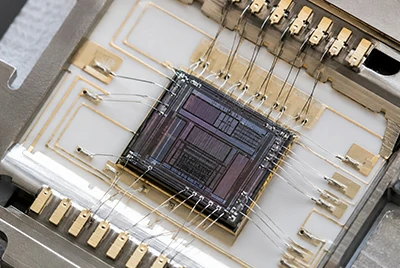
COB and Hybrid Circuits
We offer fine-diameter, low-stress aluminum bonding wire to support small pads and fine-pitch interconnects, enabling precise control of pad stress, wire feeding, and accurate loop formation.
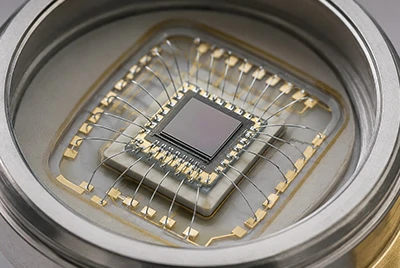
Sensors and Precision Electronics
We can tailor softness and mechanical properties to meet the requirements of sensitive dies and hermetic packaging, improving consistency in low-current connections and continuous wedge bonding.
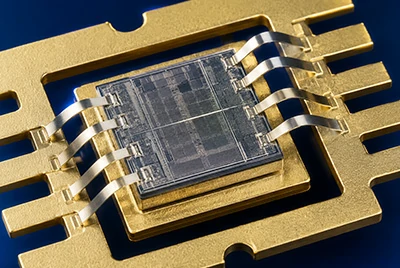
Semiconductor Discrete Devices
Fine or large-diameter aluminum bonding wire can be selected based on the current rating and pad structure of diodes, rectifiers, and transistors, simplifying material selection across different power levels.
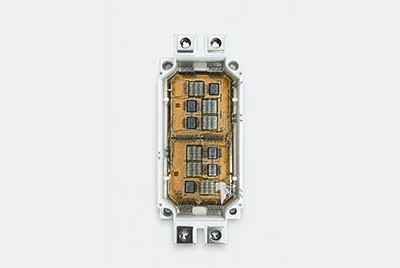
IGBT and Power MOSFET
We supply large-diameter aluminum bonding wire and multi-wire parallel configurations to enable high-current interconnects between power dies and substrates, lead frames, or module terminals.
SiC Power Devices and Modules
Wire diameter, material, BL, and EL can be matched according to power, temperature, and reliability requirements, with support for sample bonding trials and package validation.
Industrial and Automotive Power Modules
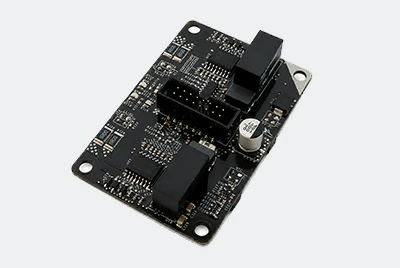
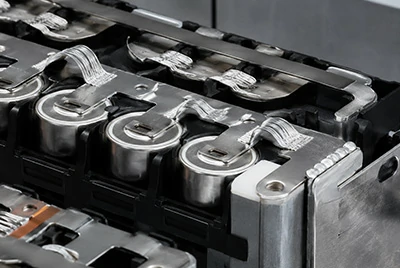
We can supply large-diameter wire, spools, and volume production specifications for inverters, motor drives, and power conversion modules, facilitating automated wedge bonding and second-source qualification.
How to Select Aluminum Bonding Wire and Optimize Wedge Bonding Compatibility
Aluminum bonding wire selection must consider interconnect function, device architecture, pad dimensions, material properties, and existing wedge bonding equipment. Selecting solely by wire diameter may fail to meet actual requirements for wire feeding, loop formation, and bond quality. Package-specific material selection should also be considered; for example, bonding wire for LED packaging may use different fine-wire material systems and bonding processes from the aluminum wedge-bonding solutions described on this page.
1. Select Wire Diameter Based on Interconnect Requirements
Use fine-diameter aluminum wire for small pads, fine pitch, and signal interconnects; use large-diameter aluminum wire for large pads, high current, and power connections.
2. Select Material Properties Based on Application
In a broader gold, silver, copper, and aluminum bonding wire comparison, material choice depends on the bonding process, package structure, electrical requirements, reliability requirements, and cost target. For aluminum systems, choose high-purity aluminum, AlSi1, or corrosion-resistant aluminum alloys based on conductivity, softness, strength, and corrosion resistance requirements, and match appropriate BL, EL, and hardness.
3. Match Pad and Wedge Bonding Equipment
Verify pad size and metallization, as well as compatibility with wedge bonder, wedge tool, spool, and loop design.
4. Confirm Aluminum Wire or Strip
The wire-versus-ribbon format should be confirmed according to routing, bond-interface, and package requirements. Use large-diameter aluminum wire for flexible routing and multi-wire parallel bonding; consider aluminum bonding ribbon for flat cross-sections and wider bond interfaces.
Production Capacity and Quality Control
Chalco ensures aluminum bonding wire quality through high-purity aluminum selection, alloy composition control, controlled drawing, protective-atmosphere annealing, precision winding, and clean packaging. Key inspection items include aluminum purity, alloying elements, ppm-level impurities, wire diameter, surface condition, BL, EL, winding quality, and feeding stability. For high-purity and alloyed aluminum bonding wires, GDMS compositional verification is available per customer specifications or project requirements.
Controlled Production: Covers raw material and composition control, casting, drawing, annealing, winding, and packaging.
Key Performance Testing: Includes wire diameter, roundness, BL, EL, surface cleanliness, and winding quality.
Batch Consistency: Product stability is maintained through in-process inspection, batch identification, and traceability management.
Existing Specification Matching: Products can be matched based on wire diameter, material, BL, EL, spool type, and sample evaluation.
Samples and Bonding Trials: Support provided for samples, small-batch trials, and wedge bonding process evaluation.
Volume Qualification Support: Assist with second-source validation and confirm production specifications, packaging, and delivery schedules.
Sample and trial bonding support is available prior to volume qualification for specification matching, process evaluation, and second-source validation. We welcome your inquiry.
FAQ
For optimal SEO and AI answer visibility, FAQ titles should reflect real customer search queries, and answers should state the conclusion directly in the first sentence.
1. What is aluminum bonding wire used for?
Aluminum bonding wire is primarily used for internal electrical interconnects between semiconductor dies, lead frames, ceramic substrates, and module terminals. Fine-diameter wire is commonly used in COB, sensors, and hybrid circuits, while large-diameter wire is used for high-current interconnects in IGBTs, SiC devices, MOSFETs, and power modules.
2. What is the difference between fine and heavy aluminum bonding wire?
Fine-diameter aluminum bonding wire is designed for small pads, fine pitch, and precision signal interconnects. Large-diameter wire offers greater conductive cross-section and is suited for power devices and multi-wire parallel bonding. The exact classification threshold varies by supplier and product family; selection should consider wire diameter, pad size, and connection current together.
3. Is aluminum bonding wire suitable for ultrasonic wedge bonding?
Yes. Aluminum bonding wire is typically used with ultrasonic wedge bonding, but successful implementation requires coordinated matching of wire diameter, BL, EL, wedge tool, guide, pad metallization, and equipment parameters-verified through bonding trials.
4. How do I select aluminum bonding wire diameter and mechanical properties?
Fine-diameter wire is typically selected for signal interconnects, small pads, and fine pitch; large-diameter wire is used for high-current and power applications. Breaking load, elongation, and temper must also align with loop design, die sensitivity, wedge bonding equipment, and reliability requirements.
5. Can you match an existing aluminum bonding wire specification?
Yes. We can match existing specifications based on wire diameter, material type, BL, EL, spool type, reel length, and application conditions. Customers may also provide original part numbers, datasheets, or samples for evaluation, trial bonding, and second-source validation.
6. What is the difference between aluminum bonding wire and aluminum bonding ribbon?
Aluminum bonding wire has a circular cross-section and supports both fine-pitch precision interconnects and large-diameter multi-wire power bonding. Bonding ribbon for semiconductor packaging uses a flat rectangular cross-section and is selected by width, thickness, and cross-sectional area; aluminum is one of the available ribbon material systems. Both wire and aluminum ribbon are compatible with wedge bonding, but require different module architectures, tooling, and interconnect designs.
Submit Your Aluminum Bonding Wire Requirements
Please provide your current product specifications or package application details so we can recommend suitable material, wire diameter, mechanical properties, spool configuration, and sample options.
- Device or Package Type
- Fine or Large-Diameter Application
- Aluminum Purity or Alloy Type
- Wire Diameter and Tolerance
- Breaking Load and Elongation
- Spool Type and Reel Length
- Wedge Bonder and Wedge Tool Information
- Pad Size and Metallization
- Sample Quantity or Volume Purchase Requirement
Chalco can provide you the most comprehensive inventory of aluminum products and can also supply you customized products. Precise quotation will be provided within 24 hours.
Get a quote