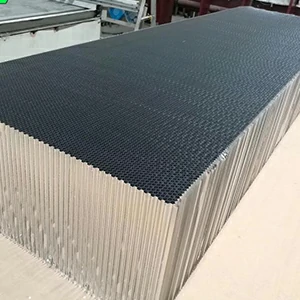
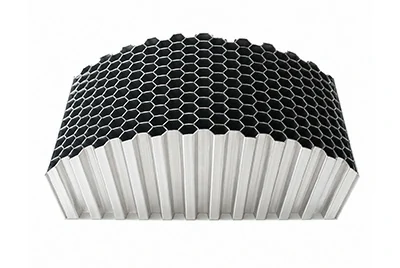
Stainless steel honeycomb core is a hexagonal cellular core material fabricated by joining ultra-thin stainless steel foils. It is commonly used as the core layer in composite sandwich structures, paired with metal skins or other face materials. This configuration reduces structural weight while enhancing overall stiffness, flexural performance, corrosion resistance, high-temperature resistance, and dimensional stability. It is widely applied in aerospace, electromagnetic shielding, rail transit, marine vessels, architectural decoration, and industrial equipment.
Chalco can supply stainless steel honeycomb cores with various structural parameters and offers delivery in either expanded or unexpanded states. In addition to supplying individual honeycomb cores, we can also support further fabrication into finished stainless steel honeycomb sandwich panels according to project requirements. We also provide material selection guidance, composite structure design recommendations, customized sandwich components, and professional technical support. For broader material and structural options, explore our honeycomb core materials and sandwich panels.
Stainless Steel Honeycomb Core Technical Specifications
To meet diverse structural design and composite sandwich application requirements, Chalco offers stainless steel honeycomb cores in multiple specifications and configurations, available in both expanded and unexpanded delivery states. Parameters such as cell size, core thickness, foil thickness, density, and block dimensions can be customized according to customer needs. We also provide complementary services including material selection, surface treatment, composite structure compatibility assessment, and related technical support.
| Cell Size (mm) | 0.8 | 1.6 | 3.2 | 4.8 | 5.6 | 6.4 | 10 | 12.7 | 16 | 25 |
| Minimum Thickness (mm) | 3 | 3 | 5 | 5 | 5 | 5 | 50 | 50 | 50 | 50 |
| Maximum Thickness (mm) | 25 | 30 | 60 | 60 | 90 | 100 | 150 | 150 | 450 | 450 |
| Foil Thickness (mm) | 0.05 | 0.076 | 0.2 | 0.2 | 0.2 | 0.2 | 0.2 | 0.2 | 0.2 | 0.2 |
| Density (kg/m³) | 1164 | 909 | 1164 | 806 | 699 | 616 | 403 | 320 | 256 | 165 |
| Open Area Ratio (%) | 85.2 | 88.4 | 85.2 | 89.7 | 91.1 | 92.2 | 94.9 | 95.9 | 96.7 | 97.9 |
- Standard Sizes: 60×60 mm, 120×120 mm, 300×300 mm, 600×600 mm, 1000×1000 mm
- Thickness Range: 5 mm – 100 mm, customizable upon request
- Standard Thicknesses: 6.35 mm, 12.7 mm, 25.4 mm, 30 mm, 40 mm, 45 mm
- Wall Thickness: 0.10 mm, 0.13 mm, 0.15 mm, 0.20 mm, etc.
- Cell Shape: Regular Hexagon, Rectangle, Square, or Custom
- Surface Coating: After conductive oxidation, can be tin-plated, nickel-plated, zinc-plated, or chromium-plated
- Joining Methods: Spot welding, laser welding, brazing, adhesive bonding. View stainless steel honeycomb cores made with different joining processes
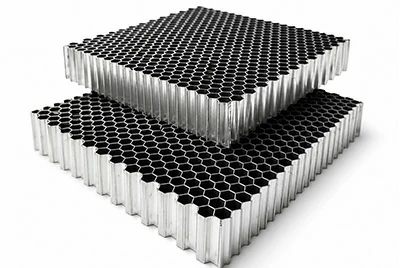
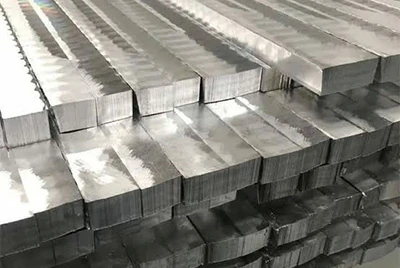
- Delivery Forms: Expanded, unexpanded, cutting. View specific delivery forms
- Cutting Methods: Laser cutting, wire cutting, machining
- Customization Note: Other cell sizes, thicknesses, block dimensions, and special specifications can be produced based on customer drawings.
Available Stainless Steel Grades for Chalco Honeycomb Cores
-
301 Stainless Steel Honeycomb Core
301 stainless steel honeycomb core features strong work hardening capability, making it better suited for honeycomb structures requiring high strength and structural efficiency after forming. Compared to 304, it is more oriented toward high-strength formed structural components rather than general-purpose corrosion-resistant applications.
-
304 Stainless Steel Honeycomb Core
304 stainless steel honeycomb core is a general-purpose grade that offers a good balance among corrosion resistance, formability, and weldability, suitable for most standard industrial environments. Compared to 301, it has broader versatility; compared to 316L, it is better suited for routine projects in typical environments.
-
316 Stainless Steel Honeycomb Core
316 stainless steel honeycomb core offers enhanced corrosion resistance over 304, especially suitable for environments demanding higher media compatibility and corrosion stability. Compared to 304, 316 is better suited for marine, chemical, and other applications with elevated corrosion risks.
-
316L Stainless Steel Honeycomb Core
316L stainless steel honeycomb core contains molybdenum and generally exhibits superior corrosion resistance compared to 304, particularly in chloride-containing environments or where pitting and crevice corrosion risks are higher. Compared to 304, it is more appropriate for marine-related, chemical, or complex-media applications. Its low carbon content also enhances microstructural stability after welding.
-
321 Stainless Steel Honeycomb Core
321 stainless steel honeycomb core is a stabilized austenitic stainless steel offering better microstructural stability at elevated temperatures. It is commonly used in structural or functional components requiring high-temperature performance and post-weld stability. Unlike 304, its primary advantage is not general-purpose usability but suitability for thermal environments in the 425–900°C range.
-
Custom Stainless Steel Honeycomb Core
In addition to standard stainless steel grades, Chalco can provide carbon steel honeycomb cores and other custom metallic honeycomb solutions based on specific project requirements. Different materials vary in corrosion resistance, strength characteristics, temperature resistance, weldability, and cost. Final material selection should be determined based on actual operating conditions and structural requirements.
Common Configurations of Chalco Stainless Steel Honeycomb Cores
To meet the demands of complex structures, curved surfaces, and functional components, Chalco offers multiple stainless steel honeycomb core configurations suitable for load-bearing, flow straightening, shielding, ventilation, and customized engineering structures.
-
Hexagon
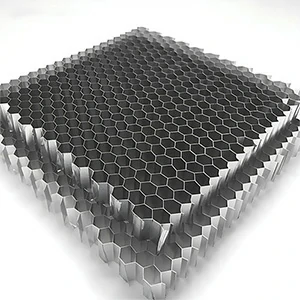
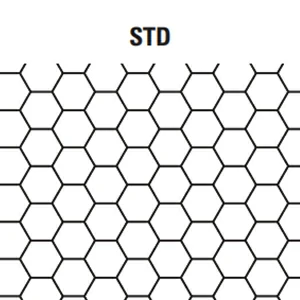
Standard hexagonal structure-the most widely used-offers an optimal balance of strength-to-weight ratio and versatility, suitable for most conventional honeycomb core applications.**
-
Reinforced Hexagon
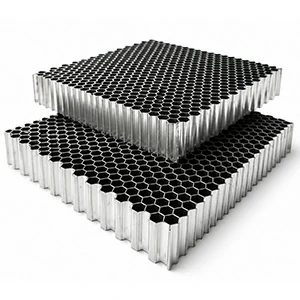
Reinforced hexagonal structure enhances load-bearing capacity and stability over the standard hexagon, ideal for applications requiring higher compressive strength and resistance to deformation.
-
Overexpanded
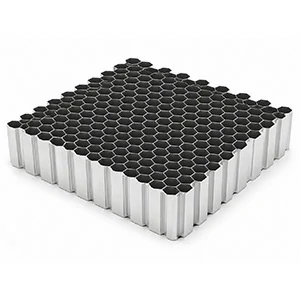
Overexpanded structure features more open cells, suitable for applications requiring high airflow permeability or greater open area ratio.
-
Square Cell
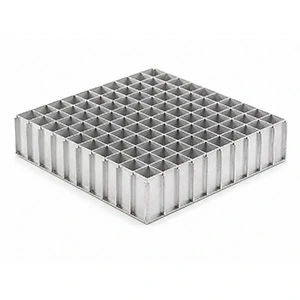
Square-cell structure offers regular cell alignment, ideal for applications requiring directional flow channels, precise assembly fit, or specific structural layouts.
-
Underexpanded
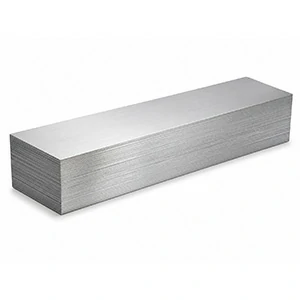
Underexpanded structure has tighter cells, suitable for projects requiring further forming, stretching, or specialized post-processing.
-
Flex-Core
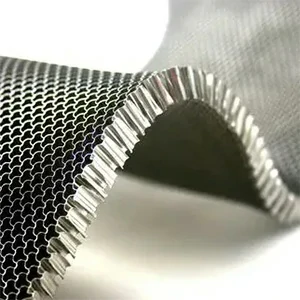
Flexible honeycomb structure is better suited for curved, arched, or complex-contour components, differing from conventional flat-panel honeycomb core solutions.
Chalco Stainless Steel Honeycomb Cores by Joining Process
Chalco can supply stainless steel honeycomb cores using various joining processes based on project requirements. These processes differ in joint characteristics, manufacturing precision, suitability for specific operating conditions, and compatibility with downstream processing. For more details on joining methods, please refer to honeycomb core joining processes.
Spot-Welded Stainless Steel Honeycomb Core
Spot welding is one of the most common joining methods for stainless steel honeycomb cores, suitable for standard honeycomb structures. This mature process produces clearly defined structures and is appropriate for a wide range of standard sizes and applications.
Laser-Welded Stainless Steel Honeycomb Core
Laser-welded stainless steel honeycomb cores are ideal for projects requiring higher welding precision, better control of localized heat-affected zones, and improved structural consistency. Compared to conventional welding, laser welding is better suited for precision-engineered structures or functional components with stringent quality requirements.
Butt-Welded Stainless Steel Honeycomb Core
Butt welding can be used for stainless steel honeycomb core designs with clearly defined structural requirements and well-defined joint boundaries. This process typically requires comprehensive evaluation considering material thickness, structural dimensions, and subsequent assembly methods.
Brazed Stainless Steel Honeycomb Core
Brazed stainless steel honeycomb cores are often selected for projects requiring high joint integrity, structural completeness, or compatibility with specific operating conditions. Brazing is a viable option for complex structures, specialized thermal environments, or products with unique functional requirements.
Adhesively Bonded Stainless Steel Honeycomb Core
Adhesively bonded stainless steel honeycomb cores typically offer better cost control and are suitable for projects with specific budget or structural integration requirements. Compared to welded honeycomb cores, they generally exhibit lower joint strength and structural stability, so selection should be based on specific operating conditions and product requirements.
Applications of Chalco Stainless Steel Honeycomb Cores
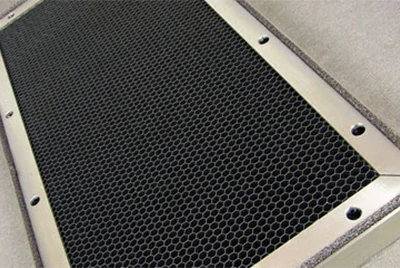
Electromagnetic Shielding and Waveguide Ventilation Structures
Used to manufacture shielding windows, shielded ventilation panels, waveguide vents, and EMI/RF shielding panels, combining shielding, ventilation, and heat dissipation functions.
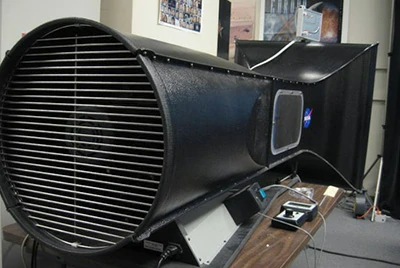
Airflow Straightening and Flow Equalization Structures
Used in air, water, and gas flow straighteners, wind tunnel flow regulators, industrial flow equalizers, and high-velocity ventilation components.
Filtration and Cooling Systems
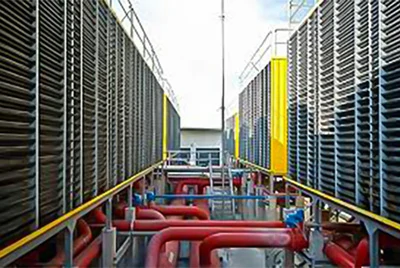
Used in industrial filtration systems and power plant cooling tower structures to meet requirements for filtration, flow guidance, cooling, and media distribution control.
Industrial Equipment and Work Platforms
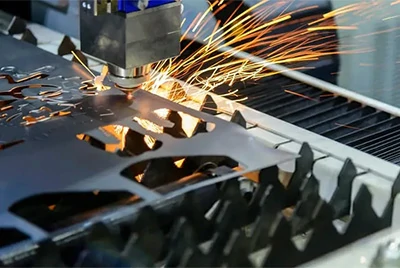
Used in high-power laser cutting machine worktables, waterjet cutting tables, electromechanical equipment platforms, and other industrial support structures, meeting requirements for high-temperature resistance, compression strength, and weight reduction.
Aerospace and Energy Equipment
Used in aircraft engine metal honeycomb seals, thrust reversers, exhaust nozzles, power generation turbine seals, and other components used in aerospace applications.


Architectural and Decorative Sandwich Structures
Used as the internal core material in curtain walls, exterior cladding, cleanroom partitions, and other stainless steel honeycomb panels.
How to Choose the Right Stainless Steel Honeycomb Core?
Select Based on Operating Environment
For standard indoor and general industrial environments, 304 stainless steel honeycomb core is typically preferred. For humid, salt-spray, marine, or highly corrosive conditions, 316L is usually more suitable. For high-temperature or thermal cycling applications, 321 is often the better choice. Clearly defining the operating environment first ensures more accurate material selection. For projects where elevated-temperature service is the primary selection factor, see our high-temperature honeycomb core options.
Select Based on Cell Size and Open Area Ratio
If shielding, flow straightening, or precision support is prioritized, smaller cell sizes are recommended. If ventilation, weight reduction, or airflow capacity is more critical, larger cell sizes are preferable. In typical structural applications, 4.8 mm and 6.4 mm cell sizes often offer a balanced solution.
Select Based on Core Thickness and Strength Requirements
Core thickness directly affects overall stiffness and bending resistance. For sandwich panels, door panels, partitions, equipment platforms, and other structures requiring high strength and flatness, an appropriate core height is essential. For shielding components, ventilation parts, or functional layers where structural demands are lower, thinner specifications may be preferred.
Select Based on Shielding, Airflow, or Attenuation Requirements
When a project requires not only structural support but also EMI shielding, ventilation, airflow straightening, or attenuation, matching cell size, open area ratio, and thickness becomes critical. Generally, for high shielding performance, choose smaller cell sizes with greater thickness; for high airflow volume, opt for larger cell sizes with moderate thickness.
Select Based on Processing and Integration Method
If the project involves lamination, cutting, perforation, chamfering, custom shaping, or frame assembly, it's advisable to consider the delivery state and processing method during selection. Stainless steel honeycomb cores can be supplied in expanded or unexpanded forms and customized to specific block dimensions or complex shapes per drawings, facilitating downstream production and installation.
Related Products for Stainless Steel Honeycomb Cores

Aluminum Honeycomb Core
5052 Aluminum Honeycomb Core
5056 Aluminum Honeycomb Core
3003 Aluminum Honeycomb Core
Aluminum Honeycomb Panel
Stainless Steel Honeycomb Panel
Supply Forms of Stainless Steel Honeycomb Cores
Quality Assurance for Chalco Stainless Steel Honeycomb Cores
Chalco's quality control for stainless steel honeycomb cores covers raw material verification, dimensional control of honeycomb structure, stability of joining processes, support from laser welding equipment, confirmation of custom projects, and pre-shipment inspection-ensuring consistency with project requirements in material, structure, processing, and delivery.
Raw Material Control
Material grade, thickness specification, and batch information are strictly verified against order requirements. Options include 304, 316, 316L, 321, and other custom alloys. Incoming material parameters align precisely with product specifications, providing a solid foundation for subsequent welding, forming, and in-service performance.
Honeycomb Structure Dimensional Control
Critical parameters-including cell geometry, cell size, core thickness, wall thickness, and cut dimensions-are tightly controlled to ensure structural uniformity and dimensional stability, meeting application needs such as waveguide ventilation, shielding, flow straightening, filtration, and precision assembly.
Joining Process Stability
Multiple joining methods-including spot welding, laser welding, butt welding, brazing, and adhesive bonding-are supported, with the optimal process selected based on product structure and project requirements. Emphasis is placed on consistent joint quality, structural uniformity, and batch-to-batch reliability to meet diverse application needs for stainless steel honeycomb cores.
Laser Welding Equipment Capability
Dedicated laser welding equipment for steel honeycomb cores enables welding of carbon steel, 304 stainless steel, and 316 stainless steel honeycomb cores with material thicknesses ≥0.08 mm. Standard weldable sizes include 600×600 mm, 1200×1200 mm, 3000×3000 mm, 6000×6000 mm, and 10000×10000 mm, with custom sizes also supported. High welding precision meets the demands of various patterns, specifications, and large-format honeycomb core projects.
Custom Project Confirmation
Projects can be confirmed based on drawings, samples, or operating conditions, with emphasis on material grade, cell geometry, core thickness, joining method, external dimensions, and post-processing requirements. Key parameters are finalized before mass production begins, enhancing project alignment and delivery consistency.
Pre-Shipment Verification
Appearance, dimensions, quantity, and packaging are verified before shipment to ensure compliance with order specifications. For custom products such as strips, rings, irregular shapes, and machined parts, additional pre-shipment checks are performed to ensure accurate delivery.
Packaging and Transportation of Chalco Stainless Steel Honeycomb Cores
During packaging and transportation, Chalco focuses on preventing structural deformation, edge damage, surface scratches, moisture contamination, and batch mix-ups. Packaging solutions are tailored to product specifications, joining methods, supply formats, and shipping conditions to maintain product integrity from dispatch through transit to final delivery.
Packaging Adapted to Product Form
Different layered, pressure-resistant, and impact-protective packaging methods are applied based on supply formats-such as blocks, sheets, strips, rings, irregular shapes, and machined components-to minimize risks of compression-induced deformation and edge damage to the honeycomb structure.
Pressure Resistance and Structural Protection
For large-format, thin-walled, irregular, or high-precision stainless steel honeycomb cores, packaging emphasizes protection against compression, bending, squeezing, and corner damage to reduce structural deformation caused by stacking, handling, or vibration during transit.
Moisture and Surface Protection
Depending on shipping conditions and delivery requirements, moisture-proofing, dust-proofing, and surface isolation treatments can be applied to minimize the impact of humidity, contamination, and abrasion on product appearance and subsequent assembly.
Labeling and Batch Differentiation
Outer cartons and packaging units can be labeled per order requirements with product name, dimensions, material grade, quantity, and batch information to facilitate warehouse identification, packing verification, and receipt inspection.
Custom Packaging Support
For orders requiring sub-assemblies, export shipping, project-based dispatch, or special assembly instructions, packaging solutions are developed in consideration of product dimensions, weight, transport method, and delivery requirements.
Pre-Shipment Packaging Verification
Packaging methods, quantities, labeling, and packing correspondence are reviewed before shipment to minimize risks of batch mixing, missing items, or packaging mismatches during transit, transfer, and delivery handover.
Chalco Stainless Steel Honeycomb Core Purchasing Guide
- Application and Environment: First clarify whether the product will be used for shielding, waveguide ventilation, flow straightening, filtration, support platforms, high-temperature structures, or sandwich components, and specify operating conditions such as temperature, humidity, and corrosive media. Application type and environment typically dictate the selection of material, cell geometry, and joining process.
- Material and Process: Common materials include 304, 316, 316L, and 321; carbon steel or other custom metal options can also be evaluated based on project needs. Joining methods include spot welding, laser welding, butt welding, brazing, or adhesive bonding, each offering different trade-offs in temperature resistance, corrosion resistance, stability, and cost.
- Structure and Dimensions: Before procurement, clearly define cell geometry, cell size, core thickness, wall thickness, and external dimensions whenever possible. For projects involving large sizes, irregular shapes, or post-processing, providing drawings, samples, or reference images is strongly recommended.
- Delivery Requirements: If your order requires material certifications, dimensional inspection records, batch information, or has specific packaging, shipping, anti-compression, or anti-deformation requirements, please specify these during the quotation stage.
If any of the above details are unclear, feel free to contact Chalco directly. We can assist in determining the optimal material, cell geometry, core thickness, joining process, and supply solution based on your actual application, operating environment, structural needs, and processing conditions-delivering a stainless steel honeycomb core solution tailored to your project.
FAQ
What is a stainless steel honeycomb core?
A stainless steel honeycomb core is a cellular core material formed by joining stainless steel foils, commonly used as the central layer in sandwich structures to achieve lightweight design, high rigidity, corrosion resistance, high-temperature tolerance, and dimensional stability.
What's the difference between a stainless steel honeycomb core and a stainless steel honeycomb panel?
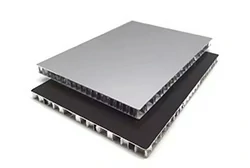
The stainless steel honeycomb core is the internal core material, while the stainless steel honeycomb panel is the finished composite panel formed by bonding the honeycomb core to face sheets. The former is a core material or semi-finished product, whereas the latter is a ready-to-use composite structure.
What's the difference between stainless steel honeycomb cores and aluminum honeycomb cores?
Aluminum honeycomb cores are better suited for lightweighting and cost control, while stainless steel honeycomb cores are ideal for structural applications requiring high-temperature resistance, corrosion resistance, shielding, flow straightening, filtration, or performance under complex operating conditions.
What are the common applications of stainless steel honeycomb cores?
Common applications include electromagnetic shielding and waveguide ventilation structures, airflow straightening and uniform distribution systems, filtration and cooling systems, industrial equipment work platforms, aerospace and energy equipment, and architectural sandwich panels.
What joining methods can you provide?
We offer various joining methods, including spot welding, laser welding, butt welding, brazing, and adhesive bonding, and can match the appropriate solution based on project requirements.
Can you provide samples?
Yes. We can confirm projects based on drawings, samples, and operating conditions, and support parameter verification prior to mass production. The current page content does not explicitly state a 'free sample' policy or standard sample terms; we recommend adding your actual policy at the time of publication.
Can it be customized?
Yes. Stainless steel honeycomb cores can be customized in terms of material grade, cell geometry, cell size, core thickness, overall dimensions, joining method, delivery condition, and other special specifications.