Honeycomb seals are a specialized application of honeycomb core materials used in high-speed rotating equipment, commonly found in gas turbines, steam turbines, compressors, and certain aircraft engine components. Their working surface consists of regular hexagonal cells and is primarily used in the sealing area between rotors and stators to meet requirements for clearance control, leakage reduction, and operational stability.
Certifications Available from Chalco
Chalco offers honeycomb seals in various materials, specifications, and structural forms, supporting drawing-based customization, surface treatments, and project-oriented delivery. Depending on project requirements, Chalco can provide the following certifications:
- ISO 9001 Certification
- ISO/TS 22163 Certification
- IATF 16949 Certification
- German DIN 6701 Certification
- Classification Society Certification
- EU EN 15085 Certification
Honeycomb Seal Specifications
Chalco provides a wide range of honeycomb seal specifications tailored to different equipment configurations, sealing types, and operating conditions. Standard products cover various inner diameters, foil thicknesses, material systems, and structural forms, using high-temperature honeycomb core structures for gas turbines, steam turbines, compressors, and other high-temperature sealing applications. For drawing-based manufacturing projects, honeycomb dimensions, geometric profiles, and material solutions can be further customized.
Main Specification Range
| Item | Available Range |
| Honeycomb Inner Diameter / Flat-to-Flat Distance | D0.8 mm (0.031"), D1.6 mm (0.062"), D2.5 mm (0.098"), D3.2 mm (0.125") |
| Foil Thickness | 0.03048, 0.03556, 0.0508, 0.0762, 0.1016, 0.127, 0.1524, 0.2032, 0.2704 mm |
| Total Material Thickness Range | 0.025–0.28 mm (0.001"–0.011") |
| Common Materials | Hastelloy X, Hastelloy S, Haynes 214, Haynes 224, Haynes 230, Haynes 233, Stainless Steel, GH3030, GH3039, GH3536, etc. |
| Sealing Types | Honeycomb labyrinth, straight honeycomb, curved honeycomb |
| Shape | Circular, rectangular, customizable |
| Structural Forms | Wide-edge type, beveled type, perforated type, threaded type, frameless type, framed type |
| Surface Treatments | Electroless nickel plating, tin plating, oxidation-resistant coating |
| Operating Temperature | Up to 1200°C (2192°F) |
Common Honeycomb Size Chart
| Honeycomb Inner Diameter / Flat-to-Flat Distance | Foil Thickness |
| D0.8 mm (0.031") | 0.03048, 0.03556, 0.0508, 0.0762, 0.1016 mm |
| D1.6 mm (0.062") | 0.03048, 0.03556, 0.0508, 0.0762, 0.1016, 0.127 mm |
| D2.5 mm (0.098") | 0.03556, 0.0508, 0.0762, 0.1016, 0.127, 0.1524 mm |
| D3.2 mm (0.125") | 0.0508, 0.0762, 0.1016, 0.127, 0.1524, 0.2032, 0.2704 mm |
Not sure which size suits your project? Contact Chalco for the optimal solution.
Instant QuoteSpecification Notes
Smaller honeycomb inner diameters are generally better suited for finer sealing structures, while thicker foils enhance structural strength and overall stability. In practice, selection should consider operating conditions, sealing location, material requirements, and assembly methods to ensure compatibility among honeycomb size, foil thickness, and structural form.
What are the common structural forms of honeycomb seals?
Chalco typically offers honeycomb seals in three main forms-ring, strip, and segmented-to accommodate different equipment assembly methods, maintenance conditions, and sealing location requirements.
Ring-Type Honeycomb Seal
The ring-type structure is a continuous circular form, ideal for locations requiring an uninterrupted sealing surface. It offers superior integrity and is well-suited for full-circumference mating configurations.
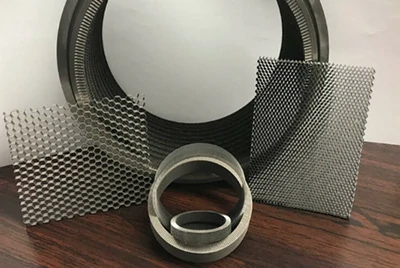
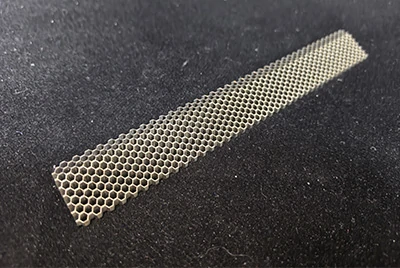
Strip-Type Honeycomb Seal
Strip-type structures are typically supplied as strips or tapes, suitable for subsequent cutting, forming, assembly, or welding/brazing onto designated areas. Their advantage lies in greater flexibility during processing and installation.
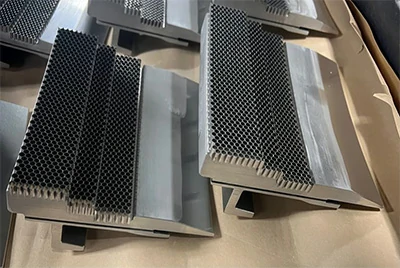
Segmented Honeycomb Seal
Segmented structures consist of multiple pieces, making them ideal for modular installation, replacement, and maintenance. They are particularly suitable when full-ring assembly is impractical or when future servicing is required.
What materials does Chalco offer for honeycomb seals?
-
Stainless Steel Honeycomb Seals
Grades: 304, 316, 316L
Temperature Resistance: Approximately 500–925°C
-
Nickel-Based Superalloy Honeycomb Seals
Grades: Hastelloy X, Hastelloy S, Haynes 214, Haynes 224, Haynes 230, Haynes 233, GH3030, GH3039, GH3536, GH536
Temperature Resistance: Approximately 650–1149°C
-
Inconel Honeycomb Seals
Grades: Inconel 625, Inconel 718
Temperature Resistance: Approximately 650–982°C
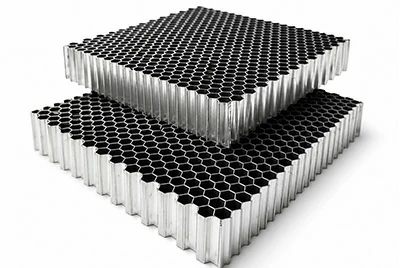
In addition to supplying honeycomb cores separately, stainless steel core structures can also be further processed into finished stainless steel honeycomb panels according to project requirements.
Related Honeycomb Core Products

Typical Applications of Chalco Honeycomb Seals
-
 Gas Turbine Honeycomb Seals
In gas turbines, honeycomb seals are primarily used to minimize airflow leakage, enhance clearance control, and improve sealing efficiency. In low-pressure gas turbines, they are typically brazed onto shrouds to boost combustion efficiency, reduce fuel consumption and CO₂ emissions, and mitigate potential damage from rotor eccentricity.
-
 Steam Turbine Honeycomb Seals
In steam turbines, honeycomb seals are employed in critical areas where both sealing performance and long-term operational stability are essential. These structures are also suitable for power plant and industrial turbine systems and must align with operating conditions, installation geometry, and maintenance requirements.
-
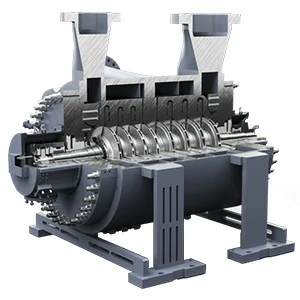 Compressor Honeycomb Seals
In industrial compressors-especially high-pressure centrifugal compressors and high-speed turbomachinery-honeycomb seals are a common sealing solution. They not only control leakage but also enhance operational stability and structural compatibility under high rotational speeds.
-
 Aircraft Engine Honeycomb Seals
In aircraft engines, honeycomb seals are used in areas demanding precise airflow leakage control and high-temperature performance, typically in compressor or turbine sections, working in conjunction with blade tips or labyrinth teeth. Such applications impose stricter requirements on dimensional accuracy, materials, and manufacturing processes.
What are the advantages of honeycomb seals?
Honeycomb seals create more effective flow paths in rotating equipment, reducing airflow leakage, minimizing air loss, and improving aerodynamic efficiency.
Reduced Clearance and Leakage
Honeycomb seals help further optimize sealing clearance, minimizing leakage of high-temperature, high-pressure gases at critical locations. The more precisely the clearance is controlled, the lower the airflow loss, enabling the equipment to maintain a more stable sealing state.
Enhanced Aerodynamic Efficiency and Output Capability
By reducing air leakage and flow losses, honeycomb seals improve airflow utilization within flow passages, allowing more effective energy to act directly on the system, thereby boosting equipment output and overall operational efficiency.
Lower Heat Rate and Fuel Consumption
In gas turbines and similar equipment, reduced leakage translates to less energy loss. Honeycomb seals enhance sealing performance, helping lower system heat rate, minimize fuel waste, and improve economic efficiency.
Reduced Operating Costs and Emissions
Improved sealing efficiency reduces unnecessary energy loss under identical operating conditions, lowering fuel costs and CO₂ emissions-delivering greater long-term value for ongoing operations.
Improved Operational Stability and Reduced Component Damage Risk
With optimized sealing clearance, airflow leakage between turbine or rotor components is further controlled, helping mitigate potential damage from rotor eccentricity, localized rubbing, or abnormal flow patterns, thus enhancing system stability.
Suitable for High-Temperature, High-Speed Sealing Requirements
In environments with hot gas erosion, thermal stress, and complex operating conditions, honeycomb seals better meet the performance and reliability demands of critical sealing zones, making them highly valuable in gas turbines, aircraft engines, and high-speed compressors.
How do honeycomb seals differ from labyrinth seals?
Different Structural Principles
Labyrinth seals rely on tooth-shaped throttling to create pressure drops, whereas honeycomb seals introduce hexagonal cells on the sealing surface, causing more complex interactions with leakage flow. Thus, under the same clearance, honeycomb seals generally achieve lower leakage rates.
Different Sealing Performance
For applications requiring stricter leakage control, honeycomb seals typically offer superior performance. They reduce air loss by altering flow characteristics in the sealing zone, while labyrinth seals represent a more traditional throttling-based approach.
Different Operational Behavior
Beyond leakage control, honeycomb seals often enhance operational stability in certain compressors and turbomachinery. In contrast, labyrinth seals can be more susceptible to circumferential flow and cross-coupling forces under specific conditions.
Different Selection Logic
Honeycomb seals are not universally superior to labyrinth seals in all scenarios. Actual performance depends on seal geometry, honeycomb cell design, operating clearance, rotational speed, and pre-swirl conditions. The key is selecting the most suitable option based on specific equipment and operating parameters.
Manufacturing Process and Quality Control of Honeycomb Seals
Honeycomb seals typically consist of an outer ring or substrate combined with a honeycomb core. A common manufacturing approach involves first forming metal strip into the honeycomb core, assembling it with the outer ring or substrate, and then applying suitable honeycomb core joining methods such as brazing before heat treatment and inspection.
- Spot-weld forming: The metal strip is first processed and spot-welded into a honeycomb core to achieve the required cell size, length, width, and height, establishing a solid foundation for subsequent assembly.
- Vacuum brazing: After assembling the honeycomb core with the outer ring or substrate, vacuum brazing joins them into a single unit, ensuring more stable bonding quality and structural consistency.
- Heat treatment: Depending on material and process requirements, stress-relief, solution, or aging heat treatments may be applied to enhance structural stability and reduce deformation risk.
- Quality inspection: Finished products typically undergo visual inspection, dimensional verification, and microscopic examination to confirm that the honeycomb structure, joint integrity, and overall consistency meet specifications.
- Quality documentation: For parts manufactured per drawings, OEM supply, or MRO replacement projects, Chalco can provide material, process, and inspection-related documentation as required to facilitate acceptance and project traceability.
Chalco Honeycomb Seal R&D, Manufacturing, and Testing Capabilities
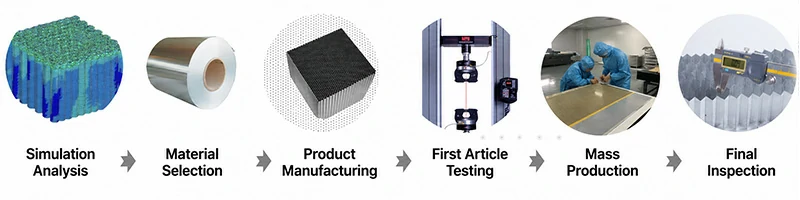
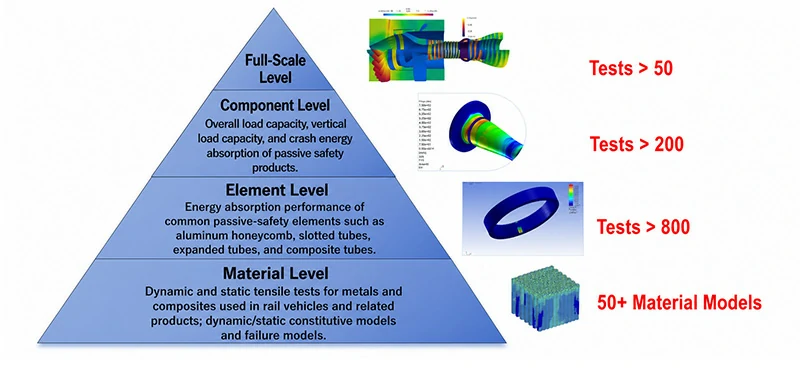
Chalco offers end-to-end support for honeycomb seals-from simulation analysis and material selection to finished-part manufacturing, first-article testing, volume production, and final inspection-helping customers efficiently complete design validation, prototype verification, and project delivery.
End-to-End Capability Support
- Simulation analysis: Evaluates honeycomb structure performance under load, impact, deformation, and energy absorption conditions.
- Material selection: Matches materials such as stainless steel, nickel-based superalloys, Hastelloy, and Haynes based on temperature, pressure, media, and operating conditions.
- Finished-part manufacturing: Supports honeycomb core forming, structural machining, welding/brazing, surface treatment, and component assembly.
- First-article testing: Prototype verification prior to volume production reduces downstream manufacturing and assembly risks.
- Volume production: Stable production according to project requirements ensures consistency in dimensions, structure, and materials.
- Finished-part inspection: Product quality is verified through dimensional inspection, visual checks, microscopic observation, and performance testing.
Testing and Inspection Equipment
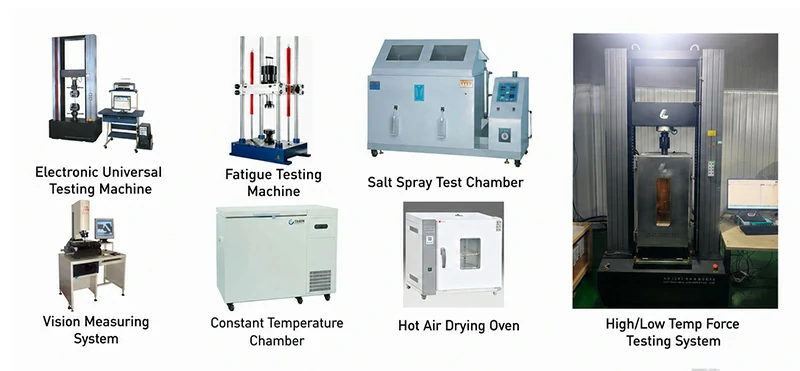
Chalco is equipped with universal electronic testing machines, fatigue testers, salt spray chambers, vision measuring systems, environmental chambers, high/low-temperature force testers, large drop-weight impact testers, and precision microscopic and metrology equipment-enabling comprehensive material validation, structural testing, and factory inspection for honeycomb seals.
What information is needed before requesting a quote?
Honeycomb seals are typically custom-made products. Providing complete key information upfront helps Chalco deliver a more professional, suitable quotation and solution faster.
- Application equipment: Please specify whether the seal will be used in gas turbines, steam turbines, compressors, aircraft engines, or other equipment to help determine operating conditions and structural compatibility.
- Operating temperature: Provide the temperature range to help identify the most suitable material system and joining process.
- Drawings or samples: If available, please include drawings, physical samples, or existing part details to enable more accurate assessment of dimensions and manufacturing methods.
- Structural configuration: Indicate whether you need annular, strip, or segmented forms to help determine delivery format and assembly method.
- Material requirements: Specify preferred materials such as stainless steel, nickel-based alloys, Hastelloy, Haynes, or FeCrAlY to facilitate preliminary selection based on operating conditions.
- Target dimensions: It's recommended to provide key parameters such as overall dimensions, honeycomb cell size, foil thickness, and honeycomb height to minimize communication discrepancies later.
- Project type: Please clarify whether this is an OEM supply or an MRO replacement project to align manufacturing and delivery approaches accordingly.
- Order quantity: Provide sample quantities, volume requirements, or annual procurement plans to help expedite production scheduling and quoting.
FAQ
Can Chalco provide samples?
Yes. For new projects, material validation, or structural confirmation, Chalco can evaluate the feasibility of providing test samples based on drawings or sample requirements. Samples are typically used to verify honeycomb dimensions, material, structural form, and subsequent assembly compatibility.
What is the minimum order quantity (MOQ) for honeycomb seals?
The MOQ depends on material grade, honeycomb dimensions, structural configuration, and processing complexity. Small-batch prototyping is feasible for standard materials and common sizes; for special alloys or complex structures, the MOQ must be confirmed based on production processes and material procurement constraints.
What is the typical lead time for custom honeycomb seals?
Lead time is typically influenced by material availability, drawing complexity, processing methods, heat treatment, and inspection requirements. Standard configurations have relatively shorter delivery cycles, while projects involving special alloys, complex geometries, or additional certification documentation require individual lead time confirmation.
Can Chalco reverse-engineer honeycomb seals from existing parts or samples?
Yes. If complete drawings are unavailable, customers can provide legacy parts, sample photos, or key dimensional data. Chalco can perform preliminary structural assessment based on available samples and assist in confirming manufacturable solutions.
What quality documentation can be provided for honeycomb seals?
Depending on project requirements, Chalco can provide material certifications, dimensional inspection records, process documentation, and shipping inspection reports. For OEM, MRO, or engineering projects, the document list can be confirmed in advance according to customer acceptance criteria.
How should honeycomb seals be inspected upon receipt?
It's recommended to focus on checking surface condition, honeycomb structural integrity, critical dimensions, material markings, quantity, and accompanying documentation. For projects with stringent assembly requirements, verify overall dimensions, mounting interfaces, and joint areas against the drawings.
How is the honeycomb structure protected during shipping?
Given the delicate nature of honeycomb seals, packaging typically includes anti-compression, anti-deformation, and anti-abrasion measures. For annular, segmented, or specially surface-treated products, compartmentalized, shock-absorbing, or custom packaging may be used based on size and structure to minimize transit damage risk.