The key question in selecting aluminum for appearance parts is not simply which alloy can be anodized, but which alloy route best matches the target finish, part geometry, and processing method. If that judgment is off at the beginning, the most common result is not that the part cannot be made, but that the appearance misses the target, the process route becomes difficult, sample iterations increase, or batch-to-batch consistency becomes hard to control in production.
- Project priorities: Appearance parts usually need to balance surface finish, process compatibility, and batch consistency—not just whether an alloy grade is commonly used.
- Alloy routes: Different alloys are better at different jobs. Some are better for higher surface quality, some for balanced housing applications, and some for projects that need to balance appearance and structural requirements.
- Finish routes: Bright, natural, bead-blasted, brushed, black, or mirror anodized finishes do not place the same demands on the substrate.
- Evaluation method: Material selection should be judged together with temper, processing route, and surface treatment requirements—not as separate decisions.
Chalco Aluminium can help narrow the material route based on your part function, target finish, processing method, and drawing requirements, then evaluate alloy, specification, manufacturing, and the appropriate route within broader aluminum anodizing solutions under the same project conditions.
Why Appearance-Part Material Selection Cannot Follow the Same Logic as Structural Parts
Structural parts are usually selected first by strength, corrosion resistance, dimensions, and cost; appearance parts must also bring surface finish, process compatibility, and batch consistency into the decision from the start.
That is why, even with the same anodizing process, different appearance-part projects should not automatically follow the same alloy route.
In many cases, the problem is not that the material cannot be anodized, but that the alloy route does not match the project priority. Bright finish, bead blasting, formability, dimensional stability, and appearance consistency are different starting points, so the alloy choice should not be the same.
First Decide Which Alloy Route Your Project Is Closer To
For appearance parts, identifying the alloy route first is usually more effective than focusing on a single grade too early.
Different alloys solve different problems: some are better for surface appearance, some for decorative effects, some for balanced housing applications, and some for projects that must balance appearance and structural requirements.
-
High Surface Quality Route
Better for projects that prioritize bright appearance, natural metallic feel, and a fine surface finish.
1050, 1070
-
Decorative and Mirror Route
Better for projects that prioritize mirror effect, decorative appearance, and surface uniformity.
5005, 5505
-
Mainstream Housing Route
Better for housing projects that need to balance appearance, formability, and production compatibility.
5052, 5252
-
Appearance–Structure Balance Route
Better for projects that also need to consider dimensional stability, part geometry, and the processing route.
6063A
Application-Based Selection for Appearance Parts: First Identify What Kind of Project You Have
For appearance parts, judging by application scenario first is usually more effective than comparing a single alloy grade at the beginning.
Different projects solve different priorities first: some focus on balancing housing formability and appearance, some on decorative surface uniformity, some on bright or mirror visual effects, and some must bring structural form and dimensional stability into the decision from the start.
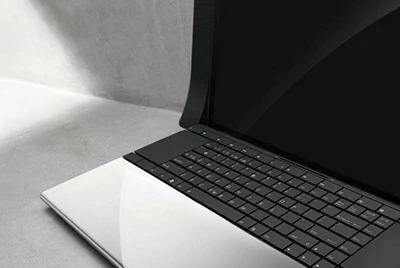
Consumer Electronics Housings: Start with Appearance, Formability, and Production Fit
Typical parts include smartphone housings, laptop housings, tablet housings, speaker housings, e-cigarette housings, SIM trays, and some mobile phone mid-frame components.
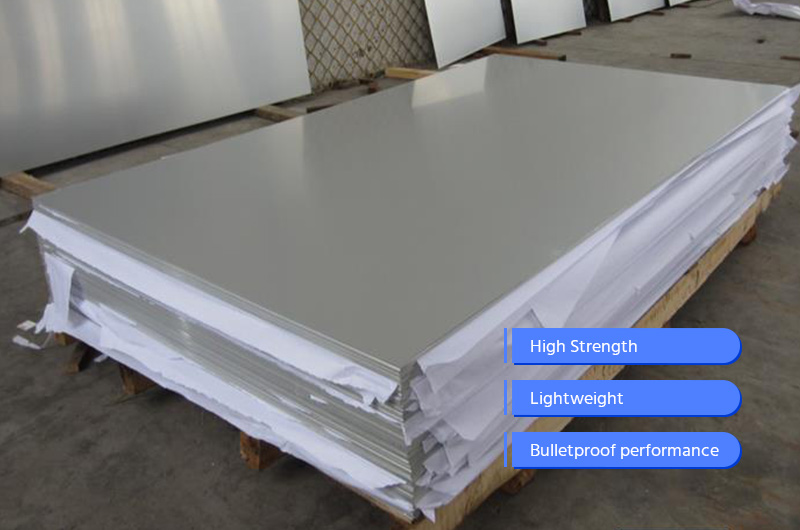
The first priority for this type of project is balancing appearance, formability, and production compatibility. Sheet-based housing projects can also be evaluated through the 3C digital housing aluminum sheet route, while internal structural parts with more demanding forming requirements may require a separate high-formability aluminum solution.
- Preferred alloys: 5052, 5252, 6063A
- Common finish routes: bead-blast anodizing, natural anodizing, black anodizing
- Manufacturing focus: forming compatibility, appearance control after CNC machining, dimensional fit in assembly areas, and batch consistency
Click to view high-strength anodizing aluminum sheet for consumer electronics housings

Decorative Surfaces and Panels: Start with Uniformity and Decorative Appearance
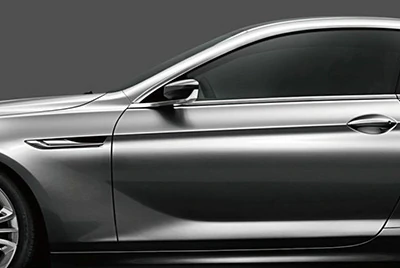
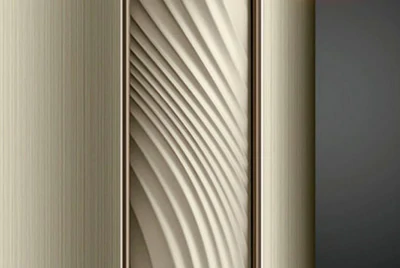
Typical parts include decorative panels, exterior trim surfaces, strips, some large visible panels, and decorative parts with higher appearance requirements.
For this type of project, surface uniformity, visual integrity, and decorative effect usually come first.
- Preferred alloys: 5005, 5505
- Common finish routes: natural anodizing, black anodizing, brushed anodizing
- Manufacturing focus: surface flatness, color consistency across large visible areas, and appearance control after light forming
Bright and Mirror-Finish Parts: Start with Surface Appearance, Not Strength
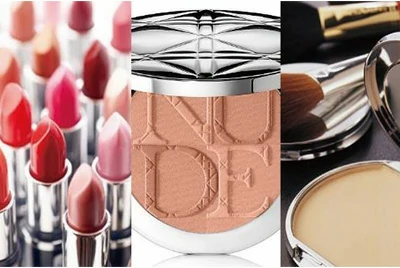
Typical parts include lipstick tubes, mirror decorative parts, some bright appearance parts, and parts that are polished before anodizing.
The first priority for this type of project is brightness, mirror effect, and surface fineness—not structural strength.
- Preferred alloys: 1050, 1070, 5505
- Common finish routes: polishing / mirror treatment + anodizing, bright natural anodizing
- Manufacturing focus: polish compatibility, surface defect control, and lightweight structural judgment when appearance takes priority
Structural Appearance Parts: Start with Dimensional Stability and Processing Route
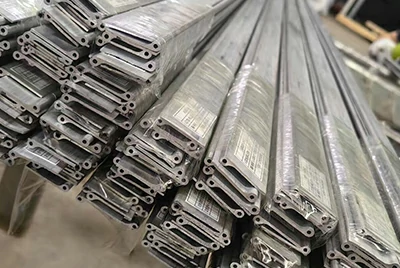
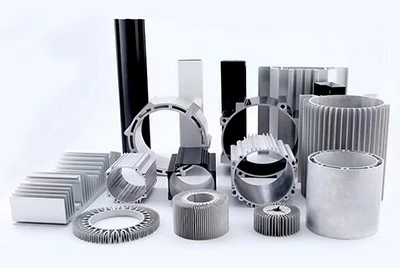
Typical parts include frame parts, profile housings, housings that must keep a good appearance after CNC machining, and appearance parts with higher dimensional stability requirements.
These projects cannot be judged by surface appearance alone; part geometry, processing route, and dimensional stability must be considered together. If a 3C project moves beyond the mainstream appearance-alloy route and requires a substantially higher-strength thin-sheet direction, high-strength and high-toughness 7-series aluminum sheet should be evaluated separately against the project's forming, structural, and surface requirements.
- Preferred alloys: 6063A, 5052
- Common finish routes: bead-blast anodizing, natural anodizing, black anodizing
- Manufacturing focus: profile forming, post-CNC distortion control, corner-detail control, and synchronizing assembly dimensions with appearance requirements

If your project already has a defined part type, target finish, or processing method, Chalco Aluminium can help narrow the alloy range, finish route, and manufacturing priorities for that application before moving into grade-level and specification-level decisions.
How to Choose Common Alloys: First Decide Which Alloy Group Is Closest to Your Project
For appearance parts, alloy selection is not about which one is 'better,' but which alloy group is closer to your project priorities.
1050 / 1070-Better for Bright and High-Surface-Quality Projects
Best for bright-finish parts, light decorative parts, and polished anodized components.
Often used where brightness, natural metallic feel, and fine surface appearance matter more than structural demands.
5005 / 5505-Better for Decorative Surfaces and Mirror-Effect Projects
Best for decorative panels, trim strips, exterior surfaces, and mirror decorative parts.
Often used where decorative appearance, surface uniformity, and mirror effect are the main priorities.
5052 / 5252-Better for Mainstream Housing Projects
Best for smartphones, laptops, tablets, speakers, e-cigarettes, SIM trays, and similar housing parts.
Often used where appearance, formability, and production compatibility need to be balanced.
6063A-Better for Projects That Balance Appearance and Structure
Best for frame parts, profile housings, CNC appearance parts, and structural housings.
Often used where appearance, dimensional stability, and the processing route need to be considered together.
If you can already tell which alloy group your project is closer to, Chalco Aluminium can further narrow the grade, temper, thickness range, and finish route based on your part type, target finish, processing method, and drawing requirements—so the result is more suitable for sampling and quotation.
Related Anodized Aluminum Products

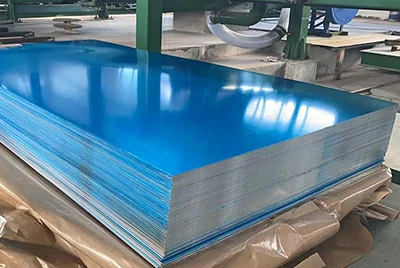
Anodized Aluminum Sheet
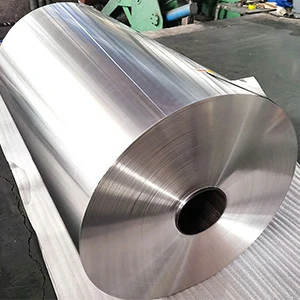
Anodized Aluminum Coil
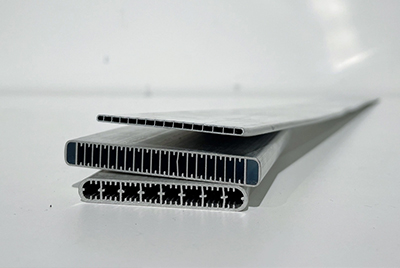
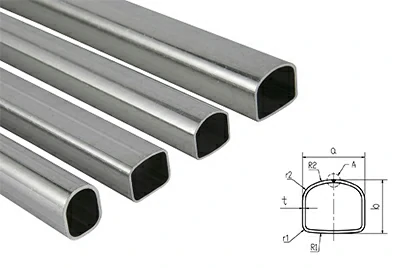
Anodized Aluminum Extrusions
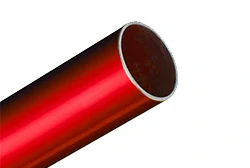
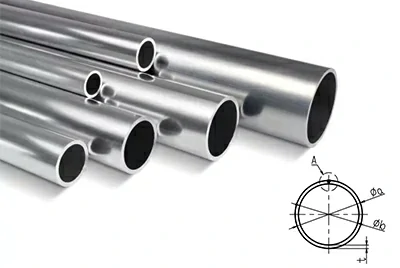
Anodized Aluminum Tubing
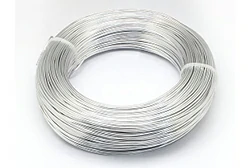
Anodized Aluminum Wire
Once the Finish Route Is Set, Material Selection Narrows Further
After the application scenario and alloy range are clear, the finish route will usually screen out another round of less suitable options.
Even within anodizing, natural, black, bead-blasted, brushed, and mirror finishes do not stress the material in the same way: some are more sensitive to surface cleanliness, some to consistency, and some to stable performance after bead blasting.
- Natural anodizing: places more emphasis on the material's own surface condition, cleanliness, and consistency.
- Black anodizing: makes color stability and visual-surface control issues easier to expose.
- Bead-blast anodizing: is closer to the mainstream housing route and usually places more emphasis on fine texture and batch stability.
- Brushed anodizing: is not only about the brushing itself, but whether the grain direction and overall appearance remain consistent.
- Mirror / post-polish anodizing: depends more heavily on the material's own surface performance; not every alloy is suitable for this route.
If the finish route is already largely fixed, Chalco Aluminium can further narrow the material and process options for sampling and quotation based on the alloy range, processing method, and drawing requirements.
For Appearance Parts, Type II Is Usually the More Common Starting Point
For appearance parts, the earlier priority is usually color, visual feel, touch, and overall consistency. That is why most housings, panels, and decorative parts start with the more appearance-oriented Type II route.
Hardcoat is better suited to parts with clearer wear, functional-surface, or service-condition requirements, rather than being the default priority for all appearance parts. Rod or bar components centered on wear resistance and Type III hardcoat can be evaluated through Type III hard-anodized aluminum bar, while projects with explicit antimicrobial requirements follow a different functional route through antimicrobial anodized aluminum.
- Type II is more common: housings, panels, decorative parts, and natural or black appearance parts
- Hardcoat should be evaluated separately: projects with higher wear requirements or clearer functional-surface demands
- Common mistake: assuming that 'thicker' and 'harder' automatically means 'better for appearance parts'
If your project is driven first by appearance, it is usually more effective to define the alloy, finish route, and appearance requirements clearly before putting the focus on Hardcoat.
Click to view everything about anodizing
The Most Common Rework Issues in Appearance-Part Projects
Rework in appearance parts often does not happen because the material choice is completely wrong, but because the material, manufacturing route, and target anodized appearance do not end up pointing to the same result.
The problems most likely to push samples and production off track are usually the following.
Unstable overall appearance after anodizing
Typical signs include color variation, uneven shade, and local light/dark contrast. For appearance parts, these issues are more common—and more likely to affect sample approval—than a simple 'can this color be made?' question.
The surface looks acceptable after bead blasting, but non-uniformity becomes more obvious after anodizing
For many housing parts, the issue is not the bead blasting itself, but the fact that streaks, contrast differences, and overall non-uniformity become more visible after anodizing.
Edges, holes, grooves, and complex features are harder to control
The most difficult areas are often not the main surfaces, but corners, openings, deep grooves, and assembly-detail zones, where the overall appearance is more easily affected.
Local variation in profiles or structural parts becomes more visible after anodizing
For frame parts, profile housings, and some structural appearance parts, the challenge is often not whether they can be made, but that local lines, structural differences, or area-to-area appearance variation become easier to see after anodizing.
Surface residue or poor pre-treatment will turn directly into visible marks
Protective-film residue, oil, adhesive traces, or insufficient surface cleaning may look minor beforehand, but after anodizing they often show up as mottling or localized appearance defects.
These issues show up during sampling or production, but their roots usually go back to the earlier alloy choice, part geometry, processing route, and target finish route.
Chalco Aluminium can review these higher-risk points with your project conditions before sampling, so more of the rework risk is removed up front rather than being corrected after samples are made.
If you want to learn more about anodizing-related issues, you can also view our guide to anodizing defects.
Before Sending an RFQ, Clarify These Key Points
When requesting a quotation for appearance-part projects, it helps a lot to make the following points clear first:
- Part type
- Target finish
- Alloy direction
- Processing method
- Drawing or reference sample
The clearer this information is, the faster Chalco Aluminium can narrow the practical options, reduce repeated communication, and move material selection, finish recommendations, and sample evaluation into an executable range.
Frequently Asked Questions
Which aluminum alloy is better for anodized appearance parts?
No single alloy fits every appearance part.
For bright and fine surface finishes, start with 1050 / 1070; for decorative surfaces and mirror effects, start with 5005 / 5505; for mainstream housing parts, start with 5052 / 5252; if dimensional stability and part geometry also matter, 6063A is often worth evaluating first.
Which alloys are more likely to produce a more uniform anodized appearance?
Uniformity depends not only on the process, but also on alloy, temper, pre-treatment, and part geometry.
For large visible surfaces, decorative parts, and high-visibility areas, the material's own surface behavior is usually more important; for housings, formability and batch stability also need to be considered.
Which alloys should be considered first for black anodized appearance parts?
For mainstream housing parts, start with 5052 / 5252; for decorative surfaces or panel-type parts, 5005 / 5505 are also worth evaluating.
What matters first in black anodizing is not only whether the color can be made, but whether the overall visual consistency of the part can be controlled.
Why are some materials more stable for bead blasting followed by anodizing?
Because bead blasting is only the starting surface condition; once anodized, substrate differences and overall consistency issues become more obvious.
For housing parts, bead-blast anodizing is usually better judged within the mainstream housing-alloy range.
How should I choose between 5052 and 5252 for appearance parts?
If the project is closer to a mature, balanced, mainstream housing route, start with 5052.
If the project is more sensitive to post-anodizing surface quality and appearance grade, 5252 is usually worth evaluating alongside it.
How should I choose between 6063A and 5052 for appearance parts?
If the project is closer to sheet-based housings, stamped parts, and mainstream consumer-electronics housings, start with 5052.
If the project is closer to frame parts, profile housings, and CNC appearance parts, and dimensional stability matters more, 6063A is usually the better first option to evaluate.
How can I reduce batch-to-batch color variation in anodized appearance parts?
First narrow the alloy range, temper, target finish, visible-surface requirements, and processing route.
For appearance parts, batch color variation is usually not caused by a single process step, but by material, pre-treatment, and finish route not being aligned to the same target.
What information should be defined in a drawing or RFQ at minimum?
At a minimum, define the part type, target finish, alloy direction, processing method, and drawing or reference sample.
The clearer these inputs are, the easier it is to narrow material selection, finish recommendations, and the sampling direction into an executable range.
Start Your Project Evaluation
If you already have the part type, target finish, alloy direction, processing method, or existing drawings, samples, and material information, Chalco Aluminium can use those project conditions to narrow the alloy range, finish route, and sampling direction into a more executable scope.
That helps you move into an effective quotation stage faster, reduces repeated clarification early on, and makes later material decisions, finish recommendations, and sample evaluation much clearer.