Die-to-package bonding materials are metallic interconnect materials used to establish electrical connections between chip pads and package substrates, leadframes or power terminals. They mainly include round bonding wires and rectangular bonding ribbons.
Chalco can supply gold bonding wire, copper-based bonding wire, aluminum bonding wire, silver alloy bonding wire and aluminum bonding ribbon. Materials can be matched to the package structure, pad metallization, current-carrying requirements, bonding process and reliability requirements.
These products are suitable for IC, LED, discrete device, IGBT, SiC and power module packaging. Wire diameter, ribbon dimensions, breaking load, elongation, alloy composition and coating systems can be customized.
Selecting materials for a new packaging project or evaluating an alternative to your current bonding wire? Send the current material, wire diameter, pad metallization, package type and bonding equipment information. Chalco can help match a suitable bonding material.
Bonding material range for semiconductor packaging
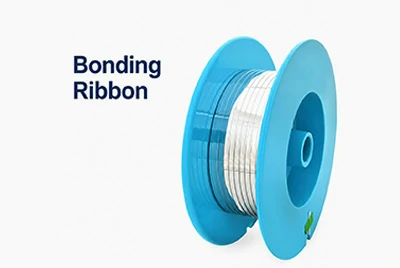
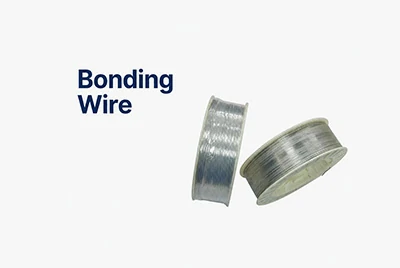
Chalco's die-to-package interconnect materials are mainly divided into bonding wires and bonding ribbons. Bonding wires are suitable for fine bond sites, complex loops and automated high-volume packaging, while bonding ribbons provide a larger contact area and are mainly used for high-current connections in power devices.
Bonding wire for semiconductor packaging
Bonding wire for semiconductor packaging is a fine metal wire used to connect chip pads to package substrates, leadframes or device terminals and establish electrical interconnections inside the package. Wire composition, diameter, breaking load and elongation affect ball formation, loop control, bond strength and package reliability.
Chalco can supply copper, aluminum, gold and silver bonding wires. Wire diameter and mechanical properties can be matched to the package type, pad material and bonding equipment.
-
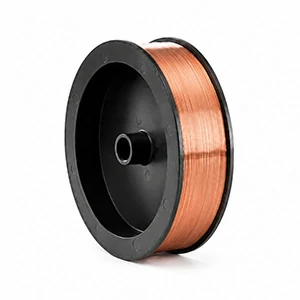
Product types: Bare copper bonding wire, coated copper bonding wire and special copper-based bonding wire
Copper wire purity: Bare copper bonding wire Cu ≥4N
Wire diameter range: 18–50 μm
-
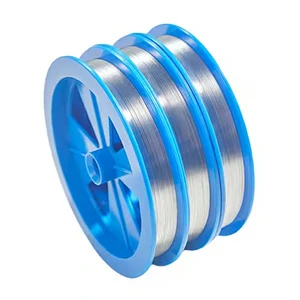
Material types: 4N5 high-purity aluminum, 4N aluminum alloy and Si-Al alloy
Wire diameter range: 18–500 μm
Main applications: Fine wire for IC and hybrid circuits; heavy wire for power devices
-
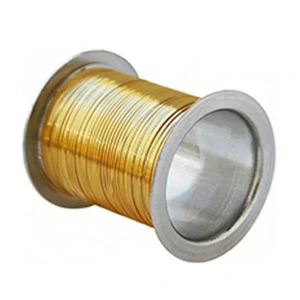
Product types: 4N, 2N and gold alloy wire
Wire diameter range: 15–50 μm
Key properties: Electrical resistivity approximately 2.4–2.9 μΩ·cm; elongation approximately 1%–15%
-
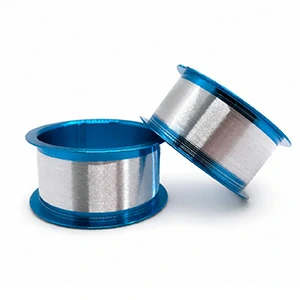
Product types: Ag 85%–99.99% and gold-coated silver alloy wire
Wire diameter range: 15–50 μm
Key properties: Electrical resistivity approximately 1.8–4.8 μΩ·cm; elongation approximately 2%–25%
Need a clearer comparison of gold, silver, copper and aluminum bonding wires in terms of performance, process, cost and suitable packages? Read "Gold, silver, copper and aluminum bonding wire comparison" to select a more suitable material for your project.
Bonding ribbon for semiconductor packaging
Bonding ribbon for semiconductor packaging is a rectangular metallic interconnect material with a large contact area, low connection profile and low parasitic inductance. It is mainly used in power devices and high-frequency packages. Chalco can supply aluminum, gold, copper and silver bonding ribbons with smooth edges and no obvious burrs, suitable for room-temperature ultrasonic bonding.
-
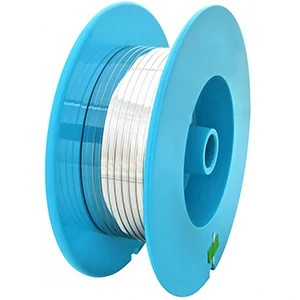
Width range: 0.50–2.00 mm
Thickness range: 0.10–0.30 mm
Packaging: 300 m/spool, 88/120 spool
-
Gold bonding ribbon
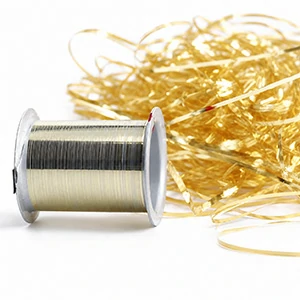
Width range: 0.38–2.50 mm
Thickness range: 0.013–0.050 mm
Packaging: 100 m/spool, AL-2/AL-4 spool
-
Copper bonding ribbon
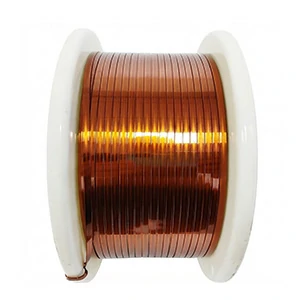
Width range: 0.50–2.00 mm
Thickness range: 0.10–0.30 mm
Packaging: 300 m/spool, 88/120 spool
-
Silver bonding ribbon
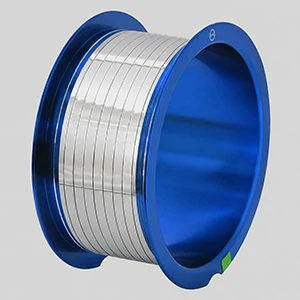
Width range: 0.50–2.00 mm
Thickness range: 0.10–0.30 mm
Packaging: 300 m/spool, 88/120 spool
Bonding wire vs bonding ribbon
Bonding wire has a round cross-section and is suitable for fine-pitch pads, complex loops and multidirectional interconnections. Bonding ribbon has a rectangular cross-section and can provide a larger contact area within limited space, making it more suitable for high-current and low-profile connections.
| Comparison item | Bonding wire | Bonding ribbon |
| Cross-section | Round | Rectangular |
| Bond and contact area | Smaller contact area, suitable for fine pads | Larger contact area, suitable for large pads |
| Current-carrying capacity | Fine wire for signal interconnects; heavy wire can be used for power connections | Better suited to high-current and high-power interconnects |
| Package space | Supports high, low or complex loops | Low connection profile, reducing space requirements |
| Process compatibility | Ball bonding or wedge bonding | Typically ultrasonic wedge bonding |
| Typical applications | IC, LED, discrete devices and hybrid circuits | IGBT, SiC, power modules and high-frequency packages |
Bonding wire offers greater routing flexibility and is suitable for small pads, narrow pitches and complex connection paths. Bonding ribbon focuses more on contact area, current-carrying capacity and space utilization in power packages. The final choice should also consider pad dimensions, operating current, loop height, bonding equipment and tool specifications.
For a more detailed comparison of their processes, performance and applications, see: Wire bonding vs ribbon bonding
Key advantages of die-to-package bonding materials
Bonding wires and ribbons can establish stable interconnections between chip pads and package carriers. Different materials, dimensions and structures can meet requirements ranging from fine-pitch signal transmission to high-current connections in power devices.
- High electrical and thermal conductivity: Gold, copper, aluminum and silver alloys all provide good electrical conductivity, helping reduce interconnect resistance and improve heat transfer inside the device.
- Compatible with different package structures: Fine bonding wire is suitable for high-density layouts, small pads and complex loops, while heavy wire and bonding ribbon are suitable for IGBT, SiC and power modules.
- Flexible material selection: Gold wire emphasizes process stability, copper wire balances conductivity and cost, aluminum wire is suitable for ultrasonic wedge bonding, and silver alloy wire combines electrical conductivity, thermal conductivity and cost efficiency.
- Supports efficient automated bonding: Consistent wire diameter, breaking load, elongation and surface quality help improve ball formation, despooling and continuous bonding consistency.
- Supports package reliability: Matching the material, pad metallization and bonding process can reduce the risk of wire breakage, bond lift, heel cracks and interface failure.
- Supports miniaturization and high current: Round fine wire enables fine-pitch packaging, while rectangular bonding ribbon provides a larger contact area for low-profile, high-current interconnects.
- Supports cost optimization: A suitable solution can be selected from gold, copper, aluminum, silver alloy and coated systems according to the performance and reliability targets.
Bonding material applications
Chalco bonding wires and ribbons can be used in semiconductor packages ranging from fine-pitch signal interconnects to high-current power connections. Materials can be matched to the pad structure, current-carrying requirements and bonding process.
Power module, IGBT and SiC packaging
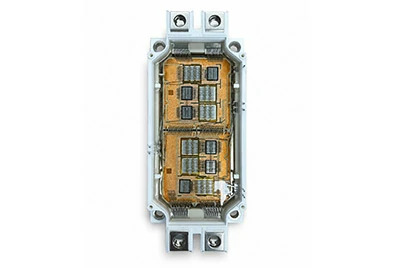
In power semiconductor bonding wire and ribbon applications, heavy aluminum wire, aluminum alloy wire and bonding ribbon are suitable for high-current and power-cycling conditions and can be used in MOSFETs, IGBTs, SiC devices and high-power control modules. Bonding ribbon provides a larger contact area and is suitable for low-profile, high-current connections.
LED packaging
Bonding wire for LED packaging can use gold bonding wire, silver alloy wire and gold-coated silver alloy wire in LED lighting, display, backlight and traffic signal packages, offering stable ball formation, electrical and thermal conductivity, and long-term operating reliability.
IC packaging
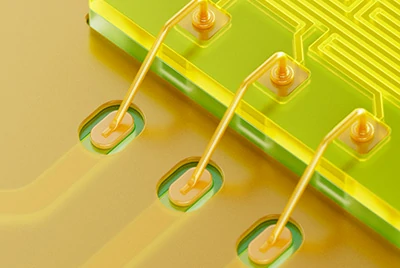
For IC packaging interconnects, gold wire, copper-based wire and silver alloy wire can be used in analog IC, digital IC and high-pin-count device packages, meeting the requirements for fine-pitch bonds, stable loops and high-speed continuous bonding.
Discrete semiconductor devices
These materials can be used in diodes, transistors, MOSFETs and other discrete devices. Fine bonding wire, heavy aluminum wire or bonding ribbon can be selected according to pad dimensions and operating current.
RF, microwave and optoelectronic devices
Suitable for RF modules, MMICs, microwave assemblies, lasers and optical communication devices. Fine gold wire and bonding ribbon can meet the requirements of small pads, high-frequency transmission and low parasitic inductance.
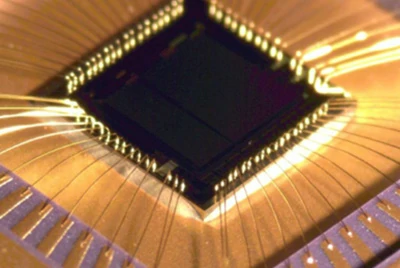
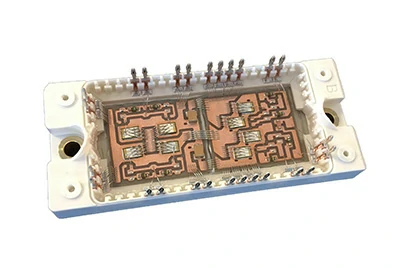
Hybrid circuits, MEMS and sensors
These materials can be used in ceramic-substrate hybrid circuits, MEMS, sensors and deep-cavity packages to establish reliable interconnections between chip pads and substrate traces or device terminals.
Bonding wire and ribbon production process
Chalco controls raw material composition, melting conditions, forming accuracy, heat treatment and surface cleanliness throughout production to achieve consistent wire diameter or ribbon dimensions, breaking load, elongation and despooling performance.
Raw material selection and composition design
High-purity raw materials are selected for gold, silver, copper, aluminum and their alloy systems. Microalloying or doping is designed according to the target conductivity, hardness, elongation, oxidation resistance and bonding performance.
Vacuum melting and continuous casting
The raw materials undergo vacuum melting, alloying and electromagnetic stirring to improve composition uniformity, followed by continuous casting into wire or ribbon billets suitable for subsequent processing. The equipment supports melting temperatures up to approximately 1,600°C and continuous casting charges up to 10 kg.
Wire drawing or precision rolling
Bonding wire is drawn through multiple passes to gradually reduce its diameter, while bonding ribbon is precision-rolled and sized to form a consistent rectangular cross-section. Deformation and processing speed in each pass must be carefully controlled to avoid surface scratches, dimensional variation and localized internal stress.
Intermediate annealing and property adjustment
Protective-atmosphere annealing is performed during drawing or rolling to adjust grain structure, hardness, breaking load and elongation. The equipment supports annealing temperatures up to 600°C to meet the mechanical property requirements of different loop profiles, low-loop packages and power packages.
Final drawing, precision rolling and surface treatment
Ultra-fine drawing or precision rolling is used to reach the final dimensions. Bare copper wire, palladium-coated copper wire, gold-palladium-coated copper wire and gold-coated silver wire also require continuous plating, while bonding ribbon production focuses on edge flatness, burr control and surface cleanliness.
Precision spooling and reel winding
Finished material is wound onto specified spools under constant tension. Winding pattern, pitch and despooling stability are controlled to reduce crossed wire, loose winding and abnormal feeding during high-speed bonding.
Inspection and clean packaging
Before shipment, material composition, wire diameter or ribbon width and thickness, breaking load, elongation, electrical resistivity, coating and surface quality are inspected. Qualified products are cleanly rewound and individually packaged to prevent moisture, oxidation, contamination and shipping damage. Breaking load and elongation are important indicators of bonding wire processability.
From bonding materials to package interconnects
After production, the bonding material must be matched with a suitable joining process based on the wire type, pad dimensions and package structure:
Ball bonding: Suitable for gold wire, copper wire and some fine silver alloy wires. It offers high bonding speed and is commonly used for IC, LED and high-volume automated packaging.
Wedge bonding: Suitable for aluminum wire, heavy wire and bonding ribbon, and can also be used for gold wire. It is suitable for small pads, low-profile connections, high-frequency packages and power device packaging.
Ball bonding or wedge bonding? Read "Ball bonding vs wedge bonding" to understand the differences and select a suitable joining process for your bonding material.
Bonding material selection and customization parameters
Bonding materials must be matched with the package structure, pad surface and bonding equipment. Based on the existing material or new project requirements, Chalco can adjust wire diameter, breaking load, elongation, alloy composition and coating structure.
- Package type: IC, LED, discrete devices, IGBT, SiC, power modules or hybrid circuits
- Material type: Gold, copper, aluminum or silver alloy; bare, alloyed or coated wire
- Product dimensions: Bonding wire diameter, or bonding ribbon width and thickness
- Mechanical properties: Breaking load, elongation, hardness and loop requirements
- Pad information: Metallization material and dimensions of the chip pad, substrate or leadframe
- Bonding process: Ball bonding, wedge bonding, ultrasonic bonding or thermosonic bonding
- Equipment and tools: Bonder model and capillary or wedge specifications
- Reliability requirements: Pull, shear, high-temperature, damp-heat, power-cycling or other validation tests
- Supply requirements: Spool model, length per spool, sample quantity and expected production volume
Pad metallization, pad dimensions, equipment type, wire material, diameter, elongation and tensile strength are all important factors in determining the bonding solution.
Send the current specification, package drawing or bonder information. Chalco can assist with material matching and sample validation.
Bonding material FAQ
What are die-to-package bonding materials?
They are metallic interconnect materials used to connect chip pads to package substrates, leadframes or power terminals. The main forms are round bonding wire and rectangular bonding ribbon.
Which bonding materials can Chalco supply?
Chalco can supply gold, silver alloy, copper and aluminum bonding wires, as well as gold, silver, copper and aluminum bonding ribbons. Dimensions, alloy composition and mechanical properties can be matched to the package and equipment requirements.
What is the difference between bonding wire and bonding ribbon?
Bonding wire has a round cross-section, offers flexible routing and is suitable for fine pitches and complex loops. Bonding ribbon has a rectangular cross-section and a larger contact area, making it suitable for low-profile, high-current and power device packages.
How should gold, silver, copper and aluminum bonding wires be selected?
Gold wire offers a stable process and is suitable for high-reliability packaging; copper wire balances conductivity and cost; aluminum wire is suitable for wedge bonding and power packaging; silver alloy wire offers good electrical and thermal conductivity and can be used in LED and some IC packages. The final choice should be based on the pad material, equipment and reliability requirements.
Which materials are suitable for ball bonding and wedge bonding?
Ball bonding is typically used for gold wire, copper wire and fine silver alloy wire and is suitable for high-speed automated packaging. Wedge bonding is more suitable for aluminum wire, heavy wire and bonding ribbon and is commonly used in power module, IGBT and SiC packaging.
Which bonding material parameters can be customized?
Wire diameter, bonding ribbon width and thickness, material composition, coating structure, breaking load, elongation, hardness and length per spool can be matched to project requirements.
What information is required when selecting a bonding material?
Please provide the package type, pad metallization, wire diameter or ribbon dimensions, bonder model, tool specifications, operating current, loop requirements and reliability test conditions.