Chalco offers silver bonding wire as a silver-based semiconductor bonding wire for IC, LED, memory, sensor, LSI, discrete semiconductor, and high-reliability packaging applications. This product is used for fine internal interconnects in semiconductor packaging and is suitable for applications that require a balance of stable bonding performance, electrical conductivity, thermal conductivity, and material cost.
Within the broader range of die-to-package bonding materials, silver-based bonding wire serves as an alternative interconnect material to gold wire, gold alloy wire, or copper wire, reducing material costs while meeting packaging performance requirements such as ball formation, LED reflectivity, fine wire diameter, loop stability, and package-level reliability.
Looking to replace gold wire or evaluate silver wire for a new packaging project? Send your current wire part number or packaging requirements, and we'll recommend a suitable silver bonding wire for sample testing.
What is silver bonding wire?
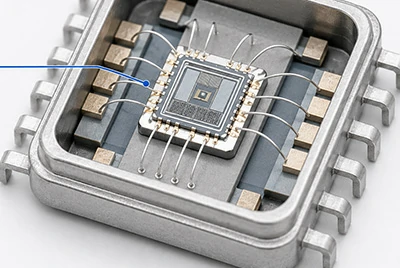
Silver bonding wire is a fine metallic wire used for internal interconnects in semiconductor packaging, commonly referred to in English as silver bonding wire or silver alloy bonding wire. Through the wire bonding process, it connects the pads on a chip to the lead frame, substrate, or package terminal, forming pathways for signal transmission, current flow, and heat dissipation between the chip and external circuits.
Unlike standard industrial silver wire, it must maintain consistency in fine wire diameter, surface cleanliness, mechanical strength, ball formation capability, loop stability, and bond reliability. Depending on packaging requirements, silver bonding wire can be made from pure silver, silver alloy, or gold-coated silver alloy to balance electrical conductivity, bondability, reliability, and material cost.
Why choose silver bonding wire?
The value of silver bonding wire goes beyond simply being cheaper than gold wire." It offers a balanced interconnect material option between gold wire and copper wire, combining cost efficiency with strong electrical and thermal conductivity and stable bonding performance.
- Silver wire costs approximately 1/20 that of gold wire. Silver bonding wire significantly reduces precious metal material costs, making it especially suitable for packaging projects evaluating gold wire replacement.
- Silver's electrical conductivity reaches 108.4% IACS, surpassing both copper and gold. For IC, memory, and sensor packaging, this translates to lower interconnect resistance and a more stable foundation for signal transmission.
- Silver's thermal conductivity is 429 W/m·K, also higher than copper and gold. For LED, power-related devices, or thermally sensitive packaging structures, silver wire provides a superior material basis.
- Compared to copper bonding wire, silver wire has hardness closer to gold wire, making it easier to balance bonding strength and pad protection in certain pad-sensitive packages.
- Silver has high reflectivity, giving it value in high-end LED packaging-ideal for designs that prioritize both brightness performance and material cost.
- Chalco's silver bonding wire covers a fine wire diameter range of 15 μm / 0.6 mil–50 μm / 2.0 mil, suitable for fine-pitch packaging in IC, LED, memory, sensor, TSOP, TQFP, and BGA applications.
Silver bonding wire standards and specifications
Chalco's silver bonding wire can meet or reference the following product standards, test specifications, and compliance requirements based on semiconductor packaging project needs:
- GB/T 34502-2017: Gold-plated silver and silver alloy wires for semiconductor packaging bonding
- JEDEC JESD22-B120: Wire bond pull test
- JEDEC JESD22-B116: Wire bond shear test
- IEC 60749-22-1: Semiconductor device wire bond pull test
- IEC 60749-22-2: Semiconductor device wire bond shear test
- MIL-STD-883 Method 2011: Destructive bond pull test
- IPC-TM-650 2.4.42.3: Wire bond pull strength test
- MIL-STD-883 Method 2010 / 2017: Internal visual inspection
- JEDEC JESD22 series: Reliability tests including high temperature, high humidity, and temperature cycling
- AEC-Q100: Automotive IC qualification reference
- RoHS / REACH: Environmental and chemical substance compliance requirements
- SGS / third-party test report: third-party inspection support
Types of silver bonding wire available from Chalco
Chalco supplies various types of silver bonding wire for IC, LED, memory, sensor, LSI, discrete semiconductor, and high-reliability packaging applications. Based on Ag content, alloy design, and surface structure, products include pure silver bonding wire, silver alloy bonding wire, and gold-coated silver alloy wire.
Pure silver bonding wire
Model:SHP
Features:High-purity silver bonding wire offers high reflectivity, conductivity, flexibility, and reliable bondability.
Applications:Used for LED, IC, and LSI packaging in TO, SOT, DIP, SOP, and TSOP structures.
High-silver alloy bonding wire
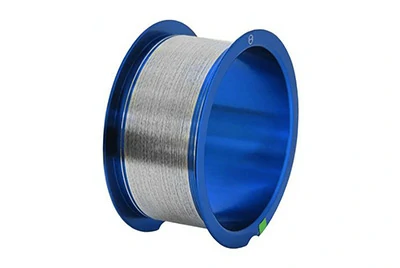
Models:SAH1, SAH2, SAH3, SAH5
Features:High-silver alloy bonding wire with 95–99% Ag content, offering high reflectivity, strength, toughness, and packaging reliability.
Applications:Suitable for memory, LED, sensor, and IC packaging in TO, SOT, DIP, SOP, TSOP, TQFP, and BGA structures.
Low-silver alloy bonding wire
Models:SAH12, SAH15
Features:Low-silver bonding wire with 85–88% Ag content, balancing cost, strength, toughness, and bonding stability.
Applications:Suitable for cost-sensitive memory, LED, sensor, and IC packaging in TO, SOT, DIP, SOP, TSOP, and TQFP structures.
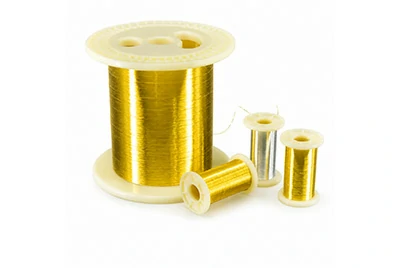
Gold-coated silver alloy wire
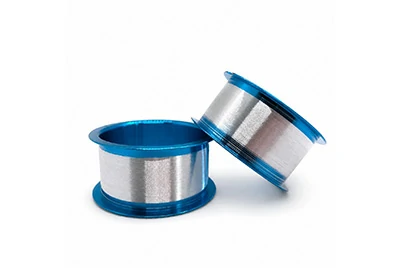
Models:SW-AA2, SW-AC6D, SW-AA
Features:Gold-coated silver alloy wire improves surface stability, oxidation resistance, ball formation, and bonding reliability.
Applications:Suitable for gold wire replacement, IC, LED, memory, sensor, and high-reliability packaging.
Silver bonding wire composition details
Chalco offers silver bonding wire with varying Ag content-from high-purity silver to low-silver alloy-allowing selection based on packaging cost, electrical performance, mechanical strength, and reliability requirements.
| Model | Product type | Main component content | Alloy content |
| SHP | Pure silver bonding wire | Ag >99.99% | <0.01% |
| SAH1 | High-silver alloy bonding wire | Ag >99.0% | <1.0% |
| SAH2 | High-silver alloy bonding wire | Ag >98.0% | <2.0% |
| SAH3 | High-silver alloy bonding wire | Ag >97.0% | <3.0% |
| SAH5 | High-silver alloy bonding wire | Ag >95.0% | <5.0% |
| SAH12 | Low-silver alloy bonding wire | Ag >88.0% | <12.0% |
| SAH15 | Low-silver alloy bonding wire | Ag >85.0% | <15.0% |
| SW-AA2 | Gold-coated silver alloy wire | Ag ≥92.00% | |
| SW-AC6D | Gold-coated silver alloy wire | Ag ≥94.00% | |
| SW-AA | Gold-coated silver alloy wire | Ag ≥97.00% |
Chalco silver bonding wire product performance
Performance of silver bonding wire at different diameters
| Wire diameter (μm) | 15 | 18 | 20 | 23 | 25 | 30 | 38 | 50 |
| Wire diameter (mil) | 0.6 | 0.7 | 0.8 | 0.9 | 1 | 1.2 | 1.5 | 2 |
| Diameter tolerance μm | ±1.0 | ±1.0 | ±1.0 | ±1.0 | ±1.0 | ±1.0 | ±1.0 | ±1.0 |
| Wire weight mg/m | 1.6–2.1 | 2.7–3.0 | 3.3–3.7 | 4.4–4.8 | 5.2–5.6 | 7.1–8.0 | 11.9–12.7 | 20.6–21.7 |
| SHP min. break load gf | 2 | 3.5 | 4 | 6.5 | 8 | 11 | 16 | 28 |
| SAH1 min. break load gf | 3 | 4 | 6 | 8 | 10 | 13 | 18 | 32 |
| SAH2 min. break load gf | 3 | 4 | 6 | 8 | 10 | 13 | 18 | 32 |
| SAH3 min. break load gf | 3 | 4 | 6 | 8 | 10 | 13 | 18 | 32 |
| SAH5 min. break load gf | 3.5 | 4 | 6 | 8 | 10 | 13 | 18 | 32 |
| SAH12 min. break load gf | 4 | 4 | 6 | 8 | 10 | 13 | 20 | 35 |
| SAH15 min. break load gf | 4 | 4.5 | 6 | 8 | 10 | 13 | 20 | 35 |
| Elongation % | 2.0–16.0 | 2.0–16.0 | 2.0–16.0 | 5.0–25.0 | 5.0–25.0 | 8.0–25.0 | 8.0–25.0 | 10.0–25.0 |
| Fusing current A | 0.1 | 0.2 | 0.3 | 0.4 | 0.5 | 0.7 | 1.1 | 1.9 |
Other physical properties of silver bonding wire
| FAB hardness | 45–60 HV |
| HAZ hardness | 60–70 HV |
| Wire hardness | 70–80 HV |
| Density | 10.49–10.60 g/cm³ |
| Electrical resistivity @20°C | 2.3–3.2 μΩ·cm |
| Elastic modulus | 40–60 GPa |
Properties of gold-coated silver bonding wire
| Gold-coated silver alloy wire (Types) | SW-AA2 | SW-AC6D | SW-AA |
| Ag content | ≥92.00% | ≥94.00% | ≥97.00% |
| Electrical resistivity | 3.8 μΩ·cm | 2.7 μΩ·cm | 1.8 μΩ·cm |
| FAB hardness | 60–75 HV | 55–70 HV | 50–65 HV |
| Wire hardness | 65–85 HV | 65–85 HV | 50–65 HV |
| Fusing current | 0.53 A | 0.52 A | 0.55 A |
| HAZ length | Max. 110 μm | Max. 110 μm | Max. 130 μm |
| Melting point | ~1013°C | ~1015°C | ~980°C |
| Density | 10.73 g/cm³ | 10.62 g/cm³ | 10.64 g/cm³ |
| Recrystallization temp. | 380–460°C | 380–460°C | 350–440°C |
Applications of silver bonding wire
Chalco silver bonding wire can be used in packaging applications such as ICs, LEDs, memory, sensors, LSIs, and discrete semiconductors-ideal for semiconductor devices requiring a balance of electrical conductivity, thermal conductivity, bonding stability, and material cost.
IC and LSI packaging
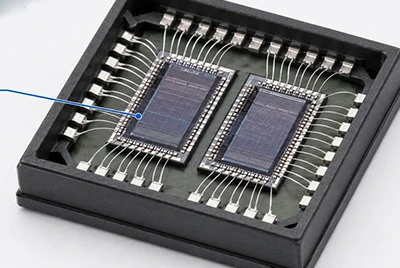
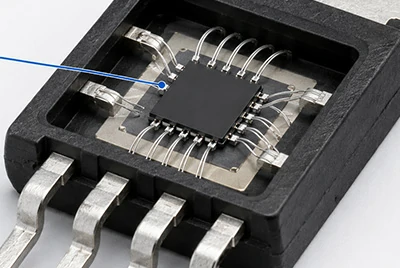
Used for IC packaging interconnects between chip pads and lead frames, substrates, or package terminals, suitable for common package types including DIP, SOP, TSOP, TQFP, and BGA.
Memory packaging
Suitable for memory products demanding fine wire diameters, stable loop formation, and batch consistency, supporting sample testing, gold wire replacement evaluation, and mass production validation.
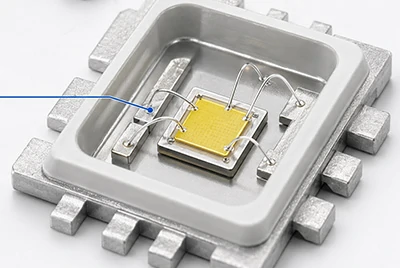
High-end LED packaging
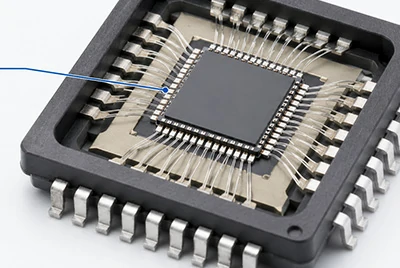
For LED packaging bonding wire, silver wire offers high reflectivity and good thermal conductivity, making it suitable for high-end LED, display, backlight, and lighting device packaging-balancing brightness performance and material cost.
Sensor packaging
Applicable to sensors, miniature electronic devices, and fine-pitch packaging structures; wire diameter and alloy grade can be selected based on pad size, bond pitch, and loop height.
Discrete semiconductor packaging
Can be used for internal interconnects in certain discrete device packages, suitable for applications requiring electrical conductivity, mechanical strength, and basic bonding stability.
How silver wire bonding works?
Silver bonding wire is commonly used in ball bonding to connect chip pads with lead frames, substrates, or package terminals, forming internal electrical interconnects within the package.
The main process includes:
- Free air ball formation: After passing through the capillary, the silver wire forms a free air ball at its tip via EFO. Silver ball formation typically requires N₂ or forming gas to minimize oxidation and maintain stable ball shape.
- First bond on chip pad: The machine presses the silver ball onto the chip pad, forming the first bond using heat, bonding force, and ultrasonic energy. Key concerns at this stage include ball shear strength, ball shape, and risk of pad damage.
- Loop formation: After the first bond, the capillary moves to the second bond location, forming a wire loop. Loop height and stability impact subsequent molding and package reliability.
- Second bond on lead frame or substrate: The silver wire forms a stitch bond on the lead frame or substrate. Primary considerations here are stitch pull strength, wire pull strength, and second bond stability.
- Wire tail cutting: After the second bond, the machine cuts the wire tail, leaving an appropriate length for the next free air ball formation.
Differences between silver, gold, and copper bonding wires
In the broader selection among gold, silver, copper, and aluminum bonding wires, material choice depends on package structure, bonding process, reliability requirements, and cost targets. Gold wire excels in maturity, copper in low cost, while silver bonding wire offers a better balance among cost, electrical/thermal performance, and pad compatibility.
Gold wire is mature but faces the highest cost pressure
Gold bonding wire has a well-established process window and extensive reliability validation, making it suitable for high-reliability packaging and low-risk adoption projects.
However, gold wire has the highest material cost. Silver bonding wire costs approximately 1/20 that of gold wire, significantly reducing precious metal interconnect costs in gold wire replacement projects.
Copper wire is inexpensive but more sensitive to process conditions
Copper bonding wire offers low cost and good electrical conductivity but is harder, making it more sensitive to oxidation control, bonding force, ultrasonic power, and pad damage.
Silver wire's hardness lies between copper and gold, closer to gold. For thin pads, low-k wafers, or pad-sensitive packages, silver wire typically achieves a better balance between bond strength and pad protection than copper wire.
Silver wire offers superior electrical performance
Silver's electrical conductivity reaches 108.4% IACS, higher than both copper and gold, enabling lower-resistance interconnects.
Silver's thermal conductivity reaches 429 W/m·K, exceeding copper's 394 W/m·K and gold's 311 W/m·K. This gives silver wire a stronger material foundation for signal transmission and thermal stability in IC, LED, memory, and sensor packaging.
LED packaging values silver's reflectivity
Gold wire is stable but expensive; copper wire shows no clear advantage in reflectivity or surface stability.
Silver bonding wire offers high visible reflectivity, making it especially suitable for high-end LED packaging where brightness, reflectivity, and material cost are all critical.
Which option is more suitable?
For minimal adoption risk, gold wire remains the most stable choice.
If you already have a mature copper wire process and prioritize cost above all, copper wire is the more direct option.
If you aim to reduce gold wire costs while avoiding copper's pad damage and oxidation control challenges, silver bonding wire deserves priority evaluation.
How to choose the right silver bonding wire?
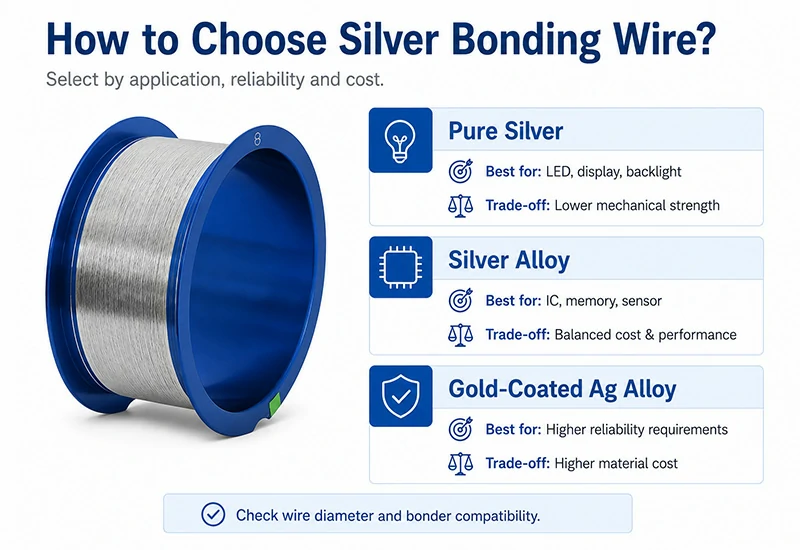
Selecting the appropriate silver bonding wire requires balancing packaging process needs, reliability requirements, and cost constraints. As a cost-effective alternative to gold wire, silver bonding wire selection typically considers the following aspects.
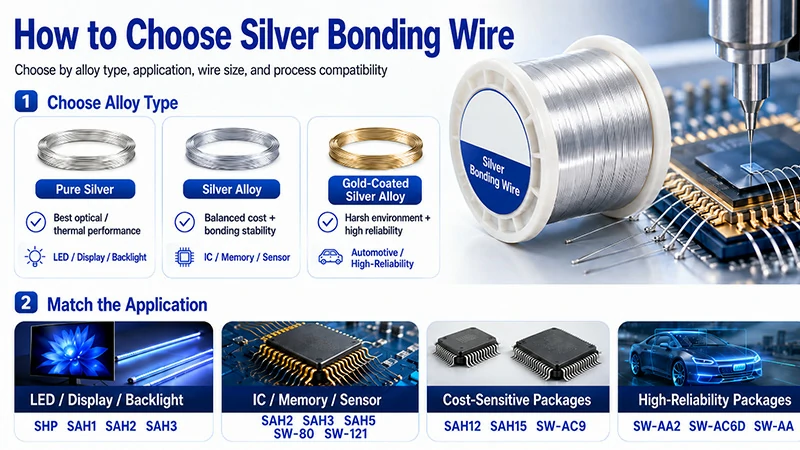
Define the alloy type
Pure silver wire offers high electrical conductivity, thermal conductivity, and reflectivity, ideal for high-end LED, display, backlight, and packaging applications demanding excellent light output.
Silver alloy wire is better suited for IC, memory, sensor, and consumer electronics packaging where cost, mechanical strength, and bonding stability must be balanced.
For applications requiring enhanced oxidation resistance, sulfur resistance, and long-term reliability, consider gold-coated silver alloy wire.
Recommended products: SHP, SAH series, SW silver alloy wire, SW-AA2, SW-AC6D, SW-AA
Evaluate application area
Different applications prioritize different attributes. LEDs and consumer electronics emphasize electrical/thermal performance, reflectivity, and material cost; automotive-grade, high-reliability, or high-temperature/high-humidity packaging demands greater focus on corrosion resistance, sulfur resistance, and long-term stability.
Recommendations:
LED / display / backlight: SHP, SAH1, SAH2, SAH3IC / memory / sensor: SAH2, SAH3, SAH5, SW-80, SW-121Cost-sensitive packaging: SAH12, SAH15, SW-AC9High-reliability packaging: SW-AA2, SW-AC6D, SW-AA
Match wire diameter and mechanical properties
Select the appropriate wire diameter based on die size, pad size, and bond pitch, and verify break load, elongation, FAB hardness, and loop stability. Finer diameters impose stricter requirements on free air ball formation, loop stability, and wire pull strength.
Chalco supplies silver bonding wire in diameters from 15 μm / 0.6 mil to 50 μm / 2.0 mil, and can recommend specific models based on customer requirements for diameter, tensile strength, and elongation.
Confirm process parameter compatibility
Before adopting silver wire, verify that your existing wire bonding equipment supports the required EFO ball formation, protective atmosphere, bonding force, ultrasonic power, and loop program. For processes requiring N₂ or forming gas, ensure equipment and parameter windows are compatible in advance.
Process parameters affecting silver bonding wire performance
The bonding performance of silver bonding wire depends not only on wire composition and diameter but also on equipment parameters, protective atmosphere, pad materials, and package structure. Before mass production, establish an appropriate bonding window through ball shear, wire pull, stitch pull, and reliability testing.
Bonding force
Bonding force affects how well the silver wire adheres to the pad or lead frame. Insufficient force may cause poor bond formation, while excessive force increases risks of pad damage, cratering, or excessive bond deformation-especially critical for fine wire diameters and pad-sensitive packages, requiring precise control.
Ultrasonic power
Ultrasonic energy is used to break through surface contamination and promote metal bonding. Insufficient power can lead to weak bonds, while excessive power may cause excessive deformation, heel cracks, or pad damage; therefore, it must be matched with wire diameter, pad material, and package structure.
Bonding time
Bonding time determines the duration of energy applied to the bond area. If too short, bond strength may be insufficient; if too long, it may cause excessive deformation and affect equipment throughput and mass production stability.
Bonding temperature
An appropriate heating stage temperature helps improve bondability and IMC formation stability. Temperature settings must be validated in combination with pad material, package type, and reliability requirements to avoid overheating that could affect the bond, chip, or packaging materials.
Protective atmosphere
Silver wire is typically used with N₂ or forming gas during EFO ball formation and ball bonding. A stable protective atmosphere helps reduce oxidation, improve free air ball shape, and enhance first bond consistency.
Capillary condition
The capillary's bore size, material, wear, and contamination directly affect ball shape, loop control, and stitch bond quality. For fine-diameter silver wire, an unstable capillary condition may cause wire scratches, unstable tails, or second bond failure.
Pad material and surface condition
Silver bonding wire is commonly used with aluminum pads, silver-plated lead frames, and various substrate finishes. Surface oxidation, contamination, roughness, and plating condition all impact ball shear strength, stitch pull strength, and long-term reliability.
Wire loop design
Loop height, loop length, and wire span affect post-molding wire sweep, short risk, and fatigue performance. Stable loop control is especially critical for TSOP, TQFP, BGA, memory, and sensor packages.
Reliability risks of silver bonding wire
Silver bonding wire offers excellent electrical and thermal conductivity along with cost advantages. However, when introducing it into packaging projects, special attention must be paid to surface stability, bond aging, and environmental reliability. Especially when replacing gold wire or used in high-reliability packages, performance after long-term testing-not just initial bond strength-must be evaluated.
Sulfidation and chlorination risks
Silver is more sensitive to sulfur- and chlorine-based contaminants. Storage environment, package opening duration, cleanroom cleanliness, molding compound, and external atmosphere can all affect the surface condition of silver wire.
For high-temperature/high-humidity environments, outdoor LEDs, automotive electronics, or long-service-life applications, high-silver alloy bonding wire or gold-coated silver alloy wire should be prioritized to enhance surface stability.
Ag-Al IMC growth
When silver bonding wire bonds to an aluminum pad, Ag-Al intermetallic compounds (IMCs) form. Proper IMC formation enhances bonding, but excessive or structurally unstable growth may compromise long-term reliability.
Such projects require validation through tests including ball shear, crater inspection, HTS, HAST, and temperature cycling, rather than relying solely on initial bond strength.
Electromigration risk
In high current density, fine wire diameter, or humid environments, electromigration risk must be considered for silver wire. In LED, memory, sensor, and high-density IC packages, wire diameter, loop spacing, operating current, and packaging materials should all be evaluated together.
Selecting an appropriate Ag content, alloy system, and wire diameter helps mitigate failure risks caused by electromigration.
Second bond reliability
The second bond of silver wire is affected by lead frame/substrate finish, surface contamination, capillary condition, and bonding parameters. An unstable second bond may result in low stitch pull strength, bond aging, or long-term contact failure.
For projects requiring higher second bond stability, gold-coated silver alloy wire can be evaluated to improve surface stability and second bond reliability.
Post-molding loop stability
During the molding process, wire loops may be affected by resin flow, leading to wire sweep, short risk, or localized stress concentration. Fine wire diameters, long spans, and low loop profiles require particular attention to this issue.
Before mass production, loop stability should be confirmed by evaluating loop height, wire span, molding compound, and wire pull test results.
Storage and packaging effects
Silver bonding wire is highly sensitive to storage conditions. After opening, exposure to moisture, sulfides, chlorides, and particulate contamination should be avoided. Vacuum-sealed individual packaging, clean handling procedures, and reasonable usage time after opening help maintain wire surface cleanliness and batch-to-batch consistency.
Silver bonding wire manufacturing process
Chalco's silver bonding wire-from raw material formulation, aluminum smelting, brushing, to cleaning and packaging-is tightly controlled to meet semiconductor packaging requirements for fine wire diameter, consistency, and cleanliness, ensuring suitability for wire bonding processes.
Raw material formulation
High-purity silver and alloying elements are selected and blended according to different product specifications to produce pure silver bonding wire, silver alloy bonding wire, and gold-coated silver alloy wire.
Smelting and casting
Aluminum smelting and casting produce silver alloy billets with controlled compositional uniformity and impurity levels, providing a stable foundation for subsequent fine drawing.
Rolling and brushing
Billets undergo rolling and multiple precision brushing passes to gradually achieve fine diameters such as 15 μm / 0.6 mil–50 μm / 2.0 mil, ensuring consistent wire diameter and surface quality.
Heat treatment control
Annealing adjusts break load, elongation, FAB hardness, wire hardness, and HAZ performance, giving the silver wire appropriate strength and flexibility during bonding.
Surface treatment and cleaning
Wire surfaces undergo cleaning and purification to reduce oil residues, particles, and surface contamination, improving free air ball formation, ball bonding, and second bond stability.
Gold plating
For gold-coated silver alloy wire, a gold coating is applied to the silver alloy wire surface to enhance surface stability, oxidation/sulfidation resistance, and long-term reliability.
Spooling and packaging
Finished silver bonding wire is wound onto 2-inch spools and vacuum-sealed individually to minimize risks from moisture, contamination, and oxidation, facilitating use in clean packaging environments.
Final inspection
Prior to shipment, wire diameter, break load, elongation, resistivity, surface quality, spool winding, and packaging condition can be inspected to ensure the product meets packaging test and sample validation requirements.
Quality control, traceability, and compliance
Bonding wire is embedded inside devices and invisible to the naked eye. What customers truly care about is not just whether specifications are met, but whether every batch of silver bonding wire is stable, traceable, and verifiable.
Process control
Chalco implements process controls on critical parameters during silver bonding wire production, including purity, dopant PPM levels, temperature, time, wire diameter, length, surface condition, plating, and weight.
Through MES management and process data analysis, Chalco continuously improves product consistency, stability, and batch traceability.
Quality system
Quality management covers product development validation, first article inspection, in-process audits, dedicated product inspections, and finished goods management.
Supplier management follows a process of information review, on-site audits, product trials, comprehensive evaluation, and periodic assessments to ensure stable supply of raw materials and supporting components.
APQP management
Chalco's supply system adopts the APQP quality planning framework, integrating DFMEA/PFMEA, MSA/SPC, and PPAP to manage product development, process risks, and batch consistency.
Certifications and standards
Chalco's supply system is certified under the ISO 9001:2015 / GB/T 19001-2016 quality management system and the ISO 14001 environmental management system.
Related enterprises participate in drafting national standards for bonding wires used in packaging, including gold wire, palladium-coated copper wire, gold-coated silver wire, and silver alloy wire.
Testing capabilities
Testing equipment covers compositional analysis, surface inspection, and mechanical property verification, including inductively coupled plasma emission spectrometers, vacuum scanning electron microscopes, bond testers, universal material testing machines, and high-precision electronic balances.
Batch traceability
Factory inspection covers wire diameter, tensile strength, elongation, resistance, appearance, and packaging. Each batch carries a lot number, and compositional and mechanical property data can be provided with the batch to enable lot traceability.
Available documentation
Chalco can provide product specifications, batch test reports, compositional and mechanical property data, packaging labels, RoHS/REACH compliance documents, and third-party inspection support according to project requirements.
Silver bonding wire related products
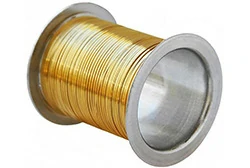
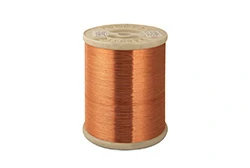
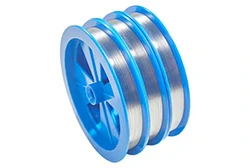
In addition to silver bonding wire, Chalco also offers gold bonding wire, copper bonding wire, and aluminum bonding wire to address diverse semiconductor packaging, power device, and cost-optimization needs.
FAQ
What is silver bonding wire?
Silver bonding wire is a fine silver wire used for internal interconnects in semiconductor packaging, connecting chip pads to lead frames, substrates, or package terminals via the wire bonding process.
Can silver bonding wire replace gold wire?
It can serve as an evaluation direction for gold wire replacement. Silver bonding wire has a significantly lower material cost than gold wire, while offering good electrical conductivity, thermal conductivity, and bonding performance. However, its suitability for mass production must be confirmed through ball shear, wire pull, and reliability tests.
What are the differences between silver bonding wire and copper bonding wire?
Copper bonding wire has a lower cost but higher hardness, making it more sensitive to oxidation control, bonding force, and pad damage. Silver bonding wire has a hardness closer to that of gold wire, making it suitable for certain packaging applications where pad damage and process window sensitivity are critical concerns.
What types of silver bonding wire can Chalco supply?
Chalco offers pure silver bonding wire, silver alloy bonding wire, high-silver alloy wire, low-silver alloy wire, and gold-coated silver alloy wire.
Available models include SHP, SAH1, SAH2, SAH3, SAH5, SAH12, SAH15, SW-AC9, SW-80, SW-121, SW-AA2, SW-AC6D, and SW-AA.
What wire diameters are commonly used for silver bonding wire?
Chalco supplies silver bonding wire in diameters ranging from 15 μm / 0.6 mil to 50 μm / 2.0 mil. Common specifications include 15 μm, 18 μm, 20 μm, 23 μm, 25 μm, 30 μm, 38 μm, and 50 μm.
Which silver bonding wire is suitable for LED packaging?
High-end LED, display, and backlight packaging applications are better suited for SHP pure silver bonding wire or SAH high-silver alloy bonding wire, as these applications prioritize reflectivity, thermal conductivity, brightness performance, and long-term stability.
Which silver bonding wire is suitable for cost-sensitive packaging?
For cost-sensitive LED, IC, and consumer electronics packaging, low-silver alloy wires such as SAH12, SAH15, and SW-AC9 can be evaluated to balance material cost, mechanical strength, and basic bonding performance.
What applications are gold-coated silver alloy wire suitable for?
Gold-coated silver alloy wire is suitable for packaging applications requiring higher surface stability, oxidation resistance, sulfurization resistance, second bond stability, and long-term reliability. Recommended models include SW-AA2, SW-AC6D, and SW-AA.
What packaging options are available for silver bonding wire?
Chalco's silver bonding wire is wound on 2-inch spools and available in lengths of 500 m, 1000 m, 2000 m, 3000 m, and 5000 m. Each spool is individually vacuum-sealed to minimize risks of moisture, contamination, and oxidation.
What information is needed to request a quote for silver bonding wire?
We recommend providing details such as intended application, current wire type, wire diameter, pad material, package structure, testing requirements, and target use case. Based on this information, Chalco can recommend suitable silver bonding wire models for sample evaluation.