In lightweight sandwich panel design, engineers often compare aluminum honeycomb core and aramid honeycomb core. Both materials are used in high-performance sandwich and composite structures, but their material systems are different. This affects structural behavior, thermal and electrical performance, fabrication, and end-use applications.
The key question is not which core material is universally better, but which one better matches the project's design priorities. In practice, selection usually depends on stiffness, weight targets, thermal or dielectric requirements, fabrication conditions, certification needs, and cost constraints.
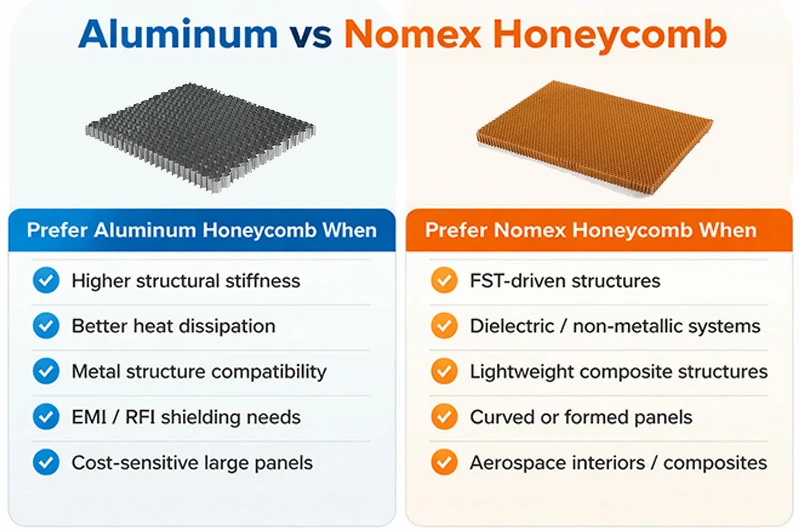
Below, we compare these two honeycomb core materials across material systems, mechanical properties, thermal and electrical characteristics, manufacturability, and typical applications.
What Is Aluminum Honeycomb Core?
-
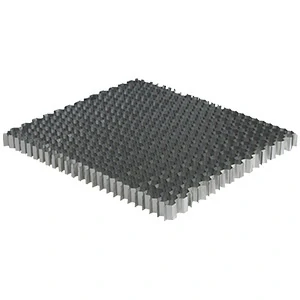
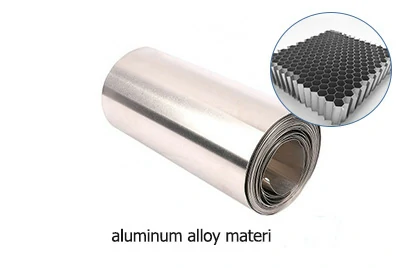
Aluminum honeycomb core is a lightweight metallic core material used in sandwich panel structures. It is formed by expanding bonded aluminum foil into a hexagonal honeycomb structure, significantly reducing weight while maintaining high stiffness.
In aerospace and high-performance composite structures, common aluminum honeycomb alloys include 5052 and 5056, while 3003 alloy is also used in some industrial applications. As a metallic honeycomb system, it is typically associated with high structural efficiency, relatively good thermal conductivity, and compatibility with metal face sheets.
From an application standpoint, aluminum honeycomb core reduces panel weight while retaining structural support, making it a common choice for lightweight sandwich structures where stiffness and thermal performance are both important.
What Is Aramid Honeycomb Core?
-
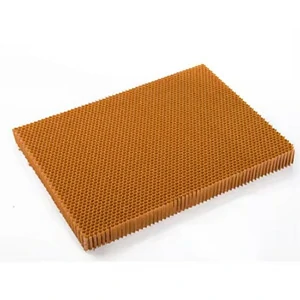
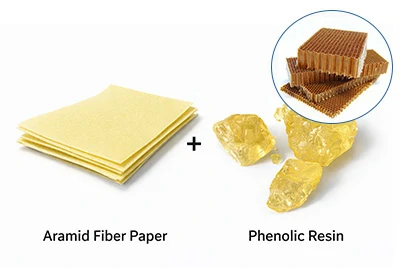
Aramid honeycomb core is a non-metallic core material commonly used in composite sandwich structures. It is typically made by combining aramid fiber paper with phenolic resin and expanding it into a hexagonal honeycomb structure, providing structural support at very low weight.
In aerospace and high-performance composite systems, aramid honeycomb is often associated with Nomex-type material systems. Compared with metallic honeycomb cores, it is recognized for low density, good dielectric performance, and suitability for applications where non-metallic construction or flammability-related requirements matter.
In practical sandwich structure design, aramid honeycomb core provides structural support at very low weight, making it suitable for composite structures where weight control, non-metallic construction, or electrical insulation is important.
Aluminum Honeycomb Core vs Aramid Honeycomb Core: Key Differences
Material System
Aluminum honeycomb core
Made from aluminum alloys such as 5052 or 5056, it belongs to the metallic honeycomb system and is suitable for applications requiring stiffness, thermal conductivity, and compatibility with metal structures.
Aramid honeycomb core
Made from aramid fiber paper and phenolic resin, it belongs to the non-metallic honeycomb system and is suitable for lightweight, electrically insulating, and composite sandwich structures.
This difference influences how each core performs in different applications. Aluminum honeycomb cores are commonly used where structural stiffness, heat transfer, and metal compatibility matter. Aramid honeycomb cores are often used where lightweight construction, electrical insulation, and non-metallic sandwich systems are more important.
Weight and Density Tendency
Both materials are available in multiple density and cell-size options, so weight should be evaluated by grade and design requirement rather than by material name alone.
- Aluminum honeycomb core typically covers a wide density range and is often selected when weight reduction must be balanced with stiffness, structural support, and thermal performance.
- Aramid honeycomb core is often used in lower-density composite structures where weight reduction, dielectric performance, and non-metallic construction are important. It is not simply a "weaker" alternative; its value lies in system-level fit for lightweight composite designs.
Compression, Shear Strength, and Shear Modulus
| Material | Aluminum honeycomb core | Aramid honeycomb core |
| Compression strength | 300 psi | 250 psi |
| Shear strength | 350 psi | 250 psi |
| Shear modulus | 0.75 ksi | 0.60 ksi |
Mechanical performance should be compared by specific cell size, density, and test condition. The table below gives typical reference values for similar-density cores and should be read as a selection-level comparison rather than an absolute material verdict.
- Aluminum honeycomb core typically offers strong stiffness and shear rigidity, which makes it suitable for structural sandwich panels where load-bearing performance is important.
- Aramid honeycomb core may show lower shear modulus in many comparable configurations, but it remains valuable in lightweight composite structures where dielectric behavior, thermal insulation, and non-metallic construction are key requirements.
Thermal Conductivity vs Dielectric Behavior
| Comparison Item | Aluminum Honeycomb | Aramid Honeycomb |
| Thermal Conductivity | 100–200 W/m·K | 0.03–0.05 W/m·K |
| Dielectric Behavior | Low | High |
| Electrical Insulation | Low | High |
Thermal behavior and dielectric performance are among the clearest differences between aluminum and aramid honeycomb cores:
- Aluminum honeycomb core, as a metallic core material, is generally better suited to structures that require heat transfer, heat dissipation, or compatibility with conductive systems.
- Aramid honeycomb core, as a non-metallic core material, is generally better suited to structures that require electrical insulation, dielectric performance, or lower thermal transfer.
Fire Resistance and FST Context
Fire resistance and FST performance should be evaluated at the sandwich panel system level, not by the core material alone.
- Aluminum honeycomb core can be used in demanding structural applications where strength, stiffness, and fire-related requirements must be considered together.
- Aramid honeycomb core is more commonly associated with aircraft interior and FST-driven sandwich structures, but final compliance still depends on face sheets, adhesives, and the complete panel design.
Corrosion and Environmental Exposure
- Aluminum honeycomb core is a metallic material, so alloy selection and corrosion protection are important, especially in humid, marine, or other demanding environments.
- Aramid honeycomb core is non-metallic, which gives it a different environmental behavior profile. However, long-term performance still depends on the full sandwich panel system, including face sheets, adhesives, edge sealing, and service environment.
Cost Trend
- Aluminum honeycomb core is generally more cost-efficient for large-area industrial sandwich panels, especially when high stiffness and thermal performance are required.
- Aramid honeycomb core is usually positioned for higher-performance applications, especially where lightweight composite construction, dielectric behavior, or FST-related requirements are more important than lowest material cost.
Summary
This comparison shows that aluminum honeycomb core and aramid honeycomb core are not interchangeable materials. Aluminum honeycomb is typically stronger in stiffness, thermal conductivity, metallic compatibility, and cost efficiency, while aramid honeycomb is more suitable for lightweight composite structures, dielectric behavior, non-metallic construction, and FST-oriented designs.
Application Context of Aluminum and Aramid Honeycomb Core
Applications of Aluminum Honeycomb Core
Aluminum honeycomb core is widely used in industries that require structural stiffness, thermal performance, dimensional stability, and cost-efficient sandwich construction. Common application areas include:
Aerospace and Aviation
In aerospace, aluminum honeycomb is often used in structural sandwich panels where stiffness and weight reduction must be balanced. It can be found in aircraft structures, bulkhead panels, floor panels, and other lightweight structural components.
- Aircraft structural panels: Aluminum honeycomb core helps provide stiffness while reducing overall structural weight.
- Bulkheads and partitions: Aluminum honeycomb can be used in bulkhead and partition panels where rigidity, low weight, and dimensional stability are required.
Automotive and Transportation
Aluminum honeycomb materials are also used in automotive and transportation applications where weight reduction, impact resistance, and structural integrity are important.
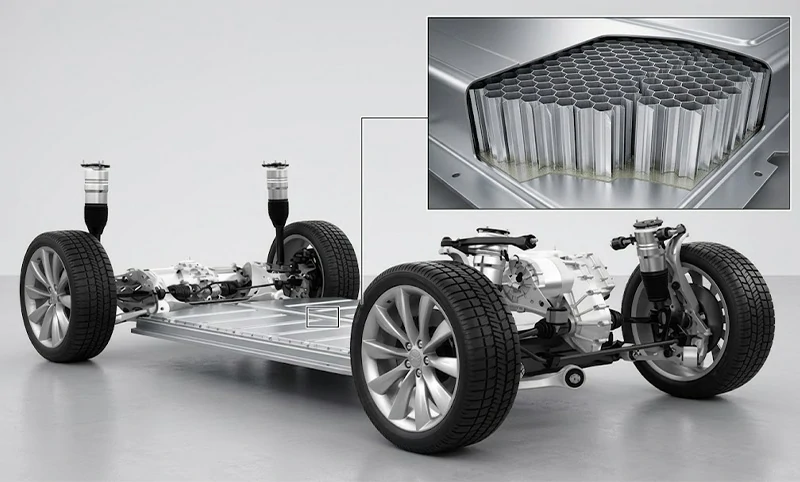
- Electric vehicle structures: Aluminum honeycomb core can be used in lightweight structural panels or protective components to reduce weight while maintaining support.
- Rail and transportation panels: Aluminum honeycomb sandwich panels may be used in exterior panels, flooring, acoustic panels, or other lightweight transportation structures.
Architectural and Industrial Applications
Aluminum honeycomb core is widely used in architectural and industrial applications, especially in large-area panels where stiffness, flatness, and low weight are important.
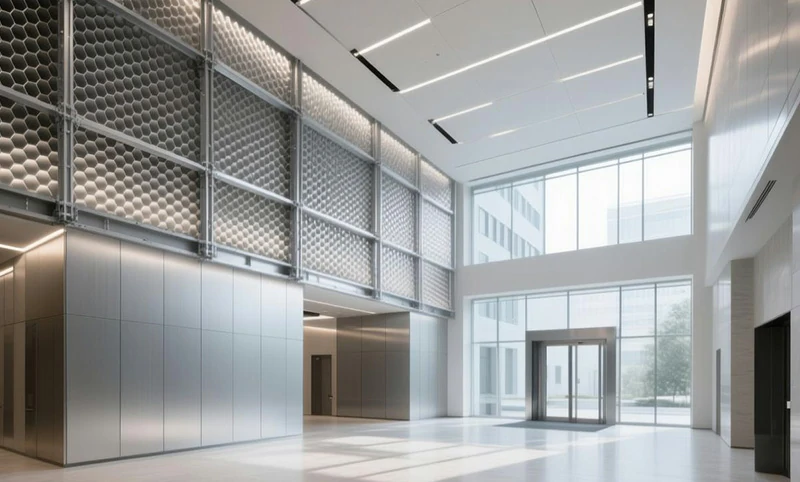
- Building facades: Aluminum honeycomb panels are commonly used in modern facade systems because they combine panel stiffness with relatively low weight.
- Partition and interior panels: Aluminum honeycomb panels can be used for lightweight partitions, interior wall panels, and other architectural panel systems.



Applications of Aramid Honeycomb Core
Aramid honeycomb core is commonly used in high-performance applications that prioritize lightweight composite structures, dielectric performance, and non-metallic sandwich systems. Typical application areas include:
Aerospace and Aviation
Aramid honeycomb core is widely used in aerospace and aviation applications, especially in lightweight interior and composite sandwich structures where weight reduction and fire-related requirements are important.
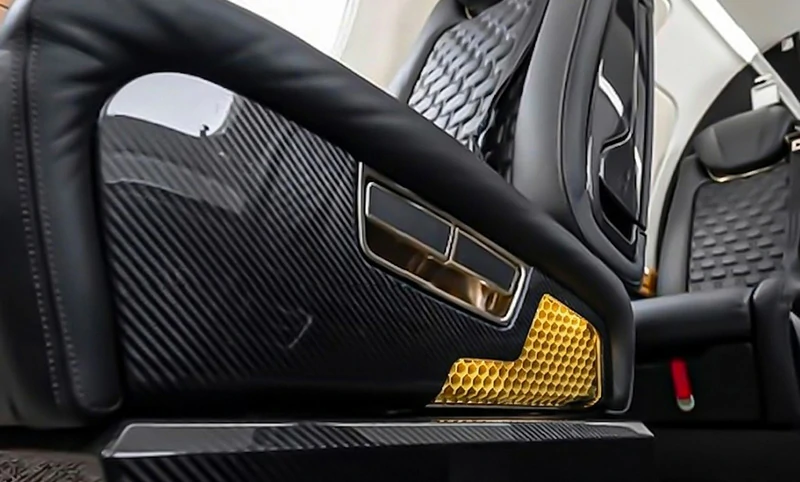
- Aircraft seating structures: Aramid honeycomb core may be used in lightweight seat panels or seat-related sandwich structures where weight reduction is critical.
- Aircraft cabin interiors: Aramid honeycomb materials can be used in cabin sidewalls, overhead bins, partitions, and other interior components to reduce weight while supporting fire-safety requirements.
Automotive and Transportation
Aramid honeycomb core can also be used in automotive and transportation applications where lightweight construction, insulation, and composite compatibility are required.
- Battery pack structures: Aramid honeycomb core may be used in battery pack isolation or protective structures where electrical insulation and low weight are important.
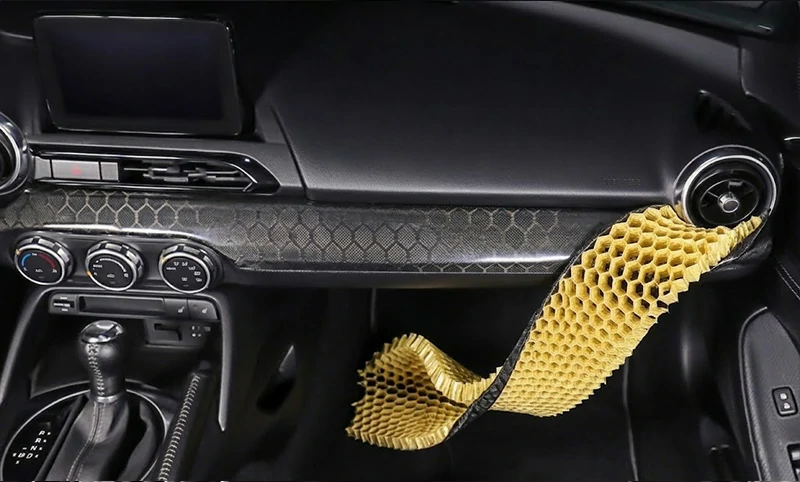
- Automotive interiors: Aramid honeycomb can be used in lightweight roof panels, interior panels, and acoustic components.
High-Performance Composite Materials
Aramid honeycomb core is also used in advanced composite structures that require low weight and a high strength-to-weight ratio.
- Sports equipment: Aramid honeycomb may be used in skis, composite boards, racing bicycles, and other lightweight sporting goods.
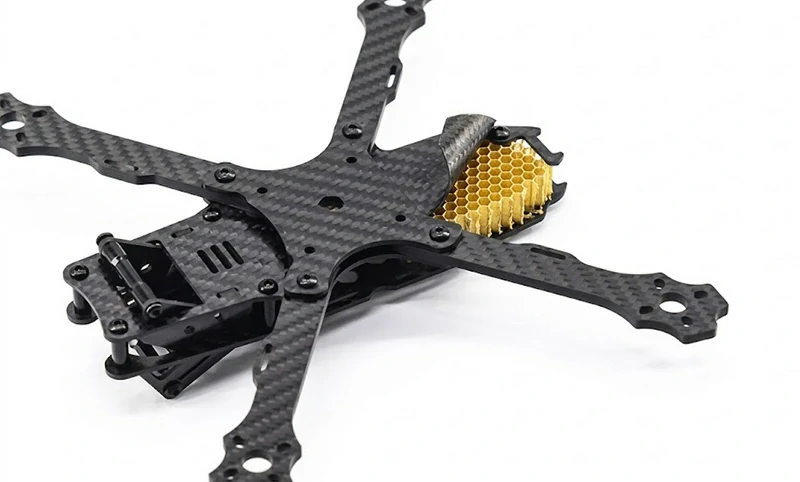
- UAV structures: Aramid honeycomb core may be used in UAV panels or structural parts where low weight and stiffness are both required.
How to Choose the Right Honeycomb Core
Based on the performance comparison and application analysis above, the choice between aluminum honeycomb core and aramid honeycomb core should be evaluated according to project priorities such as structural objectives, weight requirements, thermal and electrical performance, manufacturing conditions, and budget. For most sandwich structure projects, the key question is not which material is "absolutely better," but which one better fits the design criteria.
When to Choose Aluminum Honeycomb Core
- Suitable for projects that prioritize structural stiffness, shear rigidity, and overall load-bearing capacity.
- Suitable for structural designs requiring better thermal conductivity or heat dissipation.
- Suitable for applications that need better compatibility with metal face sheet systems.
- Suitable for large-area sandwich panels where performance and cost control must be balanced.
When to Choose Aramid Honeycomb Core
- Suitable for projects that emphasize lightweight composite structures.
- Suitable for applications requiring stronger dielectric performance and electrical insulation.
- Suitable for structures better matched to non-metallic sandwich systems.
- Suitable for applications with higher FST requirements, or for composite structures involving more curved surfaces and formed parts.
Final selection should still be confirmed based on sandwich panel structure, face sheet material, manufacturing process, certification requirements, and actual service environment.
Frequently Asked Questions (FAQ)
Which is better suited for my project: aluminum honeycomb core or aramid honeycomb core?
This depends on the project's top design priority. If the project prioritizes structural stiffness, shear strength, thermal conductivity, and compatibility with metallic systems, aluminum honeycomb core is typically preferred. If the project emphasizes lightweighting, dielectric performance, electrical insulation, or non-metallic core structures, aramid honeycomb core is usually the better choice.
Which honeycomb core is more suitable for composite sandwich panels?
In many high-performance composite sandwich panels, aramid honeycomb core is more commonly used because it is generally better suited for lightweight composite structures and non-metallic systems. However, if the project also requires higher structural stiffness, thermal conductivity, or metal compatibility, aluminum honeycomb core may be the more appropriate option.
Is aramid honeycomb core always the better choice whenever FST requirements are present?
Not necessarily. Aramid honeycomb core is commonly used in structures where FST (Fire, Smoke and Toxicity) performance is a concern, but compliance depends on the entire sandwich panel system, including face sheet materials, adhesives, and overall structural design, not just the honeycomb core itself.
If the face sheets require heat dissipation, is aluminum honeycomb core more suitable?
Typically, yes. Aluminum honeycomb core offers higher thermal conductivity, giving it an advantage in structural designs that require heat dissipation, heat transfer, or thermal management. This is why it is often selected for sandwich structures that must balance structural and thermal performance.
Are curved or formed parts always better suited to aramid honeycomb core?
Not necessarily. Aramid honeycomb core is commonly used in lightweight composite structures, so it is often preferred for curved or formed parts. However, suitability for complex contours also depends on honeycomb cell geometry, density, face sheet material, and manufacturing process, so the final decision should still be based on the specific structural configuration.