An EV battery tray and battery enclosure typically comprise multiple aluminum components, including a perimeter frame, side rails, cross members, a bottom plate, and mounting features. Each area serves a different structural function and has distinct requirements for material form, cross-sectional design, dimensional control, and downstream processing.
For EV battery tray and battery enclosure projects, Chalco supplies custom aluminum extrusions, aluminum sheet and plate, and semi-finished structural components machined to customer drawings. Depending on the component location, 2D/3D drawings, material requirements, and the customer's downstream manufacturing route, supply can range from as-extruded profiles and plate to cut-to-length material or further-machined semi-finished components.
Main Supply Options:
- Custom Aluminum Extrusions
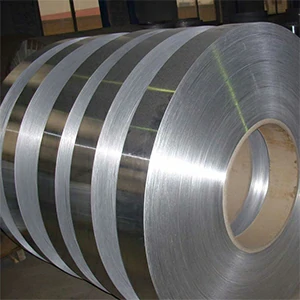
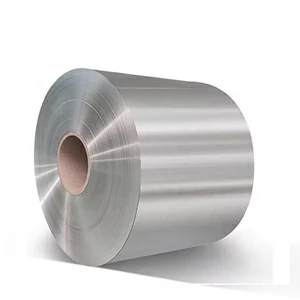
- Aluminum Sheet & Plate
- Cut-to-Length Material
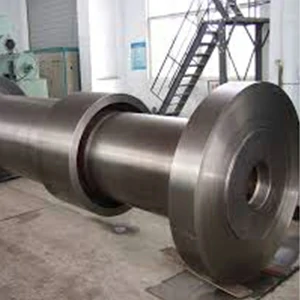
- CNC Semi-Finished Components
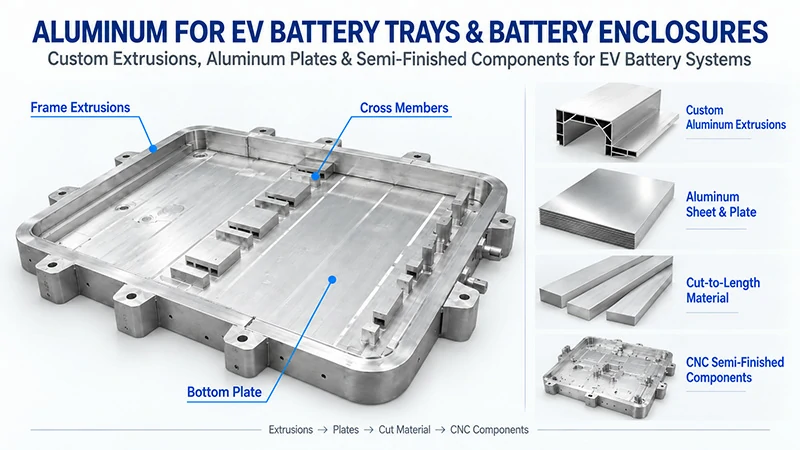
How Aluminum Is Used in EV Battery Trays
An EV battery tray or battery enclosure typically includes a perimeter frame, side rails, cross members, a bottom plate, and mounting and reinforcement features. Depending on load-bearing, joining, forming, and downstream processing requirements, these components may use aluminum extrusions, sheet and plate, or machined structural parts.
For different battery enclosure designs, Chalco can supply aluminum materials and drawing-based semi-finished components for these structural locations.
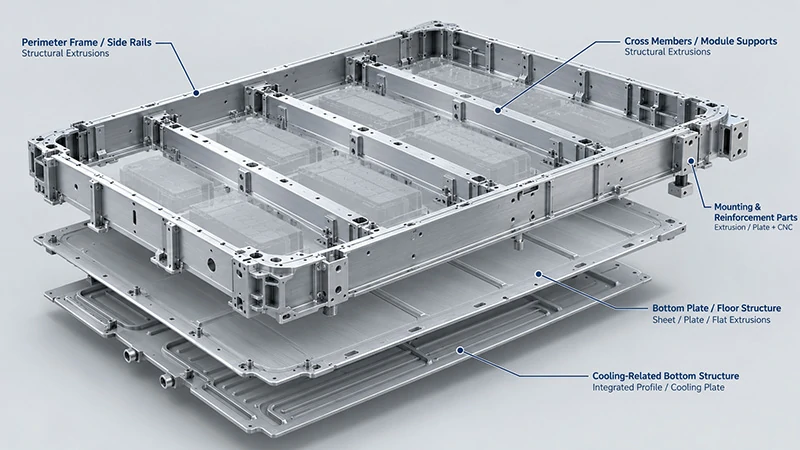
Aluminum Products for EV Battery Tray Projects
EV battery tray and battery enclosure projects vary in their required material forms and delivery stages. Based on customer drawings, component locations, and downstream manufacturing processes, Chalco can supply custom structural extrusions, aluminum sheet and plate, ultra-wide multi-cavity profiles, and CNC semi-finished structural components.
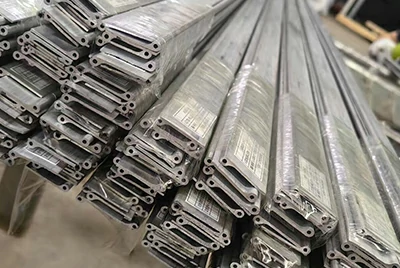
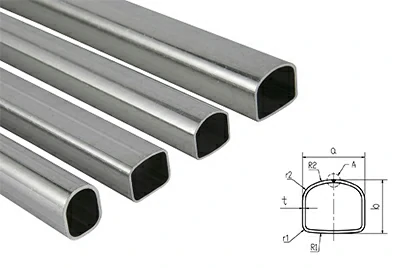
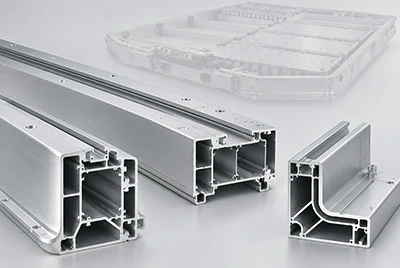
Custom Structural Aluminum Extrusions
Typical Components:Perimeter frames · Side rails · Cross members
Custom extrusions for EV battery tray frames and support structures can be developed from customer drawings. Hollow, multi-cavity, and reinforced sections can be designed according to the component cross section and subsequent processing requirements.
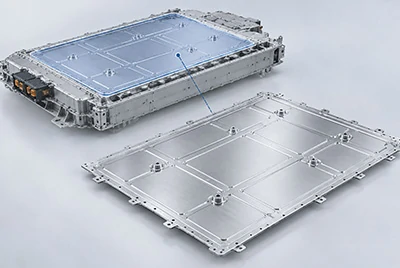
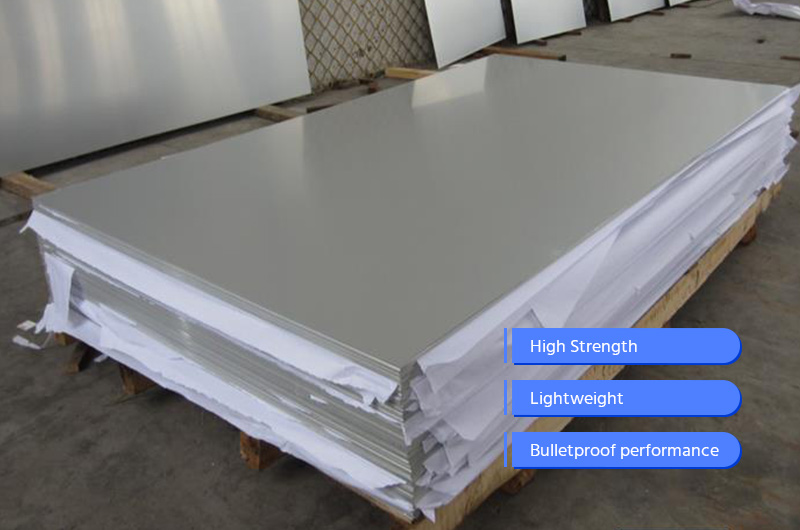
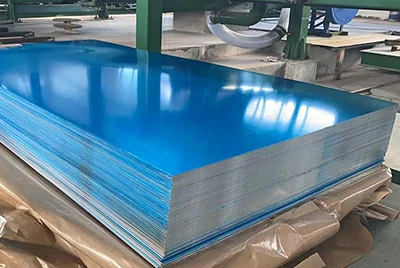
Alu Sheet Plate for Battery Enclosure
Typical Components:Bottom plates · Covers · Reinforcement parts
For battery enclosure bottom plates, covers, and other large-area structural parts, the material form and delivery condition can be selected according to downstream forming, machining, joining, and flatness requirements.
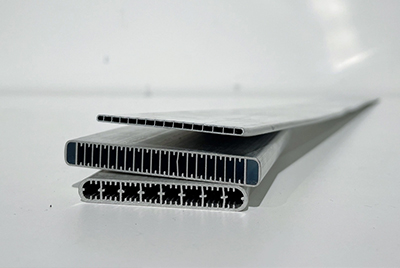
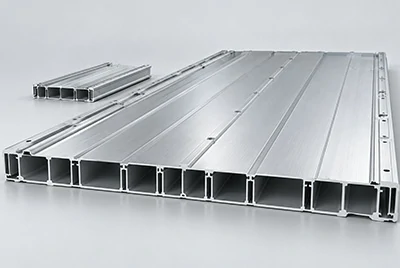
Ultra-Wide Multi-Cavity Al Extrusion
Typical Components:Bottom structures · Integrated panels · Cooling-related structures
These profiles suit battery tray projects seeking to reduce the joining of multiple narrow profiles and increase structural integration. The width, cavity layout, and section design must be evaluated against customer drawings.
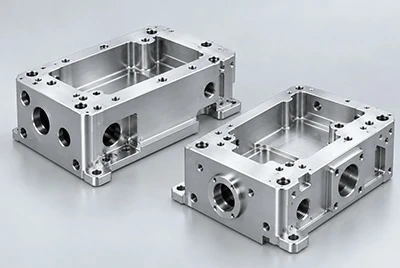
CNC Semi-Finished Structural Parts
Typical Components:Machined side rails · Cross members · Mounting parts · Interface parts
Aluminum extrusions or plate can be cut and partially CNC machined to bring components closer to the customer's downstream welding or assembly stage, reducing preliminary processing work.
Selecting Aluminum for Different Battery Tray Components
Different battery tray and battery enclosure areas serve different structural and manufacturing purposes, so they generally use different aluminum product forms and alloy systems. Material selection should account for component function, manufacturing method, downstream processing, and joining. The final alloy and temper should be defined jointly by strength needs, the forming or extrusion route, subsequent joining processes, and customer material specifications.
-
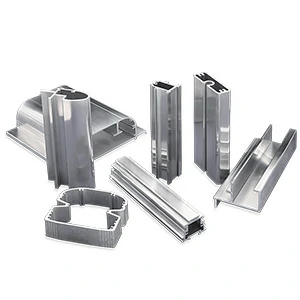 Perimeter Frames, Side Rails, and Cross Members
These components commonly use custom structural aluminum extrusions, often following a 6xxx alloy route such as 6005A, 6061, or 6082. In addition to structural strength, the selection should consider section complexity, extrusion stability, straightness and twist over long lengths, and downstream CNC and joining requirements.
Structural Extrusion 6xxx Strength Straightness and Twist Joining -
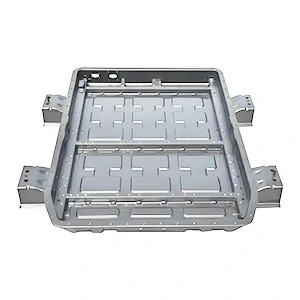 Bottom Plates and Load-Bearing Floor Structures
These structures may use sheet and plate, flat extrusions, or wide integrated profiles. Materials are generally selected from 5xxx or 6xxx alloys according to the structural and manufacturing route, with attention to flatness, stiffness, formability, underbody protection, and joining method.
Sheet and Plate 5xxx and 6xxx Flatness Stiffness Forming -
Covers and Closing Panels
These components generally use aluminum sheet or formed sheet parts. Material selection focuses more on weight, formability, flatness, and surface condition. Where sealing is involved, the edge design and sealing interface also need attention.
Aluminum Sheet 5xxx and 6xxx Formability Flatness Surface -
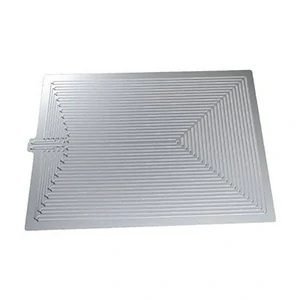 Cooling-Related Bottom Structures
The cooling system may use a separate cooling plate or an integrated bottom structure made from an ultra-wide multi-cavity profile. These routes may call for a 3xxx brazing material system or a 6xxx integrated extrusion, respectively; design priorities then shift to flow channels, cavities, flatness, and joining compatibility.
Multi-Cavity Profile 6xxx or 3xxx Route Cavities Flatness Joining
Custom Structural Aluminum Extrusions for Battery Trays From Section Design to Semi-Finished Parts
Once the material and product form for each battery tray component are selected, the section design must be translated into a structural extrusion that can be produced consistently and processed further.
For perimeter frames, side rails, cross members, and support structures, Chalco can supply custom structural aluminum extrusions and drawing-based semi-finished parts, covering section review, die development, extrusion, cutting to length, and CNC machining so that the profiles can proceed to downstream joining and assembly.
Complex Section Design and Extrusion Assessment
For battery tray profiles with hollow or multi-cavity sections, stiffening ribs, locally thickened areas, or mounting interfaces, 2D/3D drawings can be used to assess:
Cavity layout · Wall thickness distribution · Stiffening ribs · Local thickening · Machining areas · Mounting interfaces
Before die development, consider the section's extrudability, dimensional stability, and downstream machining areas together to address design issues that could affect stable production.
Dimensional Control of Long Extrusions
Perimeter frames, side rails, and cross members are generally long structural components. In addition to cross-sectional dimensions, key controls include:
Section consistency · Straightness · Twist · Machining datums
After extrusion, straightening, and cutting to length, critical dimensions can be controlled according to customer drawings to provide a stable machining basis for downstream CNC, joining, and assembly. Specific dimensions and tolerances are confirmed according to the section design and project requirements.
From Custom Extrusions to CNC Semi-Finished Parts
The delivery stage can be extended according to project needs:
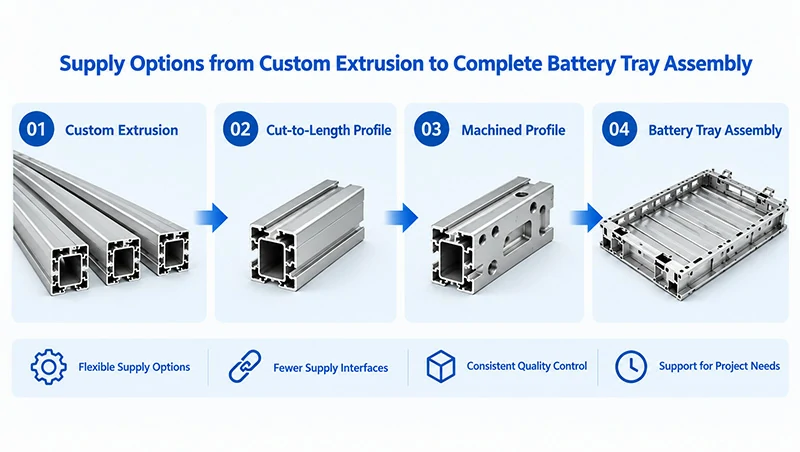
Chalco can supply custom extrusions for further customer processing or machine parts to a semi-finished stage closer to welding and assembly.
For complex multi-cavity sections, long side rails, or parts with extensive CNC features, submit the section or component drawings directly. We will assess section manufacturability, extrusion, and downstream machining requirements together.
Project Drawings Can Be Assessed from the Extrusion Stage
If a project involves complex multi-cavity sections, long side rails, multiple mounting interfaces, or extensive CNC features, submit the extrusion section drawing or component drawing directly.
We can assess section manufacturability, extrusion and machining options, and an appropriate delivery condition from the drawings.
Ultra-Wide Integrated Extrusions Reduce Joints in Battery Tray Bottom Structures
Conventional battery tray bottom plate, load-bearing floor, and integrated structure designs often require several narrow profiles to be joined. Based on customer drawings, Chalco can develop ultra-wide, integrated multi-cavity aluminum extrusions that incorporate cavities, reinforcing features, and functional areas within a single wider section.
Reduce the Number of Profiles and Welded Interfaces
Wider individual extrusions can reduce the number of narrow profiles, welds, and joints, thereby lowering dimensional stack-up, sealing interfaces, and welding work.
In an existing project, an ultra-wide profile design replaced an assembly of multiple pieces with fewer parts, while also reducing the number of welds and dies.
Optimize Weight and Manufacturing Complexity
Reducing repeated joining areas, together with optimized wall thickness and section design, can lower material use and simplify part counts, die arrangements, and manufacturing steps.
In an existing application of ultra-wide integrated profiles, the optimized design achieved approximately 12% lower weight per unit length and eliminated intermediate joining welds.
Increase Integration of the Bottom Structure
The following can be customized to project requirements:
Overall width · Cavity layout · Stiffening ribs · Local wall thickness · Mounting and joining areas
Suitable applications include bottom plates, load-bearing floor structures, water cooling plates, and other integrated structures.
As profile width and cavity complexity increase, flatness, twist, cavity consistency, and rib stability require particular attention. Specific section dimensions and manufacturing options are assessed against customer drawings.
Explore Ultra-Wide Thin-Wall Multi-Channel Aluminum Extrusions and Application Examples →
Manufacturing and Quality Verification Capabilities
For aluminum extrusions, sheet and plate, and machined structural parts used in battery trays, Chalco has associated manufacturing, processing, and inspection capabilities covering the main stages from material forming to semi-finished component delivery.
Manufacturing Equipment and Processing Capabilities
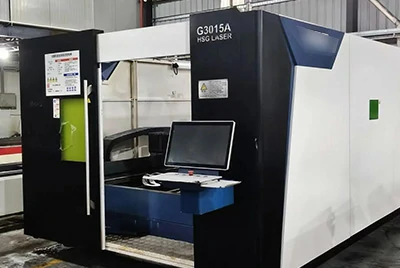
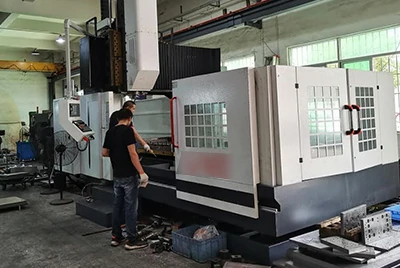
Large aluminum extrusion equipment, cut-to-length sawing equipment, and CNC machining centers can support the production of complex hollow, multi-cavity, and wide structural profiles. Based on component drawings, further operations can include cutting to length, drilling, milling, tapping, slotting, and machining mounting interfaces, covering delivery stages from as-extruded profiles to CNC semi-finished parts.
Inspection Items and Equipment
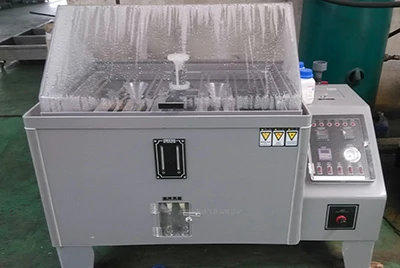
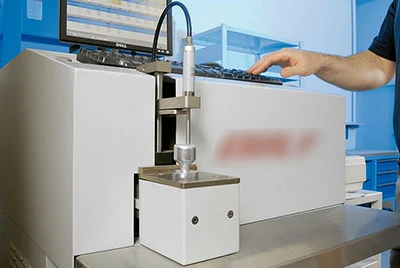
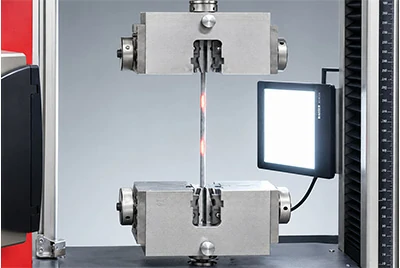
According to project requirements, inspection may cover chemical composition, mechanical properties, hardness and material temper, microstructure, internal quality, and geometric accuracy. Corresponding equipment includes optical emission spectrometers, universal testing machines, hardness testers and conductivity meters, metallographic equipment, ultrasonic testing equipment, and coordinate measuring machines or 3D measuring equipment.

Lot Consistency and Quality Records
For volume supply, lot inspection can follow approved drawings, material specifications, and inspection requirements, with material certificates and mechanical-property and finished-part inspection records retained. Material lots, production lots, and machined parts can be linked as required by the project. Sampling frequency and quality documents supplied with shipments are confirmed by project requirements.
Submit Drawings and Project Requirements
If you are sourcing custom aluminum extrusions, sheet and plate, or machined structural components for an EV battery tray, or several aluminum components within one battery tray project, submit existing drawings and technical requirements. Chalco will assess manufacturing feasibility and quotation based on material, structure, processing depth, and purchasing volume.
Drawings and Part Information: 2D/3D component drawings and extrusion section drawings; an assembly drawing or BOM for a complete battery tray project
Material Requirements: Specified alloy, temper, and material standard, if available
Dimensions and Tolerances: Section, thickness, width, length, critical dimensions, and critical-to-quality (CTQ) requirements
Processing and Delivery Condition: As-extruded profiles or sheet and plate, cut-to-length material, drilled/milled/tapped parts, CNC semi-finished components, or other agreed components
Project Stage and Purchasing Needs: Prototypes, small-batch or volume production, or second-source qualification, plus estimated annual volume
Quality and Delivery Requirements: Inspection requirements, documents supplied with shipments, and delivery destination
For existing production parts or design-change projects, current drawings and specifications can also be submitted for matching assessment.
Related Aluminum Materials and Components for EV Batteries
In addition to battery tray and battery enclosure structural components, Chalco can supply aluminum materials and components for battery thermal management, electrical connections, cell housings, and current collectors, supporting applications from battery pack to cell.
Aluminum for Battery Liquid Cooling Plates
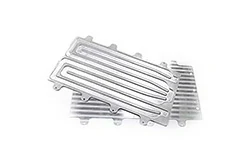
3003, 3003MOD, and brazing-clad materials for battery pack liquid cooling plates and thermal management structures.
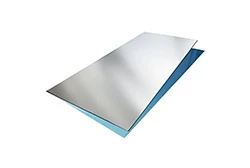
Aluminum for Power Battery Cell Housings
1050, 3003, and 3005 aluminum coil and sheet for prismatic cell housings and deep-drawn structures.
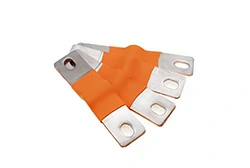
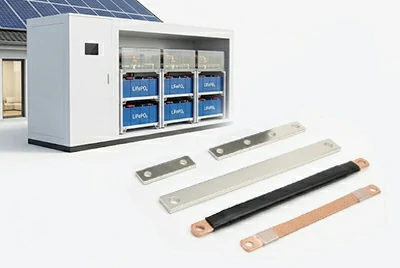
EV Battery Busbars
For current collection and distribution within battery modules and packs, and connections between modules.
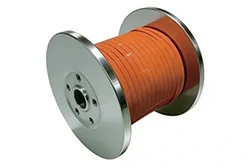
Insulated Aluminum Busbar Coils
Coiled insulated aluminum conductors for EV battery packs. Suitable for high-voltage distribution and continuous processing.
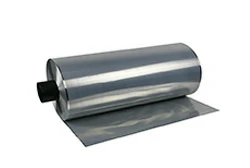
Aluminum Foil for Lithium-Ion Battery Current Collectors
Battery-grade aluminum foil in alloys including 1050, 1060, 1235, and 8011 for lithium-ion battery positive-electrode current collectors.
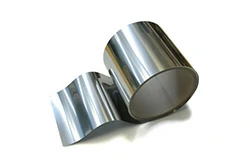
8021 Aluminum Foil for Pouch Battery Cells
Used as the intermediate barrier layer in aluminum-plastic laminate film for pouch cells, providing packaging and barrier protection.
For more aluminum materials used in battery packs and cells, view the full range of power battery materials.
Explore More Aluminum Materials for Power Batteries →
Frequently Asked Questions
Can You Evaluate a Part If Its Drawing Is Final but the Alloy or Temper Is Not?
Yes. A material route can be assessed based on the component's function, product form, structural requirements, and downstream processing. The final alloy and temper are determined according to the customer's design requirements and approved technical specifications.
Can You Assess an Existing Production Part for Second-Source Supply?
Supply matching can be assessed against existing drawings, material specifications, processing condition, and quality requirements. Prototype or subsequent supply requirements can then be confirmed according to the project stage.
Can I Request Quotes for Several Aluminum Components in One Battery Tray Project?
Yes. Submit an assembly drawing, BOM, or multiple component drawings so that we can assess the supply scope for extrusions, sheet and plate, and CNC semi-finished parts separately.
Can Supply Start at the Extrusion or Prototype Stage?
An appropriate starting point can be determined according to the project stage. Specific prototype, small-batch, and later volume arrangements are evaluated against drawings and project requirements.
Can You Supply a Complete Battery Tray Assembly?
This page primarily covers aluminum extrusions, sheet and plate, and drawing-based semi-finished parts. If a project involves welding, sealing, or a complete assembly, availability and the corresponding verification requirements must be confirmed against the specific drawings.
Submit Your Battery Tray Project
Send drawings or technical specifications. We will assess a suitable supply option based on material, structure, processing depth, and purchasing requirements.
Chalco can provide you the most comprehensive inventory of aluminum products and can also supply you customized products. Precise quotation will be provided within 24 hours.
Get a quote