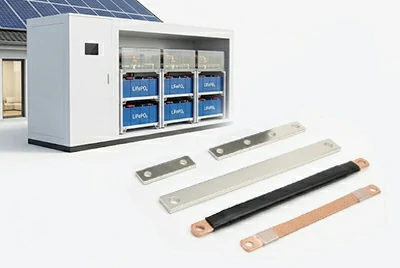
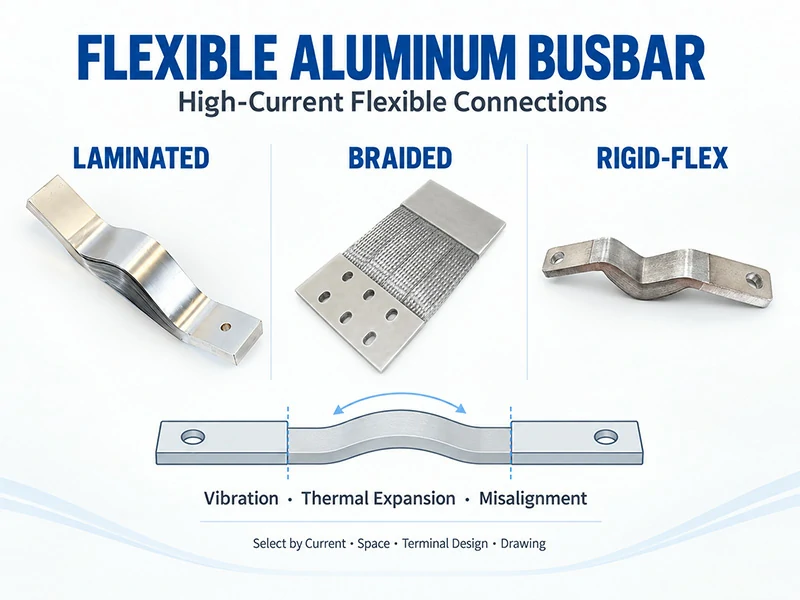
A flexible aluminum busbar is a high-current flexible conductor used between busbars, battery modules and electrical equipment terminals. While carrying current, it can compensate for vibration, thermal expansion, assembly misalignment and limited relative movement.
Common flexible aluminum busbar structures include:
- Laminated flexible aluminum busbar — multilayer aluminum foil / strip construction
- Braided flexible aluminum busbar — braided aluminum wire construction
- Rigid-flex aluminum busbar — flexible conductor section combined with a rigid aluminum busbar
Chalco can customize flexible aluminum busbars based on current requirements, installation space, connection structure and customer drawings. If your project requires a flexible aluminum busbar solution or selection support, contact us and we can help determine a suitable product configuration for the application.
Flexible aluminum busbar specifications
Flexible aluminum busbars are typically customized according to current-carrying capacity, installation space, flexibility requirements and terminal connection method. Design should consider not only width and thickness, but also individual conductor layer thickness, flexible-section length, terminal dimensions and hole locations.
| Aluminum alloy | 1050, 1060, 1070, 1100, 1200, 1350, 6101; material selection varies by structure |
| Single foil thickness | 0.05–0.30 mm |
| Total conductor thickness | 0.5–10 mm |
| Layer count | 10–50 layers are seen in multilayer 1060 aluminum foil products; the actual layer count depends on the design |
| Width | 10–150 mm is seen across different product systems |
| Terminal structure | Welded foil end, solid aluminum terminal, aluminum bar terminal |
| Hole design | Round hole, oblong hole, multi-hole palm |
| Forming | Flat, offset, V-shaped, S-shaped |
| Surface finish | Bare; tin, nickel or silver on the contact area |
| Insulation | Heat shrink, PVC dipping; some products use PE/EVA heat shrink |
Flexible aluminum busbar types available from Chalco
Flexible aluminum busbars can be divided into different types according to the flexible-conductor structure and how it is combined with rigid aluminum busbars. These structures differ in flexibility direction, conductor dimensions and installation method, and can be selected according to actual current, movement and connection-space requirements.
Laminated flexible aluminum busbar
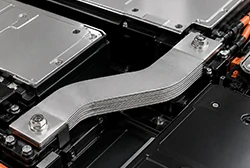
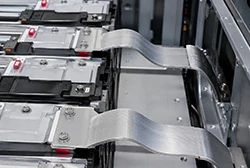
A laminated busbar structure is made from multiple thin aluminum foils or strips stacked in parallel. The ends are welded to form rigid connection areas while the center remains flexible. This compact structure provides a relatively large conductive cross-section in limited installation space and is a commonly used design for high-current connections in EV batteries, ESS and inverters.
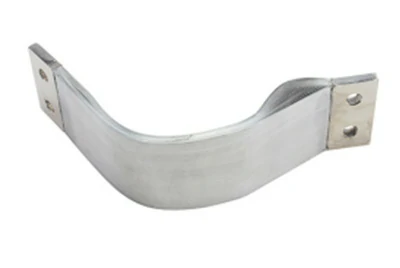
Single aluminum foil thickness: 0.05–0.30 mm, with 0.10 mm and 0.20 mm among the more common sizes.
Layer count: 10–50 layers; some EV battery busbars use a 15–20 layer design.
Total conductor thickness: 0.5–10 mm. Different conductive cross-sections and flexibility levels can be obtained by combining foil thickness and layer count.
Actual applications:
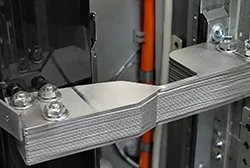
Braided flexible aluminum busbar
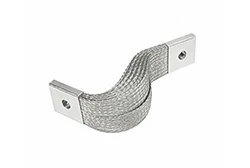
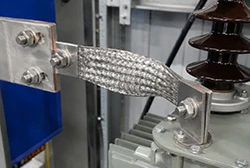
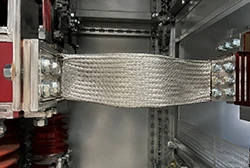
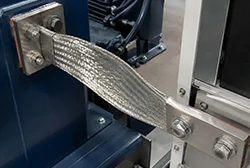
A flexible conductor formed by braiding many fine aluminum wires. Compared with parallel laminated aluminum foil, it provides better multidirectional deformation capability and is suitable for transformer, switchgear, busduct and battery connector locations that need to conduct current while absorbing vibration or movement.
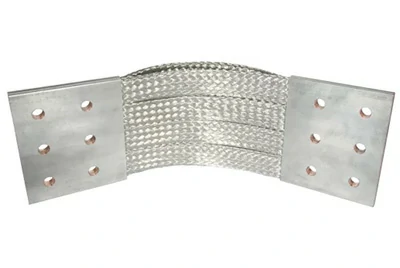
Common aluminum wire alloys: High-conductivity AA1050, AA1070 and AA1200 aluminum wire; 5154 can also be used for flexible connections requiring higher mechanical strength and corrosion performance.
Braided strip width: High-current braided flexible jumpers can use widths of approximately 25–150 mm.
Surface treatment: Bare aluminum; tin or nickel plating is available for terminals / contact areas.
Conductor structure: Round braid or flat braid can be used. The flat braided structure is more suitable for busbar-style high-current connections and installations with limited height.
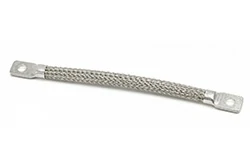
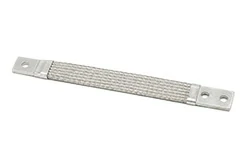
Actual applications:
Rigid-flex aluminum busbar
A laminated aluminum flexible section is welded to a solid aluminum busbar or solid aluminum terminal. The rigid aluminum busbar defines the routing path and equipment connection, while the flexible section is placed only where vibration, thermal expansion or installation misalignment must be absorbed. This design is suitable for longer or more complex busbar systems.
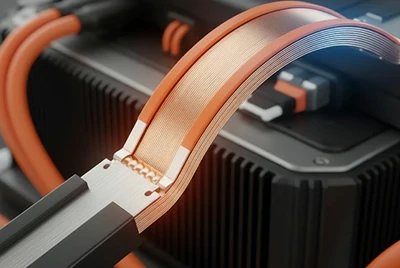
Typical overall length: 300 / 360 / 400 mm, with custom designs available according to the connection distance between equipment.
Typical product width: 51 / 76 / 102 mm. Different combinations of width and conductor thickness are used for different current ratings.
DC rated current: Typical products cover 600, 800, 1200 to 2000 A and are suitable for transformers, switchgear and other high-current busbar connections.
Insulated flexible aluminum busbar
Heat-shrink, PVC or other insulation is added around the flexible conductor for batteries, ESS and electrical equipment that require touch protection, improved insulation protection or high-voltage isolation.
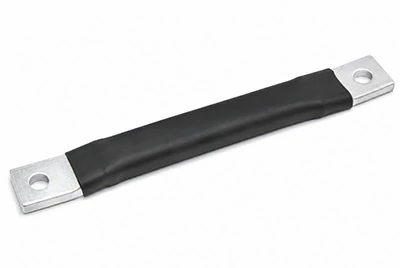
Insulation material: PE/EVA heat shrink, flame-retardant PVC
Insulation thickness: 1.0–1.5 mm
Electrical performance: Withstand voltage up to 4000 V DC / 1 min; flame retardancy up to UL 94 V-0
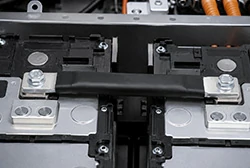
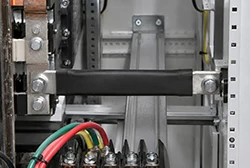
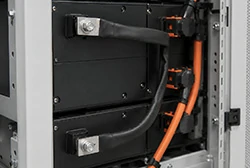
Actual applications:
Large-size flexible aluminum busbar
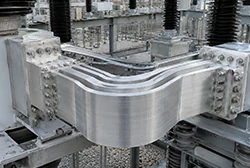
Designed for transformers, switchgear, substations and high-current distribution equipment, using wider aluminum laminations and a larger conductor cross-section for high-current connections and larger equipment interfaces.
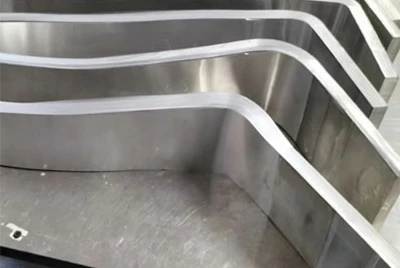
Lamination width: 100–200 mm
Lamination structure: 13–17 layers × 1.2 mm
Current rating: 1500–3150 A
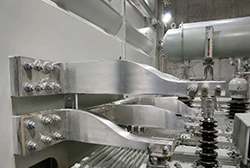
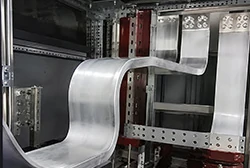
Actual applications:
If you are unsure which flexible aluminum busbar is suitable for your project, provide the operating current, installation space and connection method. Chalco can help recommend an appropriate product structure.
Common aluminum alloys for flexible aluminum busbars
Material selection for a flexible aluminum busbar should consider electrical conductivity, flexibility, mechanical strength and the specific structure. Laminated foil, braided and rigid-flex designs do not place the same emphasis on material properties.
-
1060 Flexible aluminum busbar
Key characteristics: Al ≥99.60%. A high-purity 1xxx-series aluminum with good ductility, suitable for processing into thin aluminum foil and multilayer flexible conductors.
Main applications: Laminated flexible aluminum busbar, EV battery, ESS and high-current flexible connections.
-
1070 Flexible aluminum busbar
Key characteristics: Al ≥99.70%. Typical electrical conductivity is about 62.5–62.7% IACS, making it more suitable than common structural aluminum alloys for conductive connections where low resistance is a priority.
Main applications: High-conductivity laminated flexible busbar, battery busbar and flexible connections in electrical equipment.
-
1050 Flexible aluminum busbar
Key characteristics: Al ≥99.50%. 1050-O has a typical minimum electrical conductivity of about 61.0% IACS and combines conductivity with formability.
Main applications: Flexible aluminum conductor, braided flexible busbar and general electrical connections.
-
1200 Flexible aluminum busbar
Key characteristics: Al ≥99.00%. A commercially pure aluminum suitable for processing into aluminum strip, foil or wire.
Main applications: Braided flexible aluminum busbar, flexible jumper and flexible conductive connections.
-
6101 Aluminum busbar
Key characteristics: An Al-Mg-Si conductor alloy with electrical conductivity of about 55–59.5% IACS depending on temper and typical tensile strength of about 83–221 MPa. Its strength is significantly higher than that of 1xxx-series pure aluminum.
Main applications: Better suited to the rigid busbar, terminal or other conductive sections of a hybrid flexible aluminum busbar where higher mechanical strength is required.
-
5154 Braided flexible aluminum busbar
Key characteristics: Mg content is about 3.1–3.9%, with typical electrical conductivity of about 32% IACS. Conductivity is significantly lower than for 1xxx-series aluminum, but mechanical strength and corrosion performance are higher.
Main applications: Braided flexible connectors and flexible connections where vibration, mechanical durability and corrosion performance are more important.
Advantages of flexible aluminum busbars
- Absorbs vibration and movement: The flexible conductor can absorb equipment vibration and relative movement, reducing mechanical stress on terminals and weld joints.
- Compensates for thermal expansion: The flexible section can accommodate dimensional changes caused by temperature variation, reducing long-term stress on the busbar and connection ends.
- Accommodates assembly misalignment: It can compensate for a certain amount of hole-position offset, height difference and installation tolerance, making assembly easier than with a rigid aluminum busbar.
- Combines high current and flexibility: Foil thickness, layer count, width and conductor cross-section can be designed together to maintain flexibility while meeting current requirements.
- Lower-weight option: In a copper vs. aluminum busbar comparison, aluminum's density is about 2.70 g/cm³ compared with about 8.96 g/cm³ for copper, making aluminum suitable for weight-sensitive EV and ESS applications.
- Suitable for Al-Al connections: When paired with an aluminum battery terminal or aluminum busbar, it can reduce Al-Cu dissimilar-metal interfaces and simplify the connection structure.
Main applications of flexible aluminum busbars
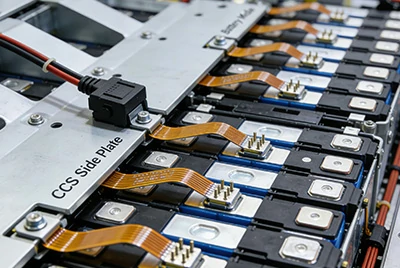
EV battery pack
Used for high-current battery busbar connections between the battery module, battery pack and high-voltage connection unit. It can absorb vibration, assembly misalignment and a limited amount of relative movement.
Energy storage system
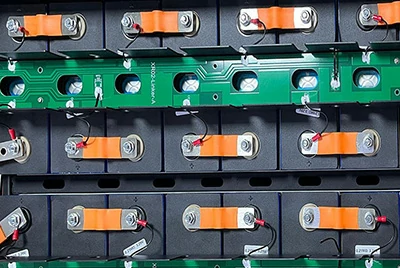
Used for flexible connections among the ESS battery rack, battery module and PCS, and suitable for modular installation and thermal-cycling conditions.
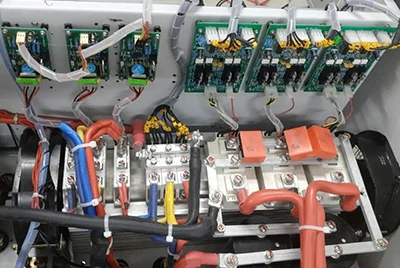
Inverter and power electronics
Used for high-current connections between power devices such as IGBTs, power modules and the DC bus, combining compact installation with flexible compensation.
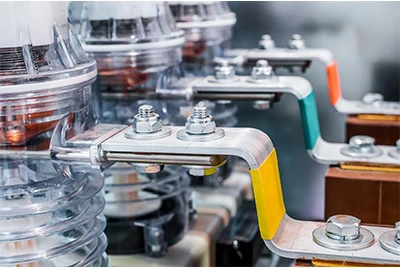
Transformer
Used for flexible connections between transformer terminals and busbars, reducing the effects of vibration and thermal expansion on the connection ends.
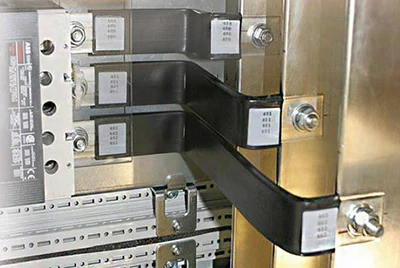
Switchgear
Used for flexible conductive connections among switchgear, circuit breakers and busbar systems, and suitable for locations with installation tolerance or movement.
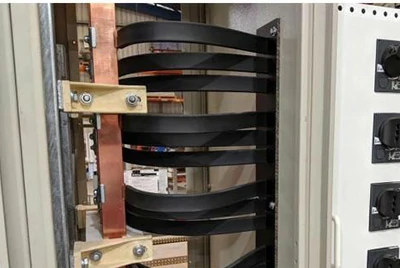
Busduct and power distribution
Used as a busbar transition connection in busducts, distribution cabinets and high-current power-distribution systems, compensating for positional offset and thermal expansion.
If your application involves EV power battery aluminum systems, ESS, transformers, switchgear or other high-current connections, Chalco can provide a suitable flexible aluminum busbar solution based on the actual operating conditions.
How to select the right flexible aluminum busbar
Flexible busbar selection typically starts with current-carrying requirements and is then adjusted for installation space, movement, terminal structure and operating environment.
Start with the required current
Continuous current, peak current and allowable temperature rise determine the basic conductor cross-section. Continuous current is used to determine long-term current-carrying capacity, while peak current also requires consideration of short-term heating and temperature rise at the connection. Selection should not rely on a fixed current-to-cross-section ratio alone.
Installation space limits busbar dimensions
Available width, height and the distance between connection points all affect the busbar structure. When installation height is limited, the design can be optimized by increasing width and reducing thickness. When width is limited, conductor thickness may need to increase or the overall routing may need to be adjusted.
How much movement must be compensated?
The flexible section is mainly used to absorb vibration, thermal expansion and assembly misalignment. Greater movement generally requires a longer and more flexible section, while the primary direction of movement must also be considered.
Thinner aluminum foil is not always better
Single foil thickness, layer count and flexible length need to be considered together. Thinner foil bends more easily, but increasing the number of layers also affects welding, total thickness and manufacturing complexity. A balance is therefore required between flexibility and current-carrying capacity.
Match the terminal structure to the equipment interface
Hole size, hole spacing, terminal width and contact area should be designed according to the actual battery terminal, busbar, transformer or switchgear interface. For Al-Cu connections, the treatment of the dissimilar-metal contact surface should also be considered.
Insulation and operating environment also affect the design
Operating voltage, working temperature, humidity or corrosive environments affect the choice of insulation, surface treatment and terminal protection, particularly in EV battery, ESS and high-voltage electrical systems.
If you can provide the operating current, allowable temperature rise, installation dimensions, movement and terminal drawing, Chalco can use this information to help determine the conductor cross-section, aluminum foil thickness, layer count and flexible-section design.
Flexible aluminum busbar installation guidelines
- Keep contact surfaces clean: Before installation, remove oil, oxides and foreign matter from terminal contact surfaces and keep the surfaces flat to avoid increased contact resistance and localized heating.
- Pay attention to Al-Cu dissimilar-metal connections: When connecting to a copper busbar or copper terminal, use a suitable plating or transition-connection solution to reduce oxidation and galvanic corrosion risk.
- Do not force stretching or twisting: Keep the flexible section in its natural state during installation. Do not use excessive pulling or twisting to compensate for large hole-position or assembly misalignment.
- Avoid excessively tight bends and repeated bending: Leave sufficient bending space for the flexible section and avoid sharp bending, folding it flat, or repeatedly reversing the bend at the same location.
- Tighten terminals correctly: Bolt torque should follow the requirements of the equipment terminal and fastener. Insufficient tightening may cause contact heating, while excessive tightening may damage the terminal.
- Protect the insulation: When installing an insulated flexible aluminum busbar, avoid scratching, crushing or contact with sharp edges, and maintain the required electrical clearances after installation.
- Check the connection after commissioning: For high-current applications, check terminal temperature rise and tightening condition during equipment commissioning or the initial operating period to identify abnormal hot spots promptly.
Flexible aluminum busbar manufacturing process
Manufacturing methods differ by flexible aluminum busbar structure, with the most obvious process differences between laminated and braided types.
Laminated flexible aluminum busbar
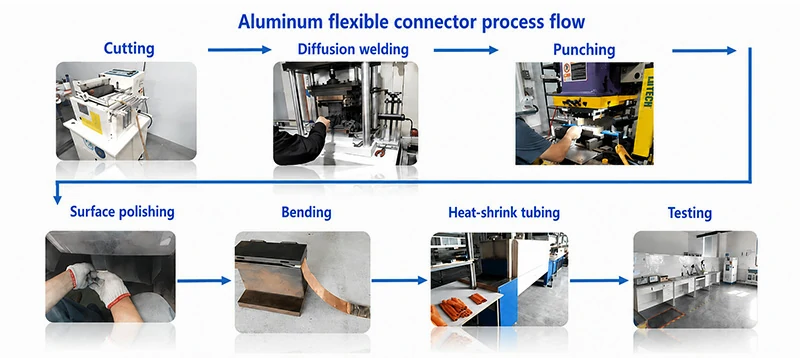
Aluminum foil cutting → multilayer stacking → end welding → punching / CNC machining → forming → surface treatment → insulation → inspection
Multiple aluminum foils are stacked according to the designed thickness and layer count. The ends are joined by diffusion welding, ultrasonic welding, laser welding or other methods to form rigid connection areas while the center remains flexible. Hole machining, profile processing, bending and insulation are then completed.
Braided flexible aluminum busbar
Aluminum wire drawing → multi-strand braiding / stranding → cut to length → terminal crimping or connection → surface treatment → inspection
Fine aluminum wires are formed into a flexible conductor by flat braiding, round braiding or multi-strand stranding and then connected to terminals at both ends. Compared with a laminated structure, the braided design provides greater multidirectional flexibility and is more suitable where vibration and relative movement are more pronounced.
Terminal connection is a critical manufacturing step
Regardless of the structure, the terminal area must balance low contact resistance, mechanical strength and dimensional accuracy. For laminated busbars, consistency in the welded area must also be controlled to avoid incomplete welding, interlayer separation or abnormal localized resistance.
Chalco can customize flexible aluminum busbars according to foil thickness, layer count, terminal dimensions, hole pattern and forming requirements shown on the drawing.
Flexible aluminum busbar appearance and dimensional requirements
Surface quality
The surface should be clean and flat, without obvious deformation, cracks, indentations or sharp edges.
Thickness tolerance
One actual aluminum foil flexible connector processing specification uses -3 / +5 mm.
Developed length tolerance
A control range of -6 / +15 mm may be used.
Bending dimensions
Bend at the positions and hardened lengths specified on the drawing and keep the final overall length within the installation requirements.
Final inspection
Key checks include thickness, overall length, bending position, plating area and whether the appearance meets the drawing requirements.
Other products you may be interested in
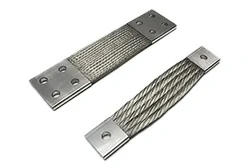
Flexible Busbar
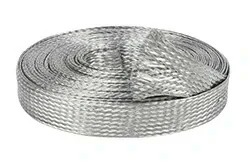
Braided Aluminum Wire
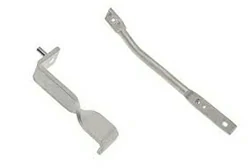
Busbar Connector
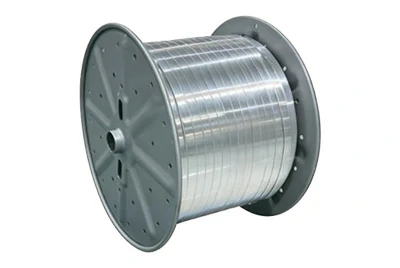
Coiled Aluminum Busbar
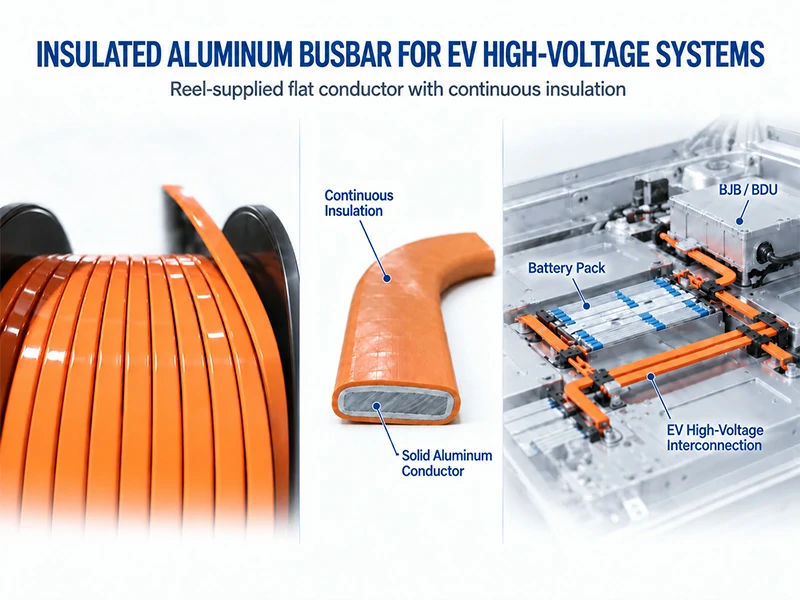
Insulated Aluminum Busbar
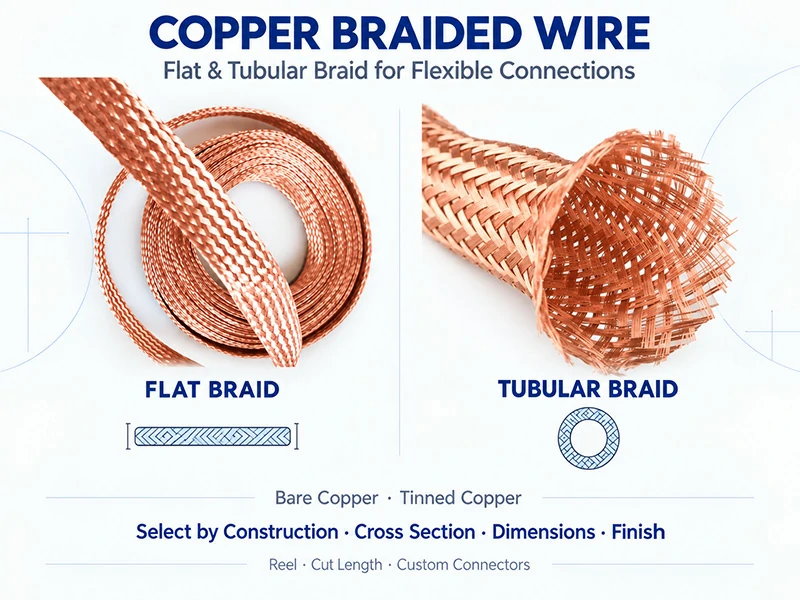
Copper Braided Wire
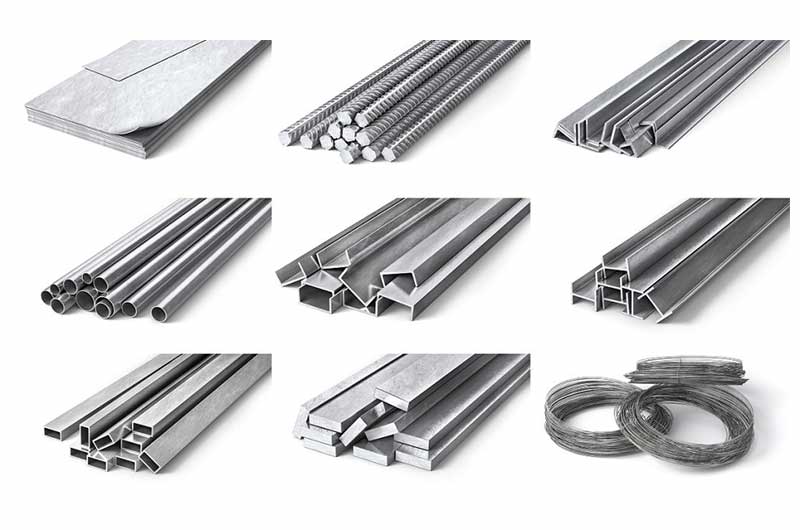
Aluminum Bar
Flexible aluminum busbar FAQ
How should 0.1 mm and 0.2 mm aluminum foil be selected?
0.1 mm foil bends more easily and is more suitable for connections requiring higher flexibility, vibration compensation or movement compensation. A 0.2 mm foil is thicker per layer and therefore requires fewer layers at the same total thickness, making it more suitable where flexibility requirements are relatively lower. Single-layer aluminum foil thicknesses of about 0.05–0.30 mm are seen in flexible aluminum busbars.
How many aluminum foil layers are typically used in a flexible aluminum busbar?
Multilayer structures with 10–50 layers are seen in actual products, and some EV battery flexible busbars use about 15–20 layers. Layer count cannot be determined independently; it should be designed together with foil thickness, total conductor cross-section and required flexibility.
How thick can a flexible aluminum busbar be?
The total conductor thickness of a multilayer flexible aluminum busbar can be about 0.5–10 mm. Total thickness is mainly determined by the current requirement, but at the same total thickness, more thin foils are generally more flexible than fewer thick aluminum strips.
What voltage can an insulated flexible aluminum busbar withstand?
Heat-shrink insulated products are available with withstand-voltage ratings of up to 4000 V DC / 1 min, insulation wall thickness of about 1.0–1.5 mm, and some insulation materials reaching UL 94 V-0 flame-retardant ratings. The actual insulation design should still be determined according to system operating voltage.
What temperature can an insulated flexible aluminum busbar withstand?
The temperature range varies significantly by insulation material. PE/EVA heat-shrink solutions can operate at about -50 to 125°C, while some flame-retardant PVC solutions are rated at about -40 to 105°C. In high-temperature environments, the insulation material temperature rating must therefore be checked in addition to the aluminum conductor.
Which is more suitable for a flexible aluminum busbar: 1060, 1070 or 1350?
All three are high-conductivity aluminum grades. 1060 contains Al ≥99.60%, while 1070 contains Al ≥99.70%. 1350 is a typical electrical-conductor-grade aluminum, and 1350-O can reach a minimum electrical conductivity of about 61.8% IACS. For higher-conductivity requirements, 1070 and 1350 can be considered first; when thin-foil processing and flexibility must also be balanced, 1060 is also very common.
How should laminated and braided flexible aluminum busbars be selected?
The laminated type is more suitable for high-current connections requiring a larger cross-section, flat installation and a defined bending direction. The braided type provides better multidirectional flexibility and is more suitable for connection points with greater vibration, movement or installation-position variation.
What current can a large-size flexible aluminum busbar carry?
For aluminum flexible connectors used in large substation and power-distribution equipment, actual products include 100–200 mm widths with 13–17 layers × 1.2 mm laminated structures and current ratings of about 1500–3150 A. The specific dimensions should still be determined according to allowable temperature rise, installation method and heat-dissipation conditions.
Information required for a flexible aluminum busbar inquiry
To help confirm the product structure and quotation quickly, provide the basic electrical parameters, installation dimensions, connection method, surface or insulation requirements and purchase quantity whenever possible. If a drawing is available, include it with the inquiry.
- Product type: Laminated, braided, hybrid, insulated or large-size
- Electrical requirements: Operating current, peak current, allowable temperature rise
- Dimensions: Width, thickness, length and installation space
- Connection requirements: Terminal form, hole pattern and mating material
- Surface and insulation: Plating, insulation and protection requirements
- Purchasing information: Application, quantity and drawing
Chalco can provide you the most comprehensive inventory of aluminum products and can also supply you customized products. Precise quotation will be provided within 24 hours.
Get a quote