Copper braided wire is a flexible conductor made by braiding multiple fine copper wires. Chalco supplies flat and tubular copper braid in bare or tinned copper, available in rolls, reels, cut lengths, and further-processed finished assemblies.
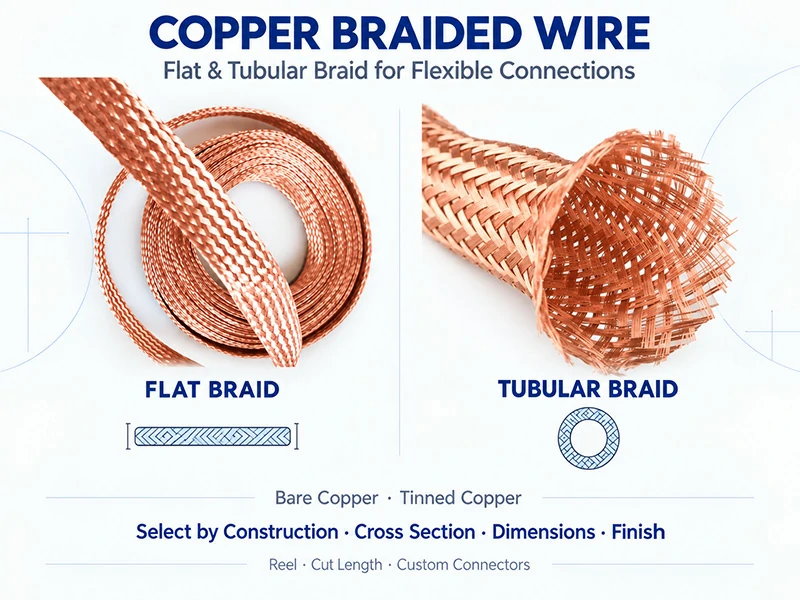
Similar appearance does not mean two copper braids are directly interchangeable. For replacement parts or downstream connector fabrication, conductor size, braid construction, and final geometry should be matched together.
- Structure: Flat / Tubular
- Finish: Bare Copper / Tinned Copper
- Supply: Roll / Reel / Cut Length / Finished Assembly
Flat Copper Braid
-
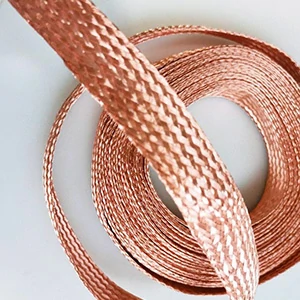 Flat Copper Braid
Flat copper braid is a flexible flat conductor made by braiding multiple fine copper wires. It is typically supplied in rolls or reels for downstream cutting and end processing, and can also be used to make flexible connectors, grounding/bonding straps, and other flexible connection components.
Flat Copper Braid Specifications
| Specification | Common Reference |
| Material | Soft / annealed copper; ETP copper |
| Finish | Bare copper / Tinned copper |
| Individual Wire Size | 30–40 AWG; 30 and 36 AWG are common examples |
| Carrier Construction | 16 / 24 / 48 carriers |
| Typical Construction Examples | 24×2/36, 24×3/36, 24×4/36, 24×5/36, 24×7/36, 24×10/36, 48×6/36, 48×8/36 |
| Equivalent Conductor Size | Approx. 19–10 AWG for the representative constructions below |
| Typical Flat Width | 1/32–1-1/2 in (0.8–38.1 mm) |
| Typical Thickness | 0.015–0.060 in (0.38–1.52 mm) |
| Supply Form | Roll / Reel / Cut Length |
| Reference Standards | Braid: A-A-59569 where specified; bare individual wire: ASTM B3; tinned individual wire: ASTM B33 |
Note: The values above are common specification formats and dimensional references. Actual available constructions and dimensions should be confirmed for the specific project.
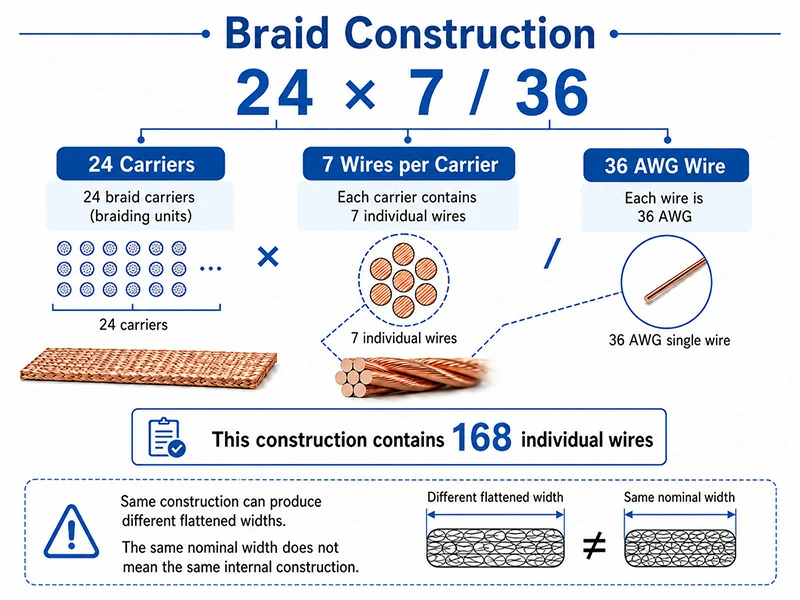
How to Read Braid Construction
24 × 7 / 36
Means: 24 carriers × 7 individual wires per carrier / 36 AWG individual wire
This construction contains 168 individual wires.
The same construction can have different flattened widths; the same nominal width does not necessarily mean the internal construction is identical.
Typical Flat Copper Braid Sizes
| Construction | Total Wires | Approx. Area | Representative Flat Width |
| 24 × 2 / 36 | 48 | ≈ 0.61 mm² | ≈ 3/32 in / 2.4 mm |
| 24 × 3 / 36 | 72 | ≈ 0.91 mm² | ≈ 7/64–1/8 in / 2.8–3.2 mm |
| 24 × 4 / 36 | 96 | ≈ 1.22 mm² | ≈ 5/32 in / 4.0 mm |
| 24 × 5 / 36 | 120 | ≈ 1.52 mm² | ≈ 3/16 in / 4.8 mm |
| 24 × 7 / 36 | 168 | ≈ 2.13 mm² | ≈ 7/32–1/4 in / 5.6–6.35 mm |
| 24 × 10 / 36 | 240 | ≈ 3.04 mm² | ≈ 1/4 in / 6.35 mm |
| 48 × 6 / 36 | 288 | ≈ 3.65 mm² | ≈ 3/8 in / 9.5 mm |
| 48 × 8 / 36 | 384 | ≈ 4.87 mm² | ≈ 1/2–5/8 in / 12.7–15.9 mm |
Typical Applications of Flat Copper Braid
Typical applications include:
Flexible Connector Fabrication: Base braid material for flexible connectors, braided shunts, and similar components.
Grounding & Bonding: Grounding straps, jumpers, and equipotential bonding connections.
Busbar Flexible Links: Flexible transitions between rigid conductors in busbars, switchgear, transformers, and similar equipment.
Vibration / Movement Connections: Flexible connections where vibration, thermal movement, or installation misalignment must be accommodated.
Tubular Copper Braid
-
 Tubular Copper Braid
Tubular copper braid retains a sleeve-like braided structure and is typically selected based on nominal inside diameter, actual cable/harness OD, braid construction, and finish.
It is commonly supplied on reels or in continuous lengths for cable, wire-harness, and shielding applications.
Tubular Copper Braid Specifications
| Specification | Common Reference |
| Material | Soft / annealed copper |
| Finish | Bare copper / Tinned copper |
| Individual Wire Size | 30 / 32 / 34 / 36 AWG |
| Carrier Construction | 16 / 24 / 48 carriers |
| Typical Constructions | 16×1/32, 24×2/36, 24×5/36, 24×7/36, 24×16/36, 48×8/36 and other configurations |
| Nominal Inside Diameter | 0.031–2.25 in (0.8–57.2 mm) in common commercial series |
| Supply Form | Reel / Spool / Continuous Length |
| Shielding Specification | Cable OD / expanded diameter / optical coverage as required |
| Reference Standards | Braid: A-A-59569 where specified; bare individual wire: ASTM B3; tinned individual wire: ASTM B33 |
Note: The values above are common specification formats and dimensional references. Actual available construction, ID, and continuous length should be confirmed for the specific project.
Typical Tubular Copper Braid Sizes
| Nominal ID | Metric Reference | Construction | Individual Wire |
| 0.031 in | ≈ 0.8 mm | 24 × 1 / 36 | 36 AWG |
| 0.062 in | ≈ 1.6 mm | 24 × 2 / 36 | 36 AWG |
| 0.078 in | ≈ 2.0 mm | 24 × 3 / 36 | 36 AWG |
| 0.125 in | ≈ 3.2 mm | 24 × 5 / 36 | 36 AWG |
| 0.171 in | ≈ 4.3 mm | 24 × 7 / 36 | 36 AWG |
| 0.250 in | ≈ 6.35 mm | 24 × 16 / 36 | 36 AWG |
| 0.375 in | ≈ 9.5 mm | 48 × 8 / 36 | 36 AWG |
Tubular Copper Braid for EMI/RFI Shielding
For EMI/RFI shielding, confirm the actual cable OD together with braid expansion range, optical coverage, finish, continuous length/splice requirements, and termination.
As tubular braid expands, the braid angle and coverage change, so selection should not be based on nominal ID alone.
Bare Copper Braid vs. Tinned Copper Braid
Both flat and tubular copper braid are available in bare or tinned finishes. Selection mainly depends on the service environment, termination/soldering process, and project specification.
| Selection Factor | Bare Copper | Tinned Copper |
| Surface | Bare copper | Tin-coated copper |
| Corrosion / Oxidation Resistance | No additional plated protection | Tin coating provides added surface protection |
| Humid / Corrosive Environment | Confirm by service environment | More commonly selected |
| Termination / Soldering | Depends on termination process | Suitable where soldering or tinned-conductor termination is specified |
| Cost | Lower | Higher |
| Individual-Wire Reference | ASTM B3 | ASTM B33 |
Bare Copper is generally better suited when the customer specification permits bare copper, the service environment is relatively controlled, or the project mainly uses mechanical crimping and downstream connector fabrication.
Tinned Copper is more commonly used in humid or more corrosive environments, where copper-surface oxidation needs to be reduced, or where drawings explicitly require tinned conductors. It is also common in grounding/bonding and some soldered terminations.
How to Select Copper Braid by Duty
Copper braid should be selected according to actual duty, which determines the appropriate supply route and level of processing. Connector fabrication, grounding/bonding, and continuous-current connections typically start with Flat Copper Braid, while cable/harness shielding generally uses Tubular Copper Braid.
Customers can purchase raw braid for in-house processing or source finished parts such as grounding straps, flexible connectors, and braided shunts.
For Connector Fabrication
Commonly used as the base material for battery and energy-storage connectors, power distribution/switchgear connectors, busbar flexible links, and grounding jumpers. Flat Copper Braid is typically used; customers can process it in-house or have Chalco supply further-processed assemblies.
Base Material: Flat Copper BraidKey Requirements: Braid construction, cross-sectional area, width/thickness, bare or tinned finish, suitability for downstream terminationSupply Forms: Roll, reel, or cut length; further-processed parts and finished assemblies can be made to drawing
For Grounding / Bonding
Commonly used for grounding and equipotential bonding of electrical cabinets, equipment enclosures, doors, racks, and machinery. Flat Copper Braid is typically used and can be further processed into finished grounding straps.
Base Material: Flat Copper BraidKey Requirements: Cross-sectional area, finished length, bare/tinned finish, end configuration, hole diameter/spacing, installation environmentSupply Forms: Cut-length braid or Copper Braided Grounding Strap
For Continuous-Current Flexible Connections
Commonly used for flexible electrical connections between rigid conductors in busbars, switchgear, transformers, batteries, and energy storage systems, accommodating vibration, thermal movement, and installation misalignment.
Base Material: Flat Copper BraidKey Requirements: Conductor cross-sectional area, resistance, finished length, termination design, contact interface, and temperature-rise requirementSupply Forms: Cut-length braid; can also be processed into Copper Braided Flexible Connectors, Braided Shunts, and other flexible links
Grounding braid and continuous-current flexible connectors should not be interchanged based solely on appearance or cross section. Continuous-current products also need to be evaluated against resistance, termination, and actual operating conditions.
For Cable / Harness Shielding
Commonly used for EMI/RFI shielding of cables, wire harnesses, industrial control wiring, and internal equipment wiring, with tubular braid sleeved over the cable to form a flexible shielding layer.
Base Material: Tubular Copper BraidKey Requirements: Cable OD, nominal/expanded diameter, optical coverage, bare/tinned finish, continuous length, and shield terminationSupply Forms: Reel, continuous length, or cut-length sleeve; braid size and coverage matched to cable OD and project requirements
Processed Copper Braid Products & Finished Assemblies
Copper braid can be further processed into flexible connectors, grounding straps, shunts, and terminal-equipped custom connectors to suit the final installation. Length, cross-sectional area, end configuration, hole diameter, and hole spacing can be customized.
-
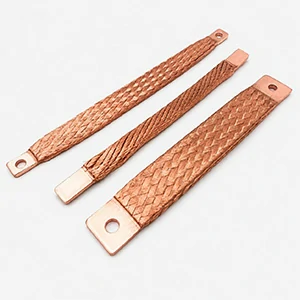 Copper Braided Flexible Connector
Made from flat copper braid with pressed ends, drilled holes, or copper end plates. Used for flexible power connections in busbars, switchgear, transformers, batteries, and energy storage systems where vibration, movement, or thermal expansion must be accommodated.
-
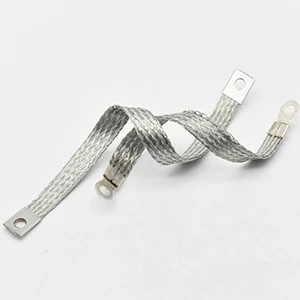 Copper Braided Grounding Strap
Made from bare or tinned copper braid with mounting holes, end tabs, or terminals. Used for grounding/bonding of equipment enclosures, cabinet doors, racks, and machinery where flexible grounding and equipotential bonding are required.
-
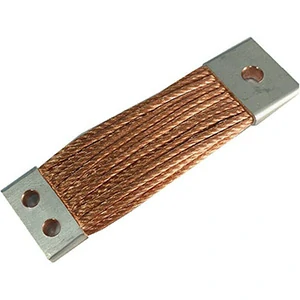 Copper Braided Shunt
A flexible current-carrying connector made from single- or multi-layer copper braid with conductive end plates or mounting interfaces. Mainly used for busbars, power equipment, and high-current flexible connections.
-
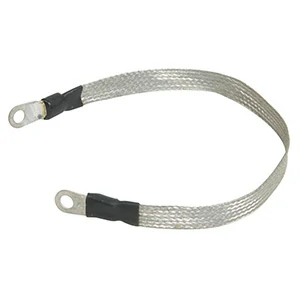 Copper Braided Terminal Lead
Copper braid fitted with ring terminals, lugs, or other connectors at both ends and cut to the required length. Used for equipment grounding, jumpers, and flexible connections between electrical components.
-
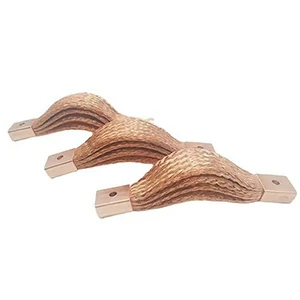 Multi-Braid Flexible Connector
Built from multiple layers or parallel braid sections to increase conductor cross section while retaining flexibility. Used in high-current connections, space-constrained installations, or applications requiring greater movement compensation.
-
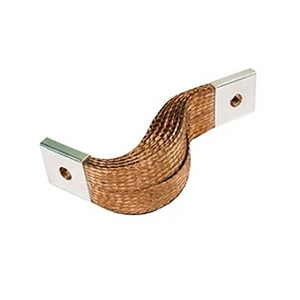 Special-Shaped Copper Braided Connector
Customizable in length, hole spacing, end width, and installation angle to suit special geometries or offset connections. Suitable for OEM supply, replacement parts, and non-standard interfaces.
Copper Braid Manufacturing & Supply Consistency
Chalco supplies raw copper braid, cut-to-length material, and further-processed products such as grounding straps, flexible connectors, and braided shunts. Sample approval is only the first step; for production orders, consistent braid construction, dimensions, surface condition, and finished installation interfaces are equally important.
How Is Copper Braid Manufactured?
From fine copper wire to the finished product, copper braid typically follows these steps:
Copper wire preparation → bare/tinned wire confirmation → carrier setup → braiding → flat forming or tubular form retention → dimensional and visual check → reeling/cutting → finished-part processing
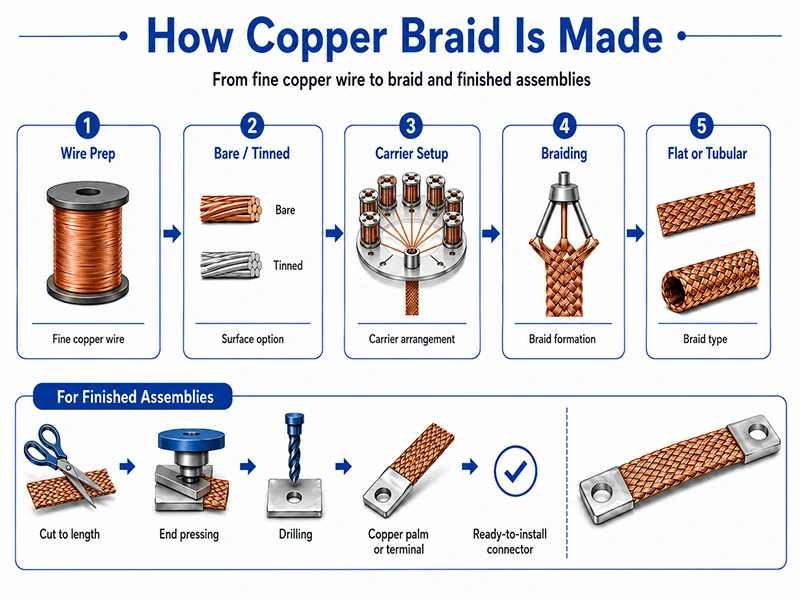
For finished assemblies, additional processing can include cut-to-length, end pressing, drilling, and fitting end plates or terminals to produce installation-ready flexible connectors.
Braid Construction & Dimensional Consistency
For Flat / Tubular Copper Braid , Chalco can match and confirm the following according to project requirements:
Braid Construction · Cross Section · Width / Thickness or ID · Bare / Tinned Finish
For replacement or second-source projects, existing specifications, drawings, or samples can be used for matching to avoid situations where the outer dimensions are similar but the internal construction or conductor size differs.
Reel & Continuous-Supply Control
For continuous cutting or volume processing, customers commonly also specify:
Roll / Reel · Continuous Length · Splice Requirement · Packaging
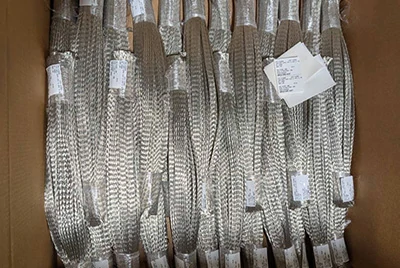
Continuous length, splice requirements, and reel format can be confirmed in advance based on the specific braid and processing needs. Packaging should also prevent tangling, kinking, or local deformation during transport to reduce disruption during unreeling and downstream processing.
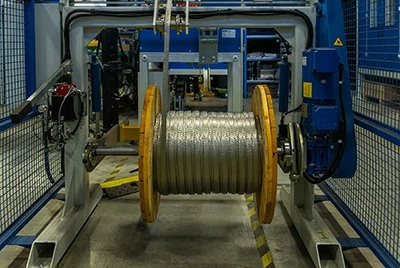
Dimensional Control of Finished Components
For finished products such as Grounding Straps, Flexible Connectors, Braided Shunts, and Terminal Leads, dimensional control extends to the final installation interface:
Finished Length · End Configuration · Hole Diameter / Spacing · Terminal / Palm Geometry · Surface Finish
For drawing-based projects, dimensions can be confirmed against the drawing revision; replacement parts can also be matched from existing drawings or samples.
FAQ
Can Copper Braid Be Matched If Only the Width and a Sample Are Available, Without the Braid Construction?
Yes. An initial match can be made from cross-sectional area, width/thickness, finish, and the sample; for second-source projects, the braid construction should then be verified to avoid matching only the external shape.
Can Continuous Reel Length and Splice Requirements Be Specified for Copper Braid?
Yes. Continuous length and splice requirements can be specified as purchasing requirements; the available range depends on the braid specification and supply form.
What Do A-A-59569, ASTM B3, and ASTM B33 Apply To?
A-A-59569 applies directly to flat/tubular wire braid; ASTM B3 and ASTM B33 apply to bare and tinned individual wire, respectively. Drawings or purchase orders should identify the level at which each standard applies.
Can a Copper Braided Connector Be Customized from an Existing Drawing or Sample?
Yes. Drawings, samples, or key installation dimensions can be used to match cross section, length, end configuration, hole diameter/spacing, and finish for OEM supply or second-source replacement.
How Should a Copper Braided Connector Be Sized for Continuous Current?
Do not select it by braid width or a single current value alone. Conductor cross-sectional area, resistance, finished length, termination method, installation environment, and allowable temperature rise should be considered together.
Get a Quote & Project Support
Chalco can supply Flat / Tubular Copper Braid, cut-to-length material, and a range of further-processed flexible connectors. Existing specifications, drawings, or samples can be sent directly for matching.
Raw Copper Braid: Flat / Tubular · Bare / Tinned · Main Size · Roll / Reel / Cut Length · Quantity
If available, include construction, standards, continuous-length requirements, or other special requirements.
Processed Parts & Finished Assemblies: Drawing / Sample · Cross Section · Finished Length · End / Hole Configuration · Quantity
If the information is incomplete, photos, sample dimensions, or an existing part number can be sent first.