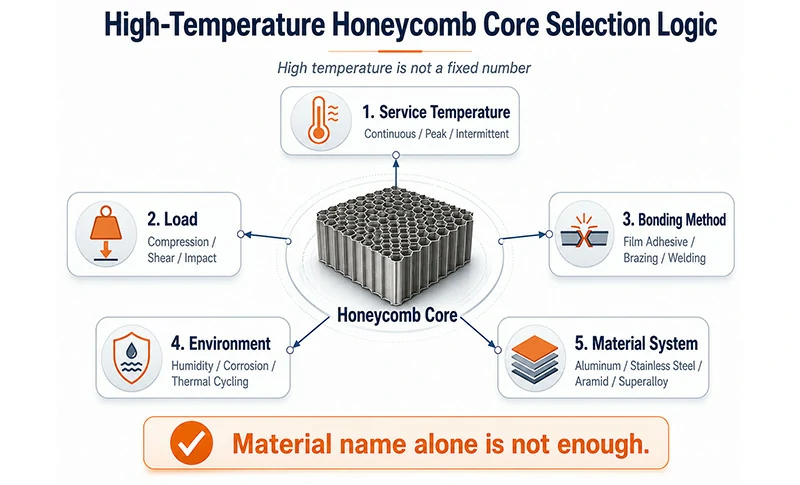
High temperature honeycomb is not a single fixed material, but a matter of choosing a honeycomb core by service temperature.
Henan Chalco can supply aramid, aluminum, stainless steel and carbon fiber cores by temperature tier, along with metal / superalloy honeycomb core solutions for higher-temperature ranges. In addition to supplying individual honeycomb cores, suitable materials can also be further integrated into finished honeycomb sandwich panels according to the required structure and joining method. For a broader overview of available materials and finished sandwich structures, see our honeycomb core materials and sandwich panels.
By comparing the reference service temperature, bonding method and typical applications of different materials, you can more quickly judge which honeycomb core best fits your current structure, thermal environment and procurement specification.
High-Temperature Metal and Superalloy Honeycomb Options
Henan Chalco can supply high-temperature metal and superalloy honeycomb core in a range of stainless steel, Hastelloy, Haynes and GH-series alloys. Material selection should be based on the actual service temperature, operating atmosphere, thermal cycling, structural load, joining method and project specification rather than alloy temperature capability alone.
Available material options include Hastelloy X, Hastelloy S, Haynes 214, Haynes 224, Haynes 230, Haynes 233, GH3030, GH3039, GH3536 and stainless steel. Other high-temperature alloy requirements can be reviewed according to drawings and specifications.
| Material family | Available grades / options | Selection focus | Typical application consideration |
| Stainless steel honeycomb | Stainless steel; specific grade confirmed to drawing or specification | service temperature, corrosion environment, foil thickness and joining method | hot-environment honeycomb structures where a stainless steel solution meets the project requirements |
| Hastelloy honeycomb | Hastelloy X, Hastelloy S | operating temperature, atmosphere, thermal cycling and brazing / joining requirements | demanding high-temperature environments requiring nickel-based alloy honeycomb |
| Haynes alloy honeycomb | Haynes 214, Haynes 224, Haynes 230, Haynes 233 | temperature exposure, oxidation environment, structural requirements and project material specification | high-temperature honeycomb structures for severe thermal operating conditions |
| GH-series superalloy honeycomb | GH3030, GH3039, GH3536 | specified alloy grade, operating conditions, honeycomb geometry and joining requirements | projects where a specified GH-series high-temperature alloy is required by the drawing or technical specification |
The alloy grade alone does not define the service-temperature limit of the finished honeycomb core. Cell size, foil thickness, joining or brazing method, load, exposure duration and operating atmosphere can all affect the suitable working range.
For quotation and material selection, please provide the required alloy grade, operating temperature, cell size, foil thickness, overall dimensions, joining requirements, drawing and applicable specification. Henan Chalco can confirm a suitable high-temperature honeycomb solution according to the project requirements.
Available Cell Sizes and Foil Thicknesses
Henan Chalco can supply high-temperature metal and superalloy honeycomb in several available cell sizes with different foil thickness combinations. Cell size and foil thickness should be selected together because they affect honeycomb geometry, structural behavior, weight and the suitability of the core for the intended component.
Available cell sizes include D0.8, D1.6, D2.5 and D3.2 mm, measured across flats. The available foil thickness combinations for these cell sizes are shown below.
| Cell size (across flats) | Available foil thickness, mm | Available foil thickness, inch |
| D0.8 mm (0.031") | 0.03048 / 0.03556 / 0.0508 / 0.0762 / 0.1016 | 0.0012" / 0.0014" / 0.002" / 0.003" / 0.004" |
| D1.6 mm (0.062") | 0.03048 / 0.03556 / 0.0508 / 0.0762 / 0.1016 / 0.127 | 0.0012" / 0.0014" / 0.002" / 0.003" / 0.004" / 0.005" |
| D2.5 mm (0.098") | 0.03556 / 0.0508 / 0.0762 / 0.1016 / 0.127 / 0.1524 | 0.0014" / 0.002" / 0.003" / 0.004" / 0.005" / 0.006" |
| D3.2 mm (0.125") | 0.0508 / 0.0762 / 0.1016 / 0.127 / 0.1524 / 0.2032 / 0.2704 | 0.002" / 0.003" / 0.004" / 0.005" / 0.006" / 0.008" / 0.011" |
The overall foil material capability is listed from approximately 0.001" to 0.011" (0.025 to 0.28 mm). The table above shows the listed foil thickness combinations currently associated with each cell size; not every foil thickness is available with every cell geometry.
For high-temperature alloy honeycomb, the final cell size and foil thickness should also be checked against the alloy grade, component geometry, joining or brazing process and operating conditions. Non-standard combinations can be reviewed against the drawing and project specification at the quotation stage.
What counts as high temperature for a honeycomb core?
In high temperature honeycomb selection, "high temperature" is not a fixed value but depends on the honeycomb core's material system, service temperature, load condition and bonding method.
For aramid and carbon fiber non-metallic honeycomb cores, the upper temperature limit is usually not set by the fibre alone but jointly by the resin system, binder, impregnation system or bonding system. As temperature rises, the thermal stability of the resin or adhesive layer directly affects the honeycomb core's mechanical properties.
For aluminum and stainless steel metal honeycomb cores, temperature resistance is governed more by metal softening, oxidation, thermal cycling and the adhesive-bonded, brazed or welded bonding method. The same metal can reach a different actual temperature limit with a different bonding method.
Published research has shown that aramid honeycomb can still retain about 70% of its room-temperature mechanical properties at approximately 160 °C. This shows that honeycomb cores can be used in elevated temperature environments, but this still needs to be confirmed by service temperature, material type and construction method.
Therefore, deciding which honeycomb core can withstand high temperature is not just a matter of material name; you should also confirm the service temperature, duration, load, environmental medium and bonding method.
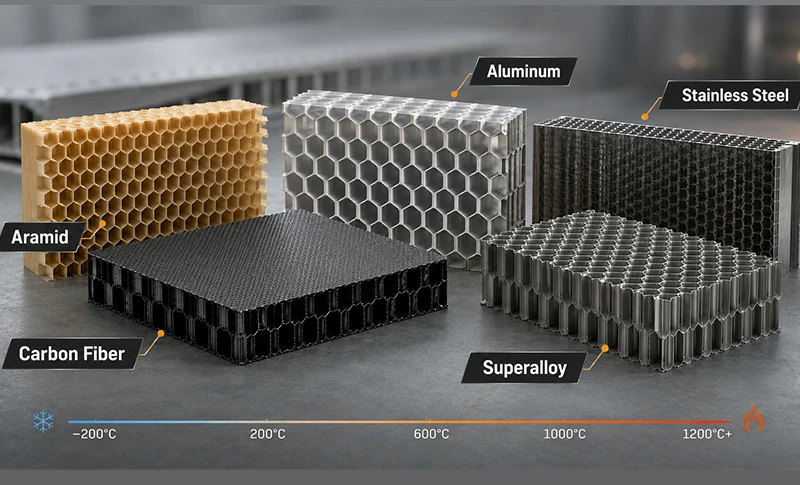
Honeycomb materials ranked by temperature capability
Different high temperature honeycomb materials should not be chosen simply on the basis of "the higher the temperature rating, the better". A better approach is to first confirm the service temperature, loading mode, environmental medium and bonding method, then screen for a suitable honeycomb core by material temperature band.
The table below is roughly ordered by typical maximum service temperature. The temperature figures are engineering selection references; final specifications should be confirmed against the project MTC/TDS, drawing requirements and actual operating conditions.
| Material | Reference service temperature | Typical bonding | Typical use |
| Carbon fiber honeycomb | −50 to 150 °C (standard epoxy); up to approximately 260 °C (phenolic / polyimide) | adhesive | low CTE, high stiffness, dimensional stability |
| Aramid paper honeycomb | −55 to 180 °C | adhesive | lightweight structural parts, interiors |
| Aluminum honeycomb | up to approximately 300 °C (adhesive-bonded) / 550 °C (brazed), depending on construction | adhesive / braze / laser weld | structural panels, energy absorption |
| Stainless steel honeycomb | project-specific; confirm by alloy grade, foil thickness, joining method, atmosphere and load | spot weld / braze | EMI shielding, harsh and hot environments |
| Superalloy honeycomb | highest temperature band, project-specific | braze | the most demanding high-temperature applications |
Different high temperature honeycomb core materials suit different service temperatures, structural loads and operating environments.
Henan Chalco can help select a suitable honeycomb core solution based on the project temperature range, material grade, joining method, drawings and application.
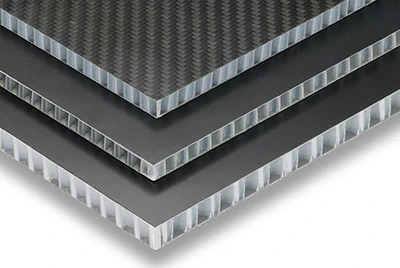
Carbon fiber honeycomb
Carbon fiber honeycomb suits low-CTE, high-stiffness and dimensionally stable projects; standard epoxy at about −50 to 150 °C, with high-temperature resin systems referenced up to about 260 °C.
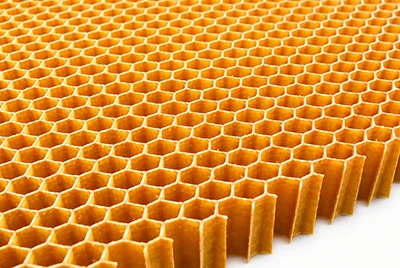
Aramid paper honeycomb
Aramid honeycomb suits −55 to 180 °C lightweight structures and is common in aircraft interiors, rail-transit interiors and sandwich panels. For sandwich structures, see also aramid honeycomb panels.
Aluminum honeycomb
Aluminum honeycomb suits lightweight structures and energy-absorption applications; adhesive-bonded and brazed constructions cover different temperature requirements.
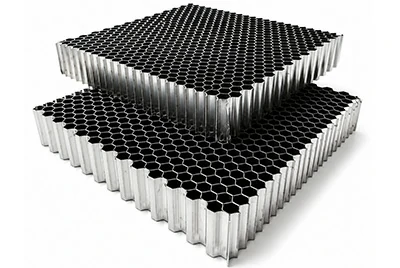
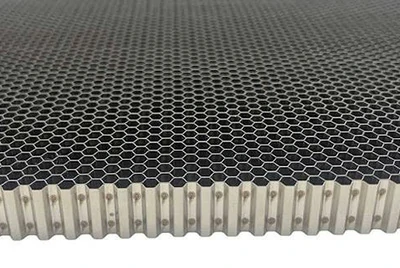
Stainless steel honeycomb core
Stainless steel honeycomb core suits high-temperature, corrosive and EMI-shielding environments. The suitable service temperature depends on the grade, construction and operating conditions.
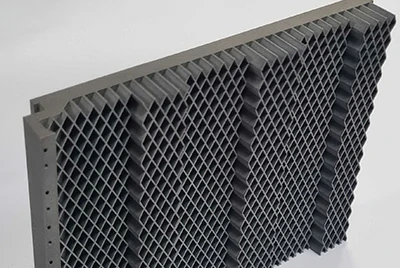
Superalloy honeycomb
Superalloy honeycomb suits more demanding high-temperature environments and can use nickel-based superalloys such as GH3030 / GH3039 / GH3536.
If you are not sure whether to choose carbon fiber, aramid, aluminum, stainless steel or superalloy honeycomb, please send your service temperature, drawing or specification requirements, and Henan Chalco can recommend a suitable material solution for your project.
Why the joining method affects the temperature limit
In high-temperature honeycomb, both the material and the honeycomb core joining method affect the usable temperature range. The same core material can fall into different temperature bands depending on whether the structure is adhesive-bonded, brazed or welded.
For aluminum honeycomb, adhesive-bonded constructions can typically be referenced up to approximately 300 °C, while brazed aluminum honeycomb can be considered up to approximately 550 °C, depending on the alloy, foil thickness and structural design.
For stainless steel and superalloy honeycomb, brazing or welding is generally considered for more demanding high-temperature conditions. The suitable process depends on the alloy grade, foil thickness, cell geometry and component requirements.
Therefore, the service-temperature limit should be confirmed for the complete honeycomb construction, rather than from the material grade alone.
Matching honeycomb to your application
Different applications place different demands on high temperature honeycomb. Selection should consider service temperature, weight, structural load, environmental medium and sandwich panel design together, rather than judging by a single temperature figure alone.
Aerospace structural parts usually favour aramid or aluminum honeycomb; locations near heat sources can consider stainless steel or metal cores. For a specific aerospace aluminum option, see 5A12 aerospace aluminum honeycomb core.


Rail transit
Rail-transit projects focus on flame retardancy, light weight and structural stability, and commonly use aramid paper honeycomb or aluminum honeycomb.
Industrial and thermal applications
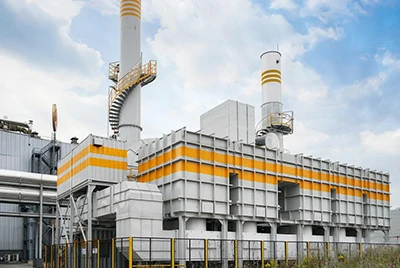
High-temperature industrial and thermal environments can prioritise stainless steel honeycomb core or other metal honeycomb cores.
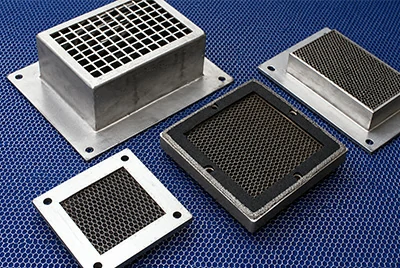
EMI shielding and heat dissipation
When EMI shielding, heat dissipation or electrical conductivity is required, aluminum or stainless steel honeycomb is usually chosen. For airflow combined with shielding requirements, see honeycomb vent panels.
Dimensional stability applications
Precision structures that need low CTE, high stiffness and dimensional stability can consider carbon fiber honeycomb.
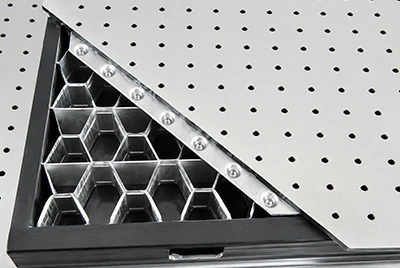
If the project temperature already exceeds the range of aramid and aluminum, stainless steel, metal or superalloy honeycomb should be evaluated. Extreme high-temperature locations such as engines and exhaust systems may fall under metal honeycomb seal applications and should be evaluated separately for the specific operating conditions.
How to specify and source high temperature honeycomb
To specify high temperature honeycomb, define the material or alloy grade, service temperature, cell size, foil thickness, overall dimensions and joining method. For stainless steel and superalloy honeycomb, also specify the operating atmosphere, thermal cycling conditions and any applicable material or component specification.
Based on project drawings, service temperature and application environment, Henan Chalco can support material selection, specification review, sample or first-article confirmation and inspection arrangements. For high-temperature or harsh-environment projects, material selection should also consider load, thermal cycling, atmosphere and joining method.
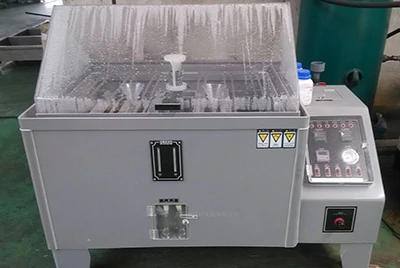
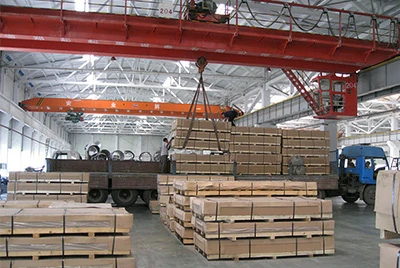
Depending on project requirements, testing and inspection can be arranged for agreed items such as mechanical performance, fatigue, salt spray or dimensional verification. Required reports, acceptance criteria and documentation should be confirmed with the order.
Certification and quality-document requirements should be reviewed against the applicable project scope. Available certificates, inspection records and traceability documents can be confirmed during the RFQ stage.

To specify a high-temperature honeycomb core, start with the material or alloy grade, service temperature, cell size, foil thickness, overall dimensions and joining method. For stainless steel and superalloy honeycomb, also specify the operating atmosphere, thermal cycling conditions and any applicable material or component specification.
For custom high-temperature honeycomb, drawings are especially helpful for confirming the cell geometry, dimensions, joining requirements and interface with the surrounding component.
Henan Chalco can support material selection, specification review, sample or first-article confirmation, and inspection arrangements according to project requirements. For applications requiring additional verification, the required testing and acceptance criteria should be defined with the order. Production and finished-product inspection can be arranged according to the agreed project requirements.
FAQs about high temperature honeycomb core
What honeycomb core can withstand high temperature?
The suitable honeycomb core depends on the service temperature, material, joining method and operating environment. Adhesive-bonded aluminum is used in lower temperature ranges, while brazed aluminum, stainless steel and superalloy honeycomb can be considered as temperature and operating conditions become more demanding.
How hot can aluminum honeycomb get?
Adhesive-bonded aluminum honeycomb can typically be referenced up to approximately 300 °C, while brazed aluminum honeycomb can be considered up to approximately 550 °C, depending on the alloy, foil thickness and construction.
What superalloy grades are available for high-temperature honeycomb?
Henan Chalco can supply high-temperature honeycomb in Hastelloy X, Hastelloy S, Haynes 214, Haynes 224, Haynes 230, Haynes 233, GH3030, GH3039 and GH3536, as well as stainless steel. Final grade selection should follow the operating conditions, drawing and project specification.
When should I consider superalloy honeycomb instead of stainless steel?
Superalloy honeycomb can be considered when the project involves more demanding high-temperature conditions, thermal cycling or specific material requirements. Selection should be based on the service temperature, atmosphere, load, joining method and applicable specification rather than the alloy name alone.
Which joining method is suitable for high-temperature honeycomb?
There is no single joining method for every application. Adhesive bonding is commonly used for lower-temperature lightweight structures, while brazing or welding can be considered for higher-temperature metal honeycomb. The suitable method depends on the material, foil thickness, cell geometry and component design.
Can high-temperature honeycomb be used for turbine or engine seal components?
Yes. Stainless steel and superalloy honeycomb can be supplied for applications such as gas turbine seal rings and engine honeycomb seal components. The final alloy, cell size, foil thickness and joining method should be confirmed against the component drawing, operating conditions and qualification requirements.
Request a quote for high temperature honeycomb core
Henan Chalco can supply high-temperature honeycomb solutions ranging from aluminum and stainless steel to Hastelloy, Haynes and GH-series superalloys according to different temperature and structural requirements.
For lower-temperature lightweight sandwich structures, you can also compare honeycomb sandwich panel solutions.
For your RFQ, please provide the material or alloy grade, service temperature, cell size, foil thickness, overall dimensions, joining method, quantity and applicable drawing or specification.
Henan Chalco can review the material, honeycomb geometry and operating conditions together to confirm a suitable supply solution for your project.