Selecting the wrong alloy for 3003 vs 5052 aluminum honeycomb core can affect structural weight, corrosion resistance, and overall cost at the same time.
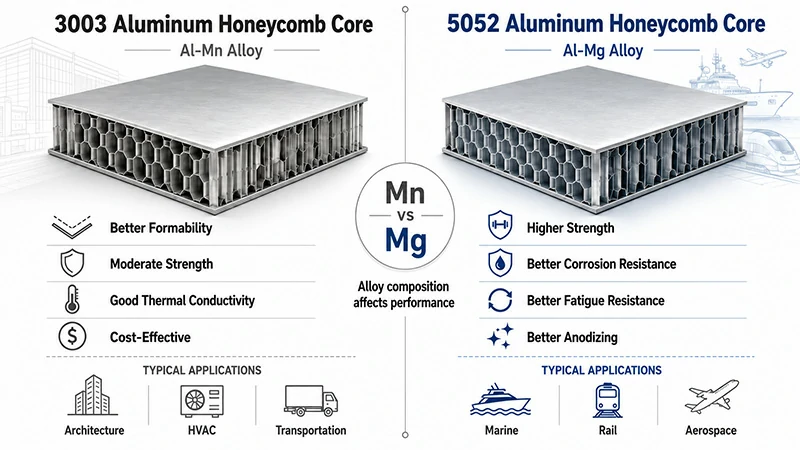
3003 is an Al-Mn alloy, while 5052 is an Al-Mg alloy. Their performance differs in strength, corrosion resistance, formability, and cost.
Chalco supplies both 3003 and 5052 aluminum honeycomb core and can customize cell size, density, and foil thickness based on project requirements, helping you select a suitable option from our aluminum honeycomb core range.
3003 vs 5052 Aluminum Honeycomb Core
When choosing between 3003 and 5052 aluminum honeycomb core, don't rely solely on alloy designation-consider operating environment, load requirements, surface treatment, and budget.
3003 aluminum honeycomb core is better suited for projects prioritizing cost, formability, and dry-environment applications.
3003 aluminum honeycomb core
Contact us now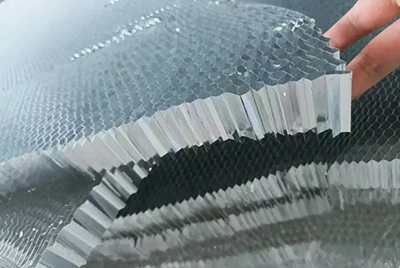
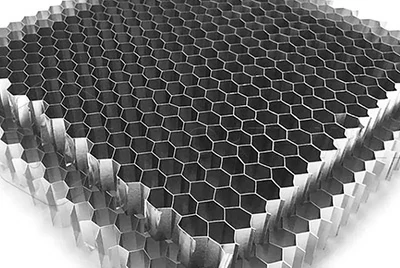
5052 aluminum honeycomb core is better suited for projects requiring higher strength, corrosion resistance-especially in marine, aerospace, and rail transit applications.
5052 aluminum honeycomb core
Contact us nowThe one-minute comparison table below highlights the key differences between 3003 and 5052 honeycomb cores.
| Comparison point | 3003 aluminum honeycomb core | 5052 aluminum honeycomb core |
| Primary element | manganese-based Al-Mn alloy | magnesium-based Al-Mg alloy |
| Strength | Typical moderate strength, suitable for standard structural applications | Typical higher strength, suitable for demanding sandwich panels |
| Corrosion resistance | Suitable for dry indoor and general atmospheric environments | Better suited for humid, salt spray, and marine environments |
| Formability | Superior formability, easier to shape and fabricate | Good formability, but generally less ductile than 3003 |
| Anodizing finish | Functional anodizing possible, but decorative appearance is typically average | Anodizing typically yields a clearer, more uniform finish |
| Cost | More cost-effective, ideal for commercial and standard projects | Typically carries a moderate cost premium |
| Typical use | Facade, ceiling, HVAC, vehicle panels, signage | Aerospace, marine, rail transit, high-load sandwich panels |
In short, neither 3003 nor 5052 is universally superior. The choice depends on whether your project prioritizes cost, formability, and standard environments-or strength, corrosion resistance, and long-term reliability.
What Makes the Two Alloys Different
The fundamental difference between 3003 and 5052 lies in alloy composition. The contrast between manganese and magnesium directly affects the honeycomb core's strength, corrosion resistance, formability, anodizing response, and fabrication cost.
3003 - the Aluminum-Manganese (Al-Mn) Alloy
3003 aluminum honeycomb core uses an aluminum-manganese alloy, with manganese as the primary alloying element (typically 1.0–1.5%) and small amounts of copper.
It belongs to the 3xxx series aluminum alloys and is a non-heat-treatable alloy, relying primarily on strain hardening to achieve strength.
3003 offers excellent formability, making it easy to shape and fabricate. It also provides moderate strength and high thermal conductivity, making it suitable for architectural cladding, curtain walls, vehicle panels, HVAC systems, and heat exchanger structures.
It exhibits good corrosion resistance in general atmospheric, indoor, and freshwater environments. However, its performance typically falls short of 5052 in prolonged salt spray or marine exposure.
5052 - the Aluminum-Magnesium (Al-Mg) Alloy
5052 aluminum honeycomb core uses an aluminum-magnesium alloy, with magnesium as the primary alloying element (typically 2.2–2.8%) and small additions of chromium to enhance grain stability and resistance to stress corrosion cracking. It belongs to the 5xxx series and is also a non-heat-treatable alloy.
5052 outperforms 3003 in strength, corrosion resistance, and fatigue resistance-making it ideal for humid, salt-laden, marine, rail transit, and aerospace sandwich structures.
5052 also delivers better anodizing results, typically producing a clearer and more uniform surface film. Its density is approximately 2.68 g/cm³, slightly lower than 3003's ~2.73 g/cm³. While harder, 5052 generally offers less ductility and complex formability compared to 3003.
How the Alloy Choice Changes the Honeycomb Core
The differences between 3003 and 5052 extend beyond the base alloy-they also influence the aluminum honeycomb core's foil thickness, cell size, density, temper, and achievable performance grade.
When conducting an aluminum honeycomb core alloy comparison, don't focus only on the alloy designation; evaluate structural parameters together.
Foil Temper and Density
Honeycomb core strength isn't determined by alloy alone-it results from the combined effects of foil thickness, cell size, density, alloy, and temper.
Standard aluminum honeycomb cores typically use hard temper foils, such as H18 or H19, to enhance cell wall stability and buckling resistance.
At comparable tempers, 5052 generally offers higher base strength than 3003. For example, in H18 temper, 3003 sheet has a typical UTS of ~210 MPa, while 5052 can reach nearly 300 MPa-demonstrating its superior base material strength.
In practice, 3003 is more commonly used in commercial-grade honeycomb cores, whereas 5052 covers a broader range and more readily achieves higher density and strength grades.
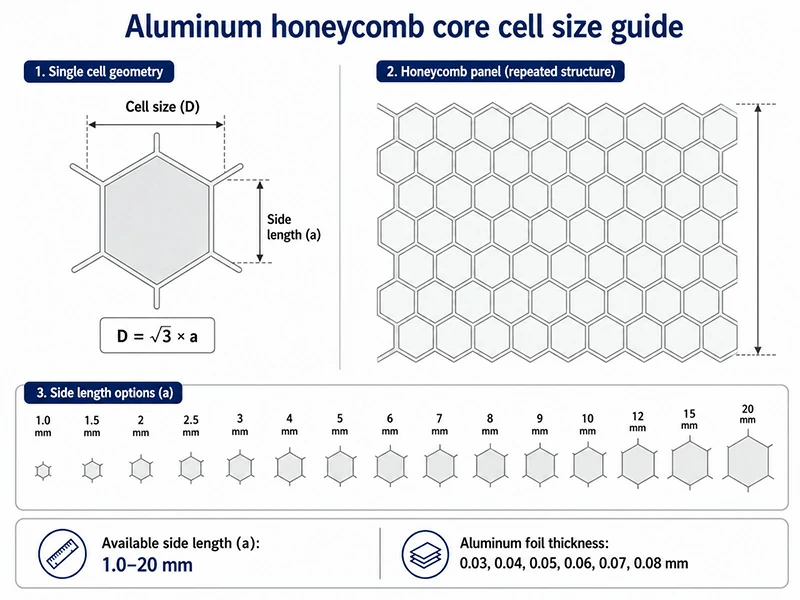
Honeycomb cells are typically regular hexagons. Specifications often reference side length (a) and cell size (D), related by D = √3 × a ≈ 1.732a. For instance, a 3 mm side length corresponds to a cell size of approximately 5.2 mm.
Common foil thicknesses range from 0.03–0.08 mm, with thinner or thicker options available per project specifications. During selection, first determine the appropriate density range based on environmental and load requirements, then match cell size and foil thickness-since these three parameters jointly affect strength grade, weight, and process compatibility.
Compressive and Shear Strength
Chalco's typical honeycomb core values are provided for selection guidance only; final values are subject to the MTC. Bare compressive strength for 3003 aluminum honeycomb core typically ranges from 0.59–4.41 MPa, corresponding to densities of 21–83 kg/m³ and common cell sizes from 1/4″ to 1.0″.
5052 aluminum honeycomb core can achieve higher strength grades. With high density, small cell size, and thick foil configurations, its stabilized compressive strength can reach approximately 12 MPa.
Note that 3003 values usually refer to bare compressive strength, while 5052 values typically reflect stabilized compressive strength. Because the test basis is different, the values should not be compared line by line.
At the same density, the compressive strength difference between 3003 and 5052 may not be substantial, as thin-foil honeycomb failure is often governed by cell wall buckling.
5052's real advantage lies in its ability to achieve higher density and strength grades, along with superior fatigue resistance, corrosion resistance, and long-term service stability.
For critical structures, shear strength, compressive strength, density, and operating environment should be evaluated together.
Corrosion Resistance and Finish
The difference in corrosion resistance between 3003 and 5052 becomes more pronounced in salt spray and marine environments. 3003 suits dry indoor, general atmospheric, and freshwater conditions; for prolonged exposure to humidity, salt fog, or seawater, 5052 is generally preferred.
Regarding surface finishing, 5052 typically yields a clearer, more uniform anodized appearance-suitable for sandwich panels requiring a cleaner appearance and better corrosion resistance. Due to its manganese content, 3003 often produces a darker or yellowish anodized color, offering less decorative appeal than 5052.
For projects requiring enhanced bonding durability or corrosion resistance, surface treatments such as chromate conversion or phosphoric-acid anodizing can be selected upon request.
Formability, Brazing, and Cost
3003 excels in formability and ductility, making it ideal for deep drawing, complex forming, and standard fabrication. Its high thermal conductivity also makes it common in heat exchanger, HVAC, and brazed honeycomb panel applications.
Projects requiring brazing often find 3003 easier to work with.
5052 trades slightly reduced complex formability for higher strength and corrosion resistance, typically at a moderate cost premium. The decision isn't about which alloy is better overall-it hinges on whether your project prioritizes cost, formability, and standard environments, or strength, salt-spray corrosion resistance, fatigue performance, and long-term reliability.
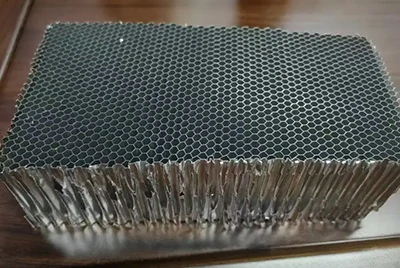
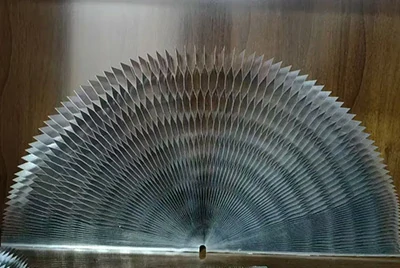
Aluminum honeycomb cores are made by bonding thin foil sheets and then expanding them into a hexagonal cell structure. 3003, being softer and more ductile, generally expands more smoothly with easier cell wall formation. In contrast, 5052 foil's higher hardness requires stricter process control during expansion to minimize risks of cell wall damage or tearing.
Therefore, the cost premium of 5052 stems not only from raw material price differences but also from higher manufacturing costs associated with its stronger hard-temper foil and more stringent honeycomb forming processes.
Choosing between 3003 and 5052: a quick checklist
When unsure which aluminum honeycomb alloy to choose, start by evaluating the operating environment, load requirements, forming method, and compliance needs.
- Consider the environment: for salt spray, marine, humid, or outdoor corrosive conditions, 5052 is preferred; for dry indoor, standard atmospheric, or low-corrosion environments, 3003 is typically sufficient.
- Assess load and vibration: 5052 is better suited for high-load, high-vibration, or cyclic loading applications, while 3003 offers better cost control for moderate loads, static structures, or standard decorative panels.
- Evaluate forming requirements: if the project involves deep drawing, complex bending, or demands higher formability, 3003 is easier to process.
- Review surface appearance: if a brighter, more uniform anodized finish is required, 5052 is generally more suitable.
- Consider joining methods: for designs involving brazing or heat transfer-related structures, 3003 is more commonly used.
- Check compliance requirements: for aerospace, rail transit, or projects with specified standards, confirm the appropriate alloy-such as 5052 or 5056-according to the applicable specification.
If still uncertain, provide your load conditions, operating environment, dimensions, cell size, and density requirements. Chalco can recommend the most suitable alloy based on your project parameters.
Typical applications by alloy
5052 aluminum honeycomb core is commonly used in aerospace, marine, rail transit, drones, and energy absorption structures-ideal for projects demanding higher strength, corrosion resistance, and fatigue performance.
Contact us now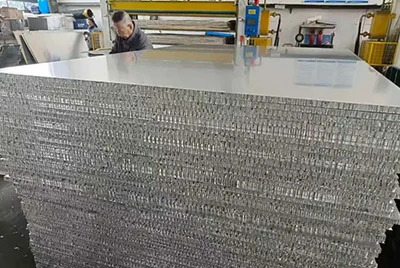
In aerospace applications, it is typically used in engine nacelle components, cockpit floor panels, and avionics bay sandwich structures, with exact configurations confirmed per project specifications.
In marine applications, 5052 is well-suited for yacht interiors, deck sandwich panels, and humid or salt-spray environments due to the superior stability of Al-Mg alloys under harsh corrosive conditions.
For rail transit projects, 5052 honeycomb core is often used in carriage floors, interior structural panels, and lightweight modules-especially where EN45545 fire performance compliance is required.
3003 aluminum honeycomb core is commonly used in architectural facades, curtain walls, interior wall and ceiling panels, HVAC systems, heat exchangers, logistics vehicle panels, and signage.
Contact us now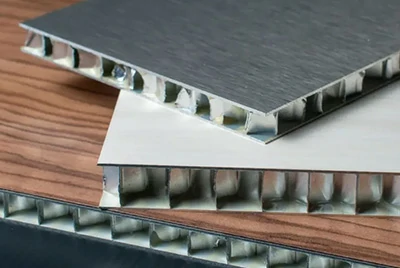
These applications typically prioritize formability, processing stability, cost control, and corrosion resistance in dry or standard environments.
3003 also integrates more easily with forming, cutting, and brazing processes, making it ideal for commercial panels and large-area lightweight sandwich structures.
When cost, thermal conductivity, and processing flexibility are prioritized over marine-grade corrosion resistance, 3003 is usually the more practical choice.
FAQs about 3003 vs 5052 aluminum honeycomb core
What is the difference between 3003 and 5052 aluminum honeycomb core?
3003 aluminum honeycomb core is an Al-Mn alloy option, suitable for cost control, good formability and dry environments. 5052 is an Al-Mg alloy option, better for higher strength, corrosion resistance, fatigue performance and marine use.
Is 5052 stronger than 3003 aluminum honeycomb core?
Yes, 5052 has a stronger base alloy than 3003. However, in honeycomb cores with similar density, the compressive difference may not be large. 5052's advantage is higher strength grades, better fatigue resistance and better corrosion performance.
What is the yield strength of 3003 vs 5052?
For typical aluminum sheet, 3003 yield strength is around 105–135 MPa, while 5052 is around 165–220 MPa. For honeycomb core selection, compressive strength and shear strength are more important than sheet yield strength.
Which aluminium honeycomb is most suitable for marine use?
5052 honeycomb is usually preferred for marine use because it offers better corrosion resistance in humid and salt-exposed environments. Anodizing or other surface treatments can further improve durability.
What is 3003 aluminum honeycomb used for?
3003 aluminum honeycomb is commonly used for architectural facade panels, curtain wall panels, ceilings, interior wall panels, HVAC structures, heat exchanger parts, transport bodies and signage where cost, formability and thermal conductivity matter.
Can you weld 5052 to 3003?
Yes. 5052 can be welded to 3003, and 5356 filler is commonly used. The joint strength is usually limited by the weaker 3003 side. In honeycomb projects, welding is more common on face sheets, frames or panel structures than on the core foil itself.
Get the right aluminum honeycomb core for your project
Choosing between 3003 and 5052 aluminum honeycomb core depends on your project's load requirements, operating environment, panel structure, and cost targets. Chalco offers both alloy options and can match the appropriate specifications to your project needs.
If your project focuses on commercial panels, interior structures, architectural curtain walls, or cost-sensitive applications, review 3003 commercial-grade specifications and request a quote based on your required cell size, density, and foil thickness.
If your project requires higher strength, better corrosion resistance, or is intended for aerospace, marine, or rail transit structures, review 5052 aerospace-grade specifications and send an RFQ to confirm the optimal configuration.
If you're still unsure which alloy to select, share your load conditions, environment, dimensions, and drawings with the Chalco technical team. We can provide alloy recommendations based on actual operating conditions.