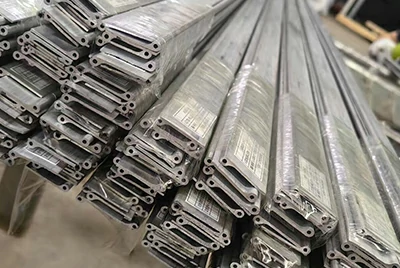
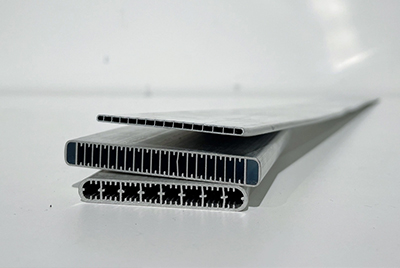
Microchannel folded tubes belong to the microchannel tube family and are used as aluminum tubes for heat exchangers in all-aluminum brazed systems. They are precision rolled and folded to form multi-port channels, suitable for condensers, evaporators, heat pumps, and HVAC&R systems.
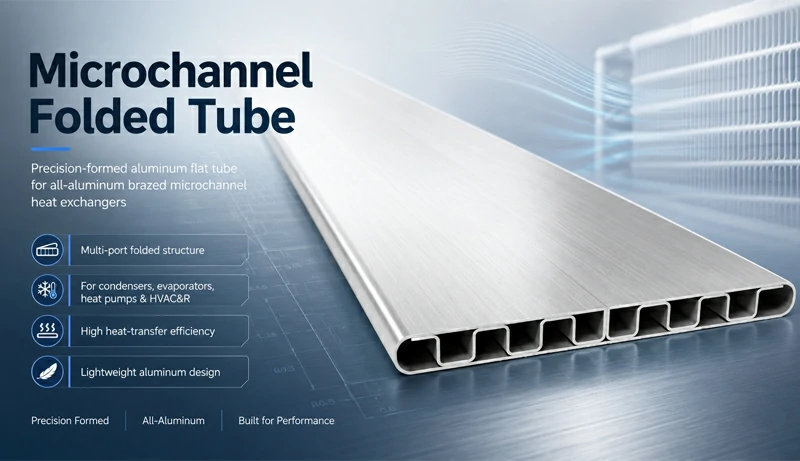
Chalco microchannel folded tubes support 0.18–0.26 mm thin-wall design, 100 bar pressure holding, and 100-day SWAAT testing without leakage. Custom sizes, ports, wall thickness, inner fins, refrigerants, and brazing requirements are available.
Why choose microchannel folded aluminum tubes?
Extruded microchannel tubes are widely used, but may face corrosion, fin separation, pitting leakage, joint leakage, and limited weight reduction. Microchannel folded tubes offer a lighter, more corrosion-resistant, and more stable upgrade for all-aluminum heat exchangers.
- Thinner wall: 0.18–0.26 mm wall thickness helps reduce tube weight for compact heat exchanger designs.
- Lighter tube: about 10%–20% lighter than similar extruded flat tubes, reducing aluminum use and unit weight.
- Better pressure resistance: no obvious bulging after 100 bar pressure holding for 5 minutes, suitable for efficient air conditioners, heat pumps, and low-GWP refrigerant systems.
- More stable corrosion resistance: no leakage after 100-day SWAAT testing, helping reduce pitting, fin separation, and leakage risks.
- Higher heat transfer performance: heat exchange capacity can increase by about 6%–12%, supporting more efficient microchannel heat exchanger designs.
- Lower refrigerant charge: refrigerant charge can be reduced by about 30% under the same performance conditions, helping lower system emissions and refrigerant use.
- Better for low-carbon upgrades: thin-wall weight reduction, lower refrigerant use, and recyclable all-aluminum structure make it suitable for new air conditioning, heat pump, and HVAC&R heat exchanger solutions.
Microchannel folded tube technical parameters
Microchannel folded tubes can be customized for condensers, evaporators, heat pumps, and refrigeration systems. The following parameters can be used for product design and selection.
| Item | Reference parameter |
| Aluminum alloy | Custom rolled alloy, H24 temper |
| Product type | Microchannel folded tube, 3-layer and 5-layer options |
| Reference size | 12 mm × 1.4 mm |
| Port number | 20 ports |
| Tube wall thickness | 0.18–0.26 mm |
| Inner fin thickness | 0.08 mm |
| Burst pressure | >178 bar |
| Material option | Aluminum alloy / clad aluminum alloy |
| Forming process | Precision rolling and folding |
| Suitable process | All-aluminum brazed heat exchangers |
Types of microchannel folded flat tubes available from Chalco
Chalco supplies one-piece and two-piece microchannel folded flat tubes, with 3-layer long-life core and 5-layer MULTICLAD structures available. Both types are suitable for all-aluminum brazed microchannel heat exchangers used in condensers, evaporators, heat pumps, and HVAC&R systems.
One-piece microchannel folded flat tube
A one-piece folded flat tube is formed from aluminum alloy material through precision rolling and folding to create a multi-port microchannel structure. It is suitable for aluminum heat exchanger projects that require lightweight design, heat transfer efficiency, and mass production.
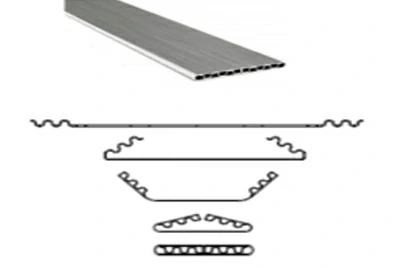
- Structure: folded from one-piece aluminum alloy material
- Applications: condensers, evaporators, and compact microchannel heat exchangers
- Key advantages: stable structure, lightweight design, and suitable for thin-wall microchannel tubes.
Two-piece microchannel folded flat tube
A two-piece folded flat tube is formed from upper and lower aluminum alloy materials, allowing more flexible material combinations and internal structure design. It is suitable for heat exchanger systems that require higher corrosion resistance, pressure strength, and long-term reliability.
- Structure: two-piece folded forming with a multi-layer clad material structure
- Applications: high-efficiency condensers, heat pump heat exchangers, and low-GWP refrigerant systems
- Key advantages: more flexible material selection, better corrosion resistance, and improved structural stability.
Not sure whether to choose one-piece or two-piece microchannel folded flat tubes? Contact Chalco, and we can recommend a suitable solution based on your project needs.
Material structure and performance of Chalco microchannel folded aluminum tubes
3-layer long-life core structure
It uses a core material + brazing clad layer structure, suitable for microchannel folded flat tubes that require good formability, brazing compatibility, and long-term corrosion resistance.
Chemical composition
| Structure | Si | Fe | Cu | Mn | Mg | Zn | Ti |
| Core material | <0.5 | <0.5 | 0.25–0.50 | 1.0–2.0 | <0.05 | <0.1 | 0.08–0.3 |
| Clad layer | 6.8–8.2 | <0.24 | <0.25 | <0.10 | <0.03 | <0.20 | <0.05 |
Mechanical properties:
| Delivery temper | Yield strength Rp0.2 | Tensile strength Rm | Elongation A50mm | Yield strength after brazing Rp0.2 | Tensile strength after brazing Rm | Elongation after brazing A50mm |
| H24 | >160 MPa | 185–235 MPa | >6% | 50 MPa | 140–150 MPa | >6% |
5-layer MULTICLAD clad structure
It uses a 5-layer clad structure with core material, intermediate layers, and clad layers, suitable for microchannel heat exchanger designs that require higher corrosion resistance and more demanding working conditions.
Chemical composition:
| Structure | Si | Fe | Cu | Mn | Mg | Zn | Zr | Ti |
| Structure | <0.5 | <0.5 | 0.25–0.70 | 1.0–2.0 | 0.10–0.20 | <0.1 | <0.2 | <0.2 |
| Intermediate layer | <0.7 | <0.4 | <0.04 | 1.4–1.8 | <0.05 | <0.1 | <0.2 | <0.05 |
| Clad layer | 6.8–8.2 | <0.24 | <0.25 | <0.10 | <0.03 | <0.20 | <0.05 | <0.05 |
Mechanical properties:
| Delivery temper | Yield strength Rp0.2 | Tensile strength Rm | Elongation A50mm | Yield strength after brazing Rp0.2 | Tensile strength after brazing Rm | Elongation after brazing A50mm |
| H24 | >160 MPa | 180–220 MPa | >6% | 55–65 MPa | 160–170 MPa | >6% |
Chalco supplies 3-layer long-life core and 5-layer MULTICLAD microchannel folded aluminum tubes. The 3-layer option suits standard brazing and corrosion-resistant applications, while the 5-layer option is better for higher strength and long-life heat exchanger designs.
Send your drawing, refrigerant type and brazing requirements. Chalco can help choose the right material structure for your project.
Applications of Chalco microchannel folded flat tubes
-
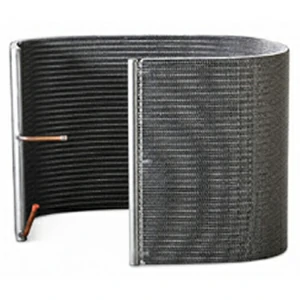 Air conditioner condensers
In high-efficiency air conditioning systems, folded flat tubes help improve condenser heat transfer performance, with heat exchange capacity increasing by about 6%–12% under test conditions.
-
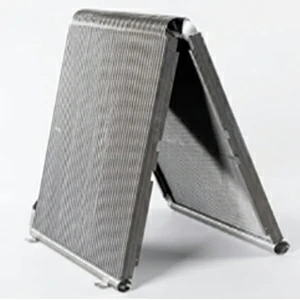 Microchannel evaporators
Multi-port channels with 0.08 mm inner fins help improve refrigerant distribution and internal support, making them suitable for compact all-aluminum evaporators.
-
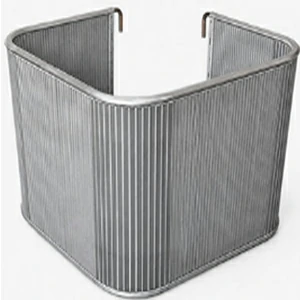 Heat pump heat exchangers
For heat pumps and low-GWP refrigerants, folded flat tubes withstand 100 bar pressure holding and offer burst pressure >178 bar.
-
 HVAC&R refrigeration systems
For commercial air conditioning and refrigeration equipment, folded flat tubes pass 100-day SWAAT testing without leakage, helping reduce corrosion, perforation, and leakage risks.
-
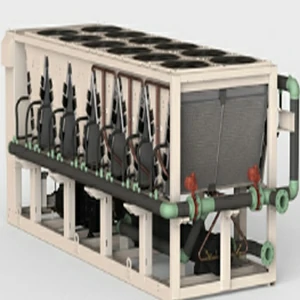 Data center cooling equipment
For continuous operation, thin-wall multi-port folded flat tubes support stable heat transfer and reliable structure in limited space.
-
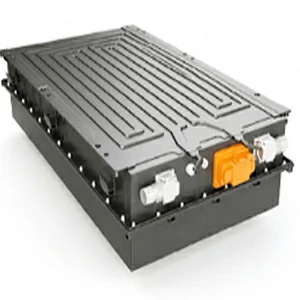 Automotive thermal management systems
For weight- and space-sensitive aluminum heat exchangers, folded flat tubes are about 10%–20% lighter than similar extruded flat tubes, helping reduce thermal management component weight.
Corrosion resistance and long-term reliability
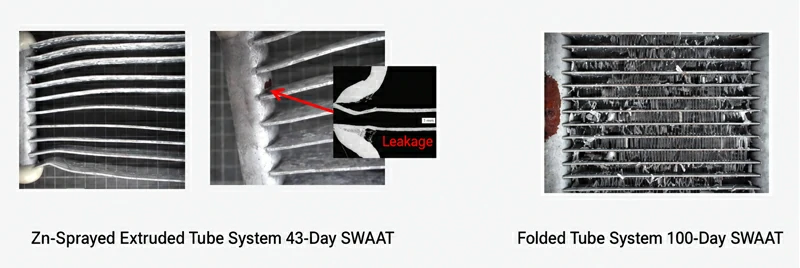
Corrosion can affect the service life of microchannel heat exchangers. Chalco microchannel folded flat tubes use long-life aluminum alloy materials, clad structure, and optimized corrosion potential design to reduce the risk of early fin separation, tube pitting, and joint leakage.
| SWAAT test time | Microchannel folded tube system | Zinc-sprayed extruded microchannel tube system |
| 21 days | No fin separation, no leakage | Complete fin separation |
| 43 days | No fin separation, no leakage | Leakage at the tube-to-header joint |
| 65 days | Slight fin separation, no leakage | Tube perforation |
| 80 days | Slight fin separation, no leakage | — |
| 100 days | Slight fin separation, no leakage | — |
In Chalco testing based on ASTM G85 A322 SWAAT method, the microchannel folded tube system showed no leakage after 100 days, while the zinc-sprayed extruded microchannel tube system showed earlier fin separation, joint leakage, and tube perforation.
Heat transfer performance and refrigerant-side flow resistance
Chalco microchannel folded flat tubes support thin-wall lightweight design while maintaining stable heat transfer. Test results show similar or slightly higher heat exchange capacity than standard extruded tubes, while refrigerant-side flow resistance depends on tube type, port number, circuit design, and system layout.
R134a / 1.5 MPa test condition
Under this test condition, the folded tube heat exchanger delivered about 6%–12% higher heat exchange capacity and about 8%–20% higher refrigerant-side flow resistance than the extruded tube design.
| Air speed | Extruded tube heat capacity | Folded tube heat capacity | Extruded tube flow resistance | Folded tube flow resistance |
| 2.0 m/s | 8.77 kW | 9.79 kW | 90 kPa | 107 kPa |
| 3.4 m/s | 12.05 kW | 12.74 kW | 157 kPa | 189 kPa |
| 4.7 m/s | 15.38 kW | 16.25 kW | 237 kPa | 257 kPa |
Test configuration:
- Refrigerant: R134a
- Condensing pressure: 1.5 MPa
- Heat exchanger size: 665 × 485 × 12 mm
- Folded flat tube: 12 × 1.4 mm, 0.20 mm wall thickness, 20 ports
- Extruded flat tube: 12 × 1.4 mm, 0.25 mm wall thickness, 12 ports
R134a / 2 MPa test condition
Under another test condition, the folded tube heat exchanger showed slightly higher heat capacity than the extruded tube design, while refrigerant-side flow resistance was about 2%–5% lower.
| Air speed | Extruded tube heat capacity | Folded tube heat capacity | Extruded tube flow resistance | Folded tube flow resistance |
| 1.0 m/s | 7.27 kW | 7.42 kW | 35.08 kPa | 33.50 kPa |
| 1.5 m/s | 10.72 kW | 10.84 kW | 63.38 kPa | 60.74 kPa |
| 2.5 m/s | 15.79 kW | 15.82 kW | 119.45 kPa | 116.87 kPa |
Test configuration:
- Refrigerant: R134a
- Condensing pressure: 2 MPa
- Heat exchanger size: 585 × 493 × 12 mm
- Folded flat tube: 12 × 1.4 mm, 0.20 mm wall thickness, 20 ports
- Extruded flat tube: 12 × 1.4 mm, 0.25 mm wall thickness, 18 ports
Overall, microchannel folded flat tubes offer more design flexibility for all-aluminum heat exchangers through thinner walls, multi-port channels, and inner fins. Chalco can help select the right folded tube structure based on heat capacity, pressure drop, refrigerant type, circuit design, and heat exchanger size.
Pressure performance for high-pressure refrigerants and heat pump systems
Low-GWP refrigerants, heat pumps, and next-generation air conditioning systems require higher pressure strength for heat exchanger tubes. Microchannel folded tubes combine thin-wall lightweight design with stable pressure performance to help reduce bulging, deformation, and leakage risks.
Test results show good pressure resistance:
- Burst pressure: over 178 bar
- Pressure holding: no obvious bulging after 100 bar pressure holding for 5 minutes
- Applications: suitable for high-efficiency air conditioners, heat pumps, refrigeration equipment, and low-GWP refrigerant systems
This makes microchannel folded tubes suitable for all-aluminum heat exchangers that require lightweight structure and reliable high-pressure performance.
Chalco can help confirm suitable folded flat tube specifications based on refrigerant type, pressure requirements, and heat exchanger drawings.
Microchannel folded tubes vs standard extruded aluminum microchannel tubes
Standard extruded aluminum microchannel tubes are widely used for regular heat exchanger production, while microchannel folded tubes are better suited for next-generation all-aluminum heat exchangers that require lighter weight, better corrosion resistance, higher pressure strength, and lower-carbon performance.
| Comparison item | Standard extruded aluminum microchannel tube | Microchannel folded tube |
| Alloy strength | Standard strength | Rolled alloy strength is about 2 times higher than extruded aluminum tubes |
| Forming method | Hot extrusion | Precision rolling and folding |
| Material selection | Relatively limited alloy options | More flexible aluminum alloy or clad aluminum alloy structures |
| Wall thickness | Usually about 0.22–0.40 mm | About 0.18–0.26 mm |
| Tube weight | Limited weight reduction | About 10%–20% lower tube weight |
| Corrosion resistance design | Usually improved by zinc spraying or coating | Improved through material and corrosion potential matching |
| Fin separation risk | Fin separation may occur in corrosive environments | Helps reduce early fin separation and leakage risks |
| Applications | Mature standard heat exchangers | High-efficiency, lightweight, long-life, and low-carbon heat exchangers |
For standard heat exchanger projects, extruded microchannel tubes are still a mature solution. For projects that require better long-term corrosion resistance, lower weight, reduced refrigerant charge, and higher system efficiency, microchannel folded tubes are a better upgrade option.
To compare the structure, performance, and selection differences between the two designs, read Microchannel folded tubes vs standard extruded aluminum microchannel tubes to find the right solution for your condenser, evaporator, or heat pump heat exchanger project.
For projects that move beyond conventional narrow flat-tube dimensions, ultra-wide microchannel tubes provide another structural route for larger integrated cooling applications.
Prospects of microchannel folded aluminum tubes
Higher energy efficiency and low-carbon policies are driving heat exchanger upgrades
Global air conditioning, heat pump, and refrigeration equipment are moving toward higher energy efficiency, lower refrigerant charge, and lower carbon emissions. As a core part of the refrigeration system, the heat exchanger directly affects system efficiency, refrigerant use, material weight, and lifecycle carbon emissions.
- China: After the implementation of GB 21455-2019, air conditioner energy efficiency requirements became higher, and low-efficiency products are being reduced.
- United States: Residential central air conditioners and air-source heat pumps need to meet higher SEER and HSPF requirements.
- Europe: ERP energy efficiency requirements continue to improve, driving system efficiency upgrades for air conditioners and heat pumps.
- Japan: Higher APF requirements for wall-mounted air conditioners place greater demands on heat exchanger efficiency and system matching.
- Refrigerant trend: HFC reduction and low-GWP refrigerants require heat exchangers to balance pressure strength, refrigerant charge, and system safety.
Under this trend, all-aluminum microchannel heat exchangers are being used more in air conditioning, heat pump, and HVAC&R systems. With thin-wall structure, multi-port channels, lightweight design, and corrosion-resistant material matching, microchannel folded tubes help improve heat transfer in limited space, reduce refrigerant use, and support low-carbon product upgrades.
Aluminum replacing copper is driving all-aluminum microchannel heat exchanger development
Air conditioning, heat pump, and refrigeration equipment are shifting from traditional copper tube aluminum fin structures to all-aluminum microchannel heat exchangers. Aluminum is lightweight, cost-controllable, and easier to recycle as a complete structure, helping reduce material use and refrigerant charge.
- More controllable cost: Aluminum is usually more cost-effective than copper for mass heat exchanger production.
- Lighter weight: Low aluminum density helps reduce heat exchanger and outdoor unit weight.
- More compact structure: Microchannel heat exchangers have smaller internal volume, helping reduce refrigerant charge.
- Easier recycling: All-aluminum structure is easier to recycle as a whole, supporting low-carbon and circular use.
Microchannel folded tubes are a further upgrade for all-aluminum microchannel heat exchangers, offering a better tube solution for lightweight design, corrosion resistance, and long-term reliability.
Custom microchannel folded flat tube supply from Chalco
Within Chalco's broader aluminum tube product range, microchannel folded flat tubes can be customized based on heat exchanger drawings, samples, or performance requirements, including size, port number, wall thickness, inner fin, and material structure for condensers, evaporators, heat pumps, and HVAC&R heat exchangers.
For conventional heat-exchanger tube projects outside the folded-tube structure, 3003 aluminum tube is also available as part of the broader aluminum tube range.
- Specification customization: custom tube width, height, port number, and channel structure are available, with 12 mm × 1.4 mm and 20 ports as a typical reference.
- Thin-wall design: 0.18–0.26 mm thin-wall folded tubes help reduce tube weight and material use.
- Inner fin structure: inner fin designs, such as 0.08 mm thickness, can be matched for refrigerant flow, internal support, and heat transfer efficiency.
- Material options: 3-layer long-life core and 5-layer MULTICLAD structures are available for different corrosion resistance, strength, and brazing needs.
- Performance matching: options can be matched for 100 bar pressure holding, 100-day SWAAT no leakage, lightweight design, and lower refrigerant charge.
- Batch supply support: suitable for sample testing, trial production, and bulk purchasing by air conditioner, heat pump, refrigeration equipment, and aluminum heat exchanger manufacturers.
Microchannel folded flat tube RFQ information
To confirm specifications and quotation more quickly, it is recommended to provide the following information:
- Tube size: tube width, height, and wall thickness, such as 12 mm × 1.4 mm with 0.2 mm wall thickness.
- Port number: such as 20 ports or other microchannel designs.
- Inner fin structure: whether inner fins are required, such as 0.08 mm fin thickness.
- Material structure: 3-layer structure, 5-layer MULTICLAD structure, or other corrosion-resistant clad aluminum requirements.
- Application: condenser, evaporator, heat pump heat exchanger, HVAC&R system, or automotive thermal management heat exchanger.
- Refrigerant type: R32, R290, R134a, CO₂, or other refrigerants.
- Pressure requirements: working pressure, burst pressure, or whether 100 bar pressure holding and >178 bar burst pressure are required.
- Brazing requirements: brazing process, furnace type, assembly method, and fin or header material matching requirements.
- Testing requirements: whether corrosion resistance, SWAAT, leakage, heat transfer, or lightweight testing support is needed.
- Purchase quantity: sample testing, trial production, or annual purchasing demand.
If you already have drawings, samples, or heat exchanger designs, you can send them directly to Chalco for suitable folded flat tube structure, material options, and supply recommendations.
Microchannel folded flat tube FAQs
Is Chalco a microchannel folded flat tube manufacturer or trader?
Chalco provides material matching, structural customization, sample confirmation, and bulk supply support for microchannel folded flat tubes, suitable for air conditioner, heat pump, refrigeration equipment, and aluminum heat exchanger manufacturers.
Can samples be provided before new project development?
Yes. Chalco can provide sample solutions based on drawings, samples, or initial specifications for size confirmation, brazing validation, assembly testing, and heat exchanger performance evaluation.
Can Chalco customize tubes if only heat exchanger drawings are available?
Yes. You can provide heat exchanger drawings, circuit design, refrigerant type, working pressure, and target performance. Chalco can help confirm tube width, height, port number, wall thickness, inner fin, and material structure.
Can microchannel folded flat tubes replace existing extruded microchannel tubes?
Yes, after evaluation based on the original tube size, port number, circuit design, brazing process, and heat exchanger structure. For projects needing weight reduction, better corrosion resistance, or lower refrigerant charge, folded flat tubes can be tested as an upgrade option.
What should be verified before bulk purchasing?
It is recommended to confirm size tolerance, brazing compatibility, pressure strength, leakage test, corrosion resistance, and assembly stability. For new structures, small-batch trial production can be done before bulk purchasing.
Can Chalco match the customer's brazing process?
Yes. The material structure, clad layer, wall thickness, and inner fin design can be matched to the customer's brazing temperature, furnace type, and fin material. Tube-to-header structure matching and assembly methods can also be reviewed for the brazing process.
What is the minimum order quantity?
MOQ depends on tube size, material structure, new development requirements, and whether it is for samples or bulk production. Mature specifications are usually more flexible, while custom structures or special materials need project-based confirmation.
Can export packaging be customized?
Yes. Chalco can provide anti-deformation, moisture-proof, and anti-scratch packaging based on tube size, length, quantity, and shipping method, with support for labels, batch information, and export documents.
Chalco can provide you the most comprehensive inventory of aluminum products and can also supply you customized products. Precise quotation will be provided within 24 hours.
Get a quote