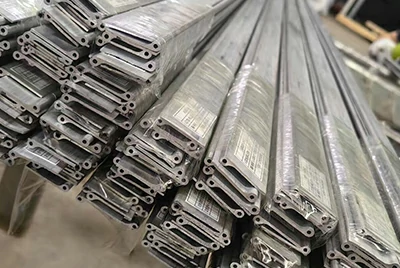
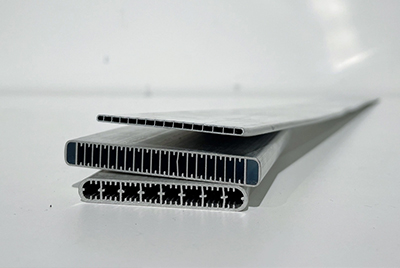
As air conditioners, heat pumps, and refrigeration systems evolve toward higher energy efficiency, lower-GWP refrigerants, and reduced carbon emissions, all-aluminum microchannel heat exchangers are being adopted in an increasing number of projects. As the core flow-path component in these heat exchangers, microchannel flat tubes not only affect heat transfer efficiency but also directly influence corrosion resistance, leakage risk, refrigerant charge volume, overall unit weight, and long-term operational stability.
Microchannel extrusion tubes represent a mature, conventional solution well-suited for standardized and cost-sensitive heat exchanger projects. In contrast, microchannel folded tubes are formed by precision folding of rolled aluminum, offering greater design flexibility in material selection, thin-wall construction, corrosion control, and lightweighting. For projects developing high-efficiency, long-life, or low-carbon all-aluminum heat exchangers, tube selection is no longer just about price-it's a comprehensive decision impacting overall performance, service life, and long-term reliability.
What's the difference between microchannel folded tubes and microchannel extrusion tubes?
Both microchannel extrusion tubes and microchannel folded tubes can be used in all-aluminum microchannel heat exchangers, but they differ significantly in forming method, material structure, wall thickness control, corrosion resistance design, and lightweighting capability. Extrusion tubes lean toward mature, standardized solutions, while folded tubes are better suited for high-reliability, long-life, and lightweight heat exchanger development.
| Comparison Item | Microchannel Extrusion Tube | Microchannel Folded Tube |
| Forming Method | Hot Extrusion | Precision Folding of Rolled Aluminum |
| Material Structure | Primarily extrusion-grade aluminum alloys | Can use rolled aluminum alloys or multi-layer clad aluminum alloys |
| Material Selection | Relatively limited alloy options | More flexible material choices |
| Typical Wall Thickness | Approx. 0.22–0.40 mm | Approx. 0.18–0.26 mm |
| Corrosion Protection Method | Commonly zinc-spray coating | Alloy design and corrosion potential matching |
| Weight Performance | Relatively heavier | Enables thinner walls and lighter designs |
| Corrosion Resistance | Depends on base material and surface protection | Better suited for long-life corrosion-resistant designs |
| Heat Transfer Performance | Mature and stable | Offers further optimization potential |
| Suitable Applications | Standard microchannel heat exchangers, cost-sensitive projects | High-efficiency, lightweight, low-carbon, and long-life heat exchanger projects |
From a selection standpoint, microchannel extrusion tubes remain suitable for mature mass-production projects with stringent cost controls, while microchannel folded tubes are better aligned with all-aluminum heat exchangers demanding higher corrosion resistance, lower weight, long-term stability, and low-carbon design.
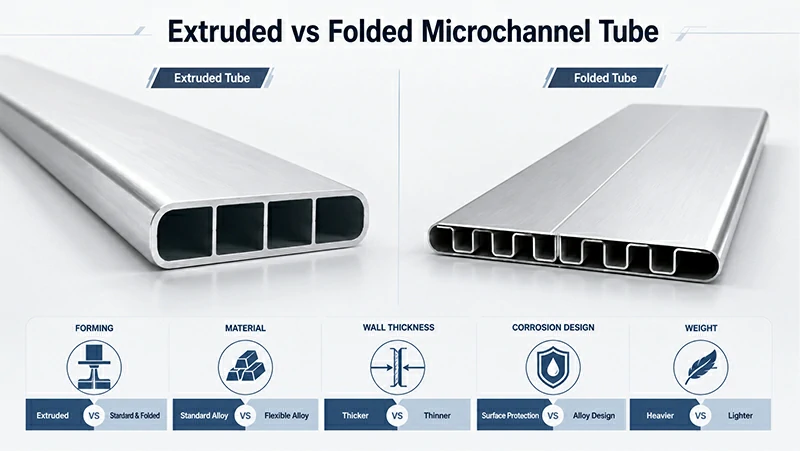
Forming process comparison: hot extrusion vs. rolled folding
Microchannel extrusion tubes form multi-port flow channels through hot extrusion, offering structural stability and production maturity-ideal for batch applications in standard microchannel heat exchangers. However, the extrusion process imposes limitations on alloy selection, thin-wall design, and complex material structures, so post-process corrosion resistance typically relies on zinc spraying or other surface protection methods.
Microchannel folded tubes are made by precision folding of rolled or clad aluminum sheets, with flow channels created through material folding and internal fin design. Compared to extrusion tubes, folded tubes can utilize a wider range of rolled alloys and multi-layer composite materials, making it easier to achieve thin-wall, lightweight, and corrosion-matched designs.
| Comparison Item | Microchannel Extrusion Tube | Microchannel Folded Tube |
| Forming Method | Hot Extrusion | Folding of Rolled Aluminum |
| Flow Channel Formation | Extruded multi-port structure | Multi-channel formed by folding |
| Process Characteristics | Mature and stable, suitable for standardized production | Design flexibility, ideal for high-performance customization |
| Material Limitations | Relatively limited alloy options | Can use clad aluminum and long-life alloys |
| Thin-Wall Design | Further thinning constrained by process | Better suited for thin-wall and lightweight designs |
Extrusion tubes excel in maturity and stability, while folded tubes offer greater freedom in material and structural design. For standard projects, extrusion tubes remain a viable option; for heat exchangers requiring higher corrosion resistance, lower weight, and longer service life, folded tubes warrant serious evaluation.
Material structure comparison
Microchannel extrusion tubes typically use extrusion-grade aluminum alloys such as AA3102, AA1100, or 3xxx series, with AA3102 being a common choice for multi-port extruded flat tubes. To enhance corrosion resistance, some long-life extrusion tubes add a zinc spray coating-for example, the 3102ZnAS solution-which delays tube corrosion through sacrificial protection.
However, material selection for extrusion tubes is constrained by the hot extrusion process, making it difficult to simultaneously achieve high strength, long-life performance, and multi-layer composite structures. Thus, extrusion tubes primarily rely on base alloys, zinc coatings, and post-process protection to improve corrosion resistance.
Microchannel folded tubes are formed by folding rolled or clad aluminum sheets and can employ more complex alloy combinations. For instance, folded tube materials may feature a 3xxx-series core with an AA4343 brazing cladding layer, or even multi-layer structures that match strength, brazability, and corrosion potential across core, cladding, and intermediate layers.
Wall thickness and weight comparison: thick-wall extrusion tube vs. thin-wall folded tube
Due to limitations of the hot extrusion process, further wall thinning of microchannel extrusion tubes is challenging, with typical wall thicknesses ranging from approximately 0.22–0.40 mm. In contrast, microchannel folded tubes-formed from rolled aluminum-can achieve wall thicknesses of about 0.18–0.26 mm, enabling easier thin-wall design while maintaining flow channel integrity.
In same-specification microchannel heat exchangers, the weight per meter of folded tubes is typically lower than that of multi-port extrusion tubes. For example, comparing MPE extrusion tubes with FT folded tubes:
- MPE-11 extrusion tube: approx. 22.58 g/m
- MPE-15 extrusion tube: approx. 24.77 g/m
- MPE-18 extrusion tube: approx. 25.40 g/m
- FT-20 folded tube: approx. 20.03 g/m
In total heat exchanger weight comparisons, MPE extrusion tube solutions weigh approximately 1.58–1.68 kg, while the FT-20 folded tube solution weighs about 1.41 kg. Compared to extrusion tubes with varying port counts but equivalent specifications, folded tubes reduce weight by roughly 10%–20%.
Lighter flat tubes reduce aluminum consumption and lower the overall heat exchanger weight. This weight reduction is especially valuable for outdoor air conditioner units, heat pump systems, lightweight refrigeration equipment, and low-carbon heat exchangers. If paired with non-clad fins, folded tube solutions can further reduce total heat exchanger weight by an additional 10%–15%.
Corrosion resistance comparison: zinc-sprayed extrusion tube vs. long-life folded tube
Microchannel extrusion tubes commonly use AA3102 extrusion alloy. To extend service life, some designs employ 3102ZnAS zinc-sprayed extrusion tubes. The zinc layer provides sacrificial protection, but if the corrosion potentials among tube, fin, and manifold are mismatched, long-term use may lead to premature fin detachment, joint corrosion, or pitting perforation of the flat tube.
Microchannel folded tubes take a different corrosion protection approach. Rather than relying solely on external zinc coatings, they control corrosion sequence through long-life alloys, clad layer structures, and corrosion potential matching. Typical folded tube materials may combine a 3xxx-series core, AA4343 brazing cladding, and multi-layer composites to create a more stable corrosion-resistant system among tube, fin, and manifold.
The difference between the two solutions is striking in SWAAT corrosion testing:
- 21 days: Folded tube system shows no fin detachment or leakage; zinc-sprayed extrusion tube system exhibits complete fin detachment.
- 43 days: Folded tube system remains leak-free with no fin detachment; zinc-sprayed extrusion tube system leaks at the joint between flat tube and manifold.
- 65 days: Folded tube system shows only slight fin detachment and no leakage; zinc-sprayed extrusion tube system develops flat tube perforation.
- 100 days: Folded tube system remains leak-free, with only minor fin detachment.
This disparity demonstrates that microchannel folded tubes are better suited for long-life microchannel heat exchanger designs in high-humidity, coastal, heat pump, outdoor air conditioner, and long-duration operating environments. Their advantage lies not only in superior tube corrosion resistance but also in reducing risks of premature fin loss, heat transfer degradation, and late-stage leakage.
Post-corrosion heat transfer performance comparison: different rates of performance degradation
The initial heat transfer capacity of a microchannel heat exchanger does not fully reflect its long-term performance. In real-world operation, corrosion affects the flat tube, fins, and brazed joints; once fin detachment, localized corrosion, or contact failure occurs, heat transfer performance declines significantly.
After SWAAT corrosion testing, the heat transfer performance of zinc-sprayed extrusion tube systems degrades more rapidly. Thanks to its optimized material structure and corrosion potential matching, the folded tube system maintains more stable heat transfer capability even after exposure to corrosive environments.
| SWAAT Test Duration | Heat Transfer Performance of Zinc-Sprayed Extrusion Tube | Heat Transfer Performance of Microchannel Folded Tube |
| 0 days | 100% | 100% |
| 7 days | 85% | 87% |
| 15 days | 67% | 85% |
According to Chalco's test data, after 15 days of SWAAT testing, the heat transfer performance of zinc-sprayed extrusion tubes drops to 67%, while microchannel folded tubes maintain 85%. This shows that folded tubes not only reduce leakage risk in corrosive environments but also help slow heat transfer degradation.
For air conditioner condensers, heat pump heat exchangers, and all-aluminum microchannel heat exchangers requiring long-term stable operation, post-corrosion performance retention is more critical than initial heat transfer capacity.
Heat transfer capacity comparison: mature stability vs. higher heat transfer potential
Aluminum microchannel extrusion tubes have been used for a long time in all-aluminum heat exchangers, offering stable thermal performance and suitability for mature designs and high-volume projects. Aluminum microchannel folded tubes, featuring thinner wall thickness, higher channel counts, and internal fin structures, increase heat transfer contact between the refrigerant and tube walls, presenting an opportunity to enhance overall heat exchanger capacity.
Under identical heat exchanger dimensions and test conditions, folded-tube heat exchangers demonstrate higher heat transfer capacity:
| Air velocity | Heat transfer capacity of extrusion tube | Heat transfer capacity of folded tube |
| 2.0 m/s | 8.77 kW | 9.79 kW |
| 3.4 m/s | 12.05 kW | 12.74 kW |
| 4.7 m/s | 15.38 kW | 16.25 kW |
The heat transfer capacity of microchannel folded-tube heat exchangers is approximately 6%–12% higher than that of extrusion-tube counterparts. For air conditioning and heat pump projects requiring improved energy efficiency, reduced heat exchanger size, or optimized system performance, folded tubes offer greater development value.
Refrigerant-side flow resistance comparison: Heat transfer capacity alone isn't enough-system compatibility matters
While enhancing heat transfer capacity, microchannel folded tubes also require concurrent evaluation of refrigerant-side flow resistance. Excessive flow resistance increases system pressure drop, negatively affecting compressor matching and overall efficiency; however, well-controlled flow resistance can maintain heat transfer performance while reducing system load.
In one test series, folded tubes achieved higher heat transfer capacity but also exhibited higher refrigerant-side flow resistance than extrusion tubes:
| Air velocity | Flow resistance of extrusion tube | Flow resistance of folded tube |
| 2.0 m/s | 90 kPa | 107 kPa |
| 3.4 m/s | 157 kPa | 189 kPa |
| 4.7 m/s | 237 kPa | 257 kPa |
This indicates that certain folded-tube designs may result in higher refrigerant-side pressure losses. For projects with limited compressor margin or strict system pressure-drop constraints, a balance must be struck between enhanced heat transfer and increased flow resistance.
In another test series, folded tubes showed slightly higher heat transfer capacity alongside slightly lower refrigerant-side flow resistance:
| Velocity | Flow resistance of extrusion tube | Flow resistance of folded tube |
| 1.0 m/s | 35.08 kPa | 33.50 kPa |
| 1.5 m/s | 63.38 kPa | 60.74 kPa |
| 2.5 m/s | 119.45 kPa | 116.87 kPa |
Therefore, the flow resistance performance of microchannel folded tubes cannot be simplistically categorized as universally higher or lower. It depends on factors such as channel count, internal fin structure, circuit design, refrigerant type, and heat exchanger dimensions. When replacing extrusion tubes, heat transfer capacity, flow resistance, operating pressure, and overall system operating conditions must all be verified together.
Pressure resistance comparison: Conventional system requirements vs. high-pressure refrigerant trends
Low-GWP refrigerants are driving air conditioning and heat pump systems toward higher operating pressures. Microchannel flat tubes must not only meet heat transfer requirements but also deliver reliable pressure-bearing capability.
Microchannel extrusion tubes are well-established in conventional refrigeration systems, with pressure resistance primarily determined by alloy grade, wall thickness, channel geometry, and brazing quality. Although microchannel folded tubes feature thinner walls, their pressure stability can be enhanced through internal fin structures, multi-channel flow paths, and optimized material strength.
Pressure resistance test results for folded tubes:
- Burst pressure of single brazed tube: above 178 bar
- Reference burst pressure: approximately 19.29 MPa
- Held at 100 bar for 5 minutes: no bulging or deformation observed
Beyond lightweight design, microchannel folded tubes also hold development potential for high-pressure refrigerant systems. For low-GWP refrigerant projects using R32, R290, or R1234yf, comprehensive validation-including operating pressure, burst pressure, brazed joint integrity, and full-system testing-is still required.
Low-carbon value comparison
Both microchannel extrusion tubes and folded tubes are all-aluminum heat exchanger solutions that reduce copper usage compared to traditional copper-tube/aluminum-fin structures and improve overall recyclability. However, folded tubes offer greater advantages in further reducing material consumption, unit weight, and refrigerant charge.
Microchannel folded tubes utilize thin-wall construction, resulting in lower weight per tube compared to extrusion tubes of equivalent specifications. Since flat tubes constitute a significant portion of material in microchannel heat exchangers, reducing tube weight directly decreases aluminum usage and lowers overall heat exchanger mass.
Low-carbon benefits are reflected in several aspects:
- Tube weight reduction: Folded tubes are approximately 10%–20% lighter than extrusion tubes of the same specification
- Overall weight reduction: When paired with non-clad aluminum fin stock, heat exchanger weight can be further reduced by about 10%–15%
- Refrigerant charge reduction: Microchannel heat exchangers can reduce refrigerant charge by approximately 30% at equivalent performance levels
- Material recyclability: All-aluminum construction simplifies end-of-life recycling and reduces material separation complexity
- Low-carbon design: Reduced material use, lower weight, and less refrigerant support low-carbon upgrades for air conditioners, heat pumps, and refrigeration equipment
For projects focused solely on basic substitution, microchannel extrusion tubes already enable copper-to-aluminum replacement and cost optimization. However, for projects aiming to further reduce weight, lower carbon emissions, improve energy efficiency ratings, or meet low-carbon supply chain requirements, microchannel folded tubes are better suited as an upgraded solution.
Cost comparison
Microchannel extrusion tubes benefit from mature manufacturing processes and stable supply chains, offering strong cost advantages in conventional heat exchanger projects. For standardized designs, high-volume production, and price-sensitive products, extrusion tubes remain a common choice.
The cost of microchannel folded tubes shouldn't be judged solely by per-unit tube price. Thanks to their thinner walls, lower weight, and enhanced corrosion resistance design, their value is better reflected in total heat exchanger cost and long-term operational expenses.
Key differences include:
- Initial procurement cost: Extrusion tubes are typically easier to cost-optimize and suit mature mass-production schemes.
- Material usage: Folded tubes have thinner walls, reducing weight by approximately 10%–20% compared to extrusion tubes of the same specification.
- Heat exchanger weight: Folded-tube designs reduce overall mass, with further weight savings possible when combined with non-clad aluminum fin stock.
- Failure risk: Folded tubes demonstrate superior leak-free performance in corrosion tests, helping reduce long-term leakage and maintenance risks.
- Long-term performance: Higher retention of heat transfer efficiency after corrosion exposure makes them suitable for heat exchangers requiring greater long-term operational stability.
- Low-carbon value: Reduced material use, lower weight, and decreased refrigerant charge support low-carbon product development.
If initial procurement cost control is the priority, microchannel extrusion tubes retain an advantage. However, if corrosion resistance, weight reduction, energy efficiency, after-sales risk, and low-carbon requirements are emphasized, microchannel folded tubes offer higher overall cost-effectiveness.
How to choose between microchannel folded tubes and extrusion tubes?
There is no absolute replacement relationship between microchannel extrusion tubes and folded tubes-the optimal choice depends on the heat exchanger's application environment, performance targets, cost constraints, and reliability requirements. Extrusion tubes are better suited for mature, standardized projects, while folded tubes excel in high-reliability, lightweight, and long-life heat exchanger development.
| Project requirements | Microchannel extrusion tube | Microchannel folded tube |
| Conventional microchannel heat exchanger | Suitable for mature mass production | Can serve as an upgrade option |
| Cost-sensitive projects | Easier to control initial costs | Requires holistic assessment of long-term value |
| Standard condenser applications | Suitable | Suitable |
| High-humidity or coastal environments | Requires enhanced corrosion protection | Warrants priority evaluation |
| Long-life heat exchangers | Corrosion and leakage risks require attention | Better suited for long-life designs |
| Lightweight design | Limited weight reduction potential | Better suited for thin-wall weight reduction |
| Low-GWP refrigerant systems | Requires verification of pressure resistance and leakage risk | Better aligned with high-pressure development trends |
| High-efficiency air conditioners or heat pumps | Meets conventional requirements | Better suited for performance optimization |
| Low-carbon heat exchanger solutions | Enables copper-to-aluminum substitution | Better suited for weight reduction and low-carbon upgrades |
| Replacement of existing tubing | Suitable for continuing original designs | Requires re-optimization of structure and operating conditions |
For projects prioritizing mature mass production, cost control, and continuity of existing designs, microchannel extrusion tubes remain a stable choice.
For projects emphasizing corrosion resistance, leakage risk, long-term performance, lightweight design, and low-carbon upgrades, microchannel folded tubes are better positioned as the next-generation all-aluminum heat exchanger tubing solution.
Chalco offers microchannel tube products
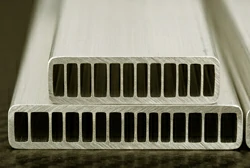
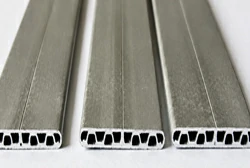
Chalco provides a range of microchannel tube products suitable for air conditioning, heat pumps, automotive cooling systems, refrigeration equipment, and all-aluminum microchannel heat exchanger projects. Based on customer-specific requirements-including heat exchanger structure, refrigerant type, operating pressure, brazing process, and performance targets-Chalco can assist in selecting appropriate tube specifications and material solutions.
Get the right microchannel tube solution for your heat exchanger project
Microchannel folded tubes and extrusion tubes each have their ideal applications. Extrusion tubes suit mature, stable conventional heat exchanger projects, while folded tubes are better for applications demanding higher corrosion resistance, lightweight design, low-carbon features, and long-term reliability.
As a microchannel tube manufacturer, Chalco can provide optimized microchannel tube solutions tailored to customers' heat exchanger structures, refrigerant types, operating pressures, target thermal performance, and procurement needs.
If you're developing air conditioners, heat pumps, refrigeration equipment, automotive cooling systems, or all-aluminum microchannel heat exchangers, please send your drawings or specifications-Chalco will help you identify the right product solution.
Chalco can provide you the most comprehensive inventory of aluminum products and can also supply you customized products. Precise quotation will be provided within 24 hours.
Get a quote