Aluminum wire for 3D printing is a continuous aluminum alloy wire used as feedstock for metal additive manufacturing. It is mainly used in WAAM (Wire Arc Additive Manufacturing) and other wire-fed additive manufacturing processes, where metal components are built through continuous wire feeding, melting and layer-by-layer deposition.
Chalco can provide aluminum alloy wire in different alloys and sizes according to the printing process, target properties and application requirements. Products can be supplied to relevant standards such as AWS A5.10 and EN ISO 18273 for additive manufacturing projects involving aerospace, low-altitude aircraft and large lightweight structures.
If you need to match the right aluminum alloy wire to your additive manufacturing project, contact Chalco for a customized supply solution.
Aluminum 3D printing wire available from Chalco
Chalco can provide aluminum alloy wire for WAAM and other wire-fed additive manufacturing processes, covering the main Al-Cu, Al-Si and Al-Mg alloy systems. The wire is intended for continuous feeding and long-duration deposition, with control of alloy composition, wire diameter, surface condition and winding quality.
| Typical grades | 2319, 4043, 4047, 5183, 5356 |
| Alloy system | Al-Cu, Al-Si, Al-Mg |
| Wire diameter | 1.0 mm, 1.2 mm, 1.6 mm |
| Wire surface | Smooth, clean surface free of oil and visible defects that could affect continuous feeding |
| Winding | Uniform traverse winding for continuous pay-off and stable feeding |
| Supply form | Spool, drum |
| Applicable processes | WAAM, wire-fed DED |
| Key applications | Aerospace, large lightweight structures, marine, transportation and industrial components |
Popular aluminum 3D printing wire alloys from Chalco
Different aluminum alloy wires show clear differences in deposition behavior, strength, corrosion performance and post-deposition heat-treatment capability in WAAM. Chalco can provide Al-Cu, Al-Si and Al-Mg wire feedstock for additive manufacturing applications ranging from general structural parts to high-strength lightweight components.
-
2319 aluminum wire
Key features: Relatively high strength, with the potential for further property improvement through post-deposition heat treatment. It is an important wire feedstock for high-strength aluminum WAAM.
Typical applications: Aerospace, high-strength load-bearing structures and large lightweight components.
-
4043 aluminum wire
Key features: Good molten-metal fluidity and forming stability. It is an established aluminum WAAM wire suitable for continuous deposition.
Typical applications: General structural parts, complex formed parts, prototypes and near-net-shape components.
-
4047 aluminum wire
Key features: Higher Si content and good molten-metal fluidity, supporting stable forming and continuous deposition.
Typical applications: Structural and near-net-shape components with higher requirements for deposition stability.
-
5087 aluminum wire
Key features: Combines strength, toughness and corrosion performance and is a commonly used wire feedstock for Al-Mg WAAM.
Typical applications: Marine, transportation, load-bearing structures and large aluminum alloy components.
-
5183 aluminum wire
Key features: Relatively high strength and good corrosion performance, suitable for Al-Mg additive manufacturing with higher structural-performance requirements.
Typical applications: Shipbuilding, large structures and high-strength components for corrosive environments.
-
5356 aluminum wire
Key features: An established alloy combining strength, corrosion performance and good feedability, suitable for a range of aluminum WAAM applications.
Typical applications: General WAAM, transportation, large structures and marine components.
Selection guidance: If the project prioritizes high strength and further strengthening through post-deposition heat treatment, 2319 aluminum wire can be considered first. For stable deposition and forming behavior, 4043 / 4047 may be suitable. For corrosion-focused, load-bearing Al-Mg structures, 5087 / 5183 / 5356 are key options to consider.
What kind of aluminum wire is more suitable for additive manufacturing?
Aluminum wire used for WAAM must feed continuously for long periods while maintaining stable melting and forming behavior through repeated layer-by-layer deposition. In addition to alloy composition, wire diameter, surface cleanliness, winding condition and feedability directly affect arc stability, porosity and bead geometry. For this reason, wire consistency is generally more critical than in short-duration conventional welding applications.
Stable wire diameter
A 1.2 mm wire diameter is common in aluminum WAAM. At a constant wire feed speed, changes in wire diameter alter the actual amount of metal entering the melt pool per unit time, which can affect deposition rate, melt-pool size and layer height.
For large components requiring hundreds or even thousands of continuously deposited layers, maintaining consistent wire dimensions over the full spool length is more important than whether a single measured point falls within specification. This helps reduce fluctuations in bead width and layer height during printing.
Clean, smooth wire surface
Porosity is one of the defects that requires close control in aluminum WAAM, and hydrogen is an important contributor to pore formation. Moisture, oil, grease and other contaminants on the wire surface can introduce additional hydrogen into the high-temperature melt pool and may form pores during rapid solidification.
Visible scratches, dimples or other depressions on the wire surface can also trap moisture and contaminants. Aluminum 3D printing wire should therefore remain clean, with obvious mechanical damage minimized, and should be protected from moisture uptake and secondary contamination during packaging, storage and use.
Stable winding and feedability
Aluminum wire is softer than steel wire and is therefore more prone to buckling, kinking, slipping or fluctuations in feeding resistance during continuous high-speed feeding. Industrial WAAM systems typically place greater emphasis on the interaction between wire winding and the feeding system, and some equipment uses a push-pull feeding system to improve stability over longer feed paths.
Aluminum WAAM wire feed stability is usually related directly to the following factors:
- Winding: Uniform, orderly winding reduces crossed wire, jamming and sudden changes in pay-off resistance.
- Cast / Helix: Affect the natural curvature and helical condition of the wire after it leaves the spool, which in turn influences wire-tip positional stability above the melt pool.
- Surface condition: Surface roughness and condition affect friction between the wire and wire-guiding system. Excessive variation in feeding resistance can cause feeding instability.
- Spool consistency: Similar pay-off condition and feeding behavior after a spool change help reduce process fluctuations during continuous printing.
Batch consistency is especially important for large components
Large WAAM components may require continuous printing for several hours or longer and may consume multiple spools or batches of aluminum wire. If chemical composition, wire diameter or surface condition varies significantly between batches, the melt-pool condition, deposited bead profile and final mechanical properties may change before and after a wire change.
For aerospace and large load-bearing structures, the alloy grade should be confirmed together with clear batch identification and traceability so that the wire used in the printed component can be traced back to the corresponding production batch.
Key quality indicators for aluminum WAAM wire
Wire diameter: Affects the actual wire feed volume, arc stability and layer consistency.
Surface cleanliness: Affects hydrogen porosity and melt-pool cleanliness.
Winding / Cast / Helix: Affect feedability and wire-tip stability.
Batch consistency: Affects consistency between different deposited regions of a large component.
Chemical composition: Affects cracking tendency, microstructure and final mechanical properties.
For long-duration continuous WAAM, high-quality aluminum wire is not only about having the correct alloy grade. Stable dimensions, surface condition and feeding behavior should be maintained from the first meter to the last.
What is the difference between aluminum AM wire and conventional welding wire?
Many alloy systems used in aluminum WAAM are derived from established welding filler alloys, including 2319, 4043, 5183 and 5356. The alloy chemistry can be the same, but the use conditions differ. Conventional welding wire is mainly used to produce welded joints, while aluminum AM wire must be fed continuously, remelted repeatedly and deposited layer by layer over a longer period. This places higher demands on continuous stability and wire consistency.
| Comparison item | Conventional welding wire | Aluminum AM wire |
| Primary purpose | Welded joints and weld filling | Continuous layer-by-layer deposition to build a component |
| Operating duration | Typically local and intermittent welding | Can continue for several hours or longer |
| Wire diameter consistency | Affects welding stability | Continuously affects deposition rate, layer height and bead geometry |
| Surface cleanliness | Affects weld quality | More sensitive to hydrogen porosity and long-duration deposition stability |
| Winding / Feedability | Supports normal wire feeding | Requires continuous feeding of the full spool for long periods without jamming, wire overlap or feed fluctuations |
| Batch consistency | Affects weld quality | May affect microstructural and property consistency across different regions of the same large printed component |
| Performance evaluation | Focuses more on weld-joint performance | Focuses more on deposited-material strength, elongation, porosity and microstructural consistency |
| Packaging requirements | Standard spools meet most welding needs | Large WAAM projects place greater emphasis on large spools / drums and continuous wire supply |
Which additive manufacturing processes use aluminum 3D printing wire?
Aluminum 3D printing wire is mainly used in wire-fed DED, with WAAM (Wire Arc Additive Manufacturing) being the most established industrial route. Different heat sources and feeding methods change melt-pool heat input, deposition efficiency, forming accuracy and wire-feedability requirements, so wire selection should be matched to the specific equipment and process route.
| Process | Heat source / method | Process characteristics | Main aluminum wire requirements |
| GMAW / MIG-WAAM | Wire acts as both electrode and filler material | High deposition efficiency, suitable for medium and large components and continuous manufacturing | Stable feeding, consistent wire diameter, good winding and surface condition |
| CMT-WAAM | Low-heat-input metal-transfer control based on GMAW | Lower heat input and stable droplet transfer help control spatter and thermal distortion | Higher requirements for continuous feedability and wire consistency |
| GTAW / TIG-WAAM | TIG arc provides the heat source independently, with wire fed separately into the melt pool | Arc, heat input and wire feed can be controlled independently, suitable for components requiring tighter deposition-process control | Wire-tip position, feed angle and feed-rate stability are more important |
| PAW-WAAM | Plasma arc melts independently fed wire | Concentrated arc energy can provide a relatively stable melt pool and deposition process | Requires continuous, stable wire entry into the plasma melt pool |
| Other wire-fed DED | Other directed-energy sources are used to melt the wire | Process characteristics depend on the specific equipment and heat source | Wire-feeding mechanism, wire diameter and material compatibility should be verified for the specific system |
GMAW / MIG-WAAM
This is a common process route for aluminum WAAM. The wire serves as both feedstock and consumable electrode, creating a direct relationship among wire feed speed, current and deposition rate. Changes in wire diameter or feeding condition are therefore reflected more directly in arc and melt-pool behavior.
For large aluminum alloy structures, this process generally places greater emphasis on continuous wire supply and stable high-speed feeding.
CMT-WAAM
CMT (Cold Metal Transfer) is essentially a controlled metal-transfer GMAW process. Droplet detachment is controlled through coordinated wire feeding and retraction together with current control. Compared with conventional GMAW, it can reduce average heat input and improve droplet-transfer stability.
For aluminum WAAM, this can help control heat accumulation, distortion and bead geometry, so the process is often used for thin-wall structures and components with higher requirements for forming stability.
GTAW / TIG-WAAM
In TIG-WAAM, the arc and filler wire are independent: the tungsten electrode provides the heat source, while the aluminum wire is fed into the melt pool by a separate feeding system.
This arrangement allows arc power and wire feed rate to be adjusted separately, but it also makes the actual wire-tip position more critical. Changes in cast, helix or feed direction may shift the wire away from the center of the melt pool and affect continuous deposition.
PAW-WAAM
PAW uses a more concentrated plasma arc as the heat source, with wire fed independently into the melt pool. Compared with a conventional TIG arc, its energy density is more concentrated, resulting in different penetration and deposition characteristics.
In this process, stable wire feeding and wire-to-pool positioning are key to continuous deposition in addition to the alloy grade.
Aluminum wire vs. aluminum powder for 3D printing
Aluminum wire and aluminum powder can both be used as metal additive manufacturing feedstock, but they correspond to different process routes and component types. Wire feedstock is more commonly used in WAAM / wire-fed DED for medium, large and high-material-input components, while powder feedstock is more common in LPBF / SLM and related processes for finer structures and complex internal features.
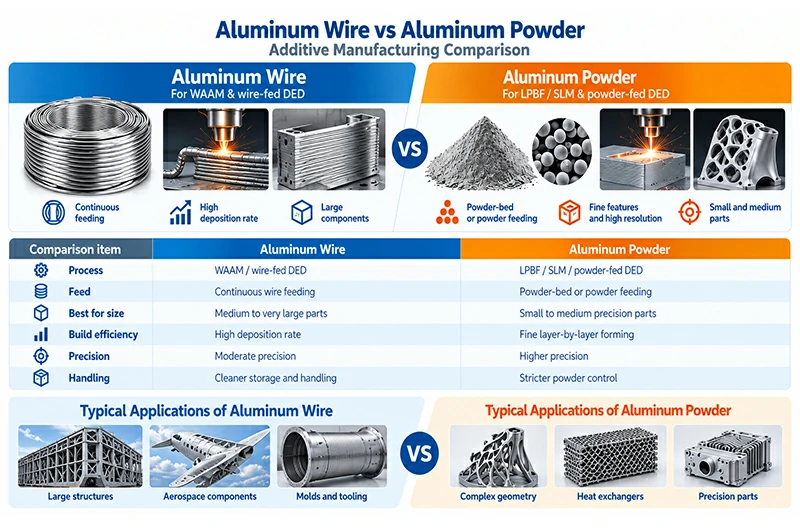
| Comparison item | Aluminum wire | Aluminum powder |
| Typical processes | WAAM, wire-fed DED | LPBF / SLM, powder-fed DED |
| Feed method | Continuous wire feeding | Powder-bed spreading or powder feeding |
| Suitable component size | More suitable for medium, large and very large components | More suitable for small and medium precision components |
| Material deposition | Typically higher material input per unit time, suitable for rapidly building larger volumes | More oriented toward fine layer-by-layer forming |
| Forming accuracy | Near-net shape, typically with machining allowance | Can generally achieve finer local features and higher geometric resolution |
| Surface finish | Deposited surfaces are relatively rough; critical dimensions typically require CNC machining | Generally better than WAAM, but post-processing may still be required |
| Material utilization | Wire enters the melt pool directly with a simple feed path | Unmelted powder generally requires recovery, sieving and management |
| Feedstock handling | Focus on winding, feedability and surface cleanliness | Focus on particle size, flowability, moisture, oxygen and related factors |
| Storage and handling | Focus on moisture protection and avoiding oil and surface contamination | Higher requirements for dust control, sealed storage and powder safety management |
| Typical advantages | Large size, continuous deposition and higher material deposition rate | Fine structures, complex geometry and greater forming freedom |
| Typical post-processing | CNC machining, heat treatment, surface finishing | Heat treatment, support removal, surface finishing and local machining |
When is aluminum wire the better choice?
If the part is a large frame, thick-wall structure, marine component, aerospace structure or near-net-shape part requiring a high material deposition rate, WAAM aluminum wire is usually more suitable. It can rapidly build a metal preform close to the final size, followed by CNC machining to achieve the required dimensional accuracy and surface quality.
When is aluminum powder the better choice?
For parts with thin walls, fine features, complex internal channels, lattice structures or higher geometric-accuracy requirements, LPBF / SLM aluminum powder is generally more suitable.
Typical applications of aluminum 3D printing wire
Aerospace structures
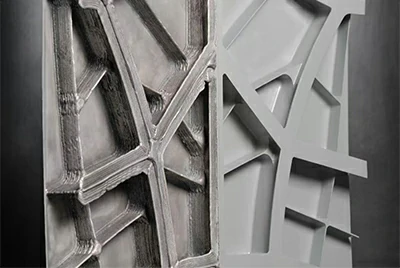
2319 aluminum wire is an important feedstock for high-strength aluminum WAAM and can be used for large lightweight aerospace structures, frames and near-net-shape components. Post-deposition heat treatment and CNC machining can then be used to achieve the required properties and dimensions.
Marine & shipbuilding
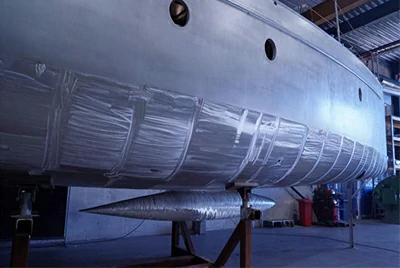
5087, 5183 and 5356 aluminum wire are suitable for marine aluminum structures requiring a balance of strength and corrosion performance. WAAM can also be used for local corrosion repair and material restoration of aluminum ship components.
Automotive
4047, 5356 and other aluminum wires have been used in aluminum WAAM research for lightweight structures, custom components, prototypes and small-batch manufacturing, especially for larger parts whose designs may require rapid adjustment.
Large-scale near-net-shape parts & repair
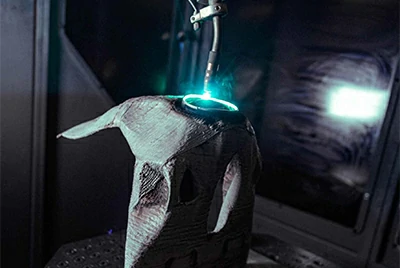
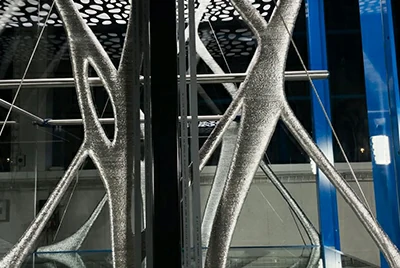
WAAM is particularly suitable for large aluminum near-net-shape parts. Wire can be used to deposit the main structure rapidly, followed by CNC machining to achieve final dimensions. For high-value aluminum alloy components, local deposition can also be used for repair and dimensional restoration.
Why choose Chalco aluminum wire for additive manufacturing?
Chalco has technical capabilities covering aluminum alloy wire, additive manufacturing process verification and inspection of deposited components. Large-scale wire arc additive manufacturing and inspection equipment supports material and printing-process matching for different aluminum alloy systems, component sizes and target properties.
60 wire arc additive manufacturing systems
Chalco is equipped with 60 wire arc additive manufacturing systems across S1, P, M and other equipment series. They can be used for aluminum wire print verification, process development and manufacturing of medium and large components, providing an equipment base for practical application of aluminum wire in additive manufacturing.
Large-component forming capability
The wire arc additive manufacturing equipment covers multiple build sizes. Large systems can provide a build envelope up to 3500 × 2500 × 1000 mm, while cylindrical components can reach up to Φ1200 × H2500 mm. This supports process verification and manufacturing of large aluminum alloy structures and near-net-shape components.
Complete verification from material to deposited performance
Chalco can perform integrated verification covering material selection, process development, additive manufacturing, heat treatment, post-processing, property testing and product acceptance. Combined with forming simulation, stress analysis and fatigue analysis, this allows the properties of the aluminum wire to be evaluated together with the performance of the final printed component.
Comprehensive inspection equipment
Available equipment includes inductively coupled plasma optical emission spectrometers, oxygen-nitrogen-hydrogen analyzers, room-temperature and high-temperature tensile testing machines, hardness testers, coordinate measuring machines, digital X-ray systems, fluorescent inspection equipment and industrial CT. These can be used for systematic evaluation of chemical composition, mechanical properties, dimensional accuracy and internal defects.
Aluminum alloy wire application and performance evaluation capabilities
Current capabilities cover Al-Si, Al-Cu and Al-Mg aluminum alloy 3D printing wire systems, with an application basis for evaluating tensile strength, yield strength and elongation of 1.2 mm wire. This can support material selection and performance verification for different additive manufacturing projects.
With large-scale wire arc additive manufacturing equipment and comprehensive inspection capabilities, Chalco can extend support from wire supply to print verification and performance evaluation, providing aluminum alloy wire solutions for additive manufacturing projects.
Related products
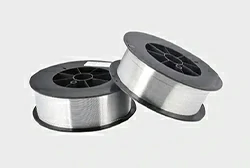
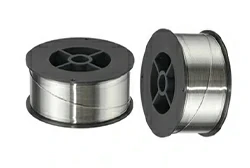
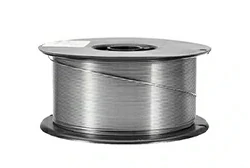
Chalco can provide 4043, 4047, 5087, 5183, 5356 and other aluminum alloy wires for aluminum 3D printing, WAAM and other wire-fed additive manufacturing processes, with different wire diameters and spool / drum supply forms available.
FAQ
Can conventional aluminum welding wire be used directly for WAAM?
Some high-quality commercial welding wires are already used in WAAM, including 2319, 4043, 4047, 5087, 5183 and 5356. Before formal printing, however, wire diameter, surface condition, winding and feedability should still be verified together with porosity and mechanical properties of the deposited material.
Why can the printing result differ even with the same alloy grade?
Even when both wires are 2319 or 5356 aluminum, differences between batches in wire-diameter consistency, surface cleanliness, winding condition and composition control may lead to differences in wire feeding, arc stability, bead geometry and final deposited properties.
Why is 1.2 mm wire common in aluminum WAAM?
A 1.2 mm wire is commonly used in aluminum WAAM because it provides a good balance among feeding stability, material input and compatibility with common industrial feeding systems. The final diameter should still be selected according to the equipment, wire feed speed and target deposition rate.
How can porosity be reduced in aluminum WAAM?
Wire surface cleanliness, moisture, shielding gas, heat input and process parameters should be controlled together. Moisture, oil and other contaminants on the wire surface can increase hydrogen sources, so moisture protection and cleanliness before storage and use are important.
How should 2319 and 5356 aluminum wire be selected?
2319 is an Al-Cu alloy and is more suitable for structural applications targeting high strength together with post-deposition heat treatment. 5356 is an Al-Mg alloy that places greater emphasis on good strength, toughness and corrosion performance and is commonly used for marine and general structural WAAM.
How should aluminum 3D printing wire be stored?
The wire should be kept sealed and dry and protected from high humidity, oil and dust contamination. If it remains unused for an extended period after opening, moisture protection should be restored to reduce the risk that moisture and hydrated oxide increase hydrogen porosity during subsequent printing.
Is machining still required after WAAM?
Most large aluminum WAAM parts are near-net-shape components. Machining allowance is typically reserved, followed by CNC machining of critical dimensions, mating surfaces, holes and the final surface finish.
Standards and quality documents for Chalco aluminum wire for additive manufacturing
Chalco can provide applicable material standards, inspection records and traceability documents according to the alloy grade, WAAM process and project quality requirements, supporting demanding additive manufacturing projects in aerospace, marine and large structural applications.
- AWS A5.10/A5.10M: For 2319, 4043, 5183, 5356 and other aluminum wires, Chalco can control chemical composition and material classification according to the corresponding grade requirements.
- ISO 18273: Can be used to confirm the grades and composition of aluminum and aluminum alloy solid wire / rod across different Al-Cu, Al-Si and Al-Mg systems.
- ISO 544: Can be referenced for wire product form, dimensions, tolerances, marking and other delivery requirements to define wire supply quality.
- ISO/ASTM 52943-2: For aerospace wire-and-arc DED projects, this standard can be considered when confirming project requirements for GMAW/MIG, GTAW/TIG, PAW and other WAAM processes.
- NDT and printed-part inspection: Digital X-ray, industrial CT, fluorescent inspection and other methods can be used to evaluate porosity, cracks and internal quality in printed components. The supplied source materials explicitly list the corresponding inspection equipment.
Chalco can incorporate the alloy grade, wire specification, quality documents and print-verification requirements into the supply solution according to the customer project, reducing subsequent material confirmation and process-verification work.
What information is required to quote aluminum 3D printing wire?
For an inquiry, provide the alloy grade, wire diameter, WAAM or other AM process, printing equipment / wire-feeding system, target component, property requirements, packaging form and purchase quantity. If the specific alloy has not yet been determined, provide the service environment, target strength, corrosion-performance requirements and post-deposition heat-treatment requirements, and Chalco can assist in matching a more suitable aluminum 3D printing wire solution.