Chalco offers custom aluminum 3D printing services for industrial OEMs, R&D teams, and technical buyers, manufacturing 3D printed aluminum parts to customer drawings. For complex internal channels, integrated cooling features, lightweight housings, and large custom components, we can assess LPBF/SLM or WAAM routes based on CAD models, intended use, alloy requirements, and critical dimensions. Post-processing and inspection can be coordinated as needed to deliver parts in the agreed condition.
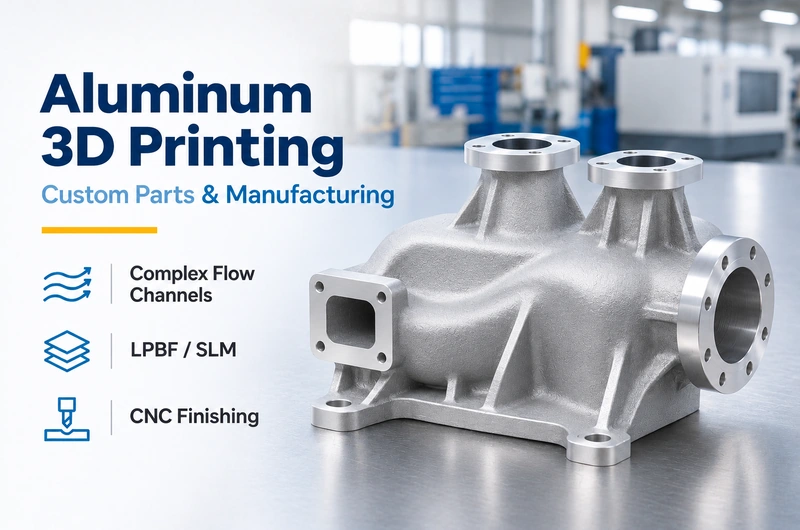
Custom Complex Aluminum Parts: Suitable for complex flow paths, integrated functions, lightweight designs, and specialized geometries.
Material and Process Matching: Evaluate the printing route based on part dimensions, operating conditions, and alloy requirements.
Finished-Part Processing and Delivery: CNC finishing, necessary heat treatment, and agreed inspection can be included.
Custom 3D Printed Aluminum Parts
From integrated cooling structures to large near-net-shape blanks, aluminum additive manufacturing options can be assessed against each part's function and service conditions. The following part categories can be customized for interfaces, mounting dimensions, and post-machining requirements.
Thermal Management & Cooling Components
-
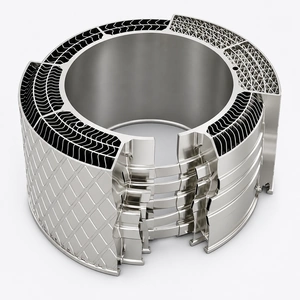
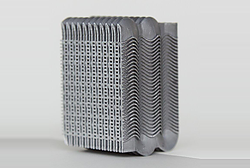
Thermal management parts often need to accommodate cooling channels, ports, and mounting features within limited space. For motor cooling housings, flow-channel plates, and compact heat-exchange components, LPBF/SLM can be evaluated to form curved channels and locally integrated structures, reducing some of the constraints associated with drilling and joining multiple parts. Heat transfer and pressure-drop performance must still be verified under the intended operating conditions.
Customizable Features: Channel paths and cross-sections, inlet and outlet locations, mounting dimensions, and sealing interfaces.
Key Requirements: Powder removal and cleaning access for enclosed channels, sealing-surface machining, and leak and thermal testing requirements.
Manifolds & Fluid Control Components
-
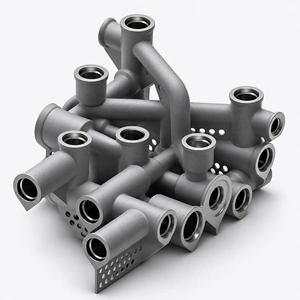
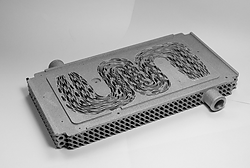
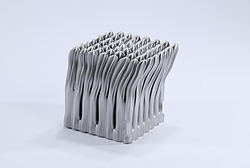
For hydraulic manifolds and fluid distribution components, 3D printing can integrate intersecting or curved passages and selected ports into a single part, reducing reliance on conventional straight-hole drilling, plugs, and multi-part assemblies. The suitability of aluminum must still be evaluated against the working fluid, pressure, temperature, and corrosion-resistance requirements.
Customizable Features: Internal passages and port layout, valve connections, threads, mounting holes, and sealing surfaces.
Key Requirements: Fluid and pressure compatibility, CNC finishing of critical interfaces, passage cleanliness, and pressure/leak testing requirements.
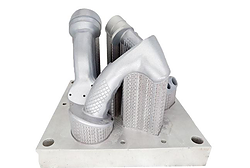
Lightweight Structural Parts & Housings
-
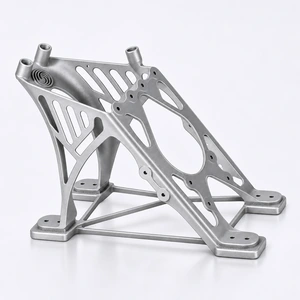
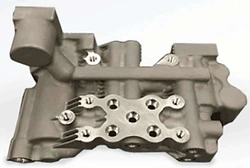
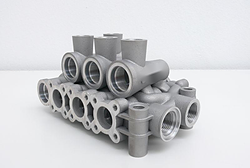
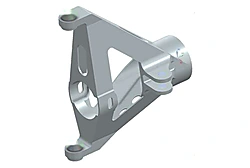
For load-bearing robotic housings, lightweight brackets, and integrated mounting components, topology optimization, local reinforcement, and consolidation of multiple features can be assessed against weight, load, stiffness, and installation-space requirements. The manufacturing approach for critical connections and mating surfaces can incorporate subsequent precision machining and structural verification.
Customizable Features: Weight targets, local reinforcement, connection holes, internal clearance, assembly datums, and surface requirements.
Key Requirements: Load and stiffness assessment, finish machining of critical mating surfaces and threads, and any required structural validation.
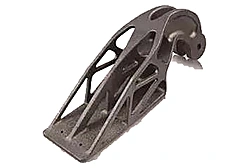
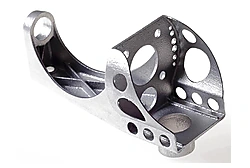
Large WAAM Aluminum Components
-
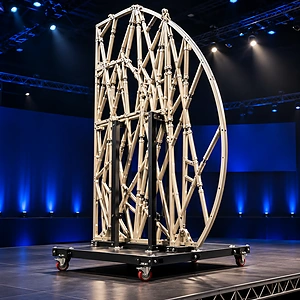
WAAM can be assessed for large frames, cylindrical components, and thick-wall near-net-shape blanks based on the target alloy and dimensions. Critical assembly features can then be finish-machined after deposition. Final dimensions must account for deposition-related distortion, machining allowance, and inspection requirements.
Customizable Features: Part geometry, wall thickness, overall dimensions, and reserved machining allowance.
Key Requirements: Material/process compatibility, deposition distortion, final machined dimensions, and inspection requirements.
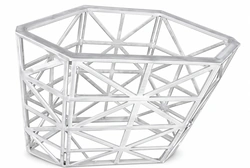
Custom Aluminum Part Design & Manufacturing Options
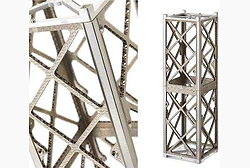
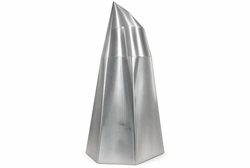
Based on customer CAD models, materials, dimensions, and functional requirements, Chalco can evaluate custom manufacturing solutions using LPBF/SLM, WAAM, and CNC precision finishing where appropriate. Whether a part contains complex internal geometry or is a large custom component, the manufacturing plan is developed around its intended function and final assembly requirements.
Custom Manufacturing Capabilities
| Customization Item | Customization and Manufacturing Options |
| LPBF/SLM Powder Alloys | AlSi10Mg,AlSi7Mg,AlMgScZr,AlMnScZr |
| WAAM Filler Wire Alloys | 2319, 4043, 4047, 5183, and 5356; 5087 and other grades require separate confirmation. |
| Manufacturing Processes | LPBF/SLM for complex, fine-featured parts; WAAM for large near-net-shape components; critical features can be CNC finish-machined. |
| LPBF/SLM Reference Build Envelopes | 350 × 400 × 300 mm,500 × 500 × 1000 mm |
| WAAM Reference Build Envelopes | 3500 × 2500 × 1000 mm,Φ1200 × H2500 mm |
| Complex Geometries | Internal channels, thin walls, lattice structures, topology-optimized designs, and consolidated geometries can be evaluated. |
| Precision Machining | CNC finish machining can be evaluated for mounting holes, threads, sealing surfaces, and critical mating features. |
| Post-Processing and Inspection | Cleaning, heat treatment, surface finishing, dimensional inspection, and necessary material or functional tests can be arranged to project requirements. |
Note: The alloys listed are material systems available for evaluation. Specific grades, material conditions, and finished-part properties require project confirmation. The dimensions shown are reference machine build envelopes, not guaranteed finished-part dimensions; actual manufacturability depends on the drawings, alloy, and process assessment.
For projects requiring WAAM filler wire as a separate purchase, see Aluminum Wire for 3D Printing & WAAM for alloys, wire specifications, and supply information.
CAD Geometry & Critical Features
Provide a 3D CAD model, such as a STEP file, together with 2D drawings showing critical tolerances. Identify mounting holes, threads, sealing surfaces, assembly datums, and any special internal features.
Key Requirements: Critical dimensions, tolerances, functional interfaces, machining datums, and areas inaccessible to subsequent machining.
Selecting the Right Manufacturing Route
The following manufacturing routes can be evaluated based on part geometry, size, and intended use.
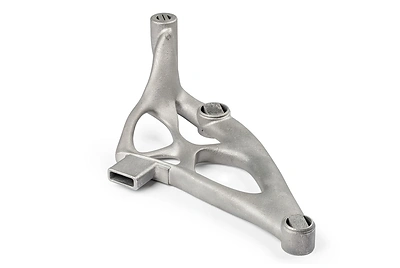
LPBF / SLM — Complex Precision Parts
Suitable for complex internal passages, thin walls, lattices, and integrated functional features, including cooling housings, fluid distribution parts, and lightweight components.
Primary Benefit: Produces complex internal geometries that are difficult to machine conventionally.
WAAM — Large Near-Net-Shape Parts
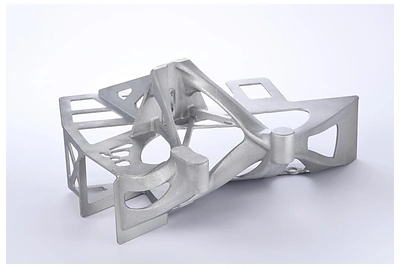
Suitable for large frames, cylindrical components, and thick-wall structures, using continuous deposition to build near-net-shape metal blanks.
Primary Benefit: Provides a forming route for large custom components, with subsequent finish machining to achieve final dimensions.
CNC Precision Finishing | After LPBF/SLM or WAAM, mounting holes, threads, sealing surfaces, and mating features can be locally finish-machined as required.
For simple geometries or parts with established volume-production routes, the overall economics of CNC machining, casting, or other conventional processes may also be compared.
For additional technical information on aluminum alloys, LPBF/SLM, and WAAM, see Aluminum 3D Printing.
Aluminum 3D Printing Services: From CAD to Finished Parts
Beyond additive build operations, Chalco can coordinate post-processing, CNC precision machining, and relevant inspection as required, supplying custom aluminum 3D printed parts in different agreed delivery conditions.
From CAD to Finished Components
CAD & Drawing Review → Process Planning → 3D Printing → Post-Processing & CNC → Finished Parts
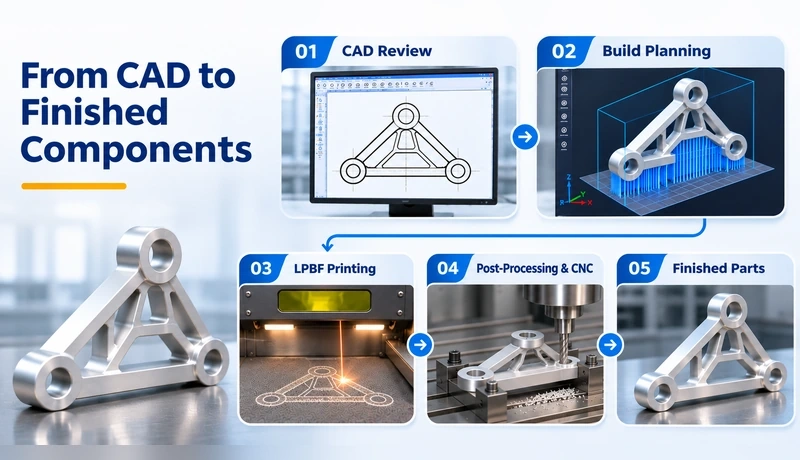
Process Flowchart
Once the drawings, material, and delivery condition are agreed, the part is printed by the selected process, followed by cleaning, necessary post-processing, and localized finish machining as specified.
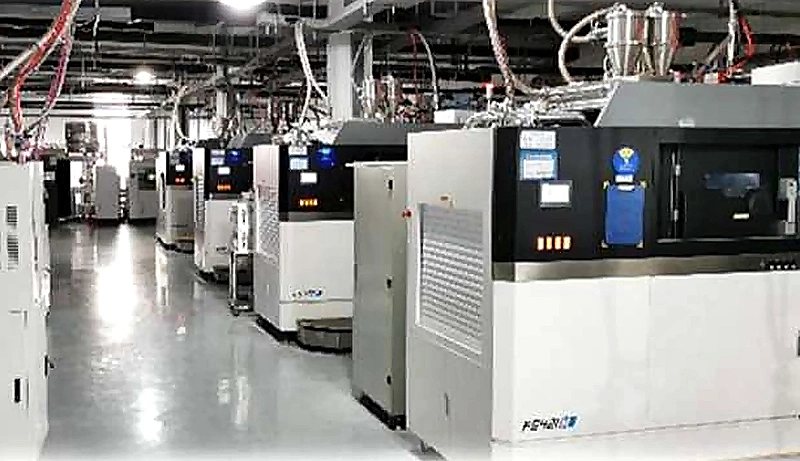
The actual operations depend on the part and the agreed finished-part requirements.
Post-Processing & Precision Finishing
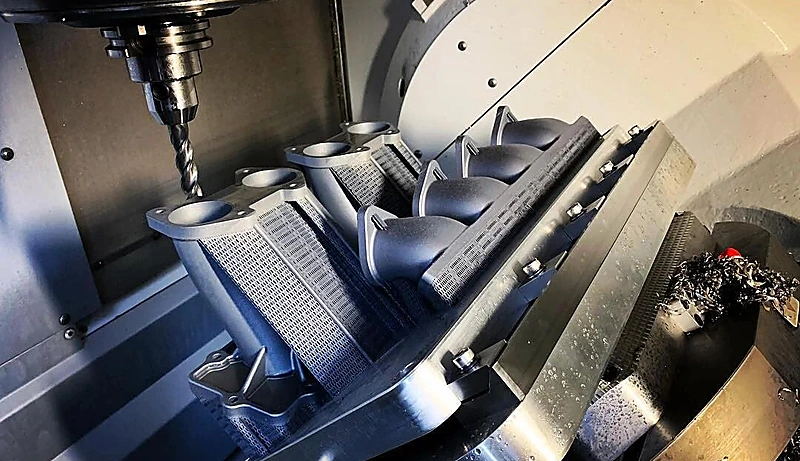
3D printing forms complex primary geometry, while CNC finish machining addresses the dimensional and surface requirements of mounting holes, threads, sealing surfaces, and critical mating features.
Support removal, cleaning, heat treatment, and surface finishing can be combined to suit the material and end use. The machining scope and final acceptance condition should be agreed before production.
Delivery Options for Custom Aluminum Parts
As-Printed / Basic Finished
Parts delivered after printing and the agreed basic cleaning and support removal, suitable for prototype evaluation or as blanks for subsequent machining.
Post-Processed Parts
Parts receive specified heat treatment or surface finishing to meet agreed material-condition and surface-treatment requirements.
CNC-Finished Components
Mounting holes, threads, sealing surfaces, and critical mating features are finish-machined for functional parts with defined dimensional and assembly requirements.
Inspection & Documentation
Any of these delivery conditions can be paired with agreed dimensional, material, or specified functional inspection and the corresponding inspection records.
The final delivery scope can be tailored to the project. Before quoting, confirm the part revision, quantity, finish-machined areas, surface condition, and acceptance criteria so the quotation reflects the actual purchasing requirement.
Quality Inspection & Verification for Custom Aluminum Parts
Quality acceptance for custom aluminum 3D printed parts extends beyond external dimensions to material properties, internal integrity, and end-use requirements. Based on customer drawings and specifications, Chalco can coordinate dimensional inspection, material verification, and necessary nondestructive or functional testing, aligning acceptance criteria with the manufacturing route and final delivery condition.
Dimensional, Material & Internal Quality
Verification requirements can be selected according to the part geometry and operating conditions.
| Verification Category | Customer-Defined Acceptance Requirements | Potential Verification Methods |
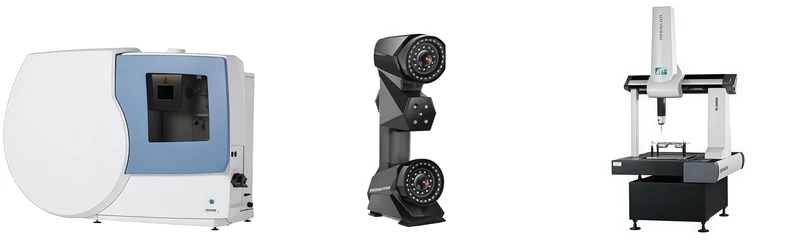
| Dimensional and Geometric Accuracy | Critical dimensions, positional or geometric tolerances, assembly datums, and functional-surface requirements | Coordinate measuring machine (CMM) measurement, 3D scanning, and dimensional inspection |
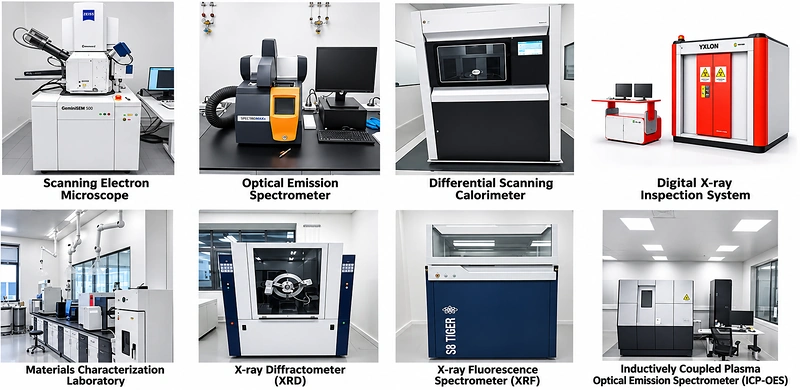
| Material and Mechanical Properties | Target alloy, material condition, and project-specified mechanical properties | Material-record review, chemical composition analysis, and mechanical testing |
| Internal Integrity and Defects | Relevant internal defect types, acceptance limits, and inspection areas | X-ray or industrial CT inspection may be evaluated based on part size, geometry, and acceptance requirements |
For precision-assembled parts, critical dimensions should generally be accepted in the final machined condition. Material-property and internal-integrity verification should be defined around the intended use, sampling conditions, and applicable methods.
Application-Specific Quality Verification
Parts with specific functional requirements may need additional verification matched to their operating risks.
Cooling and Fluid-Control Components: Key concerns include internal passage cleanliness, interface sealing, operating pressure, and leakage requirements. Pressure-drop or thermal-performance testing may also be specified for heat-exchange parts.
Lightweight Structural Components: Depending on loading and assembly requirements, verification can focus on critical connections, material properties, and necessary structural testing.
Large WAAM Components: Key concerns include build distortion, machining allowance, material quality, and final machined dimensions.
Inspection requirements depend on the customer specification and service conditions; not every part requires the same inspection plan.
Inspection Reports & Traceability
Depending on the project, the deliverables may include agreed dimensional inspection reports, material test records, nondestructive examination results, and specified functional test documentation.
For prototype validation and repeat production, confirm drawing revisions, critical acceptance criteria, inspection scope, and reporting requirements before manufacturing. Part- or batch-level records can be established as agreed to support customer acceptance and traceability on future orders.
Project Review & Supply Coordination
Chalco can serve as the project contact and supply coordination point, matching printing, post-processing, and inspection resources to the drawings and purchasing requirements while defining the scope included in the quotation.
Project Scope: Confirm the current drawing revision, manufacturing responsibilities, final processing condition, and acceptance documentation to avoid comparing a printed-blank quotation with a finished-part quotation.
Prototypes and Follow-On Orders: Before design changes or repeat manufacturing, review the approved part revision, material, and acceptance requirements to determine whether revalidation is needed.
Custom Aluminum 3D Printing FAQs
Can 6061 or 7075 aluminum be 3D printed?
6061 and 7075 are common wrought aluminum alloys, but their conventional tempers and properties cannot be assumed to apply to additive manufacturing. Specially developed materials and processes may enable printing in some cases, but the specific route requires validation.
If your drawing specifies 6061 or 7075, also identify the required strength, elongation, thermal conductivity, corrosion resistance, and operating temperature. This helps determine whether a suitable printable alternative exists or whether the original manufacturing process should be retained. An unverified substitute must not be treated as equivalent to the specified alloy.
Can I request a manufacturing review without finalized CAD drawings?
Yes. An early-stage model, sketch, or photos of an existing part, together with target dimensions, intended use, expected quantity, and critical functional requirements, can support a preliminary manufacturing review.
A firm manufacturing quotation and confirmation of critical tolerances typically require complete drawings, assembly-interface details, and acceptance criteria. A preliminary review based on incomplete information is not a final manufacturing commitment.
What determines the total cost of a finished aluminum 3D printed part?
The cost of custom 3D printed aluminum parts depends on more than material consumption. Part size, geometric complexity, printing route, support requirements, and order quantity also affect pricing.
For finished functional components, heat treatment, CNC machining, surface finishing, and inspection can contribute to the total cost. When comparing supplier quotes, first confirm that the machining scope, final dimensional requirements, surface condition, and inspection documents are equivalent.
Can a validated prototype be reproduced for later production batches?
A validated prototype can provide the technical baseline for subsequent production batches, but a successful prototype does not automatically guarantee identical results in later builds.
For repeat orders, confirm and maintain consistency in the CAD revision, material specification, critical process conditions, post-processing state, and acceptance criteria. Changes to the design or process should trigger an assessment of whether relevant properties require revalidation.
Request a Custom Aluminum 3D Printing Quote
Submit part drawings or preliminary functional requirements to discuss feasible manufacturing routes, post-processing scope, acceptance criteria, and the basis for a project quotation.
Drawings Available: Provide CAD files or 2D drawings, target material, quantity, critical tolerances, and required delivery condition.
Design Stage: Provide sketches, intended use, target dimensions, and critical functional requirements, noting any information still to be confirmed.
Chalco can provide you the most comprehensive inventory of aluminum products and can also supply you customized products. Precise quotation will be provided within 24 hours.
Get a quote