Wind turbine brazing preforms are prefabricated filler metals used for brazed electrical conductor connections in wind power equipment. They are primarily supplied as brazing strip, brazing shims, and custom preforms. The products use a Zn-Al brazing alloy system and can be used for aluminum conductors and related electrical connections in wind turbines. They are also suitable for certain copper-to-aluminum substitution designs and connections where brazing replaces conventional TIG welding.
Chalco can supply thin wind turbine brazing shims and strips with integrated flux, with thicknesses down to 0.1 mm and a flux content of 15+/-5 wt%. Integrating the filler metal and flux reduces the need to add flux separately during brazing. The products also offer good secondary processability and can be formed into brazing preforms of different shapes based on joint dimensions, connection structures, and drawings, providing a filler-metal form better matched to prototype validation and volume production.
Available forms: Brazing strip | Brazing shims | Custom brazing preforms
Material system: Zn-Al brazing alloy
Flux content: 15+/-5 wt%
Minimum thickness: 0.1 mm
Customization: Processed to joint dimensions or drawings
Product Forms and Specifications for Wind Turbine Brazing Preforms
Depending on the joint structure, filler-metal placement method, and assembly requirements, wind turbine brazing products can be supplied as brazing strip, thin shims, cut-to-length shims, or further-processed custom preforms. Zn-Al filler metal can be produced in thin gauges, with flux integrated into the filler metal for convenient pre-positioning at the joint. For non-standard joints, shim dimensions and preform shapes can be determined from drawings.
-
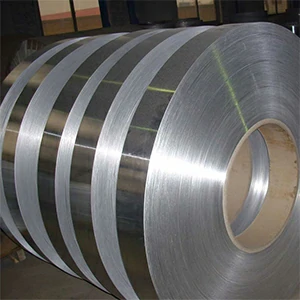
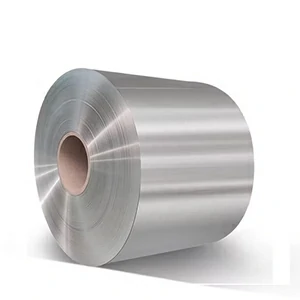
Brazing Strip
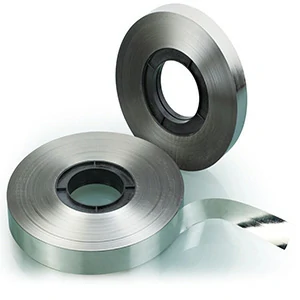
Supplied as continuous coil or narrow strip for connections requiring continuous feeding, cut-to-length cutting, or further processing. Specifications can be selected by required thickness and width, and the strip can serve as feedstock for subsequent preform processing.
-
Thin Brazing Shims
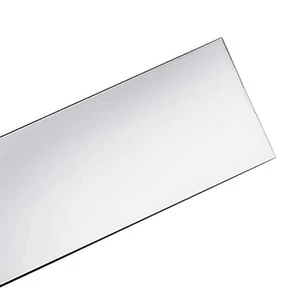
Suitable for joints requiring a thin filler-metal layer or limited placement space. Existing products are available down to 0.1 mm, allowing a more suitable thickness to be selected according to joint space and required filler-metal volume.
-
Cut-to-Length Brazing Shims
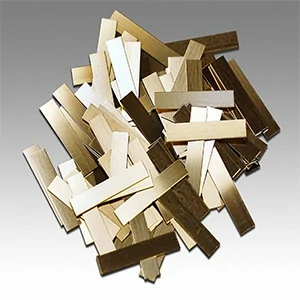
Brazing strip or thin sheet can be cut into individual pieces of specified length so that the filler-metal dimensions more closely match the joint, reducing secondary cutting and adjustment at the worksite.
-
Custom Brazing Preforms
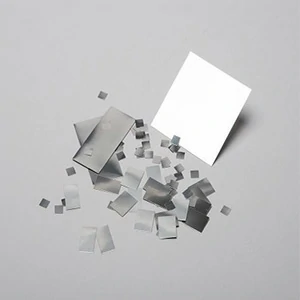
For non-standard connection structures, brazing strip or thin sheet can be further processed into preforms matching the joint shape. Length, width, and profile can be confirmed from joint dimensions or customer drawings, helping define filler-metal placement and quantity during assembly.
Wind Turbine Brazing Preform Supply Specifications
| Item | Available Supply |
| Filler-Metal System | Zn-Al system containing Zn, Al, and other alloying elements |
| Product Forms | Brazing strip / shims / cut-to-length shims / custom brazing preforms |
| Common Specifications | 0.1 x 10 mm / 0.2 x 15 mm / 0.5 x 15 mm |
| Minimum Thickness | 0.1 mm |
| Flux Form | Flux integrated into the brazing shim |
| Flux Content | 15+/-5 wt% |
| Flux Characteristics | Non-corrosive; no post-braze cleaning required |
| Further Processing | Can be further processed into preforms for different requirements |
| Customization Basis | Joint dimensions, shim dimensions, and customer drawings |
For projects with established brazing-shim specifications, the required thickness, width, and quantity can be matched. For newly developed or non-standard connection structures, joint dimensions or drawings can be provided to determine the shim specification and preform configuration.
Zn-Al Brazing Alloy with Integrated Flux
Wind turbine brazing preforms use a Zn-Al brazing alloy system composed primarily of Zn, Al, and other alloying elements, with flux integrated inside the shim or strip. Existing products contain 15+/-5 wt% flux, allowing the filler metal and flux to be placed together at the joint as a preform and reducing the need to apply flux separately during brazing.
Zn-Al Brazing Alloy
Zn-Al brazing alloys are commonly used for aluminum alloy connections and can also be used for certain copper-aluminum dissimilar-metal brazing applications. The suitable product depends on the base-metal grades, joint structure, and brazing conditions. Publicly available comparable Zn-Al brazing materials are also primarily used for aluminum-aluminum and copper-aluminum joints.
For aluminum conductors and copper-to-aluminum substitution connections in wind power equipment, the shim specification and preform configuration can be selected according to the actual base-metal combination, joint structure, and brazing process.
Integrated Flux Design
The flux is integrated directly into the brazing shim or strip, reducing the need to apply it separately before brazing. For repetitive connection stations, this form can reduce separate brushing, dipping, or flux-addition steps and allows the filler metal and flux to be positioned together as a prefabricated shim.
Non-Corrosive Flux with No Post-Braze Cleaning
The flux used in wind turbine brazing preforms is non-corrosive and does not require residue removal after brazing. This can reduce subsequent cleaning operations and is more suitable for volume production of wind turbine electrical connections. This benefit is also expressly stated in the available product information for these brazing preforms.
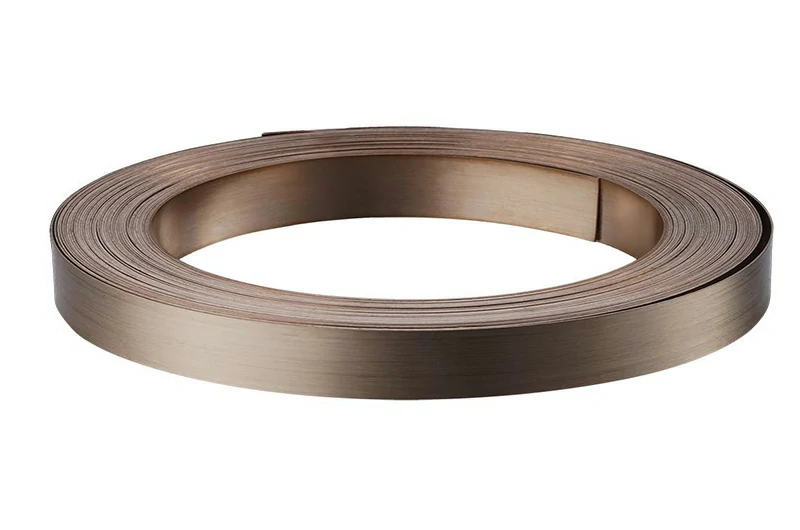
Custom Brazing Preforms for Specific Joint Structures
In addition to continuous brazing strip and standard shims, wind turbine brazing products can be further processed into custom preforms based on actual joint dimensions and assembly structures. Predetermining the filler-metal dimensions and profile helps the preform conform to the connection area, reduces on-site cutting and adjustment, and is more suitable for fixed structures and repetitive assembly processes.
From Brazing Strip to Prefabricated Shims
Based on the customer's joint design, brazing strip or shims can be cut to length and further formed, converting continuous material into preforms suitable for direct placement at the connection point.
Brazing strip / shim -> Cut to length -> Profile forming -> Brazing preform -> Joint assembly
This method is particularly suitable for production scenarios with fixed joint dimensions that repeatedly use the same filler-metal shape.
Customization Based on Joint Dimensions
Key preform dimensions can be determined around the actual connection structure, including:
Thickness: Selected according to the joint clearance and required filler-metal volume;
Width: Determined by the conductor width and effective connection area;
Length: Cut to the actual overlap length;
Profile: Formed to match the joint shape;
Joint-fit dimensions: Preform geometry adjusted to the actual assembly position.
For non-standard connection structures, the preform configuration can be determined directly from customer-provided joint drawings, shim dimensions, or an existing sample.
Better Suited to Repetitive Assembly and Volume Production
Compared with cutting continuous brazing strip at the worksite, preprocessed brazing preforms reduce repeated adjustment of shim dimensions and shapes during each assembly and make it easier to place the filler metal in the specified position. For repeated production of the same joint structure, they can further improve consistency in shim use and assembly.
Provide the joint drawing or required thickness, width, length, and profile dimensions to match an appropriate brazing preform solution.
Applications of Wind Turbine Brazing Preforms
Wind turbine brazing preforms are primarily used at electrical connection points in wind power equipment where filler metal must be pre-positioned. The shim size or custom preform can be selected according to the conductor material, joint structure, and assembly method. Specific application locations vary with generator and electrical-system designs.
Aluminum Conductor Connections
Suitable for brazed aluminum conductor connections in certain wind power equipment. Shim thickness and dimensions can be selected according to joint width, overlap area, and required filler-metal volume.
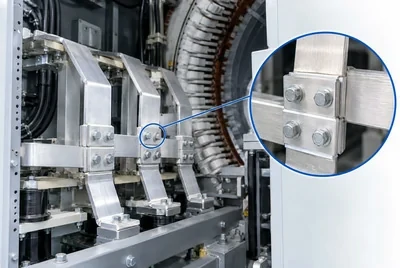
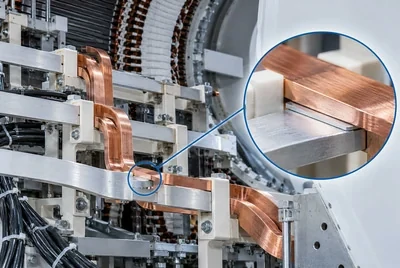
Copper-to-Aluminum Substitution Connections
For wind power electrical structures where aluminum conductors replace certain copper conductors, the filler metal and prefabricated shim form can be selected according to the actual base-metal combination and joint design.
Wind Turbine Electrical Connections
Can be used for winding conductors, connecting conductors, and other electrical connection points suitable for brazing. Cut-to-length shims or custom preforms can be produced for different joint structures.
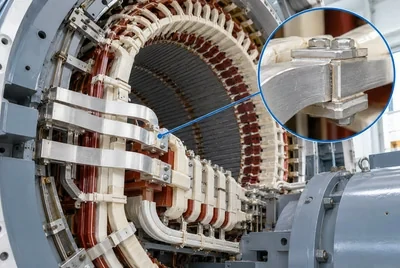
Providing joint dimensions, base metals, and drawings is recommended so that a suitable shim specification and preform configuration can be matched.
Why Prefabricated Filler Metal Suits Wind Power Volume Production
- Predetermined filler-metal dimensions and placement reduce on-site cutting and adjustment.
- The filler-metal quantity for each joint is easier to control, reducing variation from manual addition.
- The integrated-flux design reduces separate flux-application steps.
- Uniform specifications or custom preforms are more suitable for highly repetitive volume assembly.
- Non-corrosive flux can reduce post-braze cleaning operations.
- Reduced reliance on manual filler-metal addition and operator judgment makes the connection process easier to standardize.
Process Differences Between Brazing and TIG Welding in Wind Power Connections
For certain aluminum conductors and electrical connection structures in wind power equipment, brazing can be an alternative to conventional TIG fusion welding. The suitability of each process depends on the base metals, joint structure, connection requirements, and existing production conditions; neither process is universally superior.
| Comparison | Brazing | TIG Welding |
| Base-Metal Condition | Typically does not require melting the base metal | Locally melts the base metal to form a weld |
| Filler Material | Brazing shims, strip, or prefabricated filler metal can be used | Typically uses filler material such as welding wire |
| Filler-Metal Placement | Can be pre-positioned according to the joint | Typically fed as wire, manually or automatically |
| Flux Use | Prefabricated shims with integrated flux can be used | Typically does not use a flux system |
| Joint Design | Must match filler-metal flow and filling behavior | Designed as a fusion-welded structure |
| Selection Basis | Base metals, joint clearance, heating method, and connection requirements | Base metals, weld structure, heat input, and connection requirements |
For wind power connections with fixed joint structures where filler-metal dimensions and placement must be controlled in advance, the feasibility of using prefabricated brazing shims can be evaluated based on the base metals and production process.
Dimensional and Batch Quality Control
Quality control for wind turbine brazing preforms focuses on the material, dimensions, flux, and preform condition to support more stable assembly and brazing performance in volume use.
Filler-metal composition control: Maintain a stable Zn-Al brazing alloy composition.
Flux content control: Control flux content at 15+/-5 wt%.
Thickness and width consistency: Control dimensional variation in thin strip and brazing shims.
Surface quality: Keep shim surfaces clean and flat.
Edge and burr control: Reduce the effect of slitting burrs and edge curl on assembly.
Preform dimensional control: Control length, width, and profile dimensions to the drawing.
Batch consistency: Maintain stable material and dimensional characteristics across production batches.
Selecting Wind Turbine Brazing Preforms for Joint Compatibility
Selecting a wind turbine brazing preform requires consideration of the base metals, joint structure, and existing brazing process. For different connection locations, the following key conditions can be used to determine a more suitable shim specification and preform configuration.
Base Metals and Material Combination
First confirm the conductor materials and material combination to be joined. The base-metal types directly affect the filler-metal system, brazing temperature, and joint process conditions, so material compatibility should be established before determining shim dimensions.
Joint Structure and Dimensions
Determine the shim thickness, width, length, and profile from the joint width, overlap length, clearance, and assembly space. Regular connections can use brazing strip or cut-to-length shims, while special structures can be further processed into preforms matching the joint profile.
Brazing Process Conditions
Confirm the existing brazing temperature, heating method, and filler-metal placement so that the shim matches the established production process. For projects with a mature process, the specification can also be matched to the currently used filler metal and connection parameters.
Volume Assembly Method
For production tasks with fixed joint structures and high repetition volumes, cut-to-length shims or custom preforms of uniform dimensions can reduce on-site cutting and adjustment and make the filler-metal form used at different workstations more consistent.
Established connection: Provide the current filler-metal specification, base metals, and joint dimensions for matching.New connection design: Provide the joint drawing, base metals, and brazing conditions to determine the shim dimensions and preform configuration.
FAQ
What Product Forms Are Available for Wind Turbine Brazing?
Available forms include continuous brazing strip, cut-to-length shims, and custom brazing preforms processed to the joint structure, supporting different assembly and filler-metal placement methods.
What Is the Minimum Thickness Available?
Existing products are available down to 0.1 mm thick, with corresponding shim specifications selected according to joint dimensions.
Is Separate Flux Application Required?
Wind turbine brazing preforms use an integrated-flux structure. Existing products contain 15+/-5 wt% flux, reducing the need to apply flux separately during brazing.
Is Flux Residue Cleaning Required After Brazing?
The product uses non-corrosive flux and does not require additional flux-residue cleaning after brazing, reducing subsequent cleaning operations.
Can Brazing Shims Be Customized to Joint Drawings?
Yes. Based on the required joint thickness, width, length, and profile, brazing strip or shims can be further processed into preforms that match the connection point.
How Do I Select a Wind Turbine Brazing Preform for My Process?
Selection should consider the base metals, joint structure, joint clearance, brazing temperature, heating method, and filler-metal placement. For projects with an established process, the currently used filler-metal specification can also be provided for matching.
Wind Turbine Brazing Preform Customization and Quotation
Standard shims, non-standard dimensions, and custom brazing preforms can be matched to the actual joint and production process. To identify a suitable product solution more quickly, please provide the following with your inquiry:
- Base metals and material combination to be joined
- Joint dimensions or structural drawings
- Required shim thickness, width, and length
- Required preform shape
- Existing welding or brazing process
- Brazing temperature and heating method, if established
- Purchase quantity and prototype/volume requirements
If a brazing shim, filler-metal specification, or physical sample is already in use, it can also be provided for specification matching and preform design.
Send your joint drawing or current brazing-shim specification to obtain a suitable wind turbine brazing preform solution.
Chalco can provide you the most comprehensive inventory of aluminum products and can also supply you customized products. Precise quotation will be provided within 24 hours.
Get a quote