Henan Chalco supplies 7050-T74 die-forged aluminum axlebox housings for high-speed EMUs, supporting lightweight and high-strength bogie axlebox designs.
The product is die-forged from 7050-T74 aluminum alloy, combining high strength with stress-corrosion cracking resistance. It has passed bench testing and is currently undergoing onboard validation.
Projects can be reviewed against OEM drawings, technical specifications, and inspection requirements to define forging, heat treatment, machining, inspection, and delivery requirements.
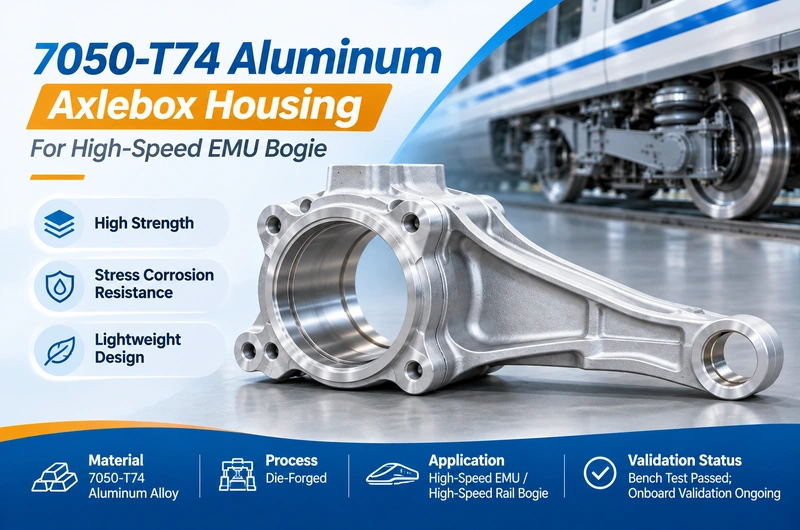
- Material: 7050-T74 aluminum alloy
- Product form: Die-forged axlebox housing
- Application: High-speed EMU / high-speed rail bogie
- Validation status: Bench test passed; onboard validation ongoing
At present, we are the only supplier in China with actual supply capability for 7050-T74 aluminum axlebox housings for high-speed EMUs.
Why Use 7050-T74 for High-Speed EMU Axlebox Housings?
High-speed EMU axlebox housings must withstand long-term operating loads while minimizing bogie unsprung mass. Material selection therefore needs to consider not only strength, but also weight, fatigue reliability, and resistance to stress-corrosion cracking.
7050-T74 high-strength aluminum die forgings provide a good balance among these requirements.
| Key factor | Why it matters for the axlebox housing |
| High strength | Meets the strength requirements of the axlebox housing as a load-bearing structural component in high-speed EMUs |
| Lightweighting | Aluminum alloy has roughly one-third the density of steel, helping reduce axlebox housing weight and unsprung mass |
| T74 temper | Maintains relatively high strength while improving stress-corrosion cracking resistance compared with T6 |
| Die forging | Creates metal flow lines aligned with the part geometry and loading direction, supporting load-bearing and fatigue performance |
In an earlier project for this product, the previously used 7001 aluminum alloy experienced stress-corrosion cracking (SCC). For high-speed EMU axlebox housings, material selection must therefore consider not only high strength, but also long-term resistance to stress-corrosion cracking.
The key advantage of 7050-T74 is its balance of high strength, lightweight performance, and SCC resistance for high-speed EMU axlebox housing applications.
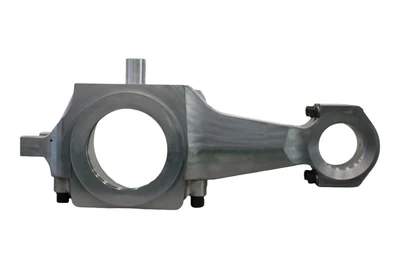
Application Position
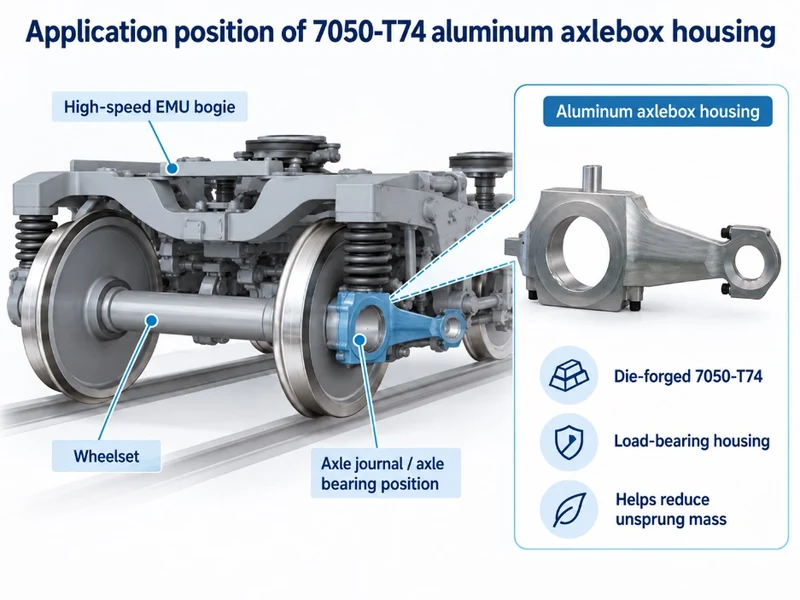
The 7050-T74 aluminum axlebox housing is installed at the axle journal bearing position of the wheelset in a high-speed EMU bogie. It serves as the load-bearing housing for the axle bearing and connects the wheelset to the bogie structure.
- Application area: High-speed EMU bogie
- Installation position: Wheelset axle journal / axle bearing position
- Product: Aluminum axlebox housing
- Manufacturing method: 7050-T74 die forging
- Main value: Reduces axlebox housing weight and bogie unsprung mass while meeting load-bearing requirements
For high-speed EMUs, reducing the weight of axleboxes and other components near the wheelset supports overall vehicle lightweighting and helps reduce the impact of unsprung mass on high-speed running performance.
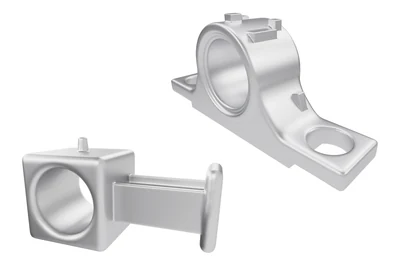
More Aluminum Forgings for Rail Transit:
In addition to aluminum axlebox housings for high-speed EMUs, Henan Chalco can also supply other aluminum forgings for rail transit, including:
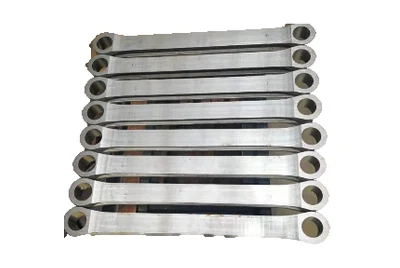
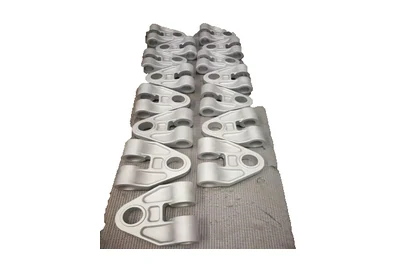
Material and Forging Characteristics of 7050-T74
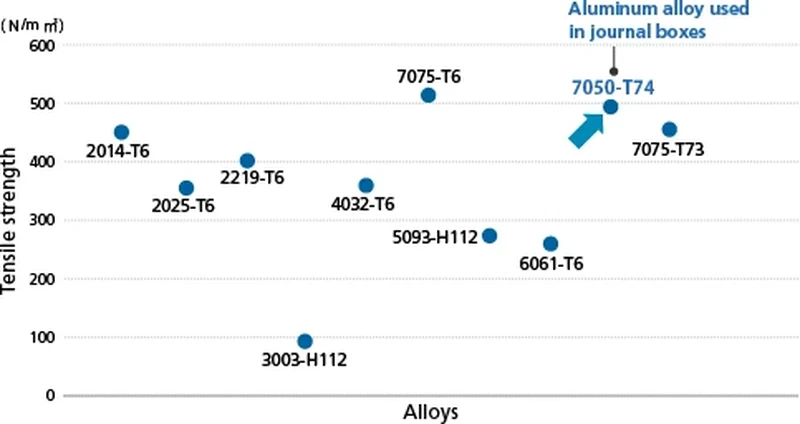
7050-T74 is a high-strength 7xxx-series aluminum alloy that combines high strength with stress-corrosion resistance and fatigue performance, making it suitable for structural parts such as high-speed EMU axlebox housings subjected to long-term cyclic loading.
| Property | Typical / research data |
| Density | Approx. 2.8 g/cm³ |
| Tensile strength | Approx. 490 MPa* |
| L-direction fatigue limit | 190 MPa |
| T-direction fatigue limit | 178.3 MPa |
* The tensile strength is an approximate value from the typical material comparison chart shown above.
Research indicates that strength, ductility, and fatigue performance along the metal flow direction (L) are better than in the transverse direction (T).
7050-T74 Axlebox Housing Manufacturing Capability
Henan Chalco can provide project-specific manufacturing support for 7050-T74 aluminum axlebox housings for high-speed EMUs, from die forging and heat treatment to CNC machining, for complex, load-bearing rail transit forgings.
Manufacturing Process
Billet preparation → Die forging → Solution heat treatment and quenching → T74 aging → CNC machining → Inspection and acceptance
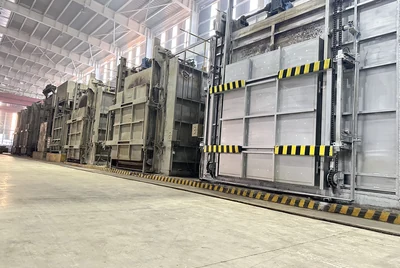
Large Die-Forging Capability
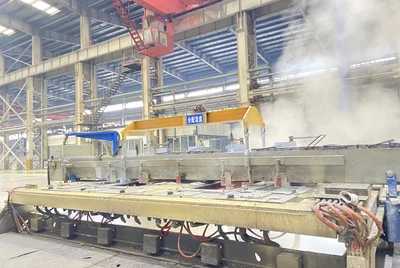
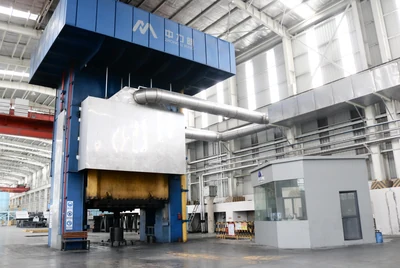
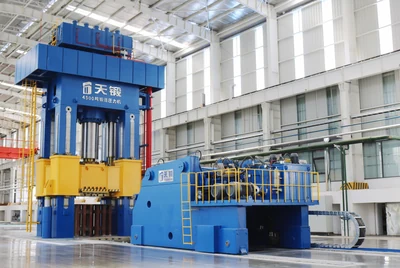
Henan Chalco can arrange 100 MN isothermal die forging, 45 MN open-die forging, and 12.5 MN die-forging equipment for complex aluminum forgings, providing the forming capability needed for die filling, metal flow control, and structural integrity of axlebox housings.
Current aluminum die-forging capability covers:
| Unit weight | 0.5–1000 kg |
| Maximum projected area | ≤0.65 m² |
| Material range | 2xxx–7xxx series aluminum alloys |
| Supported tempers | Multiple heat-treatment tempers, including T74 |
The manufacturability of a specific axlebox housing still needs to be reviewed based on part geometry, projected area, weight, and die design.
T74 Heat Treatment Support
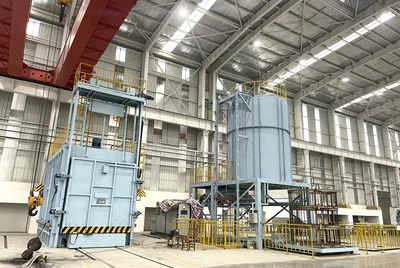
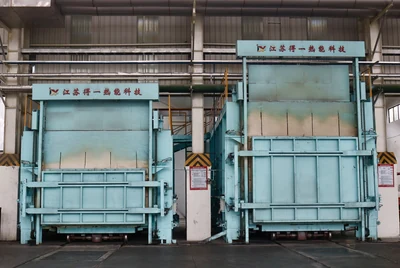
Supporting billet-heating, quenching, and aging equipment can be used to complete solution heat treatment, quenching, and T74 aging of 7050 alloy according to project technical requirements.
CNC Finish Machining
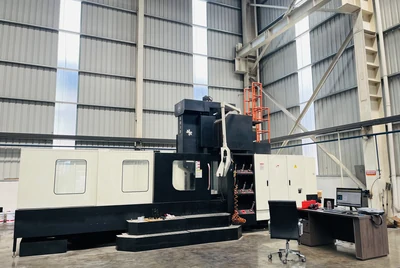
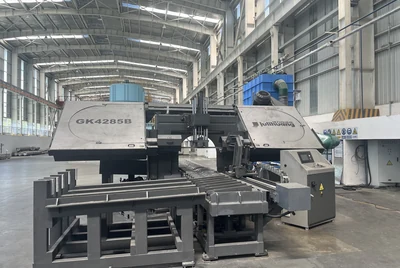
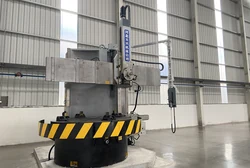
CNC machining centers, CNC lathes, and vertical lathes can be used for subsequent axlebox housing machining, with machining scope, critical dimensions, and acceptance requirements confirmed against OEM drawings.
CNC
Horizontal Band Saw
CNC Vertical Lathe
For high-speed EMU axlebox housing projects, Henan Chalco can evaluate the complete manufacturing route based on part drawings, material requirements, machining condition, and inspection requirements, rather than supplying only standard 7050 forgings.
Inspection and Project Acceptance
High-speed EMU axlebox housings are critical load-bearing components. In addition to material and manufacturing process control, dimensions, internal quality, chemical composition, and mechanical properties need to be verified against OEM drawings and project technical specifications.
Henan Chalco can support the following inspections according to project requirements:
| Inspection item | Available method | Main verification |
| Dimensional inspection | CMM measurement | Critical machined dimensions, positional relationships, and geometric accuracy |
| Internal quality | UT ultrasonic testing; inspection capability up to 3A level | Checks for internal defects in the forging |
| Chemical composition | Direct-reading spectrometry | Verifies 7050 alloy composition |
| Mechanical properties | Tensile testing | Verifies material strength and ductility |
| Microstructure inspection | Metallographic analysis | Checks material microstructure and heat-treatment condition |
| Hardness testing | Brinell hardness testing | Supports verification of heat treatment and material condition |
Actual acceptance items, sampling methods, and UT / NDT acceptance criteria are determined according to customer drawings, OEM technical specifications, or project qualification requirements.
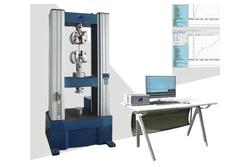
Tensile Testing Machine
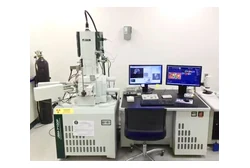
Scanning Electron Microscope
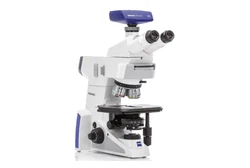
Metallographic Microscope
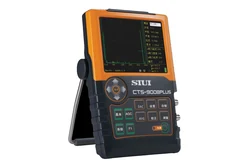
Ultrasonic Flaw Detector
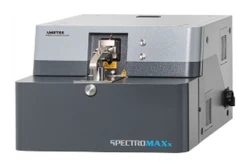
Direct-Reading Spectrometer
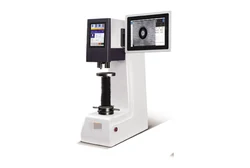
Brinell Hardness Tester
Packaging and Shipping
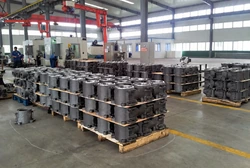
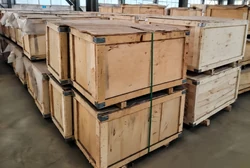
High-speed EMU aluminum axlebox housings can be protectively packaged according to customer requirements and transport conditions to reduce the risk of impact damage, contamination, and corrosion during transportation and storage.
Common packaging options include:
- Rust preventive oil + vacuum sealing + export wooden case
- Plastic bag + carton + wooden case / pallet
- Customized packaging based on part dimensions, machining condition, and transportation method
For machined axlebox housings, additional protection and securing can be applied to machined surfaces, holes, and edges to prevent impact damage during transportation.
7050-T74 Die-Forged Aluminum vs. Other Axlebox Housing Options
Different materials and manufacturing processes have their own advantages. Axlebox housing solutions are typically selected based on lightweighting, load-bearing requirements, fatigue performance, cost, and manufacturability.
| Option | Main advantages | Main limitations |
| 7050-T74 die-forged aluminum | Lightweight, high strength, and good stress-corrosion resistance; suitable for high-speed EMU lightweighting and high load-bearing requirements | Higher material and forging costs; complex geometries require subsequent machining |
| Cast steel | Good strength and load-bearing capability; mature manufacturing process | High weight, making it less favorable for reducing unsprung mass |
| Ductile iron | Lower cost and good castability | High weight with limited lightweighting benefits |
| Cast aluminum alloy | Lightweight and suitable for one-piece casting of complex geometries | Requires strict control of internal defects; fatigue performance depends more strongly on casting quality |
Die Forging or Casting?
- Die forging is better suited for: load-bearing parts requiring high strength, lightweighting, and higher fatigue reliability.
- Casting is better suited for: projects with complex geometries, larger production volumes, and greater emphasis on near-net-shape forming and cost.
For high-speed EMU axlebox housings, 7050-T74 die forging is better suited to balancing lightweight design, high strength, and long-term load-bearing reliability.
How to Get a Faster, More Accurate Quotation
To confirm the manufacturing plan and quotation terms for a 7050-T74 aluminum axlebox housing more efficiently, please provide complete product and project requirements whenever possible.
Please provide:
- Product drawing and revision
- Vehicle platform or specific application
- Material and temper requirements
- Delivery condition: forging, pre-machined part, or finished part
- Part dimensions, weight, and machining allowance
- Critical dimensions and tolerances
- OEM / customer technical specifications
- UT / NDT and other inspection requirements
- MTC, traceability, or inspection documentation requirements
- Purchase quantity, project stage, and destination
The more complete the information, the more accurately Henan Chalco can evaluate the forging plan, machining scope, inspection requirements, and delivery conditions, reducing repeated clarification and accelerating technical review and quotation.
Related Aluminum Forging Products
Henan Chalco also supplies a range of high-strength aluminum forgings for rail transit, aerospace, semiconductor, new energy, and large-equipment projects.
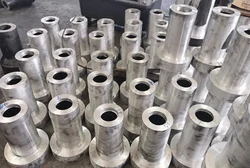
7050 Aluminum Alloy Forgings
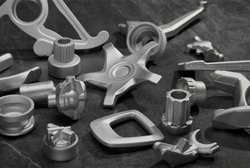
Aluminum Alloy Die Forgings
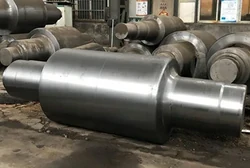
Large Aluminum Alloy Open-Die Forgings
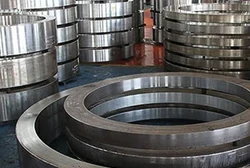
Aluminum Alloy Forged Rings
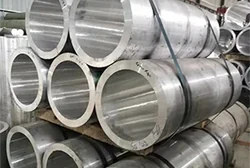
Aluminum Alloy Forged Cylindrical Parts
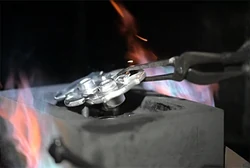
Custom Aluminum Alloy Forgings
FAQ
Is This a Complete Axlebox Assembly?
No. The product on this page is a 7050-T74 die-forged aluminum axlebox housing for high-speed EMUs. It is the housing component of the axlebox structure and does not include bearings or other components required for a complete axlebox assembly.
What Is the Current Validation Status?
The aluminum axlebox housing has passed bench testing and is currently undergoing onboard validation. Final approval for different vehicle platforms remains subject to the corresponding OEM technical specifications and qualification requirements.
Can You Supply Both Forgings and Machined Axlebox Housings?
Different delivery conditions can be reviewed against project drawings, including die forgings, pre-machined parts, and fully machined axlebox housings. The exact machining scope, tolerances, and inspection requirements are subject to customer drawings and technical specifications.
Why Use T74 Temper?
T74 is an artificially overaged temper after solution heat treatment. It retains relatively high strength while improving resistance to stress-corrosion cracking compared with T6.
For high-speed EMU axlebox housings, this balance between strength and SCC resistance is more important than simply pursuing the highest possible strength.
What Information Is Most Important for an RFQ?
Please provide the product drawing, 7050-T74 material requirements, delivery condition, critical dimensions and tolerances, UT / NDT requirements, purchase quantity, and project stage. Complete information helps confirm the manufacturing plan and quotation terms more quickly.