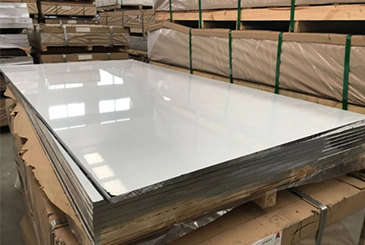
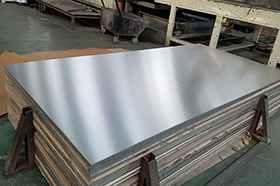
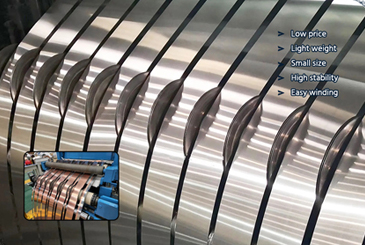
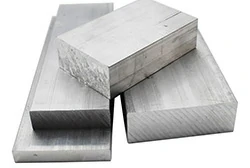
Aluminum slab is a large cast aluminum flat billet with a rectangular cross section. It can be used as the starting material for rolling, forging, heat treatment, precision machining, aluminum plate, coil, strip and other downstream processing.
Chalco aluminum supplies premium 2xxx, 7xxx, 4xxx and 5xxx aluminum slabs with stable alloy composition, good internal soundness, high melt cleanliness and uniform grain structure. They are suitable for high-strength structural parts, heat-resistant parts, wear-resistant parts, marine structures, pressure equipment and other demanding aluminum alloy processing projects.
Why choose Chalco aluminum?
Processing risks and yield costs
High-end aluminum slabs require strict control over internal quality, microstructure and batch consistency during casting and downstream processing. This is especially important for 2xxx and 7xxx high-strength aluminum alloy slabs, where the following problems are more likely to occur:
- Hot cracking: affects the internal continuity of the slab and may develop into cracking during rolling, forging or machining.
- Segregation: causes local chemical variation, affecting heat treatment response and final performance stability.
- Porosity / gas pore clusters: create internal defect sources and increase failure risks in fatigue-sensitive parts and critical structural components.
- Inclusion bands: reduce melt cleanliness and may lead to unexpected scrap during downstream processing.
- Batch variation: for heat treatment-sensitive alloys, batch differences can directly cause fluctuations in strength, toughness or machinability.
- High scrap cost: if defects are found after forging, heat treatment or precision machining, rework and scrap costs are much higher than controlling quality at the billet stage.
Product advantages of Chalco aluminum slab
- Internal soundness: focuses on controlling micro-voids, pore clusters, shrinkage and internal discontinuities, helping reduce fatigue crack sources and scrap risks in downstream processing.
- Melt cleanliness: reduces the risk of inclusions, oxide films and inclusion bands through melting, refining, degassing and filtration, improving the stability and reliability of high-strength alloy slabs.
- Microstructure consistency: controls grain size, grain shape, segregation and macrostructure, giving the aluminum slab a more uniform structure and a more stable heat treatment response.
- Batch stability: reduces performance differences between heats and batches through alloy composition control, homogenization treatment and process record management.
- Traceability package: furnace traceability, process records, chemical composition reports, dimensional inspection, a-class UT testing, macrostructure inspection, grain size testing and porosity evaluation can be provided according to project requirements.
- Combined inspection plan: a-class UT testing can be combined with grain size and porosity inspection for a deeper check of the internal quality of the aluminum slab.
Aluminum slab product overview
Chalco aluminum supplies aluminum slabs with a thickness of 300–700 mm, width of 900–2640 mm and length of 4500–11500 mm. Custom sizes are available based on the customer's application, equipment compatibility and processing requirements.
| Item | Supply range |
| Alloy series | 2xxx, 7xxx, 4xxx, 5xxx, click to view available alloy grades |
| Product form | Cast aluminum slab / aluminum rolling slab / cast aluminum flat ingot |
| Thickness | 300–700 mm |
| Width | 900–2640 mm |
| Length | 4500–11500 mm |
| Common sizes | 480 × 1660 × 6000 mm; 405 × 1560 mm; 500 × 1630 mm; 600 × 2000 mm; 700 × 2050 mm; 700 × 1550 mm; 420 × 1620 mm; 620 × 2640 × 4500 mm; 1040 × 400 mm; 1650 × 500 mm |
| Custom options | Alloy grade, chemical composition, slab size, inspection requirements and downstream processing application |
Aluminum slab size can be evaluated based on mill entry size, forging billet requirements, machining allowance, cutting plan and transport conditions. For 2xxx and 7xxx high-strength aluminum alloy slabs, size confirmation usually needs to consider casting feasibility, homogenization treatment, internal quality inspection and downstream processing yield at the same time.
Available aluminum slab alloy series
Chalco aluminum supplies premium 2xxx, 7xxx, 4xxx and 5xxx aluminum slabs, covering alloy systems for high strength, heat resistance, wear resistance, low expansion, weldability and corrosion resistance.
7xxx high-strength structural aluminum slab
-
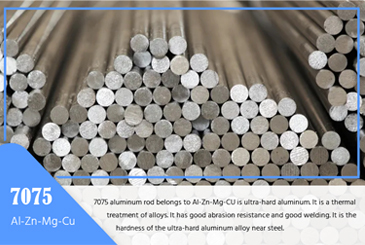
7075 aluminum slab
Performance: high strength, good internal soundness and stable heat treatment response
Applications: high-strength structural parts, sports equipment, bicycle structural parts and mold materials
-
7050 aluminum slab
Performance: high strength, high toughness and good stress corrosion resistance
Applications: thick high-strength aluminum plate, high-end structural parts and load-bearing components
-
7A09 aluminum slab
Performance: high strength, good fatigue performance and stable microstructure
Applications: high-strength load-bearing structures, forging billets and mechanical parts
-
7A04 aluminum slab
Performance: high strength, good melt cleanliness and strict segregation control
Applications: load-bearing structural parts, high-strength components and downstream forging
-
7005 aluminum slab
Performance: good strength, weldability and batch consistency
Applications: transportation structural parts, sports equipment and welded structural materials
-
7003 aluminum slab
Performance: high strength, good weldability and stable processing performance
Applications: bicycle structural parts, sports equipment and high-strength welded structures
2xxx high-toughness and high-load aluminum slab
-
2014 aluminum slab
Performance: high strength, good load-bearing capacity and stable heat treatment performance
Applications: high-strength structural parts, forgings and mechanical load-bearing components
-
2A12 aluminum slab
Performance: high strength, good toughness and batch stability
Applications: load-bearing structural parts, high-strength processing billets and mechanical parts
-
2618 aluminum slab
Performance: good heat resistance, suitable for high-temperature, high-load and thermal cycling environments
Applications: engine parts, heat-resistant structural parts and high-performance mechanical components
-
2A70 aluminum slab
Performance: good heat resistance, suitable for processing projects used in high-temperature service environments
Applications: engine pistons, compressor blades and structural components
4xxx wear-resistant and low-expansion aluminum slab
-
4032 aluminum slab
Performance: wear resistance, low thermal expansion and good thermal cycling stability
Applications: automotive pistons, heat-resistant engine parts and wear-resistant components
-
4Y32 aluminum slab
Performance: heat resistance, wear resistance, low expansion and stable microstructure
Applications: engine-related parts, thermal cycling components and special industrial parts
5xxx weldable and corrosion-resistant aluminum slab
-
5083 aluminum slab
Performance: corrosion resistance, good weldability and stable low-temperature performance
Applications: ship plates, marine structures, cryogenic vessels and pressure equipment
-
5A06 aluminum slab
Performance: high strength, corrosion resistance, good weldability and strict internal quality requirements
Applications: ship structures, marine structures, pressure vessels and welded structural parts
-
5052 aluminum slab
Performance: corrosion resistance, good formability and suitable for general industrial processing
Applications: corrosion-resistant plates, industrial structural parts and transportation components
-
5056 aluminum slab
Performance: good corrosion resistance, suitable for welding and specific industrial processing
Applications: corrosion-resistant structural parts, welding materials and industrial processed components
Not sure how to choose an aluminum slab alloy? Send your application, size and inspection requirements to get alloy selection advice from Chalco aluminum.
Aluminum slab applications
Chalco aluminum supplies high-integrity aluminum slabs for rolling, forging, heat treatment, precision machining and high-end structural processing projects. They are suitable for aluminum alloy products that require strict internal quality, stable microstructure and high downstream processing yield.
Rolled plate
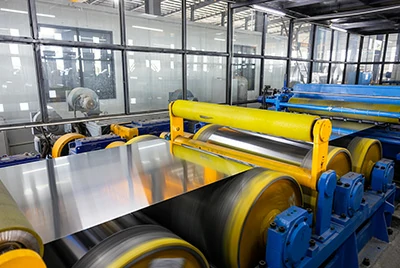
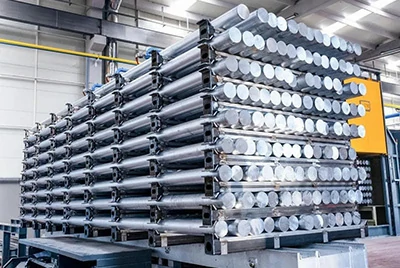
Aluminum slab can be used as the starting billet for high-strength aluminum plate, corrosion-resistant aluminum plate, heat-resistant aluminum plate and special alloy plate, followed by hot rolling, cold rolling, cutting and heat treatment.
Suitable alloys: 7075, 7050, 2A12, 2014, 5083, 5A06
Forging billet
High-integrity aluminum slab can be used for downstream forging, especially for high-load structural parts, load-bearing components and forging projects that are sensitive to internal defects.
Suitable alloys: 7075, 7050, 7A09, 7A04, 2014, 2A12, 2618
Precision machining billet
Aluminum slab can be used for cutting, heat treatment and precision machining, making it suitable for mold materials, mechanical structural parts, sports equipment parts and high-strength industrial components.
Suitable alloys: 7075, 7050, 6061, 2014, 2A12, 7005

Engine and heat-resistant parts
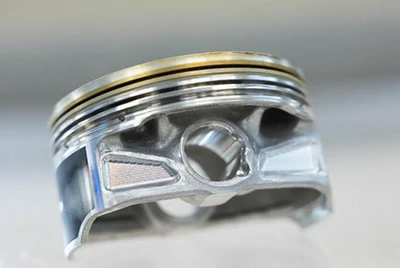
2xxx and 4xxx aluminum slabs can be used for engine-related parts, piston materials, heat-resistant structural parts and components used in thermal cycling conditions.
Suitable alloys: 2618, 2A70, 4032, 4Y32
Marine and offshore structures
5xxx aluminum slabs can be used for ship plates, offshore structures, cryogenic vessels, pressure equipment and heavy-duty welded structures.
Suitable alloys: 5083, 5A06, 5052, 5056


Marine and offshore structures
5xxx aluminum slabs can be used for ship plates, offshore structures, cryogenic vessels, pressure equipment and heavy-duty welded structures.
Suitable alloys: 5083, 5A06, 5052, 5056
High-fatigue structural parts
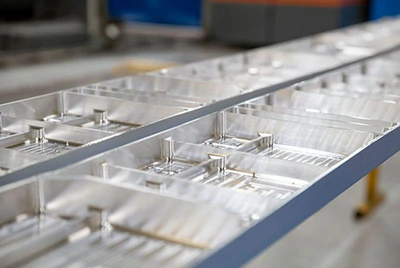
High-strength aluminum slab can be used for key structural materials that require good fatigue performance, internal soundness and batch consistency.
Suitable alloys: 7075, 7050, 7A09, 7A04, 2014, 2A12
Difference between aluminum slab, billet, ingot and plate
The key to choosing aluminum slab, billet, ingot or plate is the downstream processing route. Aluminum slab is more suitable for rolling, forging, heat treatment and deep processing; billet is mainly used for extrusion or round bar processing; ingot is mostly used for remelting and alloying; plate is a finished material that can be directly cut, welded or machined.
| Product | Form | Main use | Typical downstream processing |
| Aluminum slab | Large rectangular cast flat ingot | Starting billet for rolling, forging, heat treatment and machining | Hot rolling, cold rolling, forging, cutting and machining |
| Aluminum billet | Cylindrical or bar-shaped cast billet | Extrusion, forging and bar processing | Extruded profiles, forgings and round bar processing |
| Aluminum ingot | Cast ingot with a broader range of forms | Remelting, alloying and downstream casting | Melting, casting and reprocessing |
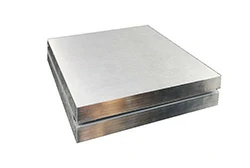
| Aluminum plate | Finished rolled plate | Direct cutting, welding, machining or assembly | CNC machining, welding, forming and surface treatment |
Other related products Chalco can supply
Aluminum slab quality control and inspection
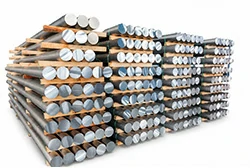
Quality control for high-end aluminum slabs covers melting, casting, homogenization, face milling, cutting and inspection. Chalco aluminum can control alloy composition, internal soundness, melt cleanliness, grain structure, porosity condition and heat traceability according to project requirements.
Chalco usually performs the following inspections to ensure aluminum slab quality:
- Chemical composition testing: confirms the main alloying elements, impurity elements and composition stability.
- Internal soundness inspection: checks shrinkage, gas pore clusters, inclusions, cracks and internal discontinuities.
- class UT testing: used to evaluate the risk of internal defects in aluminum slabs.
- Macrostructure inspection: checks segregation, shrinkage cavities, cracks, inclusion bands and structural uniformity.
- Grain size testing: evaluates grain size, shape and distribution uniformity.
- Porosity evaluation: checks micro-voids, gas pores and pore cluster risks, with gas pore size evaluation available according to project requirements.
- Dimensional inspection: checks thickness, width, length, cutting size and edge condition.
- Surface inspection: checks face milling quality, oxide scale, cracks, exposed inclusions and mechanical damage.
- Heat traceability: provides the connection between heat number, batch number, production records and inspection documents.
For 2xxx and 7xxx high-strength aluminum slabs, a-class UT testing, grain size testing, porosity evaluation and macrostructure inspection can be provided according to project requirements. For some projects, a-class UT testing can be combined with grain size and porosity inspection to confirm internal quality more deeply.
Chalco aluminum slab microstructure control and heat treatment stability
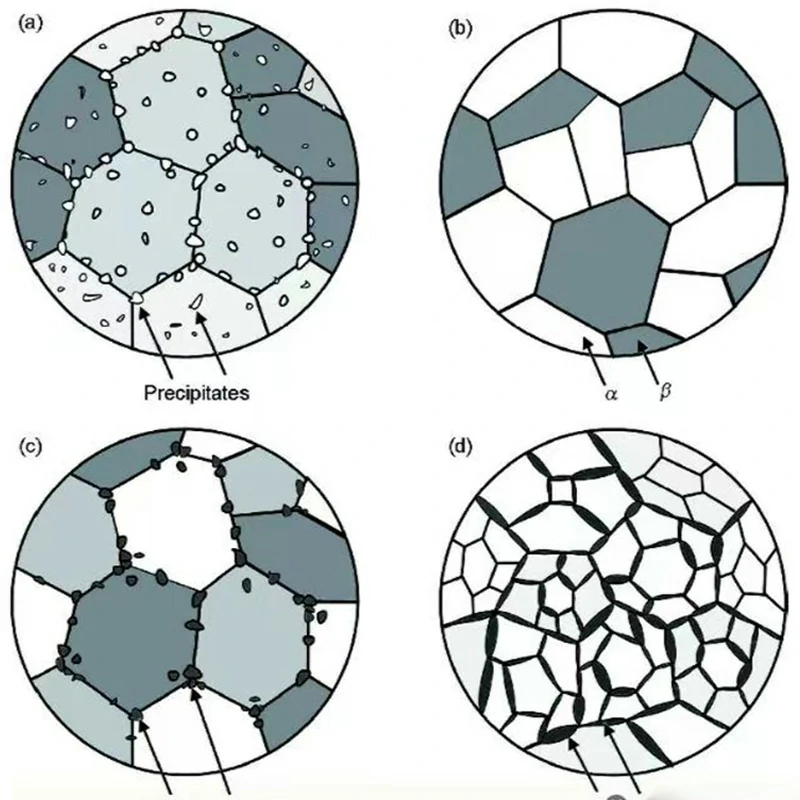
Microstructure analysis
Chalco aluminum observes the microstructure of aluminum slabs, focusing on precipitated phases, second-phase particles, grain boundary segregation, porosity and inclusion distribution. The better the microstructure uniformity, the easier it is to keep heat treatment response, mechanical properties and processing stability consistent.
Through microstructure analysis, Chalco aluminum can assess the grain condition, segregation level and internal defect risks of aluminum slabs, helping reduce the impact of hot cracking, shrinkage, gas pore clusters, inclusion bands and batch variation on downstream processing.
Heat treatment response test analysis
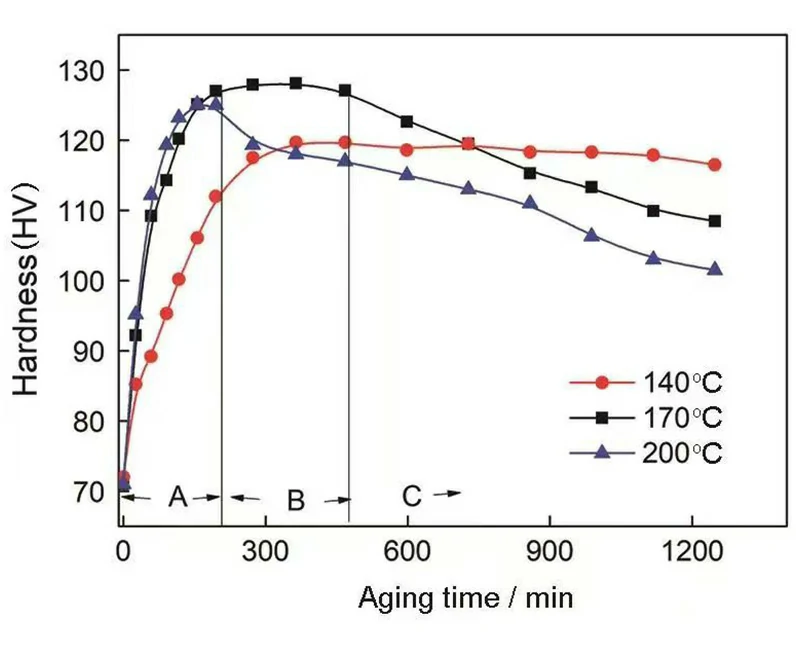
Chalco aluminum tests the aging response of heat-treatable aluminum slabs by checking hardness changes under different aging temperatures and aging times. For 2xxx and 7xxx aluminum slabs, the aging curve can show the heat treatment window, peak hardness and over-aging trend.
Stable aging response helps reduce performance differences caused by batch variation. Chalco aluminum controls alloy composition, homogenization treatment and process traceability, helping aluminum slabs deliver more stable performance in later heat treatment, rolling, forging and machining.
Aluminum slab packaging and export delivery
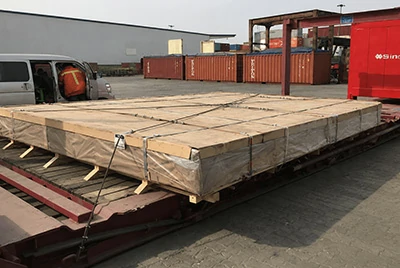
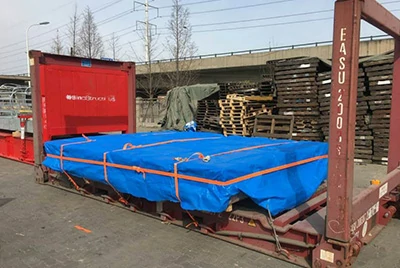
Chalco aluminum arranges packaging and shipment based on aluminum slab size, single-piece weight, transport method and destination port requirements, helping reduce the risk of impact, edge damage and surface contamination during lifting, transfer, container loading and long-distance transportation.
Packaging protection
Aluminum slabs can be packed with wooden pallets, steel straps, wooden spacers, corner protectors, moisture-proof materials and reinforced structures. For slabs with milled surfaces, cut surfaces or special surface requirements, isolation, anti-scratch and anti-contamination protection can be added according to project requirements.
Lifting and fixing
Large aluminum slabs can be arranged with suitable lifting points, support points and fixing methods based on single-piece weight and shipping method. For container loading or breakbulk shipping, wooden spacers, steel straps, limit blocks and anti-slip protection can be used to reduce movement and impact during transport.
Marking and traceability
Each batch of aluminum slabs can be marked with alloy grade, size, heat number, batch number, quantity, weight and order information as required. These markings can be matched with chemical composition reports, dimensional inspection reports, UT testing records, macrostructure inspection records and heat traceability documents.
Export delivery
Chalco aluminum can arrange export packaging, container loading, shipping documents and delivery files according to order requirements. Before delivery, slab size, quantity, weight, packaging method, shipping marks, destination port and trade terms can be confirmed to help customers with customs clearance, unloading and downstream processing plans.
Chalco aluminum slab production process
Chalco aluminum organizes aluminum slab production based on alloy grade, slab size, downstream processing route and inspection requirements, covering melting, refining, casting, homogenization, face milling, cutting, inspection and packaging.
Melting and alloying
Main alloying elements are added according to the target grade, while impurity elements are controlled to give the aluminum slab a stable chemical composition.
Melt purification
Refining, degassing and filtration are used to reduce gas, inclusion and oxide film risks, improving melt cleanliness.
Casting
A casting process suitable for large aluminum flat ingots is used to form rectangular cast aluminum slabs, while controlling risks such as hot cracking, segregation, shrinkage and gas pores.
Homogenization
The aluminum slab is homogenized to improve microstructure uniformity and heat treatment response, helping reduce performance variation during later rolling, forging or machining.
Face milling
Face milling can be performed according to project requirements to remove oxide layers, casting defects and surface contamination, providing a more stable surface condition for later rolling or processing.
Cutting to size
Cutting is arranged according to customer size, machining allowance, transport method and final use requirements, with confirmation available for thickness, width, length and end-face condition.
Inspection and traceability
Chemical composition, size, surface, UT testing, macrostructure, grain size and porosity inspections are completed, with traceability built between heat number, batch number, process records and inspection documents.
Aluminum slab inquiry information
To purchase aluminum slabs, please provide the alloy grade, size, quantity, downstream processing method and inspection requirements. Chalco aluminum can review your project details and confirm the supply plan, production feasibility and quotation terms.
Information suggested for inquiry
- Alloy grade: such as 7075, 7050, 2A12, 2618, 4032, 5083 and other grades.
- Standard: such as ASTM, EN, GB or customer-specified technical specifications.
- Slab size: thickness, width, length and allowed tolerance.
- Purchase quantity: batch quantity, annual demand or trial order quantity.
- Downstream processing: rolling, forging, heat treatment, cutting, CNC machining or other deep processing.
- Final application: high-strength structural parts, engine parts, piston materials, ship plates, offshore structures, pressure equipment and more.
- Quality requirements: chemical composition, internal soundness, grain structure, porosity control, surface condition and batch consistency.
- Inspection documents: MTC, chemical composition report, dimensional inspection, a-class UT testing, macrostructure inspection, grain size testing, porosity evaluation and heat traceability documents.
- Delivery requirements: destination port, packaging method, lead time, shipping method and trade terms.
Quotation confirmation items
Before quotation, Chalco aluminum can help confirm alloy suitability, size feasibility, inspection plan, production lead time, packaging method and export delivery requirements for aluminum slabs.
For 2xxx and 7xxx high-strength aluminum slabs, it is recommended to provide the downstream processing route and key quality requirements together, so the heat treatment response, internal quality and processing stability can be better evaluated.
Aluminum Slab FAQ
What is aluminum slab?
Aluminum slab is a large rectangular cast semi-finished aluminum billet. It can be used for rolling, forging, heat treatment, precision machining, and the production of aluminum plate, coil and strip.
What alloys are available for aluminum slab?
Chalco aluminum supplies 2xxx, 7xxx, 4xxx and 5xxx aluminum slabs, including premium alloys such as 7075, 7050, 2014, 2A12, 2618, 4032, 4Y32, 5083 and 5A06.
What sizes can Chalco supply?
Chalco aluminum supplies aluminum slabs with a thickness of 300–700 mm, width of 900–2640 mm and length of 4500–11500 mm. Custom sizes are available based on the customer's application, equipment compatibility and processing requirements.
What is the MOQ for aluminum slab?
The MOQ for aluminum slab depends on the alloy grade, slab size, inspection requirements and production schedule. Please send the required alloy, size and quantity so we can confirm the available supply plan.
Can aluminum slab be used for forging?
Yes. Some 2xxx and 7xxx aluminum slabs can be used as forging billets for high-strength structural parts and load-bearing components. The final selection should be evaluated based on alloy grade, size, internal quality and heat treatment requirements.
What inspection documents can be provided?
Chalco aluminum can provide chemical composition reports, dimensional inspection reports, a-class UT testing records, macrostructure inspection, grain size testing, porosity evaluation and heat traceability documents according to project requirements.
What is the difference between aluminum slab and aluminum plate?
Aluminum slab is a cast semi-finished billet that usually needs further rolling, forging, heat treatment or machining. Aluminum plate is a finished rolled product that can be directly used for cutting, welding, CNC machining or assembly.