Henan Chalco can supply aluminum bar grating for industrial walkways, platforms, stair treads, and load-bearing floor areas.
Available options include SG rectangular, SGI I-Bar, SGF flush-top, and ADT pressure-locked grating, primarily in 6061, 6063, and 6060 aluminum. Smooth or serrated surfaces, different bearing bar spacings, panel sizes, and custom fabrication are available.
For selection, confirm the grating type, bearing bar size and spacing, clear span, load type, allowable deflection, surface condition, and bearing-bar span direction.
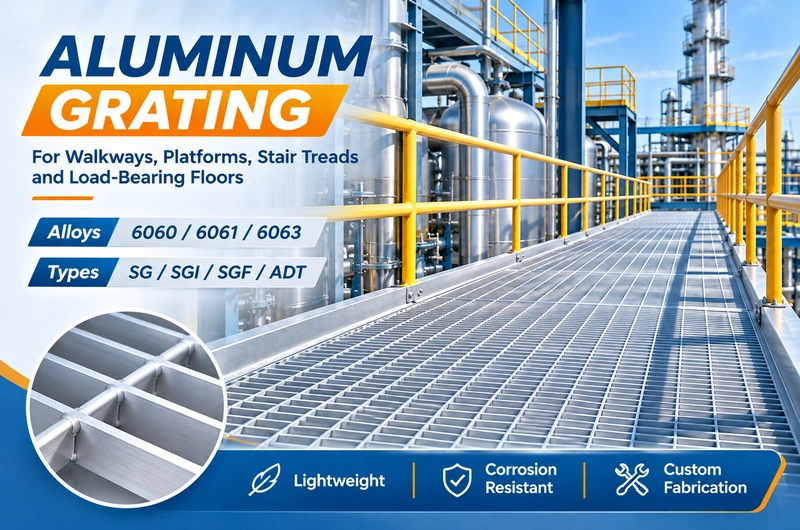
Stair treads, banding, cutouts, fasteners, and finishes can also be configured to suit project requirements.
Quick Navigation
Quickly check aluminum grating types, sizes, load data, fabrication options and ordering requirements.
Aluminum Grating Quick Specifications:
| Item | Available Options |
| Types | SG Rectangular, SGI I-Bar, SGF Flush-Top, ADT Pressure-Locked, Welded, Clinched / Castable, Plank |
| Alloys | 6060, 6061, 6063 |
| Bearing Bar Size | Rectangular: 1" × 1/8" to 2-1/2" × 3/16"; I-Bar: 1" × 1/4" to 2-1/2" × 1/4" |
| Bearing Bar Spacing | 1-3/16", 15/16", 11/16", 1/2", 7/16" c.c. |
| Cross Bar Spacing | 4" or 2" c.c. |
| Panel Width | 24", 36", 48"; cut-to-size available |
| Surface / Finish | Smooth, Serrated, Striated; Mill Finish, Anodized, Coated |
| Fabrication | Cut-to-size, Banding, Cutouts, Stair Treads, Fasteners |
Already have a drawing or specification? Send it for quotation.
Aluminum Grating Types and Specification Overview
Aluminum bar grating is available in different structures based on bearing bar design, connection method, load requirements, and walking-surface requirements.
Henan Chalco can supply SG rectangular, SGI I-Bar, SGF flush-top, and ADT pressure-locked grating.
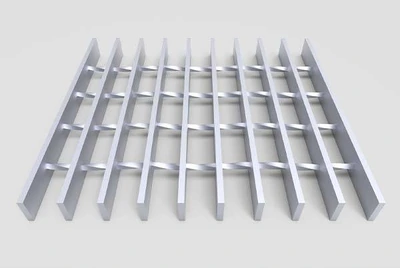
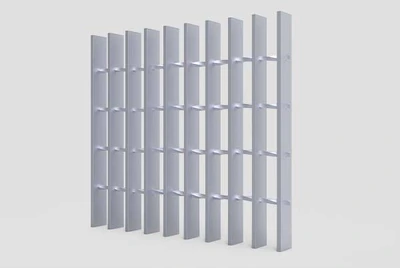
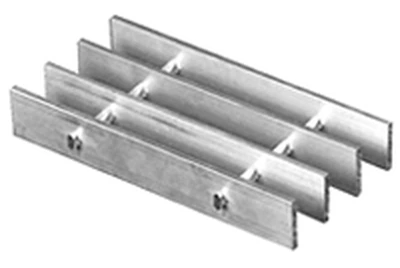
Swaged Rectangular Aluminum Grating
Rectangular bearing bars and cross bars are locked together by swaging, with the cross bars set slightly below the top of the bearing bars. This is a common aluminum bar grating structure for industrial walkways, platforms, and stair treads.
Typical configurations provide a relatively high open area. Serrated bearing bars are available for wet or oily areas or where higher slip resistance is required.
Suitable for general industrial walkways, platforms, stair treads, and projects that need both load capacity and open area.
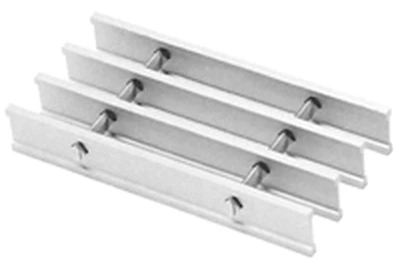
Swaged I-Bar Aluminum Grating
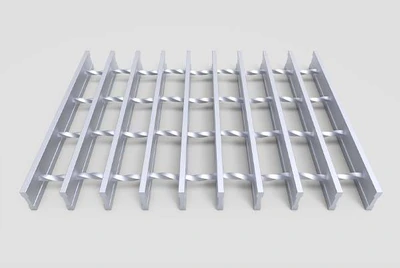
I-shaped bearing bars reduce material use and grating weight while meeting the required span and load conditions.
The top flange of the I-Bar can also use a striated or other anti-slip profile to meet different walking-surface requirements.
Suitable for walkways, platforms, and access areas where structural weight is important but load capacity is still required.
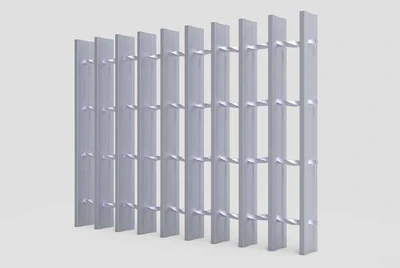
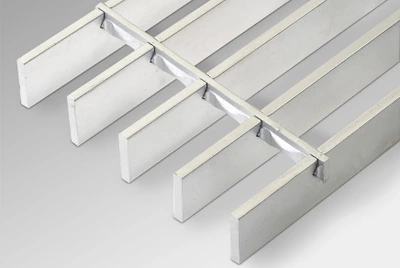
Swaged Flush-Top Aluminum Grating
The cross bars sit nearly flush with the top of the bearing bars, creating a more continuous and even walking surface than standard swaged grating.
Suitable for walkways and platforms with concentrated pedestrian traffic or where a more continuous walking surface is preferred.
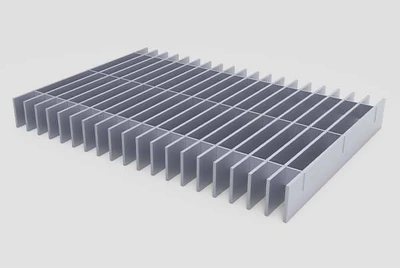
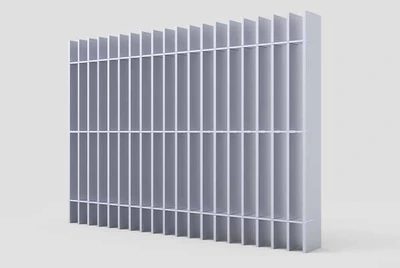
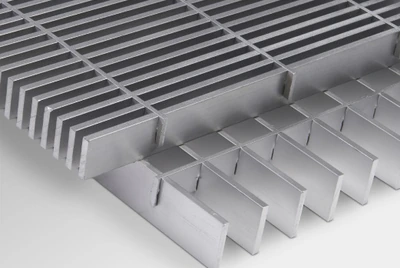
Dovetail Pressure-Locked Aluminum Grating
Rectangular cross bars are pressed into pre-slotted bearing bars to form a pressure-locked structure with a uniform appearance and configurable bar spacing.
Suitable for walkways, platforms, and projects that require consistent bar alignment and appearance. Some configurations can also be used for architectural infill or sunshade applications.
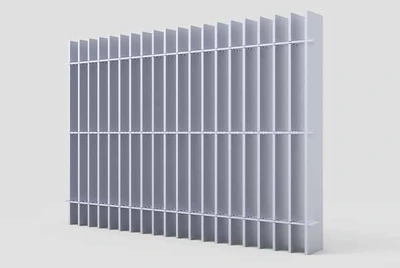
Welded Aluminum Grating
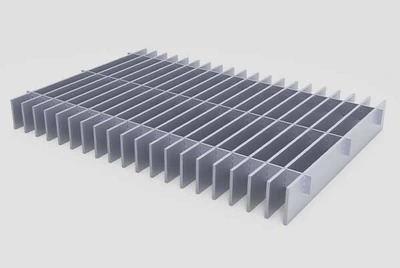
Cross bars and bearing bars are joined by welding. Bearing bar sections, spacing, and panel dimensions can be configured according to load and service requirements.
Standard-duty and heavy-duty configurations are available. Final specifications should be determined from the clear span, design load, bearing bar size, and support condition.
Suitable for industrial flooring, platforms, and access applications that specifically require a welded structure or higher localized load capacity.
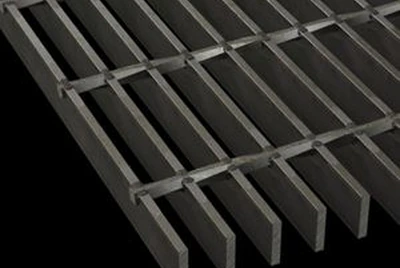
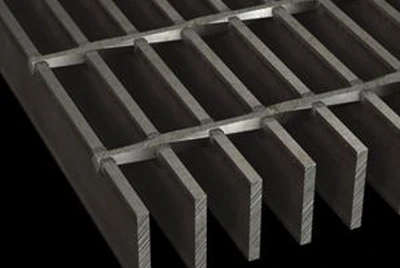
Clinched / Castable Grating
The components are joined by mechanical clinching or an interlocking structure to form an integrated grating panel, making this option suitable for projects with special structural or installation requirements.
Its structural form and dimensional system differ from conventional swaged bar grating, so the drawing, opening pattern, panel size, load, and installation requirements should be reviewed separately.
Suitable for special structures, non-standard opening patterns, and project-specific grating applications.
Suitable for grating applications that require greater structural stability or special installation configurations.
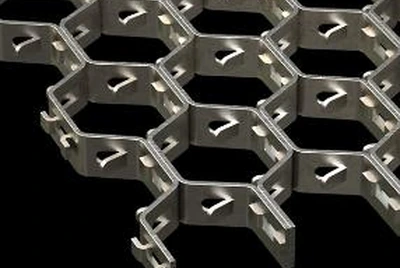
Aluminum Plank Grating
Aluminum plank grating uses an integral formed plank structure rather than the bearing-bar-and-cross-bar construction of traditional bar grating.
The surface can use serrated, perforated, or raised-projection patterns to address drainage, traction, and walking-surface requirements.
Suitable for walkways, platforms, ramps, stair treads, decks, and other areas that require an integral plank-style walking surface.
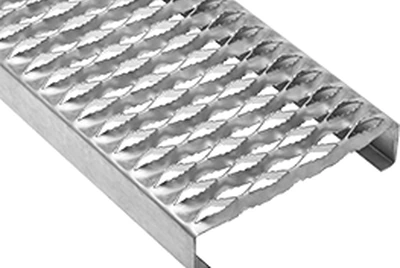
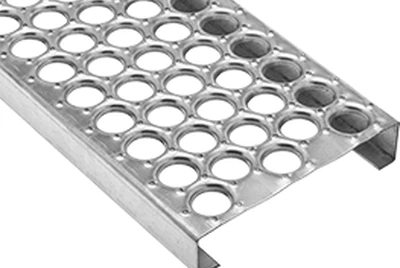
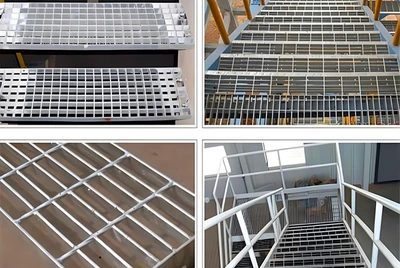
Stair Treads
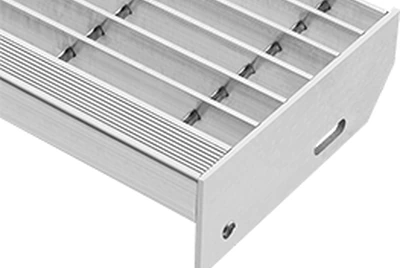
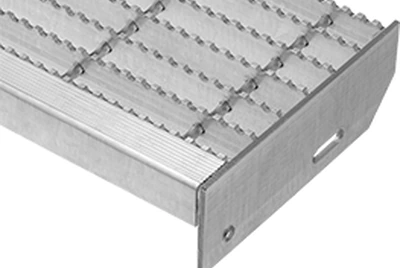
Aluminum grating can be fabricated into stair treads with project-specific end plates, mounting holes, nosing, and serrated surfaces.
Aluminum Grating Types at a Glance
| Type | Typical Size | Best For |
| SG Rectangular | 1" × 1/8" to 2-1/2" × 3/16" | General walkway & platform |
| SGI I-Bar | 1" × 1/4" to 2-1/2" × 1/4" | Lower weight |
| SGF Flush-Top | 1" × 1/8" to 2-1/2" × 3/16" | Flush walking surface |
| ADT Pressure-Locked | 1" × 1/8" to 2-1/2" × 3/16" | Appearance & pressure-lock |
| Welded Grating | By span & load | Higher-load applications |
| Clinched / Castable | Project-specific | Special configurations |
| Aluminum Plank Grating | 1-1/2"–2" depth, 0.080"–0.125" thick | Drainage & anti-slip walkway |
Need more specification details? View bearing bar sizes, spacing and common configurations.
Aluminum Grating Models and Spacing Selection
Aluminum grating model designations are typically determined by the grating type, bearing bar spacing, and cross bar spacing.
Common Aluminum Grating Models
| Model | Grating type | Bearing bar spacing | Cross bar spacing |
| 19-SG-4 / 19AS4 | Swaged Rectangular Grating | 1-3/16" c.c. | 4" c.c. |
| 19-SGI-4 / 19AI4 | Swaged I-Bar Grating | 1-3/16" c.c. | 4" c.c. |
| 19-SGF-4 | Flush-Top Grating | 1-3/16" c.c. | 4" c.c. |
| 19-DT-4 | Pressure-Locked Grating | 1-3/16" c.c. | 4" c.c. |
The number 19 indicates 1-3/16" bearing bar spacing, while 4 indicates 4" cross bar spacing. The letters identify the grating structure. A 2" c.c. cross bar spacing is also available; the final model should be confirmed according to the structure and project specification.
Bearing Bar Spacing Selection
| Series | Bearing Bar Spacing | Quick Selection |
| 19 Space | 1-3/16" c.c. | General walkway, platform and stair tread |
| 15 Space | 15/16" c.c. | Denser bearing-bar arrangement |
| 11 Space | 11/16" c.c. | Close spacing and smaller openings |
| 8 Space | 1/2" c.c. | Cart / dolly traffic and smaller openings |
| 7 Space | 7/16" c.c. | Very close spacing and tighter opening requirements |
With the same bearing bar size and clear span, closer spacing increases the number of bearing bars per unit width.
Bearing Bar Size
| Grating type | Bearing Bar Size | Depth increment |
| Rectangular bar grating | 1" × 1/8" to 2-1/2" × 3/16" | 1/4" |
| I-Bar grating | 1" × 1/4" to 2-1/2" × 1/4" | 1/4" |
Bearing bar depth, thickness, and spacing all affect grating weight, allowable span, and load capacity.
Common Aluminum Grating Configurations
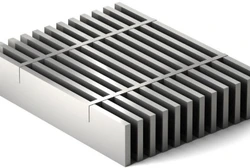
Aluminum Grating 1" Bearing Bars
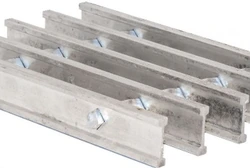
Aluminum I-Bar Grating 100
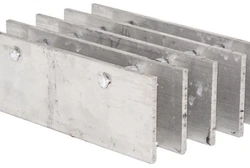
Aluminum Rectangular Bar Grating
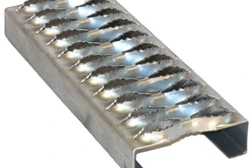
1-1/2" Depth, .080 Thick, 4-3/4" Width
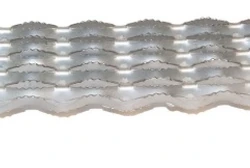
1-1/2" Depth, .080 Thick, 18-3/4" Width
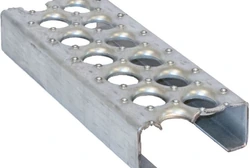
2" Depth, .125 Thick, 5" Width
Already know the grating type, bearing bar size or spacing you need? Send us your specification, drawing or panel size for a quote.
Panel Size and Custom Fabrication
Henan Chalco can supply standard panels, cut-to-size panels, and aluminum grating fabricated to drawings or panel layouts.
Standard Configuration
| Specification | Available option |
| Bearing bar spacing | 1-3/16" c.c. |
| Cross bar spacing | 4" c.c. |
| Cross bar connection | Swage-locked |
| Bearing bar thickness | 0.125" / 0.188" |
| Grating depth | 1" / 1-1/4" / 1-1/2" |
| Surface | Smooth / Serrated |
Panel Size
| Panel width | Available lengths | Metric width |
| 24" (2 ft) | 24", 36", 4', 6', 8', 10', 12' | 610 mm |
| 36" (3 ft) | 24", 36", 4', 6', 8', 10', 12' | 914 mm |
| 48" (4 ft) | 24", 36", 4', 6', 8', 10' | 1219 mm |
Common lengths correspond approximately to 610, 914, 1219, 1829, 2438, 3048, and 3658 mm.
Cut-to-size panels can also be supplied according to installation dimensions or panel layout.
Bearing-Bar Span Direction
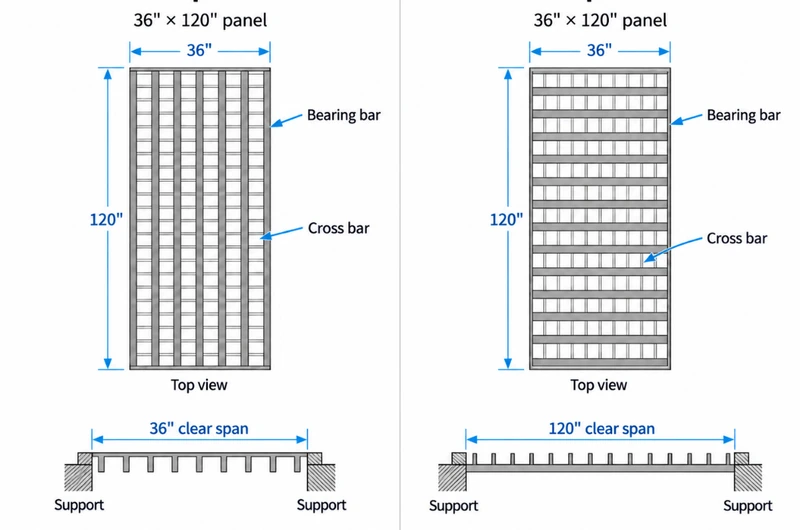
Bearing bars are the primary load-bearing members and should run in the direction of the design clear span.
For the same 36" × 120" panel, whether the bearing bars run in the 36" or 120" direction directly affects the actual span, load capacity, and deflection.
If the bearing-bar direction is not specified in the drawing or RFQ, provide the support layout or installation drawing as well to avoid a mismatch between panel orientation and the on-site support direction.
Fabrication Options
- Cut-to-size: Cut to the panel layout or installation dimensions;
- Banding: Standard trim, trench banding, load banding;
- Cutouts: Openings for pipes, equipment, columns, or other site obstructions;
- Stair treads: Grating tread, end plates, mounting holes;
- Fasteners: Clips, saddle clips, and other installation accessories;
- Finish: Mill finish, anodized, powder coated.
Banding Options
| Banding type | Typical Use |
| Standard Trim Banding | Protects open ends and provides a finished panel edge; suitable for general walkways, platforms, and removable panels |
| Trench Banding | Used for trench, drainage, or other panels requiring a special edge configuration |
| Load Banding | Connected to the bearing bars for areas where end or localized load transfer needs to be considered |
The banding type should be confirmed according to the panel edge condition, support arrangement, and local load requirements.
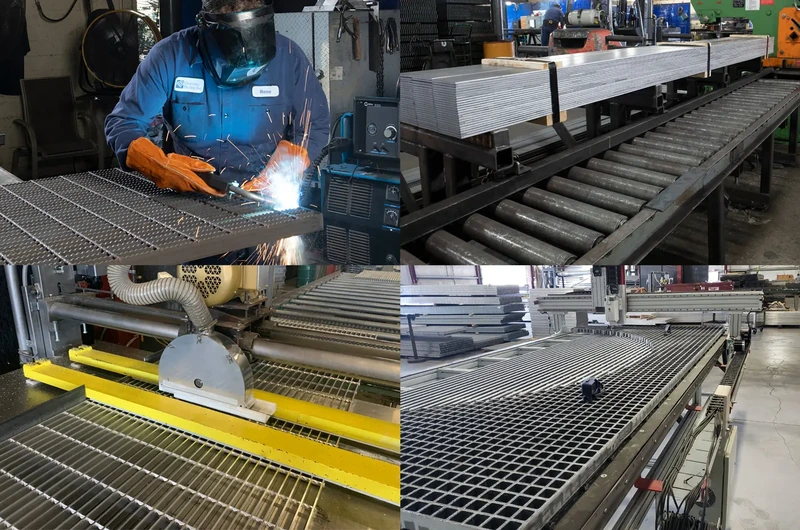
For complex panel layouts, send the project drawing or panel layout with panel dimensions, bearing-bar direction, cutout locations, support arrangement, and installation requirements for fabrication review.
Load, Span and Deflection
Aluminum grating load capacity cannot be determined from a single specification alone.
Selection should consider the bearing bar size, bearing bar spacing, clear span, load type, and allowable deflection together.
The following data compares how different configurations perform under the same calculation conditions.
Effect of Bearing Bar Spacing on Load Capacity
With the same bearing bar size and clear span, closer spacing places more load-bearing bars within each unit of width.
The following data is based on:
Bearing bar: 1" × 3/16" rectangular bar
Clear span: 4 ft
| Spacing | Bearing bar spacing | Uniform load U | Concentrated load C | Deflection D* | Max. pedestrian span |
| 19 Space | 1-3/16" | 158 psf | 316 lb/ft | 0.576" | 3'-8" |
| 15 Space | 15/16" | 200 psf | 400 lb/ft | 0.576" | 3'-10" |
| 11 Space | 11/16" | 273 psf | 546 lb/ft | 0.576" | 4'-2" |
| 8 Space | 1/2" | 375 psf | 750 lb/ft | 0.576" | 4'-6" |
| 7 Space | 7/16" | 429 psf | 857 lb/ft | 0.576" | 4'-8" |
* D is the theoretical deflection at the 4 ft clear span and corresponding uniform load shown above.
Therefore, when bearing bar size and span remain unchanged, reducing bearing bar spacing increases load capacity per unit width.
Bearing Bar Size and Load at a 4 ft Clear Span
Once the bearing bar spacing is fixed, bearing bar depth can be selected based on design load, clear span, and allowable deflection.
The following data is based on:
Spacing: 19 Space (1-3/16" c.c.)
Bearing bar thickness: 3/16" rectangular bar
Clear span: 4 ft
| Bearing Bar Size | Uniform Load U | Concentrated Load C | Uniform-Load Deflection | Max. Pedestrian Span |
| 1" × 3/16" | 158 psf | 316 lb/ft | 0.576" | 3'-8" |
| 1-1/4" × 3/16" | 247 psf | 493 lb/ft | 0.461" | 4'-4" |
| 1-1/2" × 3/16" | 355 psf | 711 lb/ft | 0.384" | 4'-11" |
| 1-3/4" × 3/16" | 484 psf | 967 lb/ft | 0.329" | 5'-6" |
| 2" × 3/16" | 632 psf | 1,263 lb/ft | 0.288" | 6'-1" |
| 2-1/4" × 3/16" | 799 psf | 1,599 lb/ft | 0.256" | 6'-8" |
| 2-1/2" × 3/16" | 987 psf | 1,974 lb/ft | 0.230" | 7'-3" |
With the same spacing and span, increasing bearing bar depth raises load capacity and reduces deflection.
As span or design load increases, a deeper bearing bar generally needs to be evaluated rather than relying only on closer spacing.
How to Read the Load Table
- U = Uniform load, in lb/ft² (psf)
- C = Concentrated load, in lb/ft of grating width
- D = Deflection, in inches
- Clear span = Unsupported distance between the two actual support points
Engineering note: The load and deflection data above are theoretical reference values based on the gross bearing bar section and an allowable bending stress of 12,000 psi.
Surface Options
Aluminum grating surfaces should be selected according to walking conditions, slip-resistance requirements, and grating type.
Smooth, serrated, and striated surfaces are the main options for bar grating applications.
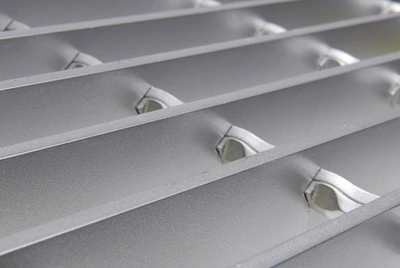

Serrated
Serrations on the top of the bearing bars for wet, oily, or higher slip-resistance areas
Contact UsStriated I-Bar
Striations on the I-Bar flange increase friction and slip resistance without additional serration.
Contact Us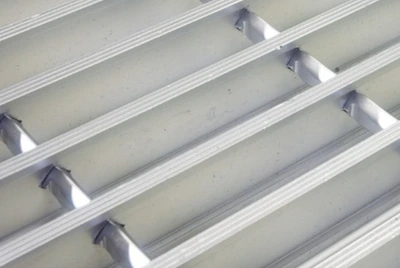
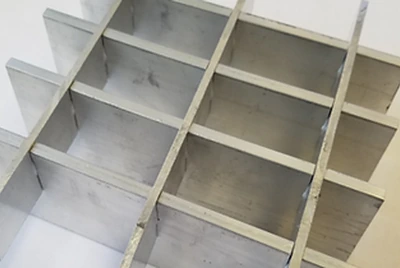
Anti-Slip Coating
An anti-slip coating is applied to the surface for areas with higher slip-resistance requirements.
Contact UsGrit Surface
A grit-type anti-slip layer is applied to the surface to further increase friction
Contact Us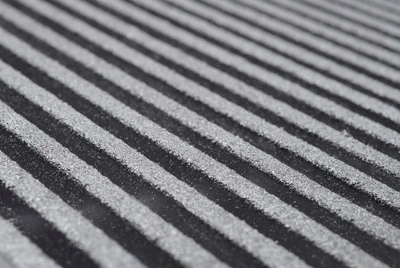
Finish Options
Henan Chalco can supply different aluminum grating finishes to suit the service environment, corrosion-resistance requirements, and appearance requirements.
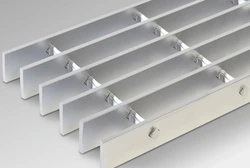
Mill Finish
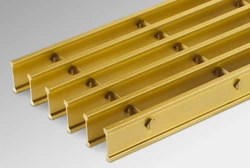
Anodized
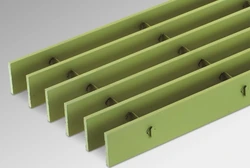
Special Coatings
Aluminum Grating Alloy Selection
Henan Chalco can supply aluminum grating in 6060, 6061, and 6063. Alloy selection can be based on grating type, bearing bar section, load requirements, surface treatment, and project specifications. The final temper is confirmed according to the order specification.
| Alloy | Key Characteristics | Typical Applications |
| 6060 | Good extrudability and surface quality, suitable for subsequent finishes such as anodizing | Grating where profile forming, appearance, and surface finishing are important |
| 6061 | Higher strength with good corrosion resistance and machinability | Industrial walkways, platforms, stair treads, and other structures with higher load requirements |
| 6063 | Good extrudability and surface quality; commonly used for aluminum bar grating | Common grating structures such as swaged rectangular, I-Bar, and flush-top |
Typical Applications
Aluminum grating is commonly used for walkways, platforms, stair treads, access areas, and drainage-related structures.
Application selection should consider load, span, traffic type, surface condition, and opening requirements.
Industrial Walkways & Platforms
Used for equipment platforms, maintenance access, and operating walkways; confirm span, load, and surface requirements.
Contact Us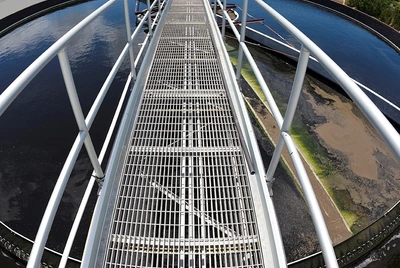
Stair Treads
Rectangular or I-Bar grating can be used with serrated surfaces, end plates, and mounting holes.
Contact UsWastewater & Chemical Facilities
Suitable for walkways, platforms, and trench areas in wet or corrosive environments.
Contact Us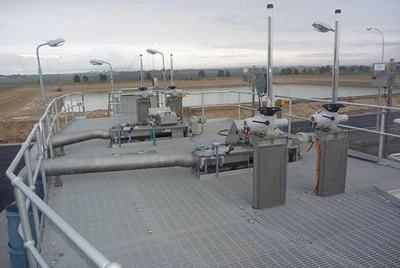
Marine & Dock Areas
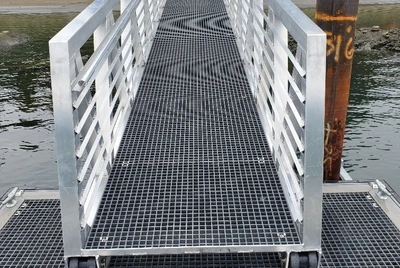
Suitable for docks, deck access, and coastal facilities where lower structural weight and reduced corrosion-related maintenance are important.
Contact UsPublic Access Areas
Close-spacing grating can be used where opening size, heel traffic, or wheelchair access needs to be considered
Contact Us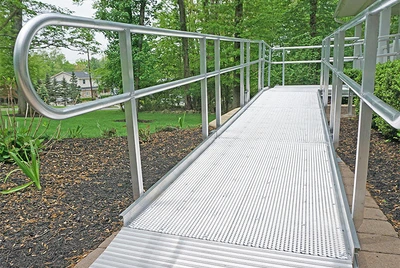
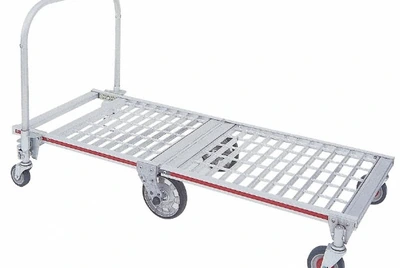
Material Handling Areas
Closer bearing bar spacing can be selected for areas used by carts, dollies, and other small-wheel equipment
Contact UsOther Architectural Uses:
Pressure-locked or project-specific aluminum grating may also be used for sunshades, facades, and ceiling applications where open area, appearance, and panel layout are important.
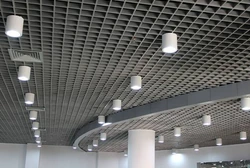
Aluminum gratings for interior ceilings
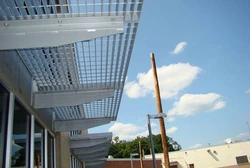
Aluminum gratings for sun shades
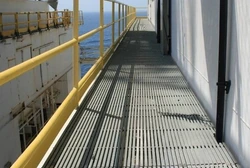
Aluminum gratings for platform walkways
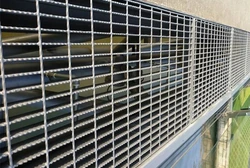
Aluminum gratings for building facades
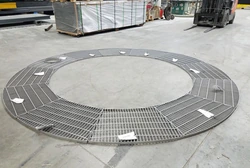
Custom Circular Grating
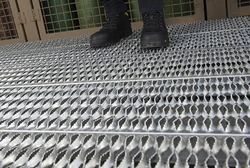
Anti-Slip Aluminum Grating
Accessories and Fasteners
Aluminum grating can be supplied with different fasteners, clips, nosing, and mounting accessories according to the installation method and support structure.
| Accessory | Typical Use |
| Saddle Clips | Common fastening method for removable grating panels |
| G / J Clips | Secures the panel according to grating structure and support condition |
| Weld Lugs | Installation points requiring welded attachment |
| Countersunk Fasteners | Used where the walking surface should remain as flush as possible |
| Stair Tread Nosing | Slip resistance and edge identification at the front of a stair tread |
| Carrier / Support Plates | Specific support or connection structures |
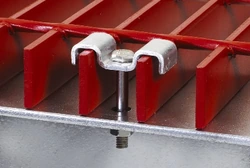
Saddle Clips
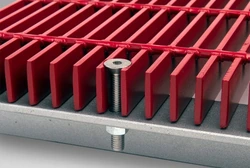
Countersunk Lands
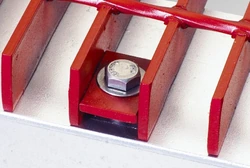
Weld Lugs
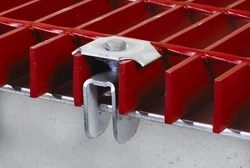
"G" Clips
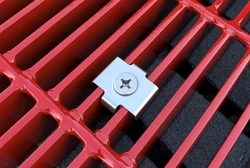
Countersunk Lands
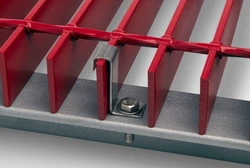
"J" Clips
Applicable Standards
Henan Chalco can review aluminum grating material, structural, and access requirements against the applicable standards based on project location, application, and design requirements.
- ANSI/NAAMM MBG 531-24: Design, dimensional, and structural requirements for aluminum grating.
- ANSI/NAAMM MBG 533-26: Fabrication welding requirements for steel, stainless steel, and aluminum bar grating; applicable to welded grating and related welding requirements.
- ASTM B221-21: Requirements for extruded aluminum bars, profiles, and related extruded products.
- BS 4592-1:2006: Applies to industrial metal open-bar flooring, walkways, and stair treads.
- BS EN ISO 14122-2:2016: Applies to machinery platforms, working platforms, and walkways.
- ADA §302.3: Requirements for opening size and opening orientation on accessible routes.
Inspection and Documentation
Project orders can include inspection and documentation support according to the specification and acceptance requirements, including:
- Material identification: Alloy / temper information;
- Dimensional inspection: Bearing bar size, spacing, panel size, and bearing-bar direction;
- Surface & finish: Confirmation of smooth / serrated surface, mill finish, anodized, powder coated, and other specified conditions;
- Fabrication drawing: Drawings for cutouts, banding, stair treads, end plates, and other fabrication details;
- MTC / COC: Material certificates or conformity documents provided according to order and project requirements;
- Load selection basis: Selection reviewed according to bearing bar, spacing, span, and load conditions;
- Third-party inspection: Can be arranged when required by the project.
Testing by the NAAMM Metal Bar Grating Division indicates that certain aluminum and steel grating stair treads designed in accordance with ANSI/NAAMM requirements can meet the load requirements of OSHA 29 CFR 1910.24(c).
For projects with specified standards, drawings, or acceptance criteria, documentation, inspection, and delivery requirements can be confirmed during quotation and order review.
Aluminum Grating Price
Aluminum grating pricing depends mainly on the final specification and fabrication requirements, and costs can vary significantly between configurations.
Main pricing factors include:
- Alloy / Temper: 6060, 6061, 6063, and the corresponding tempers;
- Bearing bar size: Depth, thickness, and section type;
- Spacing: 19 / 15 / 11 / 8 / 7 series;
- Surface: Smooth, Serrated, Anti-Slip Coating;
- Panel size: Width × Length;
- Fabrication: Cut-to-size, banding, cutouts, stair treads;
- Finish: Mill finish, anodized, powder coated;
- Inspection & documents: MTC, COC, third-party inspection, etc.;
- Quantity & destination: Quantity, packaging, and shipping destination.
Final pricing is quoted according to the confirmed specification, fabrication scope, and purchase quantity.
Grating Material Comparison
| Material | Weight | Corrosion Resistance | Load Capacity | Typical Use |
| Aluminum Grating | Light | High | Medium–High | Walkways, platforms, stairs, outdoor structures |
| Galvanized Steel Grating | Heavy | Good | High | Industrial platforms, heavy-load areas |
| Stainless Steel Grating | Heavy | Very high | High | Chemical, food processing, marine environments |
| FRP Grating | Light | Very high | Medium | Corrosive, electrical and chemical environments |
Not sure which material fits your project? Send us your load, environment and application requirements for selection support.
Aluminum Grating RFQ
Henan Chalco can review specifications and provide quotations based on grating type, alloy, bearing bar, spacing, panel size, load, and fabrication requirements.
You can send:
- Product model / specification;
- Drawing or panel layout;
- Quantity;
- Application / load requirement;
- Destination.
If the complete model has not yet been determined, provide the clear span, design load, service environment, and installation dimensions. We can use these details to help match a suitable aluminum grating configuration.
Related Aluminum Products
Henan Chalco can also supply aluminum tread plate, expanded metal, structural extrusions, and railing components for combined sourcing of walkway, platform, stair, and access-system projects.
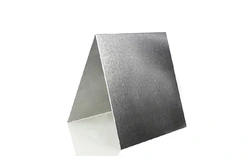
Aluminum Diamond Plate
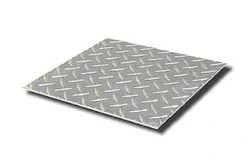
Aluminum Tread / Checkered Plate
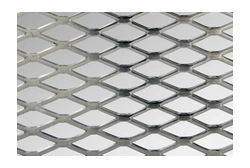
Expanded Aluminum Metal
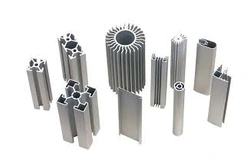
Standard Aluminum Extrusions
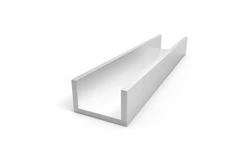
Aluminum C Channel
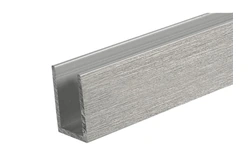
Aluminum U Channel
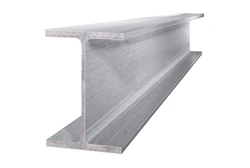
Aluminum I Beam
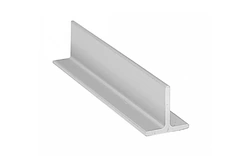
Aluminum T Bar
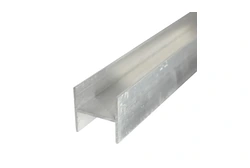
Aluminum H Channel
FAQ
How do I select aluminum grating based on span and load?
First confirm the clear span, uniform or concentrated load, allowable deflection, and bearing-bar direction, then determine the bearing bar size and spacing.
For the same grating specification, a longer span generally means lower allowable load and greater deflection, so grating should not be selected by panel size alone.
Can aluminum grating be used in cart or forklift areas?
For hand carts, dollies, and similar equipment, wheel loads and localized concentrated loads need to be evaluated separately.
Standard pedestrian aluminum grating should not be assumed suitable for vehicle loads. Forklift or other heavy-vehicle areas require selection based on the actual wheel loads.
How do I choose between smooth and serrated aluminum grating?
Smooth grating is suitable for generally dry, clean walkways and platforms. Serrated grating is typically selected for wet or oily areas or where slip resistance is a greater concern. However, a serrated surface does not replace project-specific verification of actual slip resistance.
Which bearing bar spacing is better for public walkways or high-heel traffic?
Closer bearing bar spacing reduces the opening size.
11-space grating is commonly used for accessibility-oriented walkways, while 7-space grating is used where smaller openings or high-heel traffic need to be considered. Final selection should still be checked against local opening-size and accessibility requirements.
Can aluminum grating be customized to drawings?
Yes. Panel size, cutouts, banding, stair treads, end plates, mounting holes, and fasteners can be confirmed from the panel layout and installation requirements, including projects with equipment, piping, columns, or special installation boundaries.
How do I choose between aluminum grating and steel grating?
Aluminum grating is better suited to projects where low weight, corrosion resistance, and easier handling and installation are priorities, while steel grating is generally more suitable for high-load or heavy-vehicle conditions.
The final choice should consider load, span, environment, maintenance requirements, and overall project cost.