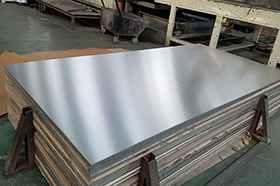
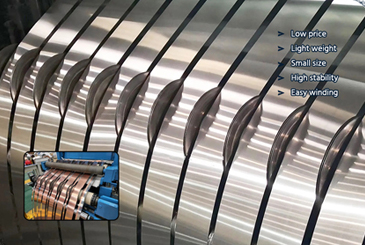
Chalco Aluminum supplies aluminum foil induction seal liners for induction sealing of bottle caps and container openings, providing leak-proof, moisture-resistant, contamination-resistant, and tamper-evident protection for food, beverage, dietary supplement, pharmaceutical, agrochemical, lubricant, chemical, and cosmetic packaging.
Our aluminum foil induction seal liners are available in roll stock, pre-cut liners, and custom-shaped liners, suitable for procurement by cap manufacturers, packaging material processors, liner die-cutting facilities, and end-fillers.
Chalco Aluminum can assist customers in selecting the appropriate aluminum foil structure, heat-seal layer, and delivery format based on their container neck design, sealing equipment, and packaging application, and supports sample testing prior to bulk purchasing.
What is an aluminum foil induction seal liner?
An aluminum foil induction seal liner is a composite sealing material placed inside a bottle cap, typically consisting of an aluminum foil layer, a heat-seal layer, and a backing layer made of paperboard, foam, PET, or other materials, used to seal and protect the container opening.
During the sealing process, after the cap is tightened, the aluminum foil layer is heated by an induction sealing unit. The foil generates heat, melting the heat-seal layer, which then bonds to the container rim to form a secure, stable seal.
This sealing method does not require direct contact between the liner and a heated plate, making it ideal for automated packaging lines and adaptable to various container shapes, cap types, and material combinations.
Aluminum foil induction seal liners are commonly used in food, dietary supplements, pharmaceuticals, agrochemicals, lubricants, chemicals, and cosmetics packaging, primarily to maintain package integrity during storage, transportation, and retail.
Key advantages of aluminum foil induction seal liners
- Aluminum foil induction seal liners create a reliable seal at the container rim, reducing the risk of leakage for liquids, powders, creams, or granular products during transport and storage-ideal for products requiring high packaging safety standards.
- The sealed aluminum layer helps block air, moisture, dust, and external contaminants, minimizing risks of product spoilage, oxidation, flavor transfer, or contamination, thereby preserving product quality and shelf stability.
- For food, pharmaceutical, dietary supplement, and cosmetic packaging, induction seal liners also provide clear tamper evidence. After opening the cap, consumers can easily see whether the seal remains intact, enhancing product safety perception and brand trust.
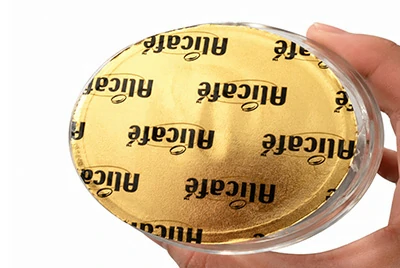
- The aluminum foil surface can be customized with text, logos, embossing, or holographic effects-not only serving sealing functions but also acting as a branding element, anti-counterfeiting feature, or opening instruction, elevating the professional appearance of the final package.
- Compared to standard cap liners, aluminum foil induction seal liners are better suited for automated filling and capping lines. They can be matched with different heat-seal layers based on container material, contents, and sealing equipment to deliver more consistent, reliable batch sealing performance.
Specifications of aluminum foil induction seal liners
Chalco Aluminum offers aluminum foil induction seal liners in various specifications tailored to container neck dimensions, container material, product type, and sealing equipment requirements. Products are available in roll stock, pre-cut liners, sheet stock, or custom shapes, suitable for cap manufacturers, packaging converters, and end-fillers.
| Product name | Aluminum foil induction seal liner |
| Supply formats | Roll stock, pre-cut liners, sheet stock, custom-shaped liners |
| Common diameters | 15 mm–120 mm, customizable to fit specific container neck sizes |
| Roll width | 360 mm, 370 mm, 390 mm, or customized to customer equipment |
| Total thickness | 0.2 mm–1.0 mm, confirmed based on material structure and application requirements |
| Aluminum alloy | Commonly 8011-O; alternatives such as 1235-O or 8079-O packaging-grade aluminum foil may be selected based on packaging structure and application needs |
| Aluminum foil thickness | 10–30 microns, selected based on sealing strength and barrier requirements |
| Structure composition | Aluminum foil layer, heat-seal layer, optionally combined with paperboard, foam, PET, wax, or barrier layers |
| Heat-seal layer | Compatible with PE, HDPE, PP, PET, PVC, PS, and glass container materials |
| Common types | One-piece, two-piece, easy-tear, tamper-evident, breathable |
| Surface finishes | Plain, logo printing, text printing, embossing, holographic, anti-counterfeit patterns |
| Application industries | Food, beverages, dietary supplements, pharmaceuticals, agrochemicals, lubricants, chemicals, cosmetics |
| Sealing method | Electromagnetic induction sealing, compatible with handheld, semi-automatic, and automatic induction sealers |
Oil and lubricant packaging can use oil-resistant, leak-proof liner structures to enhance sealing reliability during transport and storage; dietary supplement and pharmaceutical packaging can adopt tamper-evident, easy-to-identify opening solutions to boost consumer confidence; for agrochemical and chemical packaging, the compatibility of the heat-seal layer, aluminum foil, and composite backing can be evaluated based on product characteristics to reduce risks of leakage, contamination, and seal failure.
Please provide your container neck dimensions, bottle material, cap type, product contents, and desired supply format. Chalco Aluminum can help determine the optimal aluminum foil induction seal liner structure and provide samples for sealing trials.
Aluminum foil induction seal liner structures and material combinations
Aluminum foil induction seal liners typically use multi-layer composite structures. Different material combinations affect seal strength, peel performance, aluminum barrier properties, oil resistance, chemical resistance, and user opening experience. Chalco Aluminum matches the appropriate aluminum foil layer, heat-seal layer, and composite backing based on container material, product contents, and packaging purpose.
-
Paperboard + wax release layer + aluminum foil + heat-seal layer
Commonly used in two-piece aluminum foil induction seal liners. After sealing, the aluminum foil layer remains on the container rim while the paperboard backing stays inside the cap, enabling secondary sealing after opening.
Suitable for liquids, creams, lubricants, chemicals, and packaging requiring a secondary sealing experience.
-
Aluminum foil + heat-seal layer
Simple structure, primarily used for basic sealing and single-use packaging. The aluminum foil layer enables induction heating and provides barrier protection, while the heat-seal layer bonds to the container rim.
Ideal for dry goods, powders, granules, general food, and basic personal care packaging.
-
Foam + aluminum foil + heat-seal layer
The foam backing offers cushioning and improved cap fit, enhancing cap compression and seal stability.
Suitable for food, dietary supplements, personal care products, certain liquid packaging, and applications requiring tight cap-liner contact.
-
PET + aluminum foil + heat-seal layer
The PET layer provides excellent flatness, improving structural stability and supporting high-quality printing, barrier performance, and premium aesthetics.
Ideal for dietary supplements, pharmaceuticals, cosmetics, premium food, and branded packaging.
-
Paperboard + aluminum foil + PET + heat-seal layer
This structure balances rigidity, barrier performance, and heat-sealability, suitable for applications demanding high seal reliability, packaging strength, and product protection.
Appropriate for food, pharmaceuticals, agrochemicals, chemicals, and functional packaging products.
-
High-barrier composite structure
By adding specialized barrier layers or adjusting composite formulations, moisture resistance, oxygen barrier, oil resistance, permeation resistance, and compatibility with aggressive contents can be significantly enhanced.
Designed for edible oils, lubricants, chemical liquids, agrochemicals, volatile products, and specialty packaging applications.
The aluminum foil layer enables induction heating and provides barrier protection; the heat-seal layer bonds to container materials such as PE, HDPE, PP, PET, PVC, PS, or glass; and backing layers like paperboard, foam, PET, wax, or barrier films improve support, peel behavior, secondary sealing, printability, and content compatibility.
For packaging containing oils, acids, alkalis, solvents, or volatile substances, we recommend conducting sample sealing tests before finalizing the liner structure, thickness, heat-seal layer, and bulk supply format.
Common types of aluminum foil induction seal liners
Chalco Aluminum offers a range of aluminum foil induction seal liner types tailored to different cap designs, container materials, product characteristics, and opening requirements, helping customers balance leak prevention, moisture resistance, tamper evidence, ease of opening, and brand presentation.
One-piece aluminum foil induction liner
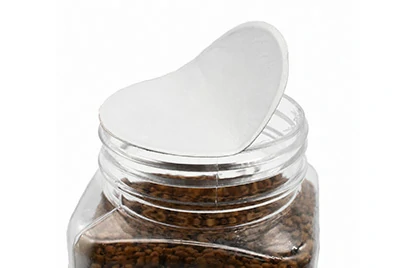
After sealing, the one-piece aluminum foil induction liner adheres entirely to the container rim, with no secondary sealing backing left in the cap. It is ideal for dry goods, powders, granules, dietary supplements, food, and single-use packaging-offering a simple structure well-suited for high-volume production.
Two-piece aluminum foil induction liner
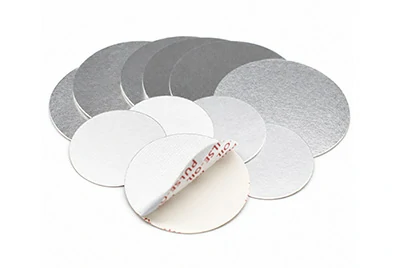
Two-piece aluminum foil induction liners keep the aluminum seal on the container rim while the backing remains in the cap, providing resealable performance. Suitable for liquids, creams, lubricants, chemicals, and other refillable packaging.
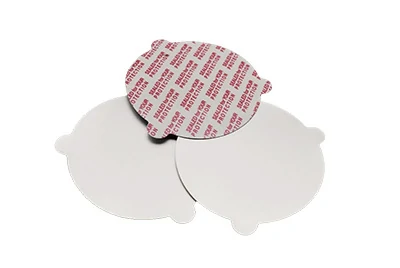
Easy-tear aluminum foil induction liner
Easy-tear aluminum foil induction liners provide smooth opening with reduced tearing, residue, and irregular peeling. Suitable for food, supplements, pharmaceuticals, cosmetics, and premium packaging.
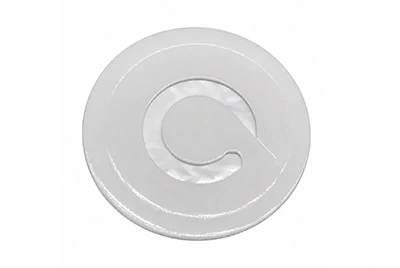
Engine oil bottle ring-pull easy-tear aluminum foil liner
Engine oil ring-pull easy-tear aluminum foil liners provide convenient opening, oil resistance, leak prevention, and anti-counterfeiting features for lubricant packaging.
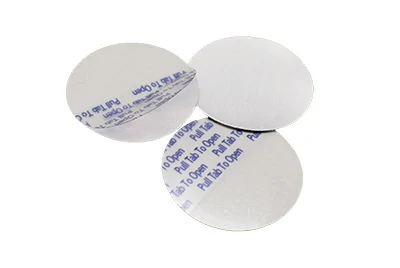
Partially peel easy-tear aluminum foil induction liner
Half-peel easy-tear aluminum foil induction liners feature a pre-designed opening area for smooth peeling with less tearing and residue. Suitable for food, pharmaceutical, supplement, dairy, and cosmetic packaging.
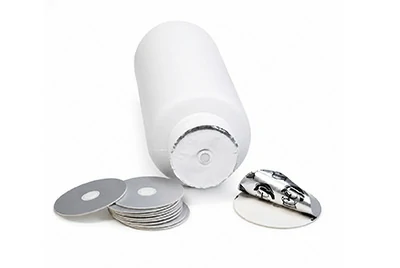
Breathable aluminum foil induction liner
Breathable aluminum foil induction liners enable gas release and pressure balance, reducing swelling, deformation, and leakage risks. Suitable for agrochemical, chemical, and specialty liquid packaging.
Printed and anti-counterfeit aluminum foil induction liners
Printed and anti-counterfeit aluminum foil induction liners support custom logos, text, holograms, and security patterns. Suitable for food, supplements, pharmaceuticals, cosmetics, lubricants, and branded packaging.
Not sure which aluminum foil induction liner to choose? Please send details about your bottle, cap, contents, and sealing requirements. Chalco Aluminum can help match the appropriate liner type, heat-seal layer, and supply format, and provide samples for testing.
Compatible bottle and container materials
The sealing performance of aluminum foil induction liners depends on the compatibility between the heat-seal layer and the bottle mouth material. Chalco Aluminum selects suitable heat-seal layers, aluminum foil structures, and backing combinations based on different container materials to ensure a stable seal forms between the liner and the bottle mouth after induction heating.
| Container material | Common packaged products | Selection priorities |
| PE / HDPE | Pesticide bottles, chemical bottles, lubricant bottles, cleaner bottles | Focus on leak prevention, oil resistance, chemical resistance, and transport sealing integrity |
| PP | Food bottles, medicine bottles, supplement bottles, personal care product bottles | Requires matching with a PP-compatible heat-seal layer to ensure sealing strength and clean peel performance |
| PET | Beverage bottles, edible oil bottles, condiment bottles, supplement bottles | Focus on sealing flatness, moisture barrier, oxidation resistance, and tamper evidence |
| PVC | Certain chemical, personal care, and specialty packaging containers | Heat-seal layer compatibility must be confirmed based on bottle mouth material and contents |
| PS | Food, pharmaceutical, laboratory, or specialty plastic containers | Suitable for lightweight packaging and specific container designs; sample testing is recommended for confirmation |
| Glass | Food bottles, supplement bottles, medicine bottles, cosmetic bottles | Requires selection of heat-seal materials compatible with glass bottle mouths, with attention to bottle mouth flatness |
Different bottle mouth materials cannot simply use the same heat-seal layer. Even if liner diameters are identical, PE, PP, PET, and glass bottles have different requirements for heat-seal temperature, sealing strength, peel performance, and sealing stability.
If customers already have bottles, caps, or existing liner samples, Chalco Aluminum can match the appropriate solution based on bottle mouth material, contents, and sealing equipment, and provide samples for sealing tests to confirm actual performance before bulk procurement.
Supply formats for aluminum foil induction liners
Chalco Aluminum offers various supply formats-including rolls, pre-cut liners, sheets, and custom liners-based on customers' production methods, equipment conditions, and procurement purposes, meeting the diverse needs of cap manufacturers, packaging material processors, liner die-cutting facilities, and end-user filling operations.
Roll supply
Aluminum foil induction liner rolls are ideal for cap manufacturers, packaging material processors, and liner die-cutting facilities, allowing customers to slit, die-cut, and insert liners according to cap specifications.
Rolls can be customized in width, thickness, structure, printed patterns, and holographic effects according to equipment requirements, supporting high-volume continuous production and enabling better control over per-unit liner cost and production scheduling.
Pre-cut liner supply
Pre-cut aluminum foil induction liners are suitable for customers with fixed bottle mouth dimensions and cap specifications, allowing direct insertion into caps for induction sealing.
This supply format is ideal for food, supplement, pharmaceutical, cosmetic, lubricant, and chemical filling operations, eliminating secondary die-cutting processes and enabling faster entry into packaging production.
Sheet supply
Sheet format suits customers needing to perform their own cutting, prototype development, small-batch validation, or special-size processing, useful for new packaging structure testing, sample confirmation, and initial matching across different bottle mouth sizes.
For packaging material development, liner structure testing, and new product pilot runs, sheet supply enhances flexibility during early-stage validation.
Custom liner supply
Chalco Aluminum can customize liners in diameter, shape, thickness, heat-seal layer, backing structure, and surface finish based on bottle mouth dimensions, cap design, container material, contents characteristics, and sealing equipment requirements.
Customization options include logo printing, text printing, embossing, holographic effects, anti-counterfeit patterns, easy-tear structures, tamper-evident features, and breathable designs, catering to customers with special requirements for sealing performance, brand presentation, and packaging security.
Selecting aluminum foil induction liners by industry
Different packaging industries have distinct requirements for aluminum foil induction liners. Chalco Aluminum matches appropriate liner structures and supply formats based on needs such as food safety, oil resistance, leak prevention, tamper evidence, chemical resistance, ease of opening, and brand presentation.
| Application industries | Common packaged products | Recommended focus areas |
| Food and beverage packaging | Edible oils, condiments, sauces, beverages, dry goods, powdered foods | Leak prevention, moisture barrier, air barrier, easy opening, food-contact safety |
| Pharmaceutical and supplement packaging | Medicine bottles, capsule bottles, nutritional supplement bottles, health product bottles | Tamper evidence, opening indication, clean opening, brand trust |
| Agrochemical packaging | Pesticide bottles, fertilizer bottles, agricultural chemical containers | Chemical resistance, leak prevention, transport sealing integrity, storage stability |
| Lubricant and engine oil packaging | Engine oil, lubricant oil, gear oil, industrial oil bottles | Oil resistance, leak prevention, ring-shaped easy-tear feature, anti-counterfeit printing, long-haul transport sealing |
| Chemical packaging | Cleaners, solvents, additives, chemical liquid containers | Heat-seal layer compatibility, resistance to content interaction, leak prevention, and safe transport |
| Cosmetics and personal care packaging | Lotions, creams, hair and skin care products, serum bottles | Easy-tear opening, smooth appearance, logo printing, brand packaging image |
| Household and cleaning product packaging | Laundry detergents, disinfectants, cleaners, care solutions | Leak prevention, contamination protection, batch sealing consistency, and packaging integrity |
Custom printed, embossed, and holographic aluminum foil induction liners
Chalco Aluminum offers plain, logo-printed, text-printed, embossed, holographic, and anti-counterfeit pattern customization for aluminum foil induction liners, enabling them to serve not only as protective seals but also as part of the brand's packaging identity.
For food, supplement, pharmaceutical, and cosmetic packaging, the aluminum foil surface can be printed with brand logos, product instructions, opening directions, or safety warnings to enhance consumer perception of product integrity and brand professionalism.
For lubricant, engine oil, agrochemical, and chemical packaging, anti-counterfeit patterns, holographic effects, batch identification, or exclusive text designs can be incorporated to reduce counterfeit packaging risks and improve retail recognition.
Embossing and 3D patterns enhance visual depth on the foil surface, making the liner more noticeable to consumers upon opening. Holographic effects are ideal for customers seeking anti-counterfeiting, brand visibility, and premium packaging aesthetics.
Chalco Aluminum supports continuous pattern layout on rolls and can confirm pattern placement according to pre-cut liner dimensions. Customers can provide logo files, text content, color requirements, bottle mouth dimensions, and roll orientation, and we will assist in verifying print quality, layout arrangement, and sample testing.
Key considerations for selecting aluminum foil induction liners
When selecting aluminum foil induction liners, matching diameter alone is insufficient. Bottle material, cap design, contents characteristics, sealing equipment, and end-user opening requirements must all be considered together. Chalco Aluminum can recommend suitable foil structures, heat-seal layers, backing materials, and supply formats based on the customer's packaging information.
Typically, the following information needs to be confirmed:
- Bottle mouth dimensions: Confirm outer diameter, inner diameter, sealing surface width, and bottle mouth flatness to ensure proper liner fit.
- Container material: Identify whether the bottle is made of PE, HDPE, PP, PET, PVC, PS, glass, or another material to select an appropriate heat-seal layer.
- Cap design: Confirm cap type, internal space, thread structure, and whether it includes an inner plug or special sealing features to avoid interference with liner insertion and sealing performance.
- Contents type: Determine whether the product is liquid, powder, granules, paste, oil, chemical liquid, or volatile substance, as different contents require different composite structures.
- Sealing requirements: Select the appropriate combination of aluminum foil layer, backing layer, and heat-seal layer based on needs such as leak prevention, moisture barrier, air barrier, contamination protection, tamper evidence, or resealability.
- Opening method: Choose from standard tear, easy-tear, half-peel, ring-shaped easy-tear, or other assisted-opening structures to enhance consumer unsealing experience.
- Supply format: Select rolls, pre-cut liners, sheets, or custom shapes based on production methods to align with die-cutting, cap insertion, filling, and sealing workflows.
- Surface finish: Confirm whether a plain surface, logo printing, text printing, embossing, holographic effect, or anti-counterfeit pattern is required for brand presentation and tamper evidence.
- Sealing equipment: Confirm whether handheld, semi-automatic, or automatic induction sealing equipment will be used, and conduct tests based on production line speed, cap size, and sealing power.
For packaging of edible oils, lubricants, and chemical liquids, prioritize verifying the heat-seal layer's oil resistance, compatibility with contents, and leak-proof performance during transport. For food, pharmaceuticals, and dietary supplements, focus on tamper evidence, clean opening, and material compliance documentation. Brand packaging customers may simultaneously confirm printed designs, holographic effects, and user opening experience.
Aluminum foil induction seal liner sealing test and usage precautions
The sealing performance of aluminum foil induction seal liners depends not only on the liner itself but also on the bottle mouth condition, cap pressure, heat-seal layer compatibility, and induction sealer parameters. Before full-scale use, conduct sample sealing tests to verify seal strength, peel performance, and opening experience.
Confirm liner installation orientation
Aluminum foil induction seal liners must be inserted into the cap with the heat-seal layer facing the bottle mouth. If installed upside down, even with correct equipment settings, issues such as failed sealing, weak adhesion, or abnormal heating of the foil may occur.
Maintain clean and flat bottle mouth
The bottle mouth surface must remain flat and clean, free from oil, moisture, dust, burrs, or noticeable deformation. For powders, oils, chemical liquids, and pastes, residue on the bottle mouth directly affects the bonding between the heat-seal layer and the container.
Control cap pressure and closure tightness
Caps must be tightened properly to ensure stable contact between the liner and the bottle mouth. Loose, misaligned caps or mismatched internal cap space can cause partial sealing failure, uneven seals, or leakage during transport.
Match bottle mouth material with heat-seal layer
Different bottle mouth materials-such as PE, HDPE, PP, PET, PVC, PS, and glass-require compatible heat-seal layers. Even with identical liner diameters, an incompatible heat-seal layer may result in poor adhesion, abnormal peeling, or inconsistent seal strength.
Assess content impact on liners
For edible oils, lubricants, chemical liquids, acidic/alkaline products, solvent-based formulations, or volatile contents, prioritize verifying the liner's oil resistance, chemical resistance, and long-term sealing stability. For high-risk contents, complete sealing, inversion, and storage tests before bulk procurement.
Adjust induction sealer parameters
Power output, sealing time, line speed, head height, and cap size of handheld, semi-automatic, or automatic induction sealers all affect final sealing performance. Insufficient power may cause weak seals, while excessive power or prolonged sealing time can burn through, deform, or over-seal the foil.
Allow cooling and inspection time
After induction sealing, allow the heat-seal layer to cool and stabilize before conducting peel tests, inversion tests, pressure tests, or transport simulations. Testing too soon may lead to inaccurate results or damage the still-curing seal.
Troubleshoot common sealing issues
If problems arise-such as weak seals, partial sealing failure, foil burn-through, difficult peeling, or post-transport leakage-systematically inspect heat-seal compatibility, bottle mouth condition, cap pressure, equipment settings, liner structure, and content interaction. Avoid attributing issues to a single factor.
Aluminum foil induction seal liner packaging, storage, and transport
Aluminum foil induction seal liners are composite structures made of aluminum foil, heat-seal layer, paperboard, foam, PET, or wax release layers. During transport and storage, protect them from moisture, extrusion, high temperatures, and contamination. Chalco Aluminum uses appropriate packaging methods-based on roll stock, pre-cut liners, or custom shapes-to maintain product flatness and sealing reliability.
Roll stock packaging
Rolls are typically packed in moisture-resistant film, cartons, or pallets, with external labels indicating specifications, structure, roll width, batch number, and quantity. For printed, embossed, or holographic rolls, surface finishes are protected to minimize transport-related abrasion, dents, and edge deformation.
Pre-cut liner packaging
Pre-cut aluminum foil induction liners can be packaged by quantity, diameter, structure, and customer capping method to facilitate warehouse receipt, counting, and production-line handling. Packaging prevents moisture exposure, material mixing, edge deformation, and heat-seal layer contamination.
Moisture and contamination protection
The heat-seal layer and paperboard or foam backing of aluminum foil induction liners are sensitive to humidity, oil, and dust. Keep original packaging intact until use, and avoid contact between the heat-seal surface and hand sweat, oil, liquids, or dust during handling to preserve seal integrity.
Storage conditions
Store products in a dry, clean, well-ventilated warehouse, away from direct sunlight, high temperatures, excessive humidity, and heavy stacking. Food, pharmaceutical, supplement, and brand packaging customers should manage inventory by batch and follow first-in-first-out (FIFO) principles.
Transport protection
For export shipments, use cartons, pallets, stretch wrap, and reinforced outer boxes based on order volume and shipping method to reduce risks of moisture, compression, box damage, and contamination during sea, air, or land transport.
Common questions about aluminum foil induction seal liners
What is an aluminum foil induction seal liner?
An aluminum foil induction seal liner is a composite sealing material placed inside a cap. It uses electromagnetic induction to heat the aluminum layer, bonding the heat-seal layer to the bottle mouth to create a leak-proof, moisture-resistant, contamination-resistant, and tamper-evident seal.
Must aluminum foil induction seal liners be used with an induction sealer?
Yes. Aluminum foil induction seal liners require handheld, semi-automatic, or automatic induction sealing equipment. Final sealing performance depends on equipment power, sealing time, cap size, production line speed, and liner structure.
Can you supply roll stock?
Yes. Chalco Aluminum supplies aluminum foil induction seal liner rolls, suitable for cap manufacturers, packaging converters, and liner die-cutters for slitting, punching, and cap insertion. We also offer pre-cut liners, sheets, and custom shapes per customer requirements.
Which bottle materials are compatible with aluminum foil induction seal liners?
Common compatible materials include PE, HDPE, PP, PET, PVC, PS, and glass. Different bottle mouth materials require matched heat-seal layers-do not select liners based on diameter alone. We recommend conducting sealing tests with actual bottle samples.
What's the difference between one-piece and two-piece aluminum foil induction liners?
After sealing, a one-piece liner remains fully adhered to the bottle mouth, leaving no secondary backing in the cap. A two-piece liner leaves the aluminum layer on the bottle mouth while the paperboard or foam backing stays in the cap, providing auxiliary resealability after opening.
Can aluminum foil induction seal liners be used for edible oil and lubricant packaging?
Yes. Edible oil, engine oil, lubricant oil, and gear oil packaging typically require strong oil resistance, leak prevention, transport sealing reliability, and easy opening. Chalco Aluminum offers oil-resistant heat-seal layers, composite structures, and ring-pull easy-peel solutions.
Can you provide logo printing, embossing, and holographic effects?
Yes. The aluminum foil surface can be customized with logos, text, tamper-evidence messages, embossing, holograms, and anti-counterfeit patterns-ideal for food, pharmaceuticals, supplements, cosmetics, lubricants, and branded packaging.
How do I choose the right aluminum foil induction seal liner?
Confirm bottle mouth dimensions, container material, cap design, contents, whether liquid or oily, need for tamper evidence, requirement for easy-peel opening, type of sealing equipment, and preferred supply format. Chalco Aluminum can recommend an optimal structure based on this information.
Can you provide samples for sealing tests?
Yes. Customers can provide bottles, caps, current liners, or sealer parameters, and Chalco Aluminum will supply matched samples for testing seal strength, inversion leak resistance, peel performance, and opening experience.
What information is needed for a quotation?
Please provide liner diameter or bottle mouth size, container material, cap type, contents, whether liquid or oily, desired supply format, printing requirements, order quantity, and target market regulations. More complete information enables faster, more accurate quoting and structural matching.