Are you evaluating aluminum foam panels for custom cabinetry or interior doors?
Henan Chalco supplies 9–18 mm sandwich-structure aluminum foam composite panels. Facing, thickness, and surface finish can be customized to drawings, and pricing is reviewed against your project specification.
The product on this page uses a non-combustible metal foam core — a porous aluminum foam metal core. It is not an XPS/PET-type polymer foam core composite panel, not an unfaced single-body decorative aluminum foam panel, and not an ACP facade panel.
Aluminum foam panels at a glance: 9 mm, 12 mm and 18 mm builds
Start with three typical builds, then compare specifications:
- 9 mm — thin dual-metal-face board, designed for cabinet doors, backing panels, and other lightweight components.
- 12 mm — general-purpose cabinet board, available with a PVC film finish.
- 18 mm (approx. 3/4 in) — the primary cabinet thickness benchmarked against 18 mm MDF, available with a solid wood veneer finish.
| Total thickness | Typical Build A | Typical Build B |
| 9 mm | 0.2 mm aluminum sheet + 8 mm aluminum foam core + 1 mm aluminum sheet (or 0.8 mm steel sheet) | 0.5 mm aluminum sheet + 8 mm aluminum foam core + 0.5 mm aluminum sheet |
| 12 mm | PVC film + 3 mm marine board + 8 mm aluminum foam core + 0.2 mm aluminum sheet | PVC film + 0.5 mm aluminum sheet + 11 mm aluminum foam core + 0.5 mm aluminum sheet |
| 18 mm | wood veneer + 3 mm marine board + 10 mm aluminum foam core + 3 mm marine board + wood veneer | wood veneer + 0.5 mm aluminum sheet + 16 mm aluminum foam core + 0.5 mm aluminum sheet |
The builds above are typical configurations. Layer structure, thickness, pore size, and facing can be customized to requirements.
Maximum panel size and thickness tolerance are confirmed against drawings.
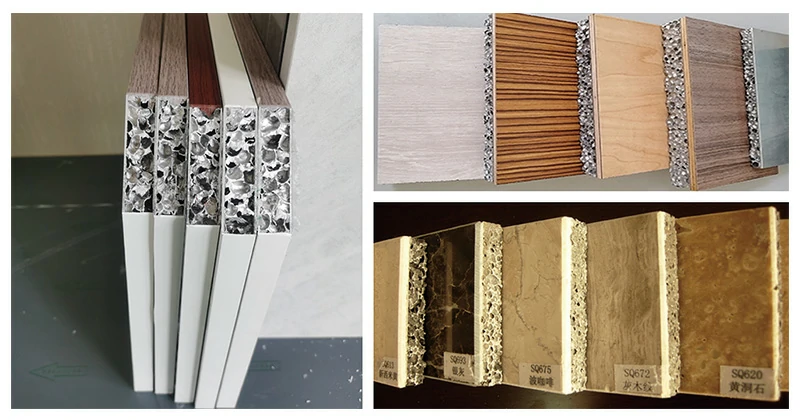
What is an aluminum foam sandwich panel?
An aluminum foam sandwich panel uses a "facing + aluminum foam core + backing" sandwich structure.
The core material, aluminum foam, is a porous metal formed by foaming molten aluminum: a closed-cell structure with porosity typically in the 60–90% range (industry-typical figures), a common density of 0.15–0.2 g/cm³, and a core material that is aluminum metal itself, with a melting point of 660 °C (1,220 °F).
The facing carries tension and compression as well as flatness, while the foam core carries shear, weight reduction, sound insulation, and thermal insulation. A sandwich structure's bending stiffness increases significantly with total thickness, which is exactly why it can achieve usable stiffness at a very low areal density.
The core is formed by a melt foaming process and then bonded with the facing to form a panel; in engineering practice, adhesive bonding and metallurgical bonding are the two common methods for joining facing to core, selected according to the build.
Note when selecting:aluminum foam core panels are actually aluminum-faced composite panels with an XPS, PET, or PU polymer foam core — cheaper and lighter, but the organic core is combustible and has limited temperature resistance.
Our aluminium foam composite panel has a core that is aluminum metal itself, non-combustible — this difference directly determines fire performance in furniture and interior projects.
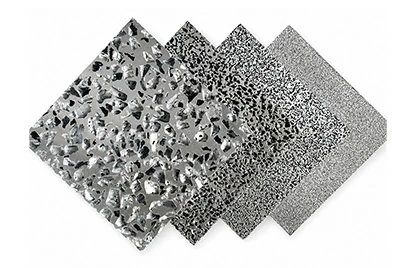
There is also a separate category of unfaced, single-body porous decorative panels (also marketed as stabilized aluminum foam), built around an exposed-pore aesthetic.
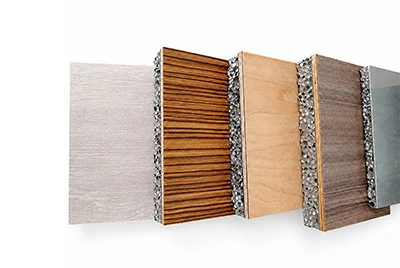
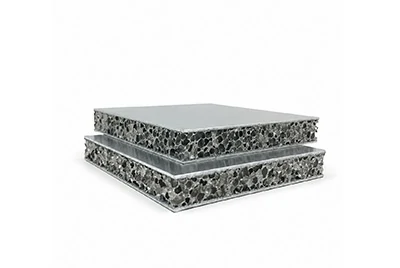
Why use aluminum foam panels in furniture?
No added formaldehyde
The metal core and metal/inorganic facing contain no urea-formaldehyde resin, so the finished product releases no formaldehyde;
the composite adhesive layer is used in limited quantity, with exact figures per the test report. For buyers accustomed to checking E0/E1 or CARB and TSCA Title VI ratings, this largely removes cabinet-board emissions-grade concerns.
Non-combustible core
Aluminum foam panels have a non-combustible metal core; the product achieves Class A flame-retardant rating per GB 8624;
while wood-based panels typically fall in the Class B range. For commercial spaces and public building projects that must pass fire inspection, this is a hard requirement.
Moisture absorption <0.1%
Both mass and volume moisture absorption are below 0.1%. Kitchen and bathroom cabinets neither absorb moisture nor develop mold or edge swelling — precisely the failure modes most common with wood cabinetry in humid spaces.
About 50% Lighter
Core density is 0.15–0.2 g/cm³. Compared with a wood-based solution of the same thickness, the composite structure typically reduces weight by about 50%, which helps reduce handling and installation effort as well as the long-term load on hinges and hardware.
Quieter Acoustics
The porous metal core naturally provides sound absorption and vibration damping, which helps reduce the hollow sound of a knocked cabinet door and room reverberation.
For quiet-sensitive settings such as walk-in closets, bedrooms, and office partitions, this is an advantage that neither wood-based panels nor polymer-core panels can offer;
Durable and Dimensionally Stable
The aluminum-based material does not rust and carries no risk of insect damage; the panel structure is stable and, unlike wood-based panels, does not warp with moisture expansion and contraction — cabinet doors stay flat through years of opening and closing, which helps reduce after-sales repair and replacement costs.
Not sure which build fits your cabinet product line? Send us panel drawings for a configuration review.
Aluminum foam vs honeycomb vs polymer foam core panels
| Dimension | Aluminum foam panel | Aluminum honeycomb panel | Polymer foam core panel |
| Structure | Porous metal-core sandwich | Hexagonal aluminum honeycomb-core sandwich | XPS/PET/PU-core sandwich |
| Stiffness and flatness | Good | Excellent (preferred for large panel formats) | Average |
| Sound absorption | Excellent (porous structure absorbs sound naturally) | Moderate (requires perforation + backing combination) | Average |
| Fire performance | Core is non-combustible | Core is non-combustible; overall panel rating depends on adhesive and facing | Organic core is combustible |
| Relative cost | Higher | More economical | Lowest |
| Furniture fit | High-end custom projects prioritizing acoustics, fire margin, and a metal edge finish | Large flat cabinet doors and cost-sensitive volume customization | Lightweight, insulation-focused scenarios with low fire requirements |
Selection logic:
For large flat, cost-first cabinet door projects, aluminum honeycomb panels are often the better answer — and they are also part of our regular product line;
polymer foam core panels are the lightest and least expensive, but the combustible core cannot clear high fire-performance thresholds;
aluminum foam panels deliver their value through sound absorption, fire margin, and an integrated metal-look edge finish — designed for projects that turn a "functional panel" into a "high-end facing material."
Fabrication, hardware and edge finishing
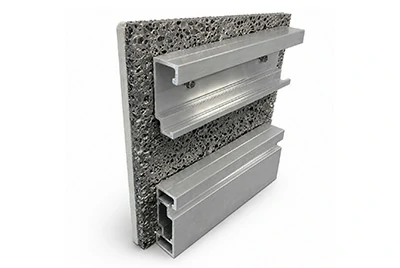
Aluminum foam composite panels can be processed with standard woodworking and aluminum fabrication equipment for cutting, drilling, and edge trimming. CNC hole-forming and profile cutting are also supported, and existing furniture production lines typically require no major changes.
The facing system covers aluminum sheet, marine board, PVC film, and wood veneer. Among these, PVC film and wood veneer can achieve custom appearances such as wood grain, helping the metal-core board blend into conventional home decor styles;
surface treatments such as anodizing and powder coating can be quoted on request.
For edge banding and hardware connections, the common approach with sandwich panels is for the metal facing to carry the main connection load, using a combination of mechanical fastening and structural adhesive bonding; a metal edge wrap or edge strip can address end-face appearance and moisture protection at the same time.
Specific hinge, hardware, and edge banding solutions are provided per build and design, quoted per design.
The aluminum facing supports mechanical surface treatments such as brushing, sandblasting, polishing, and embossing, producing a brushed, matte, or embossed metal texture;
the coating system can include PE / PVDF pre-painted aluminum sheet (color matched to your product style via the RAL color series), as well as anodizing and powder coating.
Surface patterns cover common textures such as wood grain and stone grain, and a personalized pattern can also be customized to a customer's design — all of the above are available to specification and confirmed per order quotation.

Polishing

Sandblasting
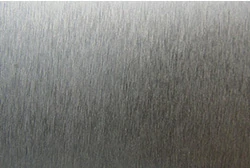
Brushing
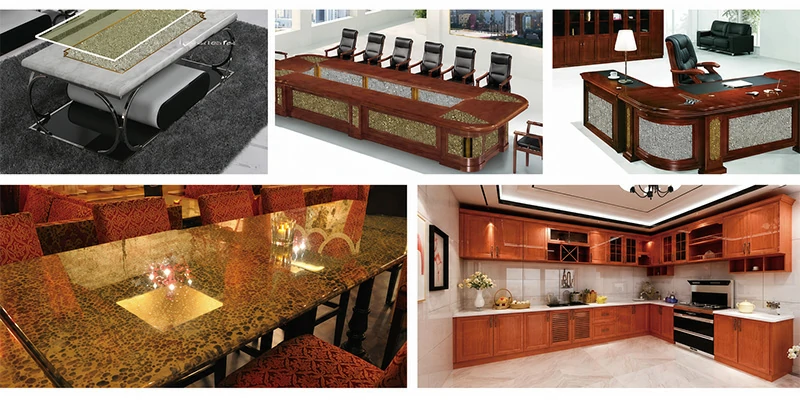
Furniture applications: wardrobes, cabinet doors and interior doors
Whole-Home Custom Wardrobes
Take a 2400 × 2400 × 600 mm (approx. 94 in high) custom wardrobe as an example: the side panels, shelves, and doors are all made of aluminum foam composite panels, assembled with clips, brackets, and bolts for modular assembly. Installation is dry, with no wet work, and the wardrobe is easy to disassemble and service later.
Cabinet Doors and Interior Doors
Aluminum foam composite doors are lighter than traditional wood or steel doors, with a non-combustible core and an average sound insulation of 30 dB per panel — suitable for residential interior doors, office soundproof doors, and door leaves and panels in commercial fire-rated scenarios.
Kitchen and Bathroom Cabinetry
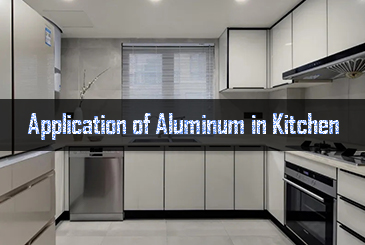
Moisture absorption below 0.1% makes it especially suited to kitchen cabinets and bathroom vanities — in high-humidity spaces it does not absorb moisture, develop mold, or swell at the edges. With an aluminum sheet or PVC film facing, the whole panel is water-resistant.
Commercial and Weight-Sensitive Applications
Commercial fit-out projects such as hotels and offices that need to pass fire inspection benefit directly from the non-combustible core;
the approximately 50% weight reduction (typical) also makes it suitable for furniture in weight-sensitive mobile spaces such as RVs and yachts.
The same panel series can also be used for interior elements such as ceilings and partitions. Need to confirm the look and feel of a finish? You can request a sample and a proofing review.
Supply options, inspection documents and RFQ boundaries
Supply Basis
Standard supply covers three typical builds at 9 mm, 12 mm, and 18 mm; thickness, pore size, facing, and panel size can all be customized to drawings, available to specification.
Surface and Packaging
Facing is determined by selection (aluminum sheet / marine board / PVC film / wood veneer);
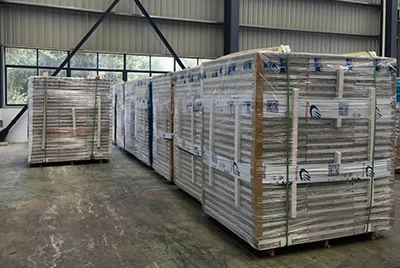
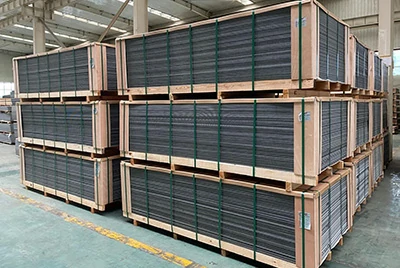
export packaging is confirmed per order.
Inspection Documents
Each order can be quoted with test reports and a COC. Test items and standards are agreed per order, providing documentation for your project acceptance.
Quality, testing and production capability
Capability: we have participated in and led the drafting of China's national standard for aluminum foam materials, hold an industry-leading number of granted invention patents in the aluminum foam field, and operate automated production lines with ongoing capacity expansion.
Project reference: the acoustic engineering for the National Indoor Stadium (ice hockey venue) at the 2022 Winter Olympics made large-scale use of our aluminum foam composite panels. At the industry level, aluminum foam has also been selected as an interior and exterior decorative facing material for landmark projects such as Milan's Fondazione Prada — the decorative and acoustic value of this material category has been repeatedly validated by high-end projects.
National-level test reports:
- Noise reduction coefficient (NRC) averaging 0.75, up to 0.9 (for perforated sound-absorbing configurations);
- Average sound insulation of 30 dB; mass and volume moisture absorption both <0.1%.
- Material 100% recyclable.
FAQ
Are aluminum foam panels the same as foam core aluminum panels?
No. The product on this page has a core that is porous aluminum metal, non-combustible. Most "foam core" aluminum-faced panels on the market have an XPS/PET-type polymer core, which is organic and combustible. Please confirm the core material when requesting a quote.
What are the disadvantages of aluminum foam panels?
Three points: cost is higher than aluminum honeycomb panels and polymer foam core panels; the exposed surface has a porous texture, so a composite facing is needed for flat applications; and it is not used as a primary load-bearing structural member. It suits projects that want to spend their budget on fire performance, acoustics, and finish quality.
How much do aluminum foam panels cost?
Pricing is per build: total thickness, facing material, finishing process, and quantity together determine aluminum foam panels cost, quoted per order. Attach drawings and quantity to get an accurate quote.
How do hinges and hardware attach to aluminum foam panels?
The metal facing carries the connection load; hinge and hardware solutions are provided per build and design, quoted per design.
How heavy is an 18 mm aluminum foam panel compared with 18 mm MDF?
The composite structure typically reduces weight by about 50%. The exact weight is calculated layer by layer based on the selected build, with a reference weight per square meter provided at quotation.
Are aluminum foam panels fireproof?
The accurate statement is that the core is non-combustible: the aluminum metal core does not burn, and the product achieves Class A flame-retardant rating per GB 8624. The fire performance of the complete furniture piece or door also depends on the facing and installation system.
Do aluminum foam panels release formaldehyde?
No added formaldehyde — the metal core and metal/inorganic facing contain no urea-formaldehyde resin; the composite adhesive layer is per the test report.
RFQ
We produce and quote per order.
If you're looking for aluminum foam panels for sale and want an accurate quote in one pass, please include in your RFQ: preferred total thickness and build, facing and finish, quantity, and panel drawings.
Henan Chalco will review against your specification and reply with configuration recommendations and a quote.