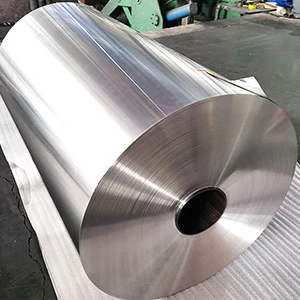
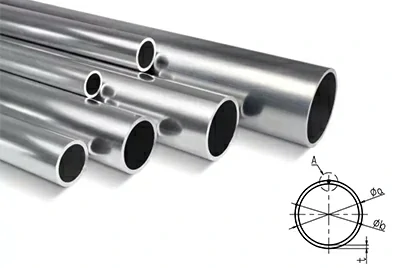
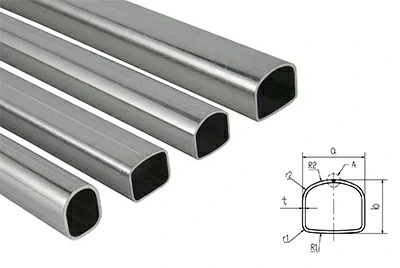
4032 aluminum is a high-silicon, heat-treatable wrought aluminum alloy with a relatively low coefficient of thermal expansion, good wear resistance and dimensional stability. It is well suited to engine pistons, bushings and precision mechanical components that require wear resistance and thermal dimensional stability.
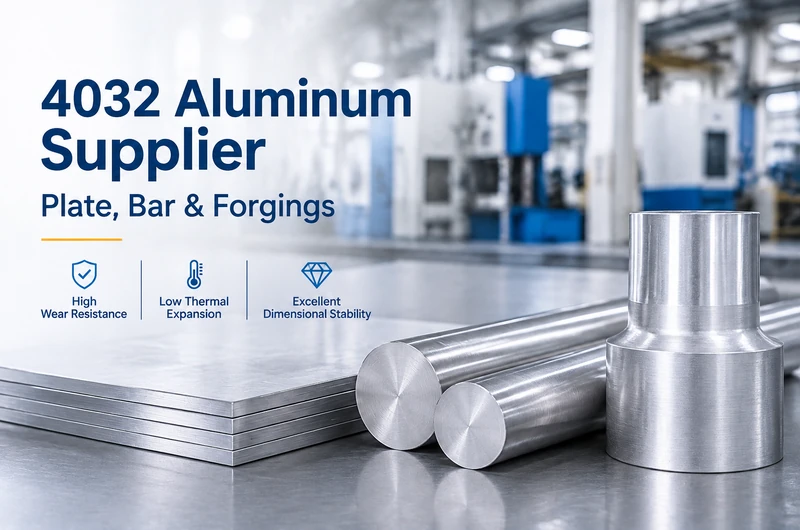
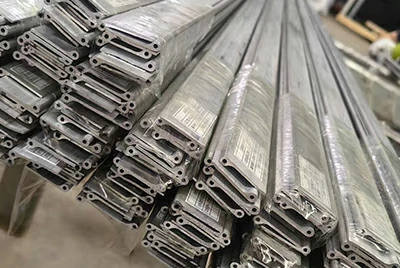
Henan Chalco supplies 4032 aluminum plate, round bar and forging stock, with cut-to-size and custom dimensions available. We can help confirm the appropriate temper, dimensions and inspection documents based on customers' machining requirements.
View 4032 aluminum product forms ↓
Why choose 4032 aluminum?
Low thermal expansion
4032 has a coefficient of thermal expansion of approximately 19.4 × 10⁻⁶/K (20–100°C), helping reduce dimensional changes caused by temperature fluctuations. In engine pistons and precision-fit parts, this helps control thermal clearances, improve dimensional stability in operation and reduce the risk of noise and wear caused by changing clearances.
Excellent wear resistance
4032 contains approximately 11.0%–13.5% silicon, along with alloying elements including nickel. Its hard secondary phases help improve wear resistance, making it suitable for friction-contact components such as brake pistons, transmission components and precision bushings, while helping reduce surface wear and maintenance needs.
Real-world test example:
Alcoa previously subjected Deltalloy 4032 brake pistons without hard anodizing to approximately 500,000 reciprocating cycles, recording a maximum wear depth of only about 0.0203 mm.
Heat-treatable strength
Under specified T6/T651 material conditions, 4032 can have a minimum tensile strength of 359 MPa and a minimum yield strength of 331 MPa, meeting the room-temperature load requirements of various precision mechanical components. Henan Chalco can help confirm appropriate material specifications based on product form, temper and machining requirements, supporting subsequent turning, milling and precision component manufacturing.
4032 aluminum products and supply forms
Henan Chalco supplies 4032 aluminum alloy in several forms to support precision turning, milling, forging and the production of complex components.
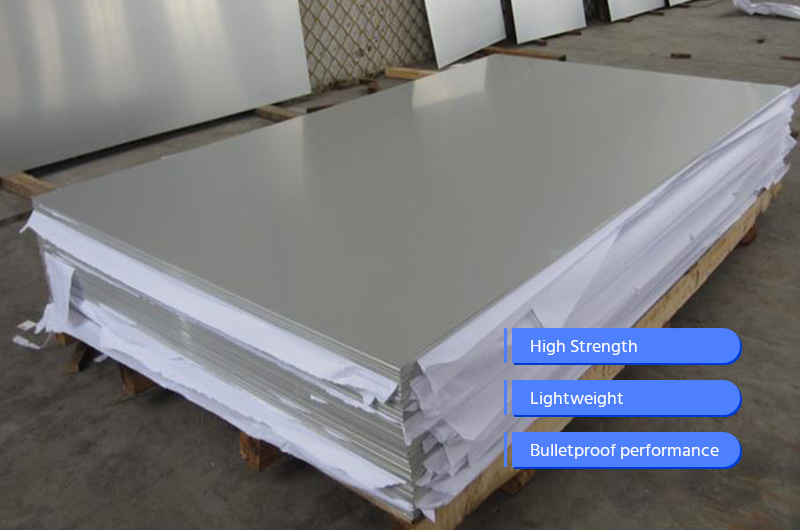
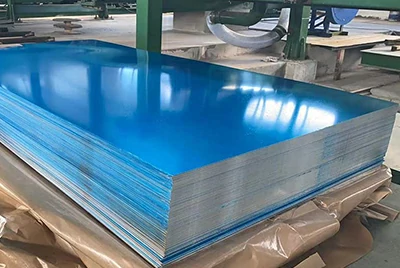
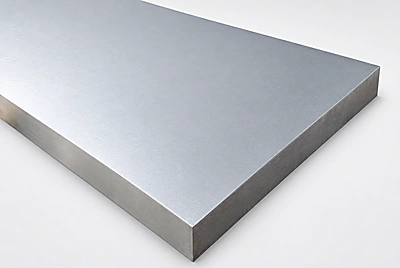
4032 aluminum plate
Thickness:0.188–8 inches (4.78–203.2 mm)
Width:24 inches
Length:36 inches
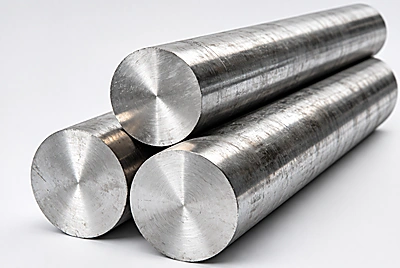
4032 aluminum round bar
Diameter:0.500–23.000 inches
Temper:T6, T651
Typical uses:Piston blanks, precision bushings, brake pistons and turned parts
4032 aluminum forgings
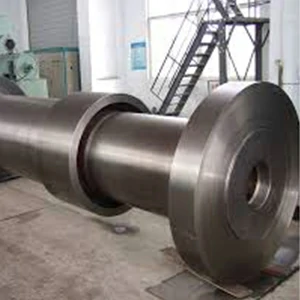
Product forms:Die forgings, open-die forgings and forged blanks
Specifications:AMS 4145, QQ-A-367
Typical uses:Forged pistons, compressor parts and wear-resistant mechanical components
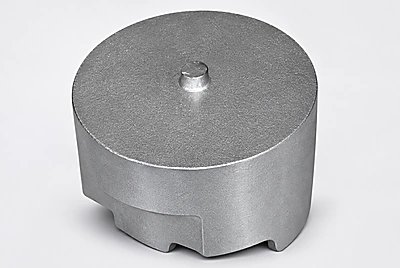
Choosing the appropriate 4032 product form and dimensions helps control machining costs and improve material utilization. Henan Chalco can confirm suitable supply specifications based on component geometry, manufacturing processes and order quantity, and provide pricing and delivery options.
4032 aluminum tempers
4032 aluminum can be heat treated to increase mechanical strength. Different supply tempers vary in residual stress, dimensional stability and machinability. Henan Chalco can help customers select a suitable temper according to component loads, machining methods and dimensional accuracy requirements.
- 4032-T6 (solution heat treated + artificially aged): Offers high mechanical strength and hardness for engine pistons, wear-resistant mechanical parts and other precision components subjected to mechanical loads.
- 4032-T651 (solution heat treated + stretch stress-relieved + artificially aged): Combines high strength with reduced residual stress to help limit distortion after extensive turning or milling. Suitable for precision bushings, machined blanks and parts with tight dimensional tolerances.
- 4032-T86 (solution heat treated + cold worked + artificially aged): Combines cold-work strengthening with artificial aging to increase mechanical strength. Under ASTM B211/B211M-23, 4032-T86 bar in the 10–20 mm section range has minimum tensile and yield strengths of 350 MPa and 315 MPa, respectively, making it suitable for precision-machined parts with defined strength and dimensional requirements.
- 4032-F (as fabricated): Retains the condition resulting from forming or other manufacturing operations. Mechanical properties depend on the specific process. Suitable for stock intended for subsequent heat treatment or additional processing.
For high-strength, wear-resistant parts, T6 is an important option to consider. For components requiring extensive stock removal and strict control of machining distortion, T651 may be preferable. Actual temper availability should be confirmed against product form, dimensions and technical requirements.
4032 aluminum applications
4032 aluminum is used in engines, automotive transmission and braking systems, and precision machinery. It is particularly suitable for parts requiring control of thermal expansion, frictional wear and machining accuracy. Henan Chalco 4032 aluminum can be used to manufacture the following typical components.
-
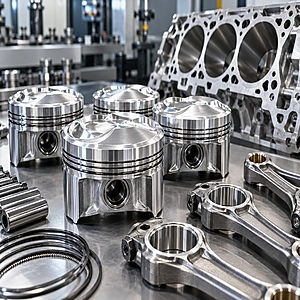 Forged pistons and engine components
4032 is commonly used for forged engine pistons. Its lower thermal expansion allows smaller cold-fit clearances and helps reduce piston slap during cold starts. Its high-silicon microstructure helps reduce wear at piston skirts and ring grooves, making it suitable for forged and machined pistons and other wear-resistant engine components.
-
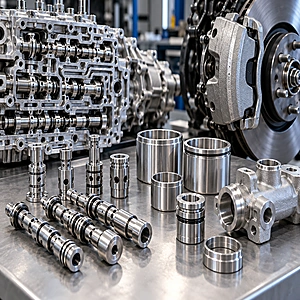 Transmission valves and brake components
The wear resistance and dimensional stability of 4032 help reduce surface wear in reciprocating components and maintain precision fits. Typical parts include transmission valves, brake pistons and brake master-cylinder components. In some brake-piston applications, wear testing may reduce the need for hard anodizing.
-
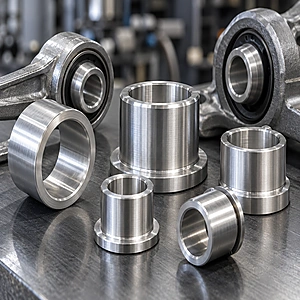 Bushings and bearing components
The high-silicon microstructure of 4032 improves resistance to wear at sliding contact surfaces and reduces damage from repeated movement. It is suitable for steering-system bushings, precision sleeves and wear-resistant bearing components, particularly when tight fits and long service life are required.
-
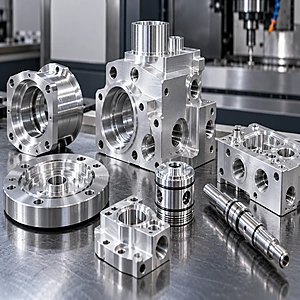 Precision machined industrial components
4032 combines machinability with wear resistance for components requiring precision turning, drilling and stable fit dimensions. Typical applications include precision hydraulic-system components, drive components in copying equipment and wear-resistant industrial machinery parts.
Every application places different demands on wear resistance, thermal expansion, and machining stability. Tell us your part requirements, and we can help assess whether 4032 aluminum is the right solution.
4032 aluminum properties
4032 aluminum offers a relatively low coefficient of thermal expansion, good thermal conductivity and high strength after heat treatment. These properties help meet the thermal dimensional stability and load-bearing requirements of precision mechanical components. Its physical and mechanical properties are listed below.
Physical properties of 4032 aluminum
| Density | 2.68–2.69 g/cm³ |
| Elastic modulus | Approx. 79 GPa |
| Coefficient of thermal expansion (20–100°C) | 19.4 × 10⁻⁶/K |
| Thermal conductivity | 138W/(m·K) |
| Brinell hardness (T6/T651) | 120 HB |
Mechanical properties of 4032 aluminum
4032 aluminum can gain mechanical strength through solution heat treatment and artificial aging. Both T6 and T651 offer high room-temperature strength; T651 is stretch stress-relieved and is therefore more suitable for components requiring dimensional stability during subsequent precision machining.
| Temper | Section size (in) | Tensile strength (min.) | Yield strength (min.) | Elongation (min.) |
| T6 | 0.500–4.000 | 359 MPa | 331 MPa | 4% |
| T6 | 4.001–6.000 | 359 MPa | 331 MPa | 5% |
| T651 | 0.750–4.000 | 359 MPa | 331 MPa | 7% |
| T651 | 4.001–6.000 | 359 MPa | 331 MPa | 5% |
These are reference properties for cold-worked material within the specified section ranges. Requirements for other product forms and sizes should be determined by the applicable standards and agreed supply specifications.
4032 aluminum chemical composition
4032 aluminum is characterized by its high silicon content of 11.0%–13.5%, together with additions of magnesium, copper and nickel. These elements create an alloy combining wear resistance, thermal dimensional stability and heat-treatable strength.
| Element | Compositions (%) |
| Silicon (Si) | 11.0–13.5 |
| Magnesium (Mg) | 0.8–1.3 |
| Copper (Cu) | 0.50–1.3 |
| Nickel (Ni) | 0.50–1.3 |
| Iron (Fe) | ≤1.0 |
| Chromium (Cr) | ≤0.10 |
| Zinc (Zn) | ≤0.25 |
| Others (Each) | ≤0.05 |
| Others (Total) | ≤0.15 |
| Aluminum (Al) | Remainder |
Functions of the main alloying elements:
- Silicon (Si): The main alloying element in 4032. Its 11.0%–13.5% content helps reduce thermal expansion and improves wear resistance through hard silicon phases.
- Magnesium (Mg) and copper (Cu): Contribute to strengthening phases and heat-treatable strength, enabling high mechanical strength in conditions such as T6 and T651.
- Nickel (Ni): Promotes the formation of intermetallic compounds with some thermal stability, helping improve microstructural stability and mechanical properties at elevated temperatures.
4032 aluminum standards
Henan Chalco can supply 4032 aluminum plate, bar and forgings to relevant ASTM, AMS and EN standards and project-specific requirements, depending on the product form. This supports different purchasing needs for chemical composition, mechanical properties, delivery temper and quality inspection.
- ASTM B211/B211M-23
- ASTM B247/B247M-25
- AMS 4319D
- SAE AMS-QQ-A-367E
- EN 573-3:2026
- EN 755-2:2025
- EN 754-2:2024
- EN 603-3:2021
4032 vs 2618 aluminum
Both 4032 and 2618 are wrought aluminum alloys widely used for high-performance engine pistons, but they are selected for different priorities. 4032 emphasizes low thermal expansion, wear resistance and long-term dimensional stability, whereas 2618 offers greater ductility, impact resistance and high-temperature load capability.
| Comparison | 4032 Aluminum | 2618 Aluminum |
| Silicon content | 11.0–13.5% | ≤0.25% |
| Thermal expansion | Lower; allows smaller cold-fit clearances | Higher; pistons usually require larger cold-fit clearances |
| Wear resistance | Better for long-term frictional contact | Relatively lower |
| Ductility | Lower; more prone to cracking under extreme impact loads | Higher; better impact resistance and plastic deformation capability |
| High-temperature performance | Suitable where wear resistance and thermal dimensional stability must be balanced | Better elevated-temperature strength and extreme-load tolerance |
| Typical applications | Street and some competition-engine pistons; wear-resistant precision parts | High-boost racing pistons and high-load engine parts |
In piston applications, the thermal expansion of 2618 pistons is approximately 15% higher than that of 4032 pistons. As a result, 4032 can use smaller cold-fit clearances, helping reduce cold-start noise and improve long-term wear performance at the piston skirt and ring grooves.
For components where service life, low noise and dimensional stability matter most, Henan Chalco 4032 aluminum is a strong material candidate. For severe detonation impacts, high boost pressure or more demanding high-temperature loads, 2618 should also be evaluated.
How to machine and process 4032 aluminum?
4032 aluminum is suitable for precision turning, drilling, thread machining and hot forging. Its high silicon content improves wear resistance but also increases tool wear. Selecting suitable tooling, cutting conditions and heat-treatment processes helps improve surface quality, control dimensions and meet the manufacturing requirements of pistons, precision valves and wear-resistant parts.
Machining parameters and tool selection
4032 aluminum has a machinability rating of B (Aluminum Association) and is suitable for volume production on single-spindle and multi-spindle automatic lathes. Coated carbide or polycrystalline diamond (PCD) cutting tools can improve surface finish and help control tool wear, especially during turning, drilling and thread machining of brake pistons, transmission valves and precision bushings.
| Machining parameter | Recommended value |
| Cutting speed | 100–168 m/min |
| Form tool feed rate | 0.05–0.08 mm/rev |
| Drilling feed rate | 0.20–0.25 mm/rev |
| Carbide tool grade | C4, coated carbide preferred |
| Top rake angle | 5–8° |
| Side rake angle | 2–2.5° |
| End relief angle | 2–3° |
For continuous production, wear-resistant coated tools and controlled cutting lubrication are recommended. For precision threads, thread rolling can also be evaluated to reduce cutting-tool wear and achieve consistent processing quality.
Forging and heat treatment
4032 aluminum is suitable for hot die forging, with a typical forging temperature of 371–510°C. It can be used for forged blanks for engine pistons and complex mechanical components. Compared with machining directly from large-diameter bar, near-net-shape forgings can reduce machining allowance and improve material utilization.
4032 can also achieve high mechanical strength through solution heat treatment, quenching and artificial aging.
| Process | Reference conditions |
| Hot die forging | 371–510°C |
| Solution heat treatment | 510°C, 1–12 h |
| Quenching | Cold water quenching |
| Artificial aging (T6) | 171°C, 10 h |
| Annealing | 413°C, followed by controlled cooling |
Forging temperatures and heat-treatment schedules affect microstructure, mechanical strength and dimensional stability. For components of different thicknesses and shapes, holding time, cooling method and subsequent processing should be controlled appropriately to meet final design requirements.
Welding considerations
TIG and MIG inert-gas arc welding methods may be evaluated for 4032 aluminum, but conventional gas welding is not suitable. Because the high-silicon microstructure and heat-treatment condition affect weldability, load-bearing components require careful attention to weld cracking, heat-affected-zone strength changes and post-weld distortion. Joint reliability should be confirmed through welding procedure qualification.
For projects involving precision machining, forging or subsequent heat treatment, Henan Chalco can help confirm a suitable 4032 material form and delivery temper based on component drawings, manufacturing processes and target properties, reducing machining risks caused by inappropriate material selection.
Quality control and material certification
Henan Chalco focuses on material quality and batch-to-batch consistency for 4032 aluminum alloy. Inspection and quality documents can be provided according to product form and customer acceptance requirements, supporting reliable precision machining and component manufacturing.
- Chemical and mechanical testing: Verify key alloying elements such as Si, Mg, Cu and Ni, and inspect tensile strength, yield strength, elongation and hardness according to material temper.
- Dimensional and defect inspection: Check plate thickness, bar diameter, forging dimensions and surface quality; confirm nondestructive testing requirements, including ultrasonic testing (UT), based on the applicable standards and project specifications.
- Material certification and traceability: Confirm MTCs, EN 10204 3.1 material certificates, dimensional inspection reports and batch traceability records as required for delivery, supporting customer acceptance and quality management.
4032 aluminum FAQs
Is 4032 aluminum a cast or wrought alloy?
4032 is a heat-treatable wrought aluminum alloy that can be produced through extrusion, rolling, cold working and forging. Although it has a high silicon content, it should not be confused with cast aluminum alloys such as A390.
What is the difference between 4032 and 6061 aluminum?
4032 contains 11.0%–13.5% silicon, giving it lower thermal expansion and better wear resistance for friction-contact components such as pistons and bushings. 6061 offers broader formability, welding suitability and general-purpose machining applications, making it suitable for structural parts, extrusions and conventional mechanical components.
Does 4032 aluminum require hard anodizing?
Not necessarily. The high silicon content and nickel-bearing secondary phases in 4032 can provide good wear resistance. In certain brake-piston applications, non-hard-anodized 4032 has demonstrated excellent wear performance, so some components may be able to omit hard anodizing. This should still be verified against actual wear conditions.
Can 4032 aluminum be used at elevated temperatures?
The low thermal expansion and nickel-containing alloy system of 4032 make it suitable for some engine components operating at elevated temperatures. However, mechanical strength still changes as temperature increases. For sustained high-temperature or cyclic-load applications, material selection should be based on actual service temperature, temper and elevated-temperature property data.
Are AA 4032, EN AW-4032 and UNS A94032 equivalent?
All three designations refer to the 4032 wrought aluminum alloy family. AA 4032 is the Aluminum Association designation, EN AW-4032 is the European designation, and UNS A94032 is the Unified Numbering System designation. The specified standard should still be used to confirm composition, temper and acceptance requirements when purchasing.
Request a quote for 4032 aluminum
Henan Chalco can supply suitable 4032 aluminum materials based on customers' component manufacturing needs, technical standards and purchasing specifications. For a quotation, please provide the product form (plate, bar or forging), temper, dimensions, order quantity, drawings or applicable standards, and inspection and delivery requirements. Our team can help confirm available sizes, material quality documents, pricing and lead times for your project.