For high-performance aluminum components such as control arms, steering knuckles, scroll plates, and UAV structural parts, conventional forging provides high strength and reliability, but complex geometries often require large machining allowances, multiple forming steps, and higher manufacturing costs.
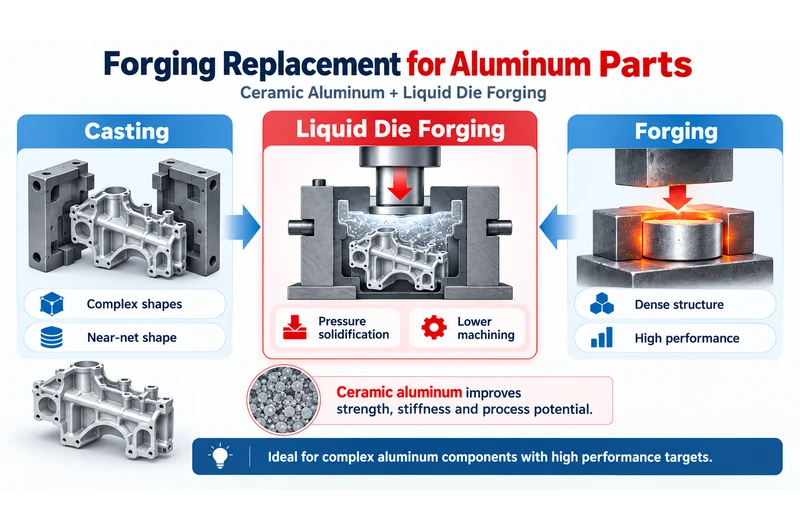
Ceramic aluminum combined with squeeze casting / liquid die forging uses pressure solidification to achieve a denser structure and near-net-shape forming of complex parts.
For selected 6xxx, 7xxx, 4032, and other conventional aluminum forgings, the feasibility of ceramic aluminum squeeze casting as a forging replacement can be evaluated based on target strength, ductility, fatigue performance, service temperature, and annual volume.
What Is "Forging Replacement"?
"Forging replacement" does not mean directly replacing a forging with a conventional casting. For suitable structural components, it combines high-performance ceramic aluminum + squeeze casting / liquid die forging + heat treatment + near-net-shape design to reduce forging and downstream machining while meeting target mechanical properties.
In squeeze casting, high mechanical pressure is applied after liquid or semi-solid metal enters the die cavity, causing the metal to solidify under pressure.
Compared with conventional casting, pressure solidification can improve feeding, refine the microstructure, and reduce solidification defects such as shrinkage porosity and cavities, while retaining the advantages of casting for complex geometries and near-net-shape forming.
Ceramic aluminum squeeze casting therefore provides a manufacturing route that combines the forming flexibility of casting with the higher density and mechanical performance expected from forged components. It is especially relevant to aluminum parts with large machining allowances, complex geometries, or strong cost-reduction targets.
Why Is Conventional Casting Difficult to Use as a Direct Forging Replacement?
Conventional casting offers advantages in complex forming and cost, but for load-bearing parts such as control arms, steering knuckles, and aerospace structures, internal density, strength, ductility, and fatigue reliability are usually more critical.
During solidification, conventional castings are more susceptible to defects such as shrinkage cavities and porosity, while microstructural and property consistency depends more heavily on the alloy system, die design, and process control.
For parts under high or cyclic loads, tensile strength alone is usually not enough. Yield strength, elongation, fatigue performance, and stability under elevated-temperature or wear conditions must also be considered.
A practical forging-replacement solution requires more than applying conventional casting to a forged-part design. Both the material performance baseline and the densification of the casting process must be improved.
Key differences between conventional casting and forging:
| Comparison | Conventional Casting | Forging |
| Complex Geometry Forming | Strong advantage | More forming limitations |
| Near-Net-Shape Forming | Easier to achieve | Usually requires more downstream machining |
| Internal Density | More dependent on solidification and feeding control | Typically higher |
| Shrinkage Porosity / Cavity Risk | Requires close control | Relatively low |
| Strength and Ductility | More affected by cast alloy and defects | Usually more consistent |
| Fatigue-Critical Structural Applications | Requires thorough validation | More mature engineering use |
How Does Squeeze Casting Close the Gap Between Castings and Forgings?
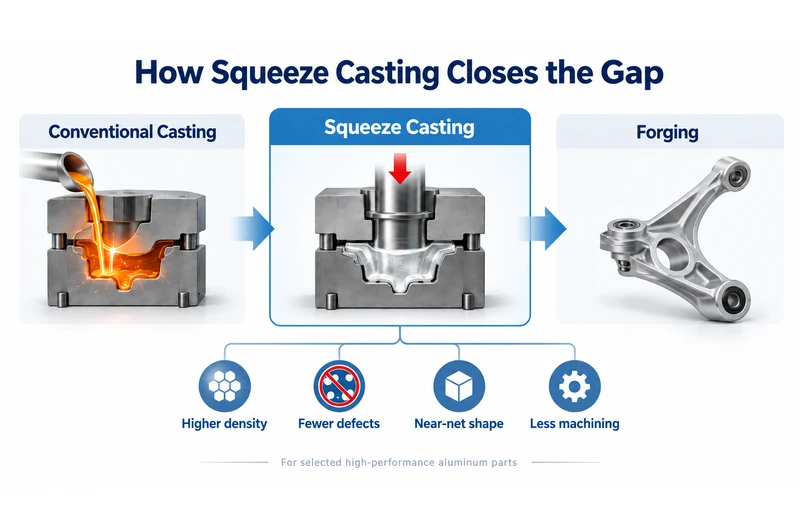
The core of squeeze casting is to fill and solidify liquid or semi-solid metal under high mechanical pressure.
Compared with conventional casting, it retains the ability to form complex geometries while using pressure solidification to improve internal structure, providing a better performance basis for high-performance structural parts.
Pressure Solidification Reduces Internal Defects
Continuous pressure during solidification improves feeding conditions, reduces the risk of shrinkage porosity and cavities, and produces a denser structure.
This is important for load-bearing components because internal defects can directly affect strength, fatigue life, and part-to-part consistency.
Faster Cooling Refines the Microstructure
A metal die combined with pressure solidification can accelerate solidification and refine the microstructure.
A finer and more uniform microstructure helps improve strength and property consistency, creating the conditions for replacing selected conventional forgings.
Complex Parts Can Be Formed Closer to Final Shape
For forged parts with complex ribs, bosses, curved surfaces, or integrated features, large machining allowances and extensive downstream CNC machining are often required.
Squeeze casting can produce a preform closer to the final part geometry, reducing:
- Material removal
- CNC machining time
- Tooling and fixtures
- Multiple forming steps
This is one of the main reasons forging replacement can reduce total manufacturing cost.
Heat Treatment Can Further Tailor Performance
Suitable ceramic aluminum squeeze-cast alloys can be combined with T6 heat treatment to further tailor strength, ductility, and service performance for specific engineering requirements.
Why Does Ceramic Aluminum Improve the Feasibility of Forging Replacement?
Conventional particle-reinforced aluminum matrix composites typically add ceramic particles directly to the aluminum matrix, which can lead to coarse or angular particles, poor interface compatibility, and reduced ductility.
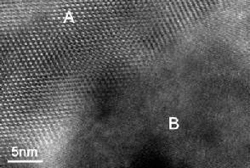
Ceramic aluminum uses an in-situ synthesis process: ceramic-forming elements are introduced into molten aluminum, and fine nano-scale ceramic particles are generated directly within the matrix through chemical reactions.
This approach helps achieve:
- Finer, more regular reinforcing particles
- Better particle/aluminum-matrix interface bonding
- Higher strength and stiffness
- Retains ductility and machinability while improving performance
Ceramic Aluminum Raises the Performance Baseline of Cast Materials
Forging replacement cannot rely on the forming process alone; the material itself also needs a higher strength and stiffness baseline.
Using A356 as an example, in-situ TiB₂ nano-ceramic reinforcement significantly increases tensile strength, yield strength, and elastic modulus while keeping density close to that of conventional aluminum alloys.
| Property | A356 | TiB₂/A356 Ceramic Aluminum | Change |
| Tensile Strength | 300 MPa | 400 MPa | +33% |
| Yield Strength | 245 MPa | 320 MPa | +31% |
| Elastic Modulus | 70 GPa | 83 GPa | +20% |
| Elongation | >2% | >2% | Maintained |
| Density | 2.70 g/cm³ | 2.77 g/cm³ | Similar |
Test standard: GB/T 228.1-2010
TiB₂/A356 ceramic aluminum increases tensile strength, yield strength, and elastic modulus while maintaining density and elongation close to A356. By raising the material performance baseline and combining it with pressure solidification and near-net-shape forming, ceramic aluminum provides a basis for replacing selected forged parts.
What Mechanical Properties Can Ceramic Aluminum Squeeze Casting Achieve?
For projects considering a switch from forging to squeeze casting, the key question is not the process name but whether the finished part can meet the required strength and ductility.
Different ceramic aluminum systems cover different property ranges and can be selected according to strength, elongation, wear resistance, and service conditions.
| Material / Process | Yield Strength YS | Tensile Strength UTS | Elongation EL |
| A356.2 Squeeze Casting | 230–250 MPa | 290–310 MPa | 7–12% |
| 6061 Forging | 290–310 MPa | 320–330 MPa | 10–12% |
| 6082 Forging | 295–320 MPa | 330–350 MPa | 7–9% |
| S114 Ceramic Aluminum Squeeze Casting | 310–370 MPa | 350–410 MPa | 6–17% |
| S4032 Ceramic Aluminum Squeeze Casting | 340–360 MPa | 420–440 MPa | 2–5% |
| S4032-G Ceramic Aluminum Squeeze Casting | 390–410 MPa | 440–460 MPa | 1–3% |
| 6xxx Ceramic Aluminum Squeeze Casting | 270–290 MPa | 290–310 MPa | 8–12% |
| 7xxx Ceramic Aluminum Squeeze Casting | 450–490 MPa | 540–560 MPa | 7–15% |
Strength Is Not Enough: Fatigue Performance Also Matters
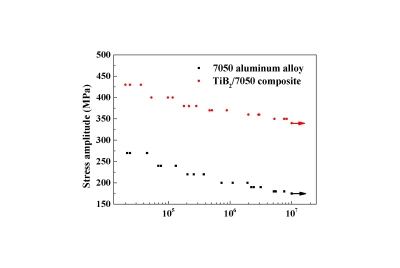
For control arms, steering knuckles, aerospace structures, and other components subjected to long-term cyclic loading, forging replacement must be evaluated not only by tensile and yield strength but also by fatigue performance.
Rotating Bending Fatigue
Under the corresponding test conditions:
- 7xxx ceramic aluminum: fatigue limit approximately 94% higher than the reference high-strength 7xxx aluminum alloy
- 2xxx ceramic aluminum: fatigue limit approximately 87% higher than the reference 2xxx aluminum alloy
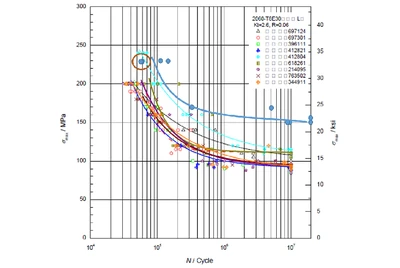
Open-Hole Fatigue
At Kt = 2.6 and 10⁷ cycles:
| Material | Fatigue Limit |
| 2xxx Ceramic Aluminum | 150 MPa |
| 2060 Aluminum-Lithium Alloy | 80–110 MPa |
Rotating bending fatigue test: GB/T 4337-2008
High-Temperature Performance, Wear Resistance, and Dimensional Stability
For scroll plates, pistons, compressor components, and other parts exposed to heat or friction, elevated-temperature strength, wear resistance, and thermal expansion are important in addition to room-temperature strength.
High-Temperature Strength
Heat-resistant ceramic aluminum can maintain good strength at elevated temperatures, for example:
| Material | 300°C | 350°C |
| Mahle174 | 120–140 MPa | 85–100 MPa |
| Heat-Resistant Ceramic Aluminum | 140–160 MPa | 95–110 MPa |
Low Thermal Expansion and Wear Resistance
Some ceramic aluminum systems have a room-temperature coefficient of thermal expansion of 15–18 ×10⁻⁶ K⁻¹, lower than the 21–23 ×10⁻⁶ K⁻¹ of the reference A356 alloy; corresponding hardness can reach 120–140 HB.
Ceramic Aluminum Materials and Custom Parts We Supply
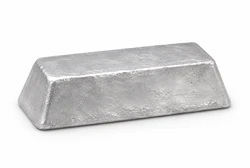
In addition to ceramic aluminum squeeze-cast parts, we supply ceramic aluminum raw materials, wrought products, and custom finished components based on the required alloy system, performance targets, and downstream manufacturing process.
Ceramic Aluminum Ingots
CA101, CA109, S114, and other series.
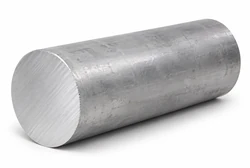
Ceramic Aluminum Billets
CA7075, CA7050, CA6005A, CA6110, and other series.
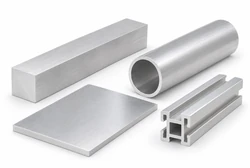
Wrought Products
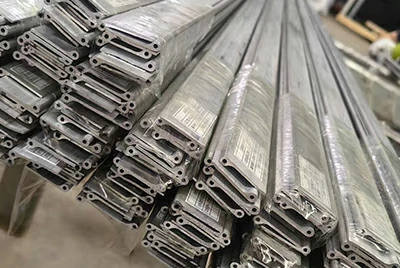
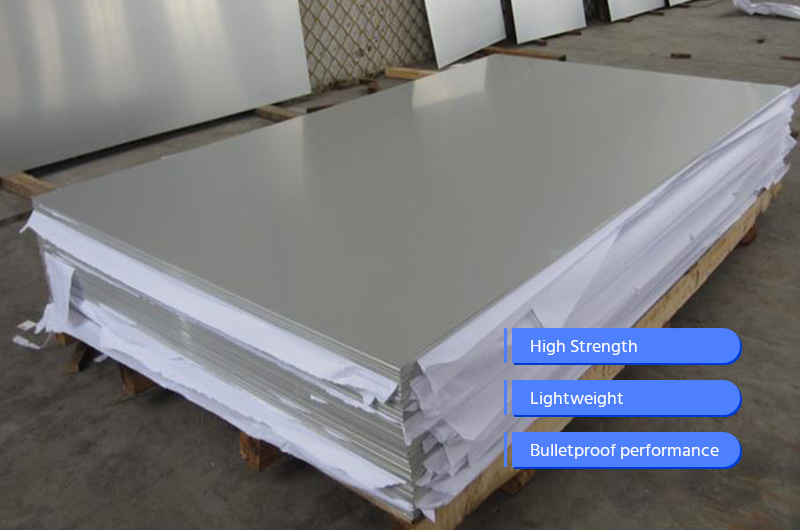
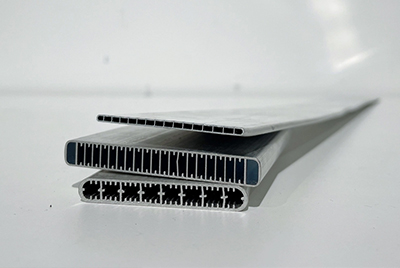
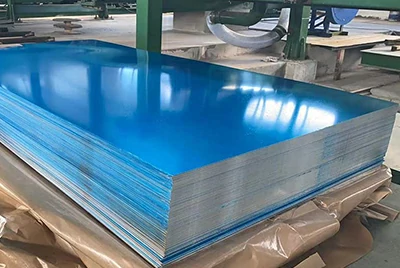
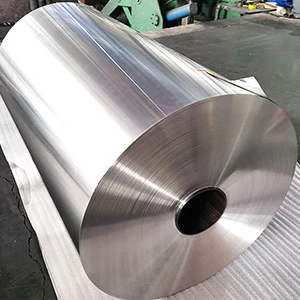
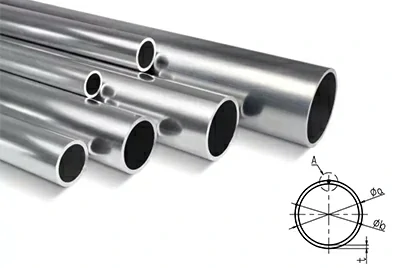
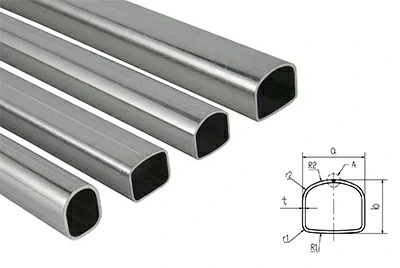
Bars, tubes, profiles, and plates.
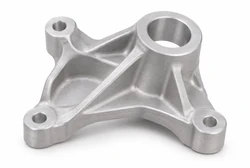
Ceramic Aluminum Forgings
Open-die forgings, die forgings, isothermal forgings, and rolled rings.
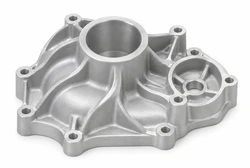
Ceramic Aluminum Castings
Gravity castings, low-pressure castings, and custom complex castings.
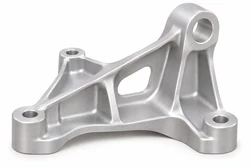
Squeeze-Cast Parts
S114, S4032, 6xxx, 7xxx, and other material systems.
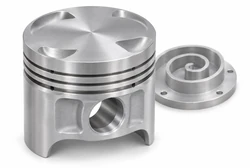
Heat-Resistant Ceramic Aluminum
Pistons, scroll plates, and high-temperature mechanical parts.
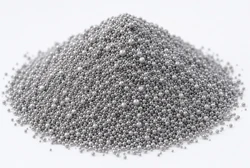
Additive Manufacturing Materials
AlSi7Mg and AlSi10Mg ceramic aluminum powders, 15–53 μm.
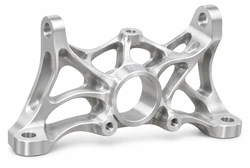
Custom Parts
Complex structures and lightweight designs
For forging-replacement projects, we can supply ceramic aluminum raw materials or develop finished squeeze-cast ceramic aluminum parts from existing forging drawings, 3D models, and target properties. Customers can choose raw-material supply or custom part development according to their manufacturing capabilities.
Forging Replacement Project Examples
Ceramic aluminum squeeze casting has been used in the development of automotive parts, compressor components, UAV parts, and high-strength structural components.
These projects share a common challenge: the original forging or multi-step manufacturing route required extensive machining and high cost, while the part performance requirements could not be significantly reduced.
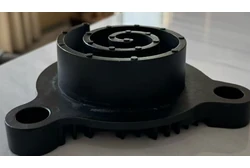
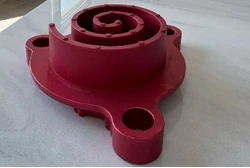
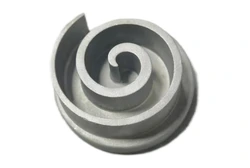
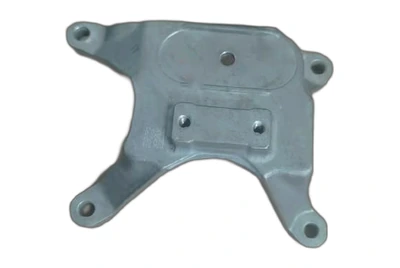
Scroll Compressor Plate: Reduce Machining from Forged Blanks
Scroll plates require good wear resistance, high-temperature performance, low thermal expansion, and dimensional stability. Conventional 4032 and 6xxx aluminum routes typically require forged blanks followed by extensive machining.
Using S4032 / 6xxx ceramic aluminum with squeeze casting allows the complex scroll geometry to be formed closer to final dimensions, reducing downstream machining.
| Material / Process | Yield Strength | Tensile Strength | Elongation |
| 4032 Forging | 320–340 MPa | 360–380 MPa | 1–3% |
| S4032 Ceramic Aluminum Squeeze Casting | 350–410 MPa | 420–460 MPa | 1–6% |
While meeting the strength requirements of the scroll plate, near-net-shape forming reduces material removal and CNC machining, making it better suited to batch production of complex scroll geometries.
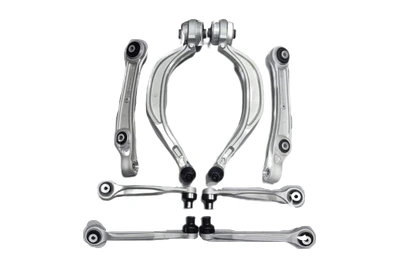
Automotive Control Arm: Strength with Lower Manufacturing Cost
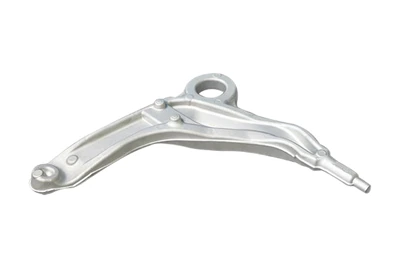
Automotive control arms are subjected to continuous loads and impacts and require strength, ductility, and dimensional stability. Conventional 6082 aluminum control arms are typically forged and still require substantial downstream machining.
S114 ceramic aluminum with squeeze casting can reduce machining through near-net-shape forming while maintaining good strength and elongation.
| Material / Process | Yield Strength | Tensile Strength | Elongation |
| 6082 Aluminum Forging | 295–320 MPa | 330–350 MPa | 7–9% |
| S114 Ceramic Aluminum Squeeze Casting | 300–320 MPa | 370–390 MPa | 9–14% |
Near-net-shape forming reduced downstream machining, and the total project cost was reduced by approximately 20%.
Automotive Steering Knuckle: Lightweighting with Near-Net-Shape Forming
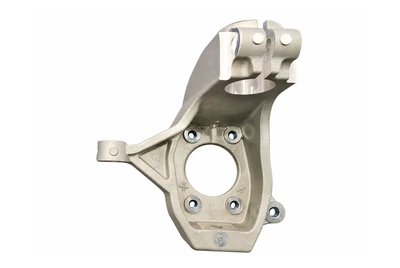
Steering knuckles require high load capacity while remaining sensitive to weight and manufacturing cost. S114 ceramic aluminum with squeeze casting can retain the low-density advantage of aluminum while forming complex structures close to final shape.
| Material / Process | Yield Strength | Elongation | Density |
| QT450 Cast Iron | 310 MPa | 10% | 7.1 g/cm³ |
| 6082 Aluminum Forging | 300 MPa | 8–12% | 2.71 g/cm³ |
| S114 Ceramic Aluminum Squeeze Casting | 310 MPa | 9–14% | 2.71 g/cm³ |
Compared with the QT450 cast-iron solution, the S114 steering knuckle achieved approximately 60% weight reduction, while total project cost was reduced by about 20%. The part also completed 18,000 km of high-speed circuit testing, 5,000 km of reinforced road testing, and 10,000 km of mountain-road testing.
The solution meets steering-knuckle strength and ductility requirements while reducing weight, machining, and manufacturing cost.
UAV Joint: From Multi-Part Welding to Integrated Near-Net-Shape Forming
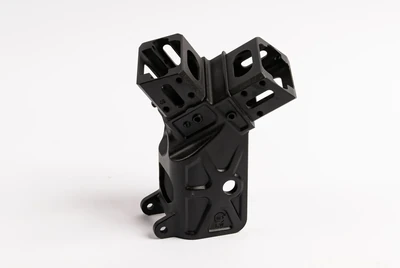
Traditional UAV joints based on multi-part welded structures can involve complex processes, difficult dimensional control, large machining allowances, and high manufacturing costs.
Using A356.2 ceramic aluminum with squeeze casting can consolidate the original multi-part structure into an integrated preform closer to the final shape.
7xxx High-Strength Structural Parts: Reduce Extensive Machining of High-Strength Forgings
High-strength 7xxx aluminum forgings are widely used for load-bearing structural parts, but complex geometries and large machining allowances can significantly increase CNC time and material waste.
Using 7xxx ceramic aluminum with squeeze casting can reduce material removal through near-net-shape forming while maintaining high strength and ductility.
| Material / Process | Yield Strength | Tensile Strength | Elongation |
| 7xxx Ceramic Aluminum Squeeze Casting | 450–490 MPa | 540–560 MPa | 7–15% |
How to Evaluate a Part for Forging Replacement
Forging replacement is not suitable for every forged part. Its feasibility mainly depends on part geometry, machining volume, production volume, and performance requirements.
- Forgings with large machining allowances: Suitable for reducing extensive CNC material removal through near-net-shape forming.
- Complex parts: Ribs, bosses, curved surfaces, and integrated features are well suited to squeeze casting.
- Multi-part welded structures: Can be evaluated for integrated forming to reduce welding and assembly steps.
- Medium- to high-volume parts: Tooling and process-development costs are easier to amortize.
- Structural parts with defined performance targets: S114, S4032, 6xxx, 7xxx, and other ceramic aluminum systems can be matched to YS, UTS, elongation, fatigue, and temperature requirements.
- Critical load-bearing parts highly dependent on forging flow lines: Not suitable for direct replacement without revalidating structural and fatigue performance.
- Parts with extreme fatigue or fracture-toughness requirements: Targeted life and reliability validation should be completed first.
- Low-volume parts: Tooling and development costs may be difficult to amortize.
- Parts with high recertification costs: Products already qualified under aerospace, defense, or industry requirements may require revalidation after a process change.
- Parts with requirements beyond current ceramic aluminum capabilities: Squeeze casting should not be forced solely for cost reduction.
The key is not simply whether the process is cheaper. Performance and reliability must be confirmed first, followed by an evaluation of near-net-shape benefits, machining reduction, and total cost.
FAQ
Can Squeeze Casting Completely Replace Forging?
No. Suitability depends on part geometry, performance requirements, fatigue life, certification requirements, and production volume.
Can Squeeze-Cast Ceramic Aluminum Reach Forging-Level Strength?
Some ceramic aluminum systems can match or exceed the static mechanical properties of corresponding conventional aluminum forgings, but the specific alloy and service conditions must be evaluated.
Which Parts Are Better Candidates for Forging Replacement?
Typical candidates include aluminum structural parts with large machining allowances, complex geometries, medium-to-high production volumes, and good near-net-shape potential.
How Much Machining Cost Can Squeeze Casting Reduce?
There is no fixed percentage. Actual savings depend on the original forging allowance, part complexity, tooling, production volume, and downstream inspection requirements.
What Information Is Needed to Evaluate an Existing Forging?
Please provide the drawing or 3D model, current alloy and temper, mechanical property requirements, service conditions, critical tolerances, machining allowance, and annual demand.
Project Evaluation and RFQ
If you currently use 6061, 6082, 4032, 2xxx, 7xxx, or other aluminum forgings and want to reduce forging steps, CNC machining, or total part cost, send us your existing project information for evaluation.
Please provide:
- Part drawing or 3D model
- Current alloy grade and temper
- YS, UTS, elongation, fatigue, and other performance requirements
- Service temperature, load, wear, and other operating conditions
- Critical dimensions, tolerances, and machining allowances
- Annual demand and mass-production plan
Based on part geometry and performance targets, we can evaluate suitable ceramic aluminum systems, squeeze-casting processes, and near-net-shape solutions, and assess the technical and cost feasibility of forging replacement.