Laminated busbars are high-performance power distribution conductors used in EV battery systems, power inverters, and high-current power electronics equipment. Compared with traditional cables and solid conductors, laminated busbars provide a compact multilayer structure with integrated insulation, helping reduce inductance, improve current distribution, and optimize system reliability.
Common laminated busbar applications include electric vehicles, energy storage systems, rail transit equipment, and renewable energy inverters. Chalco provides copper and flexible laminated busbar solutions with project-oriented design and precision manufacturing capabilities, supporting customized multilayer structures, insulation systems, and complex geometries for modern power electronics systems.
Key Advantages of Laminated Busbar Systems
Laminated busbars are widely used in EV battery systems, inverters, and high-current power electronics because they provide a compact and electrically stable alternative to traditional cable connections. Their multilayer conductive structure improves electrical performance, thermal management, and system reliability in demanding power applications.
- Low inductance for stable high-frequency switching: Closely spaced conductor layers significantly reduce parasitic inductance and help suppress EMI in high-speed switching systems.
- Efficient thermal dissipation: Optimized conductor stacking creates shorter thermal paths, helping maintain lower operating temperatures for power semiconductor devices.
- Compact and highly integrated layout: Multiple current paths are integrated into a single structure, reducing wiring space and simplifying system assembly.
- Consistent assembly and reduced wiring errors: The integrated busbar design eliminates complex cable routing and improves installation consistency in batch production.
- Stable performance in demanding environments: Laminated busbars provide strong resistance to vibration, mechanical stress, and long-term electrical loading.
Laminated busbars offer clear advantages in high-current and high-frequency power electronics systems, helping engineers improve electrical performance, simplify system layouts, and enhance long-term reliability.
If you are evaluating laminated busbar solutions for your project, our engineering team can help review specifications and recommend suitable structures.
Laminated Busbar Structure and Materials
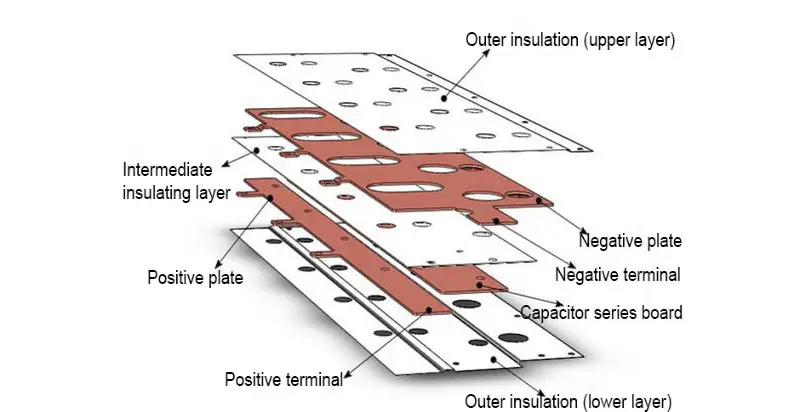
A laminated busbar is constructed by stacking multiple conductive layers and insulation materials into an integrated structure. This multilayer design creates a controlled current path with reduced inductance, improved thermal performance, and compact system integration for high-power electrical equipment.
Conductive layers: Laminated busbars typically use high-conductivity copper or aluminum plates to carry electrical current efficiently in power electronics systems.
Insulation layers: Dielectric insulation materials such as polyester film, Kapton, Nomex, or epoxy glass fiber are laminated between conductor layers to ensure electrical isolation and stable performance.
Lamination structure: Through precise stacking and bonding processes, multiple conductive layers can be integrated into a compact busbar assembly that supports optimized current distribution, reduced electromagnetic interference, and improved system reliability.
This multilayer laminated structure allows engineers to optimize electrical performance, thermal behavior, and system integration in demanding power electronics applications.
If you need laminated busbars designed for specific current ratings, insulation systems, or compact equipment layouts, our engineering team can support custom design and manufacturing.
Laminated Busbar Types
Laminated busbars can be manufactured in different conductor materials and structural configurations depending on current capacity, system layout, and electrical performance requirements in power electronics applications.
-
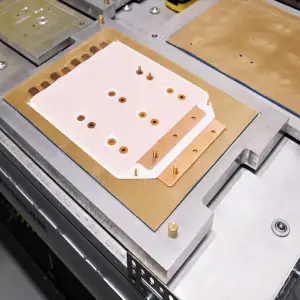 Copper Laminated Busbar
Copper laminated busbars provide high electrical conductivity and low inductance, making them suitable for high-current and high-frequency power electronics systems.
-
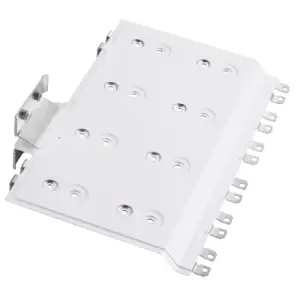 Aluminum Laminated Busbar
Aluminum laminated busbars offer a lightweight and cost-efficient alternative to copper, commonly used in energy storage systems and battery pack power connections.
-
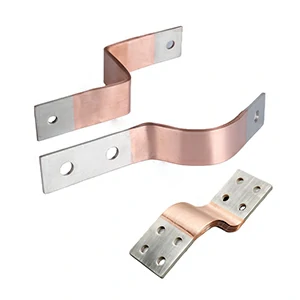 Flexible Laminated Busbar
Flexible laminated busbars use multilayer copper foil and insulation films to allow controlled bending, suitable for module connections and compact electrical layouts.
-
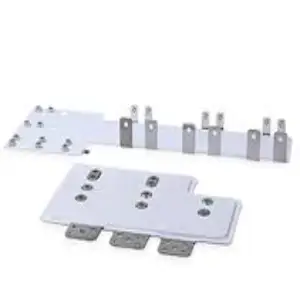 Custom Multilayer Laminated Busbar
Custom multilayer laminated busbars support complex routing, interface integration, and multilayer conductor stacking for highly integrated power electronics systems.
* Laminated busbar solutions can be customized based on layer count, conductor thickness, hole patterns, bending angles, and surface treatments such as tin plating, silver plating, or epoxy coating.
If you are selecting laminated busbar types for specific current ratings, installation layouts, or power electronics applications, Chalco can provide customized laminated busbar solutions based on your project requirements.
Laminated Busbar Design and Manufacturing Capability
The performance of laminated busbars in power electronics systems depends not only on material selection but also on proper electrical and mechanical design. Factors such as current capacity, conductor thickness, insulation configuration, and system layout must be carefully considered to achieve low inductance, effective thermal management, and reliable long-term operation.
Current carrying capacity: Conductor thickness and width are determined according to system current levels and allowable temperature rise.
Insulation configuration: Insulation materials and layer spacing are selected to meet voltage ratings and dielectric strength requirements.
Thermal management: Busbar layer arrangement and conductor geometry are optimized to improve heat dissipation and maintain system stability.
Mechanical layout: Hole patterns, bending angles, and connection interfaces are designed to match equipment installation and assembly constraints.
To support these engineering requirements, Chalco provides integrated laminated busbar manufacturing capabilities and complete in-house processing for customized production.
- Integrated production process: From copper and aluminum plate preparation, lamination, CNC machining, insulation pressing, to final inspection — all processes are completed in-house under strict quality control.
- Precision lamination and machining: High-capacity lamination presses, laser cutting systems, CNC milling, and automated punching ensure accurate layer alignment and dimensional stability.
- Custom prototyping support: Rapid prototyping with electrical and thermal simulation enables efficient design verification during early development stages.
- Surface finishing options: Tin plating, nickel plating, silver plating, epoxy coating, and laser marking are available to meet electrical and environmental requirements.
- Quality inspection and testing: Electrical continuity testing, insulation breakdown testing, and layer alignment inspection ensure stable product quality.
If you need laminated busbars designed for specific current ratings, electrical systems, or equipment layouts, our team can support both engineering design and customized manufacturing.
Validated Application Areas of Chalco Laminated Busbar Systems
Based on the manufacturing capabilities and performance characteristics described above, laminated busbar systems are widely applied in power electronics platforms where electrical stability, thermal performance, and long-term reliability have been verified in real-world operating conditions.
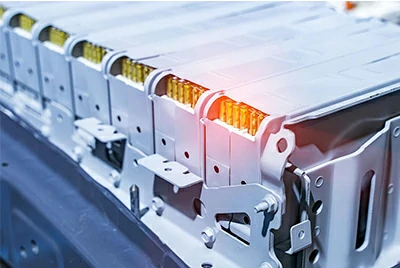
New energy vehicles (EV & Hybrid)
Application: battery module connection, main electric drive inverter, DCDC module, OBC system
Advantage: reduce system inductance, improve power conversion efficiency and switch response speed; modular structure facilitates battery pack wiring optimization
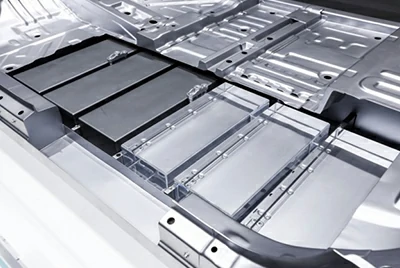
Energy storage system (ESS)
Application: battery array parallel connection, power conversion module, BMS system interface
Advantage: compact structure, easy installation, customizable flexible segments, suitable for rack-mounted, cabinet-mounted and container-mounted energy storage applications
Rail transit and industrial electronic control systems
Application: traction converter system, brake unit, rectifier, electric control cabinet busbar connection
Advantage: strong anti-vibration performance, high heat dissipation efficiency, meeting the needs of long-term stable operation.


Wind power and photovoltaic inverter system
Application: IGBT modules, three-phase bridge modules, high-voltage power supply output connections
Advantage: multi-layer stacking design reduces high-frequency resonance, improves conversion efficiency and optimizes heat distribution
UPS and data center power distribution system
Application: rectifier bridge, inverter bridge, busbar connection module
Advantage: flat structure, easy integration, improved density and stability of electrical systems, reduced failure rate


Aerospace and defense equipment
Application: power distribution module, radar/ navigation system power interface
Advantage: strong electromagnetic interference suppression capability, high reliability, suitable for extreme working conditions and compact space structure design
Laminated Busbar vs Traditional Cables
Laminated busbars are typically selected when power systems require high current capacity, compact layout, and precise control of parasitic inductance and electromagnetic interference. Compared with traditional cables or solid conductors, laminated busbars provide a more structured and predictable current path, making them well suited for high-frequency switching and tightly integrated power electronics.
In applications where space constraints, thermal management, EMC performance, or assembly consistency are critical—such as EV power systems, energy storage inverters, power modules, and industrial converters—laminated busbars often outperform conventional cable solutions. Traditional cables may remain suitable for low-frequency, low-density, or highly flexible routing scenarios, while laminated busbars are preferred when electrical performance, system integration, and long-term reliability are key design priorities.
| Selection Criteria | Laminated Busbar | Traditional Cables |
| Current & Frequency | High current, high-frequency switching systems | Low to medium current, low-frequency systems |
| Layout & Space | Compact, structured routing for dense layouts | Flexible routing but higher space occupancy |
| EMC / Inductance Control | Very low inductance, strong EMI control | Limited control, higher parasitic inductance |
| Assembly Consistency | High repeatability, suitable for batch production | Dependent on manual routing and assembly |
| Typical Applications | EV power systems, inverters, power modules, energy storage | Low-density wiring, flexible or simple systems |
Laminated Busbar vs Braided Busbar
Braided busbars are flexible electrical connectors made of woven copper wires and are commonly used for vibration absorption, grounding connections, or equipment with movable components. While they provide excellent flexibility and mechanical tolerance, braided busbars do not offer the same level of electrical performance control as laminated busbars.
Laminated busbars are designed as multilayer conductor assemblies with integrated insulation, enabling controlled current paths, low inductance, and compact system layouts. In modern power electronics systems such as EV inverters, energy storage systems, and high-frequency switching equipment, laminated busbars are typically preferred when electrical performance and system integration are critical.
| Comparison Criteria | Laminated Busbar | Braided Busbar |
| Structure | Multilayer copper or aluminum conductors laminated with insulation | Braided copper wires forming flexible conductive straps |
| Inductance Control | Very low inductance with controlled current paths | Limited inductance control |
| Flexibility | Moderate flexibility depending on layer structure | Very high flexibility for vibration and displacement |
| System Integration | Compact integrated layouts for power electronics systems | Primarily used as flexible connectors or grounding straps |
| Typical Applications | EV inverters, energy storage systems, power modules, industrial converters | Grounding connections, vibration isolation, equipment connectors |
Engineering Consultation & Project Support
Laminated busbar selection and design are highly dependent on system current levels, switching frequency, spatial constraints, and thermal management requirements. In practical projects, factors such as layer configuration, conductor material, insulation system, and interface design should be evaluated together to achieve stable long-term performance.
Chalco supports engineering teams with application-oriented laminated busbar design, prototyping, and manufacturing coordination. For project-specific requirements, technical consultation and configuration support are available to assist with system integration and performance optimization.
Chalco can provide you the most comprehensive inventory of aluminum products and can also supply you customized products. Precise quotation will be provided within 24 hours.
Get a quote