In precision refrigeration pipelines, electronic contacts, and cemented carbide cutting tools, silver-based brazing alloys are widely used as high-reliability filler metals due to their low melting point, rapid wetting behavior, and strong metallurgical joints. These performance characteristics make silver brazing alloys a standard solution for demanding industrial brazing applications.
To match different brazing processes and production rhythms, Chalco supplies silver brazing alloys in straight rods, wire coils, and preformed rings. Batch-by-batch inspection is carried out on chemical composition and wire diameter tolerance to ensure consistent fluidity, joint strength, and repeatable brazing results.
*Cd-free eco-friendly formulation, with no toxic cadmium oxide fumes generated during brazing. Fully compliant with RoHS and REACH regulations, these alloys provide a safer and more sustainable solution for industrial operators and end-use applications.
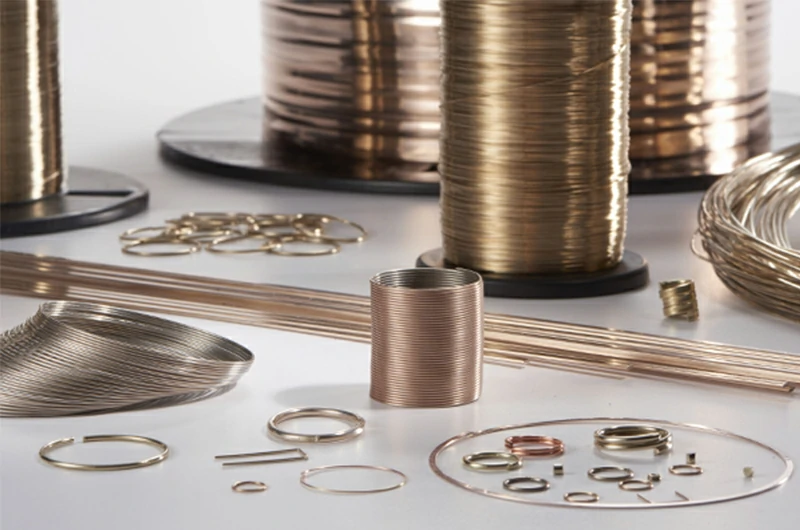
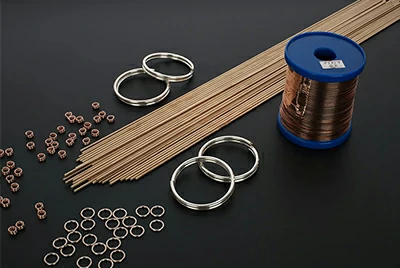
To help customers quickly identify the most suitable silver brazing alloy for different base metals and processes, Chalco classifies its silver brazing alloys through a three-dimensional system based on silver content, functional alloy modification, and flux integration. This structure supports applications ranging from cost-sensitive HVAC installation to high-reliability industrial and precision components.
Basic Silver Brazing Alloys | Cost-Efficient Alloy Systems
Basic silver brazing alloys are designed for standard copper and copper-alloy joints where cost efficiency, stable processing, and repeatable brazing results are the primary requirements.
Typical dimensions: Straight rods Ø 1.6–3.2 mm × 500 mm; wire coils Ø 0.5–1.5 mm (5 kg/coil).
Core alloy systems: Low-silver Ag–Cu based formulations such as Ag5 and Ag15, featuring melting points above 700 ℃ and stable capillary flow behavior for routine brazing operations.
Supply configuration: Available as bare rods, flux-coated rods, or wire coils to support manual brazing, induction heating, and light semi-automated workflows.
Application scope: Widely used in HVAC copper tube installation, plumbing and hardware assembly, and general maintenance brazing where process stability and cost control are key considerations.
-
Economic Silver Series (Ag 5–15%)
Melting Point: ≥ 700℃
Key Features: Cost-friendly; wetting speed sufficient for mass assembly
Typical Uses: Copper tubes, brass valves, small stainless-steel parts
-
General Silver Series (Ag 20–45%)
Melting Range: 630–780℃
Key Features: Flowability and shear strength significantly improved over low-silver grades
Typical Uses: Cu–stainless dissimilar joints, carbide tool tips, appliances and cookware
-
High-Performance Silver Series (Ag 50–56%)
Solidus–Liquidus: low to 610℃
Key Features: Superior electrical & thermal conductivity
Designed For: Thin-wall stainless, electronic contacts, induction brazing in heat-sensitive cases
| Common Grade (AWS / ISO) | Ag (%) | Solidus (℃) | Liquidus (℃) | Shear Strength (MPa)* | Typical Applications |
| BAg-3 / ISO Ag215 | 15 | 705 | 745 | 250 | HVAC copper tubes, brass water valves |
| BAg-2 / ISO Ag220 | 20 | 750 | 780 | 260 | Stainless-steel tableware, Cu–steel dissimilar joints |
| BAg-6 / ISO Ag225 | 25 | 720 | 760 | 270 | Cu–stainless heat-exchanger sheets |
| ISO AgCuZn-30 | 30 | 690 | 730 | 275 | Hardware fittings, pump and valve housings |
| ISO AgCuZn-34 | 34 | 670 | 720 | 280 | Refrigeration piping, instrumentation joints |
| BAg-5 / ISO Ag345 | 45 | 630 | 680 | 290 | Carbide tool tips, tool steels |
| BAg-24 | 50 | 625 | 655 | 295 | Induction-brazed steel parts, electronic packaging |
| BAg-7 / ISO Ag456 | 56 | 610 | 630 | 300 | Electronic contacts, thin-wall stainless steel |
*Shear strength values are typical lab results; actual performance depends on joint clearance and process parameters.
Composite Silver Brazing Alloys | Engineered Performance Solutions
Composite silver brazing alloys are designed for applications requiring improved wetting on difficult substrates, reduced heat input, or compliance with environmental and regulatory requirements.
Typical modification schemes: Ni–Ag high-strength wetting, Ag–Sn low-temperature protection, Ag–Cu–P self-fluxing, CleanSilver cadmium-free.
Available forms: RapidRod bare rods, FluxOne flux-coated rods, FlexWire coils.
Typical dimensions: Straight rods Ø 1.6–3.2 mm; wire coils Ø 0.8–1.5 mm (5 kg/coil).
Upgrade highlights: By intentionally adding Ni, Sn, or P, or adopting Cd-free formulations, wettability on tool steels, carbides, and heat-sensitive electronics is comprehensively improved, along with low-temperature brazability and environmental compliance.
- Phos–Copper–Silver Alloys (Ag–Cu–P): Self-fluxing on copper and brass joints, eliminating the need for external flux; commonly used in copper piping, HVAC systems, and refrigeration valves.
- Sn/Ni-Modified Silver Alloys (Ni–Ag, Ag–Sn): Provide enhanced wetting and joint reliability on tool steels, cemented carbides, and heat-sensitive electronic components.
-
Ni–Ag Nickel Silver
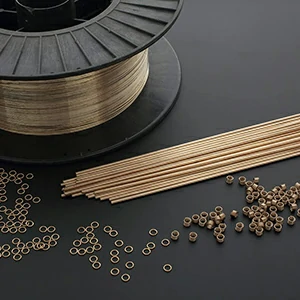
Key Element: ~2% Ni
Benefit: Significantly improves wetting and shear strength on tool steel and carbon steel
Recommended Uses: Carbide tips, die/mold brazing
Notes: Designed for high-strength joints on ferrous substrates
-
Ag–Sn Low Temperature
Key Element: ≤ 2% Sn / Li
Benefit: Lowers solidus–liquidus to about 610 ℃ for low-heat input brazing
Recommended Uses: Sensitive electronics, thin-wall stainless steel, induction brazing
Notes: Helps prevent overheating and distortion
-
Ag–Cu–P Phosphorus Silver
Key Element: ~6% P
Benefit: Self-fluxing on copper and brass, no external flux required
Recommended Uses: Copper and brass brazing with reduced process cost
Notes: Ideal for piping, refrigeration valves
-
CleanSilver Cadmium-Free
Key Feature: Completely removes Cd in mid/high-silver formulations; RoHS & REACH friendly choice
Benefit: Meets food-grade, medical-grade, and green manufacturing requirements
Recommended Uses: Food-contact and medical equipment, eco-compliant processes
| Modification Type | Common Grade (AWS / ISO) | Ag (%) | Key Element | Solidus (℃) | Liquidus (℃) | Shear Strength (MPa)* |
| Ni–Ag | BAg-24 | 50 | Ni ≈ 2% | 625 | 645 | 300 |
| Ag–Sn Low Temperature | ISO AgCuZn-34Sn | 34 | Sn ≤ 2% | 660 | 700 | 280 |
| Ag–Sn Low Temperature | ISO AgCuZn-40Sn | 40 | Sn ≤ 2% | 640 | 680 | 285 |
| Ag–Cu–P | BCuP-3 | 5 | P ≈ 6% | 645 | 810 | 200 |
| Ag–Cu–P | BCuP-5 | 15 | P ≈ 5% | 645 | 705 | 240 |
| CleanSilver Cd-Free | ISO AgCuZn-45 (Cd-Free) | 45 | — | 630 | 680 | 290 |
*Upgrade your brazing with Chalco's modified silver alloys—stronger joints, lower heat input, and eco-friendly compliance. Contact us today for details.
Flux Integration | High-Efficiency Silver Brazing Systems
Flux-integrated silver brazing systems combine filler metal and flux into a single consumable, reducing process steps and improving consistency in manual, induction, and automated brazing operations.
Supply forms: FluxOne flux-coated rods for manual brazing, CoreStick cored rods for controlled high-strength joints, and CoreWire cored coils for continuous feeding in automated or robotic lines.
Typical dimensions: Coated rods Ø 2.0–3.2 mm; cored wire coils Ø 0.8–1.6 mm (5 kg/coil).
Core advantages: Flux and silver filler are integrated, melting and activating simultaneously upon heating. Wetting and gap-filling are accelerated, welds are full with minimal residue, and true one-step brazing is achieved without extra paste or powder, significantly saving time and consumables.
-
Flux-Coated Rods
Construction: Special flux evenly coated on standard silver rods
Benefit: One-step brazing without additional paste or powder
Best For: Rapid on-site work
-
Cored Rods / Cored Wires
Structure: Flux embedded in the core, released upon melting
Benefit: Clean welds with low residue
Best For: Automation and long-duration continuous feeding
-
Continuous Wire Feeding Products
Supply: Wire coils for continuous feed
Benefit: Significantly boosts takt time with shielding-gas processes or robots
Best For: High-volume production lines
| Key Metric | FluxOne Coated Rods | CoreStick Cored Rods | CoreWire Cored Coils |
| Flux Distribution | Outer coating | Core-filled powder | Core-filled powder |
| Flux Content | 3–5 wt% | 8–10 wt% | 6–8 wt% |
| Typical Diameter | Ø 2.0–3.2 mm | Ø 2.4 / 3.2 mm | Ø 0.8–1.2 mm |
| Feeding Method | Single-rod manual | Single-rod manual | Coil automatic/robotic |
| Recommended Scenarios | Quick on-site repair | Thick-wall steels, high-strength joints | Mass production, automation |
| Weld Residue | Minimal, brushable | Minimal | Trace powdery |
| Suggested Gap* | 0.03–0.08 mm (Cu) / 0.05–0.15 mm (Fe) | Same as left | Same as left |
In addition to flux-integrated silver brazing systems, Chalco also supplies standalone flux solutions for different brazing conditions, including silver solder flux paste for precision joints and industrial brazing flux for copper, stainless steel, and multi-metal assemblies. Contact us to configure the most efficient silver brazing and flux combination for your production line.
Key Performance Advantages of Chalco Silver Brazing Alloy Systems
Low-temperature and fast brazing capability: High-silver alloys such as Ag56 feature a liquidus as low as 630 ℃, enabling rapid joint formation under reduced heat input. This is especially beneficial for thin-wall stainless steel, electronic components, and other heat-sensitive assemblies.
High joint strength and load reliability: Mid- to high-silver brazing alloys typically deliver shear strength levels of 270–300 MPa, meeting the mechanical demands of carbide tool tips, pressure-bearing components, and structural joints.
Environmental compliance and operational safety: Cadmium-free silver brazing alloy systems combined with low-halogen fluxes generate no cadmium oxide fumes during brazing. All products comply with RoHS 2.0 and REACH requirements, with SGS inspection reports and EN 10204-3.1 material certificates available.
Flexible forms and supply readiness: Silver brazing alloys are available not only in rods and wire coils, but also as customized preformed rings, brazing foils/sheets, and powders. Standard grades can be delivered within 48 hours, while tailored alloy formulations are typically available within 7–15 days.
| Representative Grade | Melting Range (℃) | Shear Strength (MPa) | Conductivity (% IACS) | Typical Application |
| BAg-3 (Ag15) | 705–745 | 250 | 20 | HVAC copper tubing |
| AgCuZn-34 (Ag34) | 670–720 | 280 | 24 | Stainless kitchenware, mixed-metal joints |
| BAg-7 (Ag56) | 610–630 | 300 | 29 | Electronic contacts, thin-wall stainless induction brazing |
Shear strength values represent typical laboratory results. Actual joint performance may vary depending on base material, joint clearance, and brazing parameters. For complete chemical composition data or customized alloy forms, please contact Chalco.
How to Select the Right Silver Brazing Alloy
Selecting the right silver brazing alloy is essentially about matching alloy behavior to joint conditions rather than simply choosing higher silver content.
Base metal determines the alloy system. Copper and brass joints are typically compatible with low- to mid-silver alloys or Ag–Cu–P self-fluxing systems. Stainless steel, carbon steel, and dissimilar joints usually require higher silver content, often with nickel modification, to ensure reliable wetting and joint strength. Cemented carbides and tool steels generally perform best with high-silver or Ni-modified alloys to reduce cracking risk.
Heat sensitivity defines the melting range. For thin-wall parts, electronic components, or precision assemblies, low-liquidus alloys such as Ag56 or Ag–Sn modified systems allow sound joints to form at reduced temperatures. Where thermal distortion is less critical, higher-melting low-silver alloys remain a practical and economical choice.
Joint clearance affects capillary action. Most silver brazing alloys achieve optimal flow within controlled joint gaps, typically between 0.03 and 0.15 mm. High-silver alloys tolerate slightly wider clearances, while low-silver systems perform best with tighter joint control.
Production method guides alloy form. Straight rods and flux-coated rods are suitable for manual and on-site brazing. Induction brazing benefits from alloys with stable melting ranges. Automated or robotic lines typically require cored wires or continuous coils to ensure consistent feeding and production efficiency.
When multiple base metals, narrow thermal windows, or specific production constraints are involved, Chalco can assist in aligning alloy chemistry and supply form to achieve stable and repeatable brazing results.
Industry Application Reference for Silver Brazing Alloy Systems
The following application examples provide a practical reference for selecting silver brazing alloy systems across common industrial scenarios. Each case highlights a typical application, recommended alloy system, and the primary performance objective. For special base metals or customized forms, Chalco offers application-specific guidance and sample support.
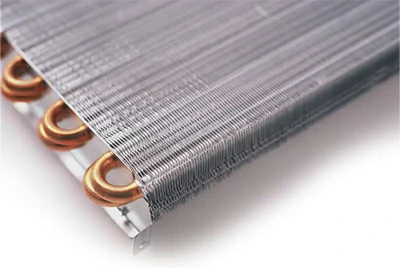
HVAC Refrigeration Copper Tubing
Recommended Alloy: Ag15 low-silver brazing alloy or Ag–Cu–P self-fluxing system
Application Focus: Fast, reliable joints for on-site installation and routine maintenance
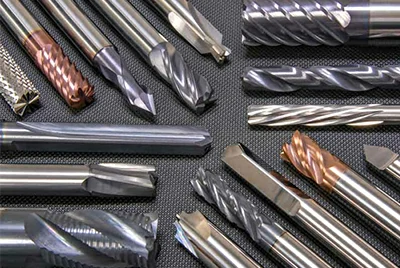
Cemented Carbide Tools and Tool Steels
Recommended Alloy: Ni-modified high-silver brazing alloy (e.g. BAg-24)
Application Focus: Stable carbide-to-steel joints with high mechanical reliability
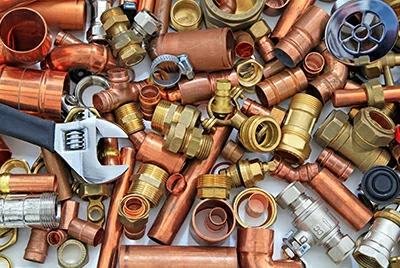
Stainless Kitchenware and Plumbing Hardware
Recommended Alloy: Mid-silver brazing alloys such as Ag25 or Ag34
Application Focus: Clean, bright joints for visible assemblies and consumer-facing products
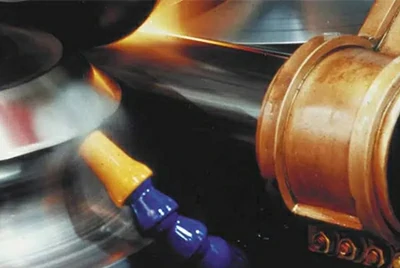
Electronic Contacts and Thin-Wall Induction Brazing
Recommended Alloy: High-silver systems such as Ag56 or Cd-free Ag45 alloys
Application Focus: Low-heat-input brazing for precision components and automated lines
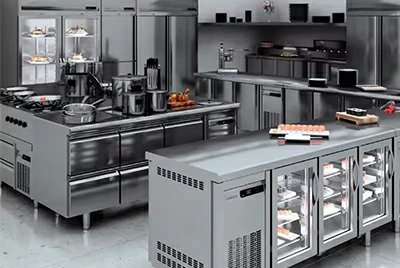
Medical and Food-Grade Equipment
Recommended Alloy: Cadmium-free Ag45 silver brazing alloy
Application Focus: Regulatory compliance and clean, polishable brazed joints
For additional applications such as aluminum heat-exchanger brazing, hardfacing repair, or powder-based brazing overlays, please contact Chalco for targeted alloy recommendations and validation support.
Chalco Integrated Brazing Product Supply Capability
As a material-focused manufacturer and supplier, Chalco provides an integrated brazing product portfolio extending beyond silver-based alloys to include complete aluminum and copper brazing systems. Our brazing solutions are not offered as isolated consumables, but as coordinated material systems that align alloy composition, product form, and application-specific joining requirements.
This system-oriented supply capability enables Chalco to support brazing projects across automotive, HVAC & refrigeration, electronics, and general industrial manufacturing—delivering stable processing behavior, consistent joint quality, and reliable project-based supply.
-
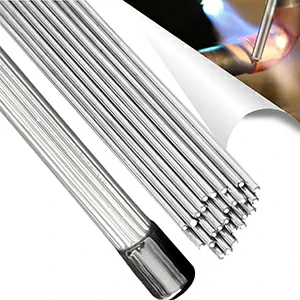 Aluminum Brazing Systems
Chalco supplies a complete aluminum brazing system for aluminum-to-aluminum joining, combining compatible alloy design, controlled melting behavior, and stable joint reliability for automotive and lightweight structures.
Aluminum Brazing Rod | Aluminum Brazing Foil | Aluminum Brazing Strip | Flux-Cored Brazing Rod | 6951 Brazing Core Aluminum -
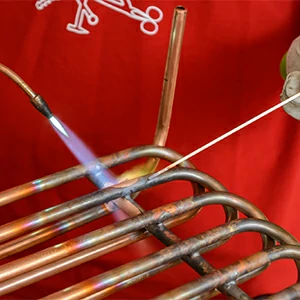 Copper Brazing Systems
For copper and copper-alloy joining, Chalco supplies a full range of brazing alloys designed for stable wetting, reliable capillary flow, and efficient on-site or production brazing. These systems are commonly applied in HVAC piping, refrigeration equipment, and general industrial connections.
Copper Brazing Rod | Copper-to-Copper Brazing Rod | Brazing Ring Preforms
Process Guidelines & FAQ for Silver Brazing Alloy Systems
To ensure Chalco silver brazing alloy systems perform reliably across different base metals, joint designs, and heating methods, the following process guidelines and frequently asked questions provide a practical reference for industrial brazing operations. For special conditions not covered below, our application engineers can offer tailored recommendations.
Recommended Heating Methods and Temperature Windows
- Flame brazing: Use a neutral to slightly reducing flame; stop heating once the alloy exhibits smooth, bright flow to avoid zinc evaporation or base-metal overheating.
- Induction brazing: Typical heating rate of 20–40 ℃/s; hold for approximately 3 seconds after full alloy penetration to ensure joint integrity.
- Vacuum or furnace brazing: Preheat components to about 50 ℃ below alloy solidus, then complete brazing at approximately 20 ℃ above liquidus.
Recommended Joint Clearances
- Copper and copper alloys: 0.03–0.08 mm
- Stainless steel and low-carbon steel: 0.05–0.15 mm
- Tool steel or cemented carbide: 0.03–0.05 mm (best performance with Ni-modified silver brazing alloys)
Flux Matching Guidelines
- General copper components: Medium-temperature flux (e.g. 650–780 ℃ working range)
- Stainless steel or tool steel: High-activity flux suitable for 700–820 ℃
- High-volume copper–brass joints: Ag–Cu–P self-fluxing silver brazing alloys eliminate the need for external flux
Frequently Asked Questions
Q: What should I do if the alloy fails to wet the base metal?
A: Ensure all oxide layers and contaminants are removed before brazing. Verify flux activity and consider switching to Ni-modified silver brazing alloys for steel or carbide substrates.
Q: What if post-braze flux residue is difficult to remove?
A: Avoid excessive overheating that sinters flux residues. Flux-integrated silver brazing systems or warm-water cleaning with a soft brush typically simplify post-braze cleanup.
Q: What causes zinc loss or brittle joints?
A: Excessive flame temperature can vaporize zinc in mid-silver alloys. Reduce heat input by approximately 20 ℃ or select high-silver or Ag–Sn low-temperature alloy systems.
Q: How can overheating of thin-wall or precision parts be avoided?
A: Choose low-liquidus silver brazing alloys such as Ag56 or Ag–Sn modified systems, which enable sound joints at temperatures around 630 ℃ with reduced thermal stress.
Compliance, Certification & Ordering of Silver Brazing Alloy Systems
All Chalco silver brazing alloy systems are supplied with cadmium-free formulations, producing no cadmium-oxide fumes during brazing and fully compliant with RoHS 2.0 and REACH regulatory requirements.
Our production facilities operate under ISO 9001 and IATF 16949 quality management systems, ensuring full batch traceability from alloy melting to finished brazing forms.
Each shipment can be provided with EN 10204-3.1 material certificates. SGS / TÜV third-party inspection reports and flux SDS documentation are available upon request.
Selected silver brazing alloy grades have passed FDA food-contact heavy-metal leaching tests, making them suitable for medical devices, food-processing equipment, and catering applications.
By combining compliant alloy chemistry, controlled manufacturing, and application-oriented selection, Chalco helps ensure every brazed joint is reliable from the first production run.
The following tables list representative silver brazing alloy systems available for regular supply. Final alloy selection, form (rod, wire, ring, foil), and flux configuration can be adjusted according to joint design and process requirements.
Phos–Copper–Silver Alloys (Ag–Cu–P)
| Stock Model | Standard | Ag (%) | Melting Range (℃) | Main Applications |
| Ag20 | AWS BCuP-5 / ISO CuP 284 | 20 | 690–810 | Copper–copper / copper–brass pipelines, refrigeration valves |
| Ag25 | AWS BCuP-6 | 25 | 670–760 | High-frequency induction brazing, large-section copper bars |
| Ag30 | ISO CuP 286 | 30 | 680–765 | Food-grade stainless and copper assemblies |
| Ag45 | AWS BAg-5 | 45 | 605–715 | High-conductivity joints, small-tube fast brazing |
Sn/Ni-Modified Ag–Cu Silver Brazing Alloys
| Stock Model | Alloy Highlights | Ag (%) | Melting Range (℃) | Main Applications |
| Ag50Sn | Ag–Cu–Sn | 50 | 640–750 | Stainless heat exchangers, carbide tool tips |
| Ag45Ni | Ag–Cu–Ni | 45 | 655–775 | High-voltage electrical contacts, motor commutator segments |
| Ag55SnNi | Ag–Cu–Sn–Ni | 55 | 630–740 | Precision instruments, micro-brazing of medical devices |
| Ag60Sn | High-silver Cd-free | 60 | 650–720 | Electronic packaging, spot brazing of gold-plated terminals |
For alloy selection, customized forms, or project-based supply, contact Chalco to receive tailored silver brazing alloy solutions backed by full compliance and engineering support.
Chalco can provide you the most comprehensive inventory of aluminum products and can also supply you customized products. Precise quotation will be provided within 24 hours.
Get a quote