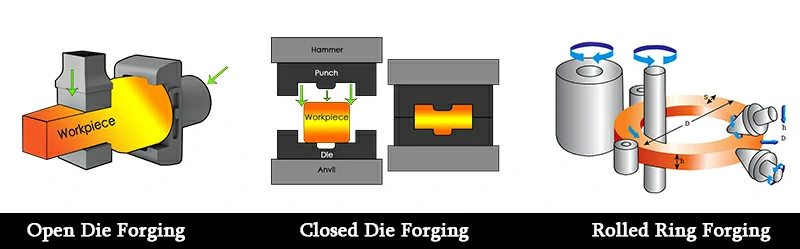
Chalco is a manufacturer of forged rings and rolled rings for aerospace, energy, marine, and heavy machinery applications. Our aluminum rings are produced using forging processes such as open-die forging, closed-die forging, and CNC radial-axial ring rolling.
Our aluminum ring forging capability covers outer diameters from 120 mm to 1800 mm and supports aerospace-grade alloys such as 6061, 6082, 7050, 7075, 2024, and 5083. Through controlled grain flow, precise heat treatment, and strict dimensional control, our forged rings and rolled aluminum rings deliver excellent concentricity, roundness, and structural reliability.
Quick Specs for Aluminum Forged Rings & Rolled Rings
Manufacturing Process: Open-die forging, closed-die forging, and CNC radial-axial ring rolling
Size Range: Typical OD 120–1800 mm · ID per drawing · Wall thickness ≥ 10 mm
Concentricity / Roundness: ≤ 0.5–1.0 mm (size-dependent) · end-face perpendicularity ≤ 0.5 mm / 300 mm
Heat Treatment: T6 / T651 / T73 (other tempers available on request)
Aluminum Alloys: 6061 · 6082 · 7050 · 7075 · 2024 · 5083 (2618 / 4032 available case-by-case)
Inspection & Documentation: Ultrasonic testing (UT) per ASTM B594 / AMS-STD-2154 · dimensional inspection report · EN 10204 3.1 certification
Machining State: as-forged / as-rolled · rough-machined · finish-machined according to drawing
Lead Time / MOQ: quoted based on drawings and specifications · single-piece prototypes and small batches supported
Aluminum Ring Manufacturing — Forged Ring & Rolled Ring Capabilities
Chalco manufactures aluminum forged rings and rolled rings using integrated processes including open-die forging, closed-die forging, and CNC radial-axial ring rolling. These manufacturing routes allow us to produce high-strength aluminum rings with controlled grain flow, stable concentricity, and reliable dimensional accuracy for aerospace, energy, marine, and heavy-machinery applications.
Our aluminum ring manufacturing capabilities combine forging, ring rolling, heat treatment, CNC machining, and non-destructive testing within one production flow. Ultrasonic testing is available per ASTM B594 or AMS-STD-2154, with MT/PT/RT inspection provided depending on project requirements.
-
Open-Die Forging
8000 t forging presses support multi-directional open-die forging, refining grain structure and removing internal porosity.
Strengths: thick-wall forged rings, stepped or flanged sections, and heavy-duty components requiring larger machining allowances.
-
Closed-Die Forging
In-house die design enables closed-die forging with repeatable geometry and improved surface quality for small- to mid-size forged rings.
Strengths: precision couplings, drivetrain flanges, and high-cycle mechanical connectors.
-
CNC Radial-Axial Ring Rolling
CNC radial-axial ring rolling produces weld-free aluminum rolled rings with continuous circumferential grain flow and uniform wall thickness.
Ideal for large-diameter, thin-wall rings requiring high concentricity, stable quality, and high material yield in batch production.
Capabilities & services:
- Section height: 30–600 mm depending on forging or ring rolling process
- Single-piece weight: up to approximately 3 tons (higher weights evaluated on request)
- Wall strategy: thin-wall rings produced by ring rolling
- Machining allowance defined per drawing; rough machining and finish turning available
- Surface roughness after machining: Ra 0.8–3.2 µm depending on feature requirements
- Heat treatment with recorded cycles: T6 / T651 / T73 (other tempers available)
- Non-destructive testing (NDT): UT per ASTM B594 / AMS-STD-2154, mechanical testing, metallography, CMM inspection
- Documentation: EN 10204 3.1 (3.2 available), dimensional reports and UT inspection maps
- Oversize strategy: segmented ring forging with circumferential joining (non-seamless), evaluated case-by-case
Not sure whether your project requires forged rings or rolled rings? Send us your drawing or specifications and our engineers will recommend the most suitable forging or ring rolling process.
Engineering ReviewTypes of Forged Rings & Rolled Rings
Forged rings and rolled rings can be produced in a wide range of structural configurations depending on load requirements, wall thickness, and connection design. Rolled rings are typically used for large-diameter or thin-wall structures, while forged rings are commonly used for solid, flanged, or profiled components.
-
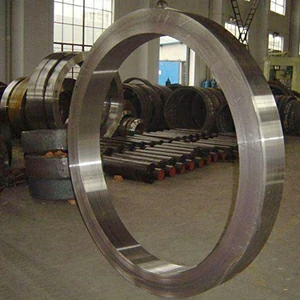
Seamless rolled rings produced by radial-axial ring rolling with continuous grain flow and uniform wall thickness, offering excellent structural integrity and dimensional stability.
-
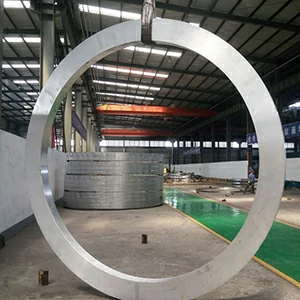
Large-diameter forged rings produced by open-die forging or ring rolling, supporting ultra-large OD structures with controlled grain flow and high structural stability.
-
Solid Forged Ring
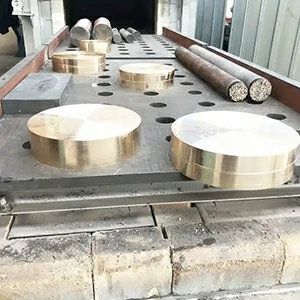
Solid forged rings with full cross-section density, providing maximum load-bearing capacity and structural reliability for heavy-duty mechanical assemblies.
-
Hollow Forged Ring
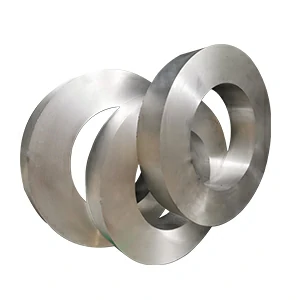
Hollow forged rings with reduced inner mass and optimized wall thickness distribution, supporting lightweight structural designs while maintaining mechanical strength.
-
Flanged Forged Ring
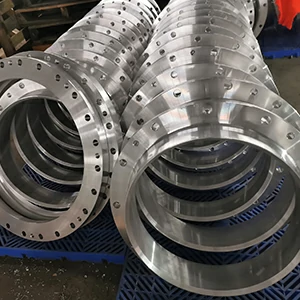
Forged rings with integrated flange geometry for bolted connections, sealing interfaces, and structural joining applications.
-
Profiled Forged Ring
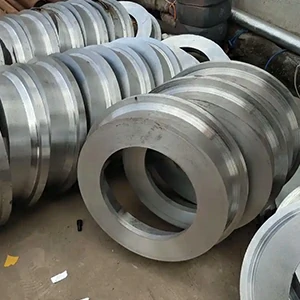
Forged rings with customized cross-section profiles such as stepped, grooved, or polygonal geometries for specialized mechanical interfaces.
-
Gear / Toothed Ring
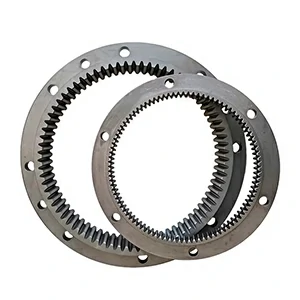
Forged rings with external teeth, grooves, or positioning features, commonly used as precision transmission or positioning components.
-
High-Strength Rolled Ring
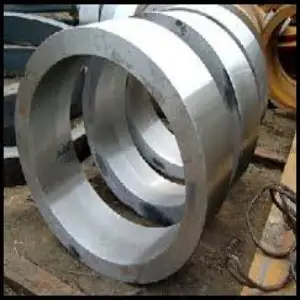
High-strength rolled rings produced through controlled ring rolling processes for demanding structural and rotating components.
Need a specific forged or rolled ring configuration? Send us your drawing or dimensions for engineering review.
Send DrawingHow to Choose Between Forged Rings and Rolled Rings
The choice between forging and ring rolling mainly depends on the diameter-to-wall ratio, geometry complexity, tolerance requirements, and production volume. In general, ring rolling is preferred for large-diameter or thin-wall rings requiring high concentricity, while forging is better suited for thick sections or reinforced geometries.
- Ring Rolling (CNC radial-axial): used to produce rolled rings, including seamless rolled rings. This process is ideal for large-diameter and thin-wall rings, offering excellent roundness, stable concentricity, and high material yield.
- Forged Ring (open-die / closed-die): suitable for thick-wall sections, stepped or flanged geometries, and prototype or small-lot production.
- Hybrid Route: a ring blank can be pre-formed by forging and then refined through ring rolling to achieve more uniform wall thickness and improved dimensional stability.
| Feature | Forged Ring | Rolled Ring (Ring Rolling Process) |
|---|---|---|
| Typical Structure | Thick-wall, reinforced or stepped rings | Large-diameter, thin-wall rings |
| Grain Flow | Process-dependent | Circumferential continuous flow |
| Concentricity | Good | High precision (≤0.5–1.0 mm) |
| Material Yield | ~50–70% | ~75–90% |
| Typical Use | Flanged rings, reinforced rims, heavy sections | Large OD rings, thin-wall housings |
Not sure which manufacturing route fits your ring design? Click to view more detailed information or Send us your drawing or key dimensions and our engineers will recommend the most suitable process.
Process ReviewAluminum Alloys for Forged Rings & Rolled Rings
Chalco specializes in manufacturing aluminum forged rings and rolled rings, supporting a wide range of aerospace-grade alloys. Aluminum forged and rolled rings provide an excellent strength-to-weight ratio, corrosion resistance, and good machinability. These properties make them widely used in rotating equipment, couplings, structural rings, aerospace components, and lightweight mechanical assemblies.
-
6061 Aluminum Ring — Forged / Rolled
General-purpose alloy with stable strength, excellent weldability and machinability
Typical temper: T6/T651 · UT: per ASTM B594 / AMS-STD-2154 (level/class per PO; 100% on request) · Docs: EN 10204 3.1
ASTM B247 | GB/T 6892 | AMS 4127 (T6)
-
7075 Aluminum Ring — Forged / Rolled
Ultra-high strength alloy widely used in high-load aerospace structures
Typical temper: T6/T73 · UT: per ASTM B594 / AMS-STD-2154 (level/class per PO; 100% on request) · Docs: EN 10204 3.1 (3.2 on request)
AMS 4045 | GB/T 6892 | HB/Z 140
-
2024 Aluminum Ring — Forged / Rolled
Excellent fatigue resistance for multi-frequency stress structures
Typical temper: T351/T4 → finish HT · UT: per ASTM B594 / AMS-STD-2154 (level/class per PO; 100% on request) · Docs: EN 10204 3.1
AMS 4144 | GB/T 6892 | HB/Z 140 (T42/T6)
-
7050 Aluminum Ring — Forged / Rolled
Strong stress-corrosion resistance for thick-wall, heavy-load components
Typical temper: T74/T76/T73 · UT: per ASTM B594 / AMS-STD-2154 (level/class per PO; 100% on request) · Docs: EN 10204 3.1 (3.2 on request)
AMS 4050 | HB/Z 140 | GJB 1438A
-
5083 Aluminum Ring — Forged / Rolled
Outstanding corrosion resistance and toughness for offshore & chemical equipment
Typical temper: O/H112 · UT: per ASTM B594 / AMS-STD-2154 (level/class per PO; 100% on request) · Docs: EN 10204 3.1
GB/T 6892 | ASTM B247 | ISO 6361
-
2618 Aluminum Ring — Forged / Rolled
Excellent high-temperature creep strength for engine and heat-load components
Typical temper: T61/T651 (case-by-case) · UT: per ASTM B594 / AMS-STD-2154 (level/class per PO; 100% on request) · Docs: EN 10204 3.1
AMS 4133 | HB/Z 140 | GJB 2446
-
2219 Aluminum Ring — Forged / Rolled
High-temperature performance—ideal for liquid-fuel tanks and hot-end parts
Typical temper: T6/T852 (per drawing) · UT: per ASTM B594 / AMS-STD-2154 (level/class per PO; 100% on request) · Docs: EN 10204 3.1 (3.2 on request)
AMS 4144 | HB/Z 140 | GJB 3225
-
7475 Aluminum Ring — Forged / Rolled
High toughness and fracture resistance for safety-critical components
Typical temper: T761/T76 (on request) · UT: per ASTM B594 / AMS-STD-2154 (level/class per PO; 100% on request) · Docs: EN 10204 3.1 (3.2 on request)
AMS 4085 | HB/Z 140
-
6082 Aluminum Ring — Forged / Rolled
Better formability than 7075—suitable for ring rolling and large-size forging
Typical temper: T6/T651 · UT: per ASTM B594 / AMS-STD-2154 (level/class per PO; 100% on request) · Docs: EN 10204 3.1
GB/T 6892 | EN 586 | ISO 6361
* All alloys are qualified for free forging, ring rolling, and die forging. Available heat-treatment states include T6, T651, T42, and O, with complete material certificates and third-party inspection reports. While Chalco primarily focuses on aluminum forged and rolled rings, we can also supply titanium and steel rings for selected applications. Contact our engineers to discuss material selection and manufacturing options.
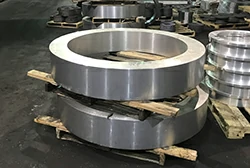
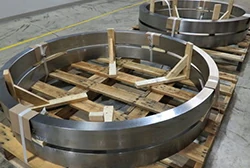
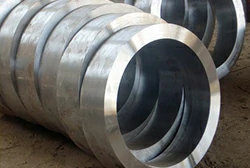
Need help selecting the right alloy or ring material for your project? Send us your drawing or specifications for an engineering recommendation.
Material AdviceTolerances & QA for Aluminum Forged Rings & Seamless Rolled Rings
For aluminum forged rings and seamless rolled rings (CNC), we control geometry and quality across the full route—heat treatment, NDT and documentation—so your parts arrive machining-ready and traceable.
| Item | Typical Control (size-dependent) | Notes |
|---|---|---|
| Concentricity | ≤ 0.5–1.0 mm | Rolled rings hold tighter on large OD / thin-wall |
| Roundness / Ovality | ≤ 0.5–1.0 mm | Controlled via CNC radial–axial reduction |
| End-face ⟂ (Perpendicularity) | ≤ 0.5 mm / 300 mm | Custom targets per drawing welcome |
| Wall / Height Uniformity | Process capability documented | Define machining allowance up front |
| Heat Treatment | T6 / T651 / T73 (others on request) | Cycle records and distortion control |
| Ultrasonic Testing (UT) | 100% per ASTM B594 or AMS-STD-2154 | Level/Class per PO; UT map & report available |
| Dimensional Inspection | Full report with key characteristics | CMM / dedicated gauges per feature |
| Documentation | EN 10204 3.1 (3.2 on request) | Heat & test traceability; third-party witnessing optional |
Note: Targets above are indicative; final tolerances are confirmed with your drawing, alloy/temper and OD–wall combination.
Instant QuoteApplication Industries of Aluminum Forged & Rolled Rings
Aluminum ring forgings serve weight-critical and corrosion-sensitive assemblies across aerospace/defense, energy & marine, and rail & heavy machinery. We match process (open-die forging / seamless ring rolling), alloy/temper, and machining plan to your duty cycle to maximize strength, fatigue life, and dimensional stability.
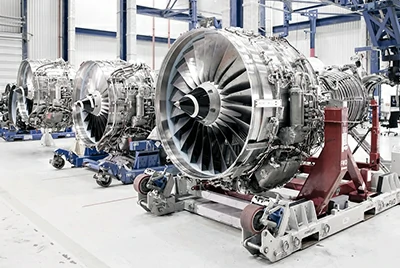
Aerospace & Defense
Uses: fuselage/engine interface rings, lightweight sealing flanges, stiffener/locating rings. Alloys 7050/7075/2024 per print; UT 100% per ASTM B594 / AMS-STD-2154 with EN 10204 3.1. Thin-wall/high concentricity → ring rolling; thick-section/flanged → open-die forging.

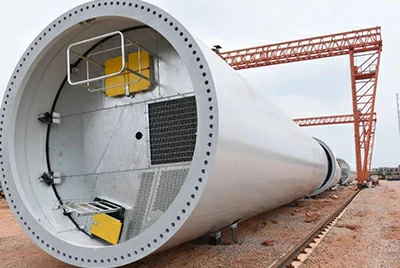
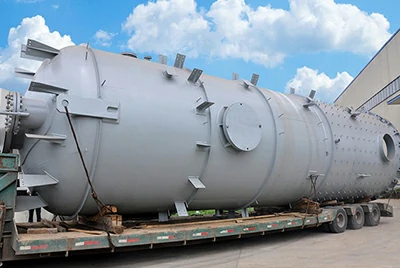
Energy & Marine (Wind / Petro-Chemical)
Uses: main-shaft/yaw flanges, valve/pressure-vessel seal rings, corrosion-resistant pipeline interfaces. Alloys 5083/6061/6082; weldability and UT maps available on request. Large-OD thin-wall housings favor ring rolling; heavy flanged rings favor open-die.
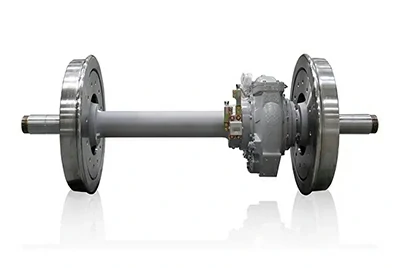
Rail & Heavy Machinery
Uses: bogie support/brake base rings, couplings and seat rings with tight concentricity. Alloys 6061/6082/7075; finish-machined to print with dimensional report. Rolled rings reduce machining time on thin walls; forged rings suit reinforced/stepped sections.

Also supported: cryogenic/chemical plants, UAV & mission-critical devices (project-specific UT/Docs). Each project receives a tailored alloy + process + tolerance plan (RFQ guide: alloy/temper; OD×ID×wall/height; tolerance & surface; quantity; target lead time). Welcome ro your project inquire.
Aluminum Forged & Rolled Rings — Custom, Lead Time & Supplier Guide
As a focused aluminum ring supplier and manufacturer (open-die/closed-die forging & CNC radial-axial ring rolling in-house), we turn drawings into machining-ready rings with one accountable flow — from preform to heat treatment, machining, and inspection. Send the essentials below to get a fast, engineering-led quote.
You'll receive a process recommendation (rolled vs forged), a tolerance proposal aligned to your print, and a clear lead-time window. Prototypes and small batches are supported.
- RFQ essentials: alloy & temper; OD × ID × wall/height (± target weight); drawing & tolerances; quantity & delivery terms; QA package (UT per ASTM B594 / AMS-STD-2154, level/class per PO) & documents (EN 10204 3.1 / 3.2); machining state (as-forged/rolled / rough-machined / finish-machined).
- Supplier strengths: end-to-end in-house line; aluminum expertise across 2xxx/5xxx/6xxx/7xxx; guidance for thin-wall (ring rolling) vs heavy-section/flanged (open-die); recorded HT cycles, dimensional reports, optional third-party witnessing.
- Indicative lead time: as-forged/rolled blanks 2–4 weeks after PO; rough-machined 3–6 weeks; finish-machined to print 4–8 weeks (tolerance/QA dependent).
Send us your drawing or specifications and our engineers will recommend the most suitable forging or ring rolling process for your application.
Frequently Asked Questions
What's the difference between a forged ring and a rolled ring?
Rolled rings are produced by CNC radial-axial ring rolling and belong to the forging family. Seamless rolled rings are typically used for large-diameter or thin-wall structures requiring high concentricity and roundness. Conventional forged rings are better suited for thick sections, flanged or stepped geometries, and small-lot production where flexible forming paths are required. See "How to Choose".
What size range can you support?
See Quick Specs for typical ranges. Larger sizes can be evaluated through open-die forging depending on the drawing, tolerances, and alloy requirements.
Can you deliver rough- or finish-machined rings?
Yes. We supply rings in as-forged, as-rolled, rough-machined, or finish-machined condition according to your drawing. Dimensional inspection reports can be provided to support machining and assembly.
Which QA package and documents are available?
Ultrasonic testing can be performed according to ASTM B594 or AMS-STD-2154 (level/class per PO). Standard documentation includes dimensional reports and EN 10204 3.1 certification, with 3.2 available upon request. Details are summarized in Tolerances & QA and the RFQ essentials above.
Which drawing formats do you accept?
PDF / DWG / DXF for 2D drawings, and STEP / IGES / STP for 3D models.
What's the MOQ and typical lead time?
We support single-piece prototypes as well as small-batch production. Typical lead times depend on alloy, size, machining state, and inspection requirements. For details, see Custom, Lead Time & Supplier Guide.
Chalco can provide you the most comprehensive inventory of aluminum products and can also supply you customized products. Precise quotation will be provided within 24 hours.
Get a quote