




In overhead transmission and distribution projects, conductor selection must balance conductivity, mechanical strength, and long-term reliability. ACAR (Aluminum Conductor Alloy Reinforced) features an all-aluminum structure, combining conductive aluminum with an aluminum alloy core to meet the current-carrying and structural demands of medium- and high-voltage lines.
Chalco's ACAR conductors use 1350 high-conductivity aluminum with a 6201 alloy reinforcing core, ensuring stable conductivity and enhanced mechanical strength. Compared with traditional steel-core conductors, this all-aluminum design reduces weight and improves corrosion resistance, making it well suited for project-based overhead transmission applications.
ACAR conductor structure and working principle
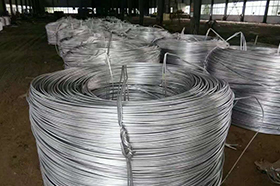
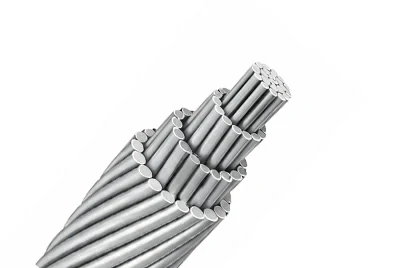
ACAR conductors employ a concentric stranding structure, consisting of an outer layer of conductive aluminum wire and an inner core of aluminum alloy reinforcing wire. A matte (mirror-finish) finish is available, and color coatings can be applied upon request.
The outer aluminum wire primarily carries current, ensuring the conductor has stable conductivity.
The inner aluminum alloy wire serves as the load-bearing core, used to enhance the overall tensile strength and structural stability of the conductor.
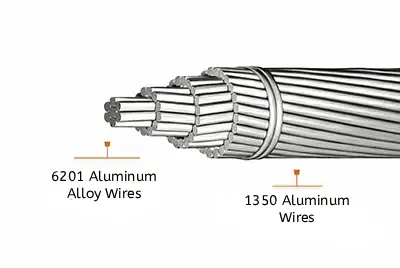
Through this structural division of labor, ACAR assigns electrical and mechanical properties to different alloy layers, achieving enhanced strength without introducing a steel core. The all-aluminum structure not only helps reduce conductor weight but also avoids the potential problems of corrosion and magnetic loss associated with steel-core conductors, making it more suitable for long-term overhead transmission environments.
ACAR conductor alloy system design (1350 aluminum + 6201 aluminum alloy core)
In overhead transmission projects, ACAR is not simply a combination of materials, but a conductor structure solution oriented towards engineering outcomes. By assigning current-carrying and load-bearing functions to different alloys, ACAR can simultaneously meet conductivity and structural strength requirements without relying on a steel core, providing greater flexibility for line design.
Chalco's ACAR conductors use 1350 series high-conductivity aluminum as the outer current-carrying material to ensure stable and controllable conductivity within the design current range.
The inner core is made of 6201 aluminum alloy or equivalent Al-Mg-Si alloy to provide the necessary tensile strength and structural support, enabling the conductor to adapt to higher spans and more complex installation conditions.
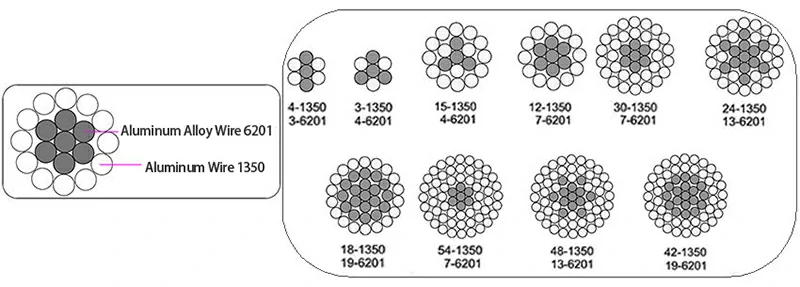
Based on the mature configuration of 1350 conductive aluminum + 6201 aluminum alloy reinforcing core, Chalco ACAR conductors achieve a stable balance between conductivity, mechanical strength and line weight. This helps projects reduce the risk of steel core corrosion, while also reducing structural burden and controlling long-term operation and maintenance costs, making them more suitable as a comprehensive conductor choice for medium and high voltage overhead power transmission projects.
Comparison of ACAR and AAC/ACSR engineering selection
In actual overhead power transmission projects, AAC, ACSR, and ACAR are usually not single, mutually exclusive choices. Instead, they are rationally combined and configured within the same project based on the line span, stress conditions, and environmental factors. Different conductors perform the functions of different sections, collectively forming a complete transmission line scheme.
AAC (All-Aluminum Conductor)
Characterized by light weight and stable conductivity, AAC is suitable for short spans and low mechanical stress sections. It is commonly used in branch lines and other applications with lower structural load requirements.
ACAR (Aluminum Alloy Core Reinforced Conductor)
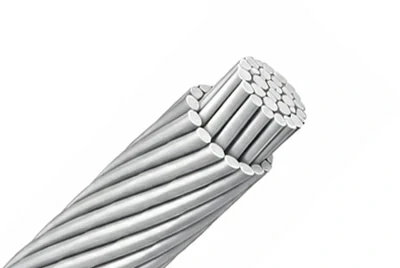
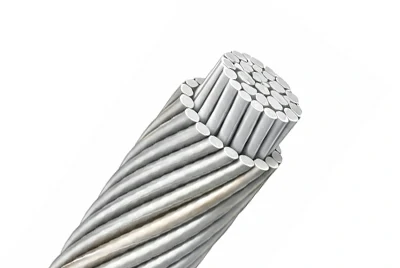
Uses an all-aluminum alloy core to enhance strength without steel, balancing conductivity and stability. It is suitable for spans requiring weight control and corrosion resistance, bridging AAC and ACSR applications.
ACSR (Aluminum Steel Cored Wire)
Provides high mechanical strength through its steel core, making it suitable for long spans and high-tension sections. ACSR is widely used for trunk lines but requires consideration of corrosion and long-term maintenance.
| AAC / ACAR / ACSR Engineering Selection Reference Comparison Table | |||
| Comparison Projects | AAC | ACAR | ACSR |
| Structural form | All-aluminum conductor | Conductive aluminum + aluminum alloy reinforcing core | Conductive aluminum + steel core |
| Electrical conductivity | high | high | higher |
| Mechanical strength | lower | Medium to High | high |
| wire weight | light | Lighter | heavier |
| span capability | Small | Medium – Large | big |
| Corrosion resistance | excellent | excellent | generally |
| Magnetic loss | none | none | have |
| Typical application section | Branch lines, short spans | Medium span, corrosive environment | Main trunk, long span |
Due to the differences in various line sections and engineering conditions, AAC, ACAR, and ACSR are often used in combination within the same project. Chalco can provide a variety of overhead conductor solutions and supports technical communication and solution recommendations, from single conductor selection to overall project configuration.
Typical application scenarios of ACAR conductors
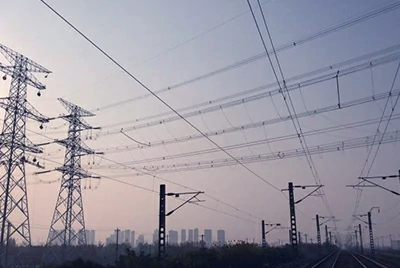
In practical engineering, ACAR is usually applied to line sections where there are comprehensive requirements for conductor strength, weight and environmental adaptability, and is especially suitable for scenarios where structural performance needs to be improved without using steel core.
Medium-span overhead transmission lines
In line sections where span requirements exceed AAC but steel-core structures are not preferred, ACAR provides a more balanced option between strength and weight.
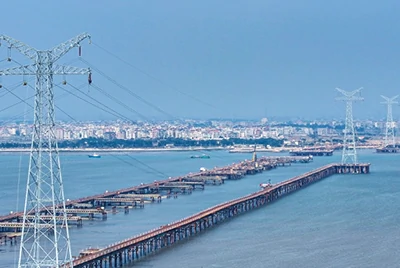
Coastal and high-humidity line sections
The all-aluminum structure helps reduce corrosion risk, making it suitable for transmission and distribution lines in coastal, humid, or corrosive environments.
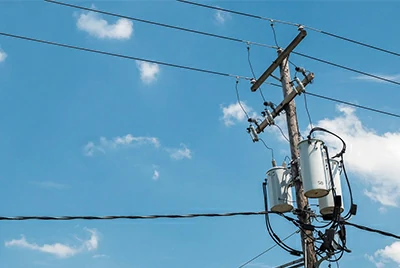
Urban transmission line upgrade and renovation projects
Where tower load-bearing capacity is limited or existing structures are not suitable for added weight, ACAR can serve as an alternative to steel-core conductors.
Projects sensitive to long-term operation and maintenance costs
By avoiding steel-core-related issues, ACAR helps simplify long-term maintenance considerations and is suitable for projects that emphasize operational stability and service life.

Supply methods & capacity
Chalco offers pre-stranded ACAR bare conductors for overhead power transmission and distribution projects. The conductors feature a concentric stranding structure, using 1350 series high-conductivity aluminum as the outer current-carrying material and 6201 aluminum alloy or equivalent Al-Mg-Si alloy as the reinforcing core, achieving a reasonable balance between conductivity and mechanical strength.
Conductor Structure: The number of strands of ACAR's aluminum and aluminum alloy wires can be configured according to project requirements. Common structural forms include concentric stranding schemes with different ratios of conductive aluminum to alloy cores, used to match the cross-sectional area, span requirements, and stress conditions of the line. The specific structural design is usually confirmed in conjunction with the line design parameters and the applicable standards.
Supply Form: ACAR is typically used in bare conductor form, suitable for long-term operation in overhead transmission environments. For applications involving additional protective layers, composite structures, or non-standard configurations, Chalco can conduct technical feasibility assessments based on project conditions and assist in providing corresponding solution suggestions and coordination support during the engineering communication phase.
For confirmation regarding the structural configuration, parameter range, or project compatibility of ACAR conductors, please contact Chalco for technical support.
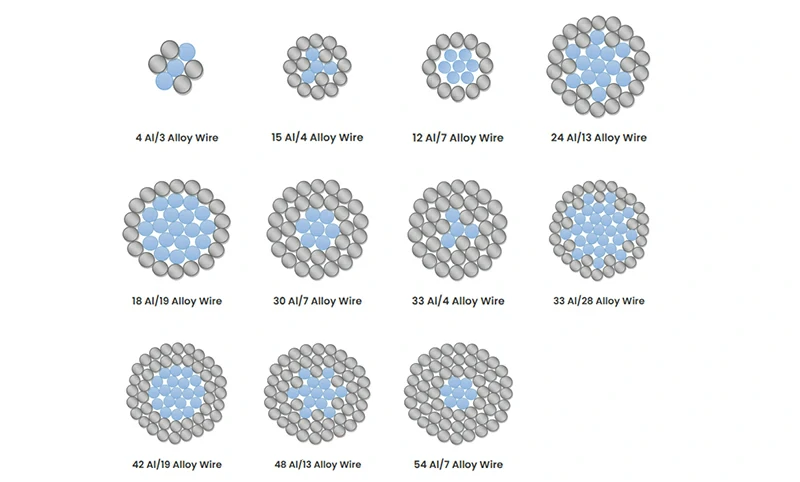
ACAR conductor technical parameters
ACAR is a project-specific overhead bare conductor, and its structure and technical parameters need to be confirmed in conjunction with the line span, stress conditions, and environmental factors. The following parameters are for engineering selection and scheme reference; the specific configuration can be adjusted according to project requirements.
Structural form: Concentric Stranding
Outer current-carrying material: 1350 series high conductivity aluminum
Core reinforcement material: 6201 aluminum alloy or equivalent Al-Mg-Si alloy
Share combinations: can be configured according to project needs ( example structures include 12/7, 18/19, 30/7, etc.)
Implementation Standards and Engineering Specifications
- ASTM B524 / B524M – Aluminum Conductor Alloy Reinforced (ACAR)
- IEC 61089 – Overhead Conductors (Engineering Equivalent)
- CSA C61089 – Applicable to some North American projects
Different standard systems have different ways of expressing parameters. Chalco can provide corresponding technical configuration support according to project requirements.
| Typical electrical and mechanical properties | ||
| Parameter Items | Reference range | illustrate |
| Conductivity (outer aluminum layer) | ≥ 61% IACS | Based on 1350 series conductive aluminum |
| Alloy core conductivity | 52.5–53.0% IACS | 6201 Aluminum Alloy |
| DC resistance at 20°C | 0.03 – 0.60 Ω/km | Related to cross-sectional area and structure |
| Rated breaking force | 30 – 200 kN | Determined by the alloy core ratio |
| wire weight | 150 – 3500 kg/km | Lighter than steel-core conductors of the same grade |
| Continuous operating temperature | ≤ 90 °C | Common conditions for overhead lines |
| Short-term temperature resistance | ≤ 200 °C | Short-term operating condition reference |
| Physical performance reference | |
| project | Typical value |
| Density (20°C) | ≈ 2.70 g/cm³ |
| elastic modulus | 55 – 62 GPa (varies with structure) |
| coefficient of linear expansion | ≈ 23 × 10⁻⁶ /°C |
| Note: Physical properties are related to the number of strands, structure, and alloy ratio, and are for engineering estimation reference only. | |
FAQ
Q1: What are the main differences between ACAR conductors and ACSR conductors?
A1: ACAR uses an all-aluminum structure, with an aluminum alloy reinforcing core to improve mechanical strength. It does not introduce a steel core, which provides advantages in terms of weight control and corrosion resistance. ACSR provides higher strength with a steel core and is more suitable for long-span or high-tension lines.
Q2: Can ACAR replace AAC or ACSR?
A2: In practical engineering, AAC, ACAR, and ACSR are usually used in combination depending on the span, stress, and environmental conditions of different line sections, rather than as a single replacement. ACAR is often used for medium-span sections that balance strength, weight, and corrosion resistance.
Q3: Is the ACAR supplied by Chalco a finished conductor or raw material?
A3: Chalco can supply stranded ACAR bare conductors and supports configuration of structure and parameters according to project requirements. Specific supply methods need to be confirmed based on project conditions.
Q4: Does ACAR offer insulation or overlay structures?
A4: ACAR is typically used as bare conductors. For requirements involving additional protective layers or non-standard structures, Chalco can conduct a technical feasibility assessment based on project conditions and assist in providing appropriate solution recommendations.
Q5: What standards does ACAR conductor comply with?
A5: ACAR typically complies with overhead conductor standards such as ASTM B524/B524M, and can refer to systems such as IEC 61089 and CSA C61089 for technical configuration according to project needs.
For confirmation of the structural configuration, parameter range, or standard adaptation scheme of ACAR conductors under specific line conditions, please contact Chalco for technical communication and project coordination.
Chalco can provide you the most comprehensive inventory of aluminum products and can also supply you customized products. Precise quotation will be provided within 24 hours.
Get a quote