Many buyers search chrome plated rod as hard chrome shaft, piston rod, guide rod, or linear shaft. Common use cases include pneumatic cylinder piston rod and hydraulic cylinder rod applications.
For guide and linear motion components, the same rod is often specified as a linear shaft for stable sliding.
Chrome plated rod quick selection by working condition
We offer two common hard chrome plated rod options: SUS304 stainless steel hard chrome plated rod (corrosion resistance first) and CK45/S45C hard chrome plated piston rod (general strength and cost performance first).
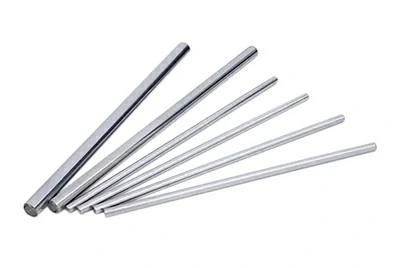
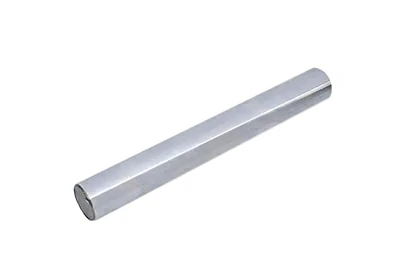
You can start with the comparison table below to quickly confirm which option better fits your working conditions and assembly requirements.
| Product | SUS304 stainless steel hard chrome plated rod | CK45/S45C hard chrome plated rod |
| Selection focus | Corrosion resistance first | General strength and cost performance first |
| Surface roughness | Ra < 0.2 μm | Ra < 0.2 μm |
| Tolerance | f8 | f7 / f8 |
| Straightness | 0.15/1000 mm | As agreed / accepted by drawing |
| Chrome layer hardness | HV850+ | 850–1050 HV |
| Chrome thickness | Confirmed based on user requirements | φ<20mm ≥15 μm;φ≥20mm >20 μm |
| Typical use | Cylinder rod, shock absorber piston rod, precision guide shaft/guide post | Pneumatic cylinders, hydraulic cylinders, and general transmission/guide parts |
How to choose faster:
- If your equipment runs in a humid environment, needs frequent washing, or you worry about corrosion, choose SUS304 stainless steel hard chrome plated rod first.
- If you need general, bulk purchasing for pneumatic cylinders or hydraulic cylinders, choose CK45/S45C hard chrome plated rod first.
If you need tighter fit consistency, consider f7. For most general assemblies, f8 is the common choice (share your bore tolerance or drawing, and we can confirm it for you).
SUS304 stainless chrome plated rod
The rod is first precision milled and machined, then ground and chrome plated. This brings the surface tolerance to f8 and the surface hardness to HV850 or higher. It improves wear resistance and extends service life, helping you reduce total cost.
SUS304 has a stronger corrosion-resistant base. With hard chrome plating and precision surface finishing on top, it delivers both corrosion resistance and wear resistance.
Contact Us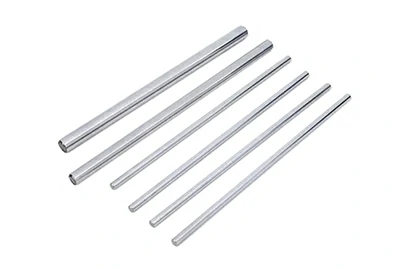
SUS304 chrome plated rod specifications
| Surface roughness | Ra <0.2 |
| Base material hardness | HB220–280 |
| Plating hardness | HV850+ |
| Straightness | 0.15/1000 mm |
| Tolerance grade | GB1184 Grade 9 |
| Chrome thickness | Based on user requirements |
| Full-length dimensional tolerance | GB1100 IT grade |
| Hardness | HB220–280 |
Sizes and delivery condition
Sizes can be confirmed based on your requirements, including common diameter and length ranges.
| Diameter mm | Weight Kg/m | Tolerance f7(μm) | Tolerance f8(μm) | Tolerance h6(μm) |
| 6 | 0.22 | -10 to - 22 | -10 to -28 | 0 to -9 |
| 8 | 0.39 | -13 to -28 | -13 to -35 | 0 to -9 |
| 10 | 0.62 | -13 to -28 | -13 to -35 | 0 to -11 |
| 12 | 0.89 | -16 to -34 | -16 to -43 | 0 to -11 |
| 16 | 1.58 | -16 to -34 | -16 to -43 | 0 to -11 |
| 18 | 2.00 | -16 to -34 | -16 to -43 | 0 to -13 |
| 20 | 2.47 | -20 to -41 | -20 to -53 | 0 to -13 |
| 22 | 2.99 | -20 to -41 | -20 to -53 | 0 to -13 |
| 25 | 3.86 | -20 to -41 | -20 to -53 | 0 to -13 |
| 28 | 4.84 | -20 to -41 | -20 to -53 | 0 to -13 |
| 30 | 5.55 | -20 to -41 | -20 to -53 | 0 to -16 |
| 32 | 6.32 | -25 to -50 | -25 to -64 | 0 to -16 |
| 36 | 8.00 | -25 to -50 | -25 to -64 | 0 to -16 |
| 38 | 8.91 | -25 to -50 | -25 to -64 | 0 to -16 |
| 40 | 9.87 | -25 to -50 | -25 to -64 | 0 to -16 |
Length
| Diameter (mm) | φ6-φ12 | φ16-φ25 | φ30-φ50 | φ55-φ100 | φ105-φ1200 |
| Length (mm) | 200-2000 | 200-3000 | 200-5000 | 200-10000 | 1000-10000 |
Typical applications
Printing / textile dyeing equipment: Humid environments and high downtime cost. Once corrosion spots or wear appear on the rod surface, seal aging speeds up. The corrosion-resistant base of 304, combined with Ra < 0.2 and a high-hardness surface, is better for long-term stable running positions.
Office equipment guide shafts: Guide parts are sensitive to surface quality and dimensional consistency. A flatter surface with lower roughness runs more smoothly, with lower risk of noise and sticking.
Cylinder / shock absorber piston rods: Seal life depends heavily on rod surface quality. Ra < 0.2 + HV850+ helps reduce friction and wear, and lowers early air leakage / oil seepage issues.
Are you using it for a cylinder rod or a guide shaft? Send your bore tolerance / target clearance, speed, and environment (humidity / washing / dust), and we will confirm the right surface option and chrome requirements for you.
Instant QuoteCK45 / S45C hard chrome plated rod
Cylinder and hydraulic piston rods, also called chrome plated rods, are rods with a specially ground surface and a hard chrome plated layer.
We manufacture cylinder and hydraulic piston rods with precision cold drawing, honing, and polishing. All technical indicators meet national standards.
CK45 (often called S45C in the market) is a very common general-purpose material for pneumatic and hydraulic cylinder piston rods. It offers a strong balance of strength, machinability, and cost.
Contact Us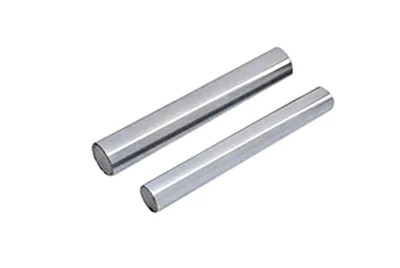
CK45 / S45C chrome plated rod specifications
| Material | CK45(GB/T699-1999) |
| Tensile strength (MPa) | ≥600N/mm² |
| Yield strength (MPa) | ≥355N/mm² |
| Elongation | min.16% |
| Chrome thickness | φ<20mm≥15μm, φ20mm>20μm |
| Surface roughness | Ra<0.2 |
| Chrome layer hardness | 850HV-1050HV |
| Diameter tolerance | F7, F8 |
| Ovality | < 1/2 of diameter tolerance |
| Corrosion test | ISO 10289:1999, IDT |
Sizes and delivery condition
Size range: Common diameter and length ranges can be confirmed based on your requirements.
Delivery condition (optional): Normal / induction hardened / Q+T.
| Diameter mm | Weight Kg/m | Tolerance f7(μm) | Tolerance f8(μm) | Tolerance h6(μm) |
| 6 | 0.22 | -10 to -22 | -10 to -28 | 0 to -9 |
| 8 | 0.39 | -13 to -28 | -13 to -35 | 0 to -9 |
| 10 | 0.62 | -13 to -28 | -13 to -35 | 0 to -11 |
| 12 | 0.89 | -16 to -34 | -16 to -43 | 0 to -11 |
| 16 | 1.58 | -16 to -34 | -16 to -43 | 0 to -11 |
| 18 | 2.00 | -16 to -34 | -16 to -43 | 0 to -13 |
| 20 | 2.47 | -20 to -41 | -20 to -53 | 0 to -13 |
| 22 | 2.99 | -20 to -41 | -20 to -53 | 0 to -13 |
| 25 | 3.86 | -20 to -41 | -20 to -53 | 0 to -13 |
| 28 | 4.84 | -20 to -41 | -20 to -53 | 0 to -13 |
| 30 | 5.55 | -20 to -41 | -20 to -53 | 0 to -16 |
| 32 | 6.32 | -25 to -50 | -25 to -64 | 0 to -16 |
| 36 | 8.00 | -25 to -50 | -25 to -64 | 0 to -16 |
| 38 | 8.91 | -25 to -50 | -25 to -64 | 0 to -16 |
| 40 | 9.87 | -25 to -50 | -25 to -64 | 0 to -16 |
| 45 | 12.49 | -25 to -50 | -25 to -64 | 0 to -16 |
| 50 | 14.22 | -25 to -50 | -25 to -64 | 0 to -19 |
| 55 | 15.43 | -30 to -60 | -30 to -76 | 0 to -19 |
| 60 | 18.66 | -30 to -60 | -30 to -76 | 0 to -19 |
| 65 | 26.07 | -30 to -60 | -30 to -76 | 0 to -19 |
| 70 | 30.23 | -30 to -60 | -30 to -76 | 0 to -19 |
| 75 | 34.71 | -30 to -60 | -30 to -76 | 0 to -19 |
| 80 | 39.49 | -30 to -60 | -30 to -76 | 0 to -22 |
| 85 | 44.58 | -36 to -71 | -36 to -90 | 0 to -22 |
| 90 | 49.98 | -36 to -71 | -36 to -90 | 0 to -22 |
| 95 | 55.68 | -36 to -71 | -36 to -90 | 0 to -22 |
| 100 | 61.70 | -36 to -71 | -36 to -90 | 0 to -22 |
Typical applications
General support for pneumatic cylinders / hydraulic cylinders: Buyers worry most about batch differences that cause inconsistent assembly. We set unified acceptance criteria for Ra, tolerance class, hardness, and chrome thickness. It supports long-term repeat orders and spare parts management.
Automation transmission systems for packaging, woodworking, spinning, printing and dyeing: High-frequency reciprocating motion plus dust/oil environments can speed up wear. Chrome hardness of 850–1050HV and Ra < 0.2 help keep operation stable.
Working conditions that need a more predictable service life: Chrome thickness is clearly defined by diameter range (15/20 μm logic), making inspection easier and service life easier to predict.
If you need bulk supply or long-term spares, send us your common diameters, lengths, tolerance class (f7 or f8), and chrome thickness requirements. We will confirm the right plan for batch consistency and quote accordingly.
Why choose our chrome plated rod
- Longer seal life: Surface roughness is controlled to Ra < 0.2 μm. Plating hardness is clear and easy to accept (304: HV850+; CK45: 850–1050HV). This reduces friction and wear and keeps your equipment running more steadily.
- Lower early failure risk: We control rod surface condition and plating quality before delivery, reducing the impact of scratches, pitting, and other issues on seals.
- Easier assembly: We provide the right tolerance class for your fit (304: f8; CK45: f7/f8), making batch assembly consistency easier to control.
- More predictable service life: CK45/S45C supports chrome thickness control by diameter range (φ<20 ≥15 μm; φ≥20 >20 μm), reducing local early wear-through.
- More stable bulk purchasing: Key indicators are delivered under one unified standard (Ra / tolerance / hardness / thickness), making inspection, repeat orders, and long-term spare parts management easier.
How to choose F7 / F8 tolerance
Simply put: f7 is a tighter fit with a smaller clearance window. f8 is more general and covers most standard fit needs.
For example, when the basic size is 10–18 mm, f8 is (-0.016, -0.034) and f7 is (-0.016, -0.027). Both share the same upper deviation, but f7 has a narrower tolerance zone, so fit consistency is usually higher in batch assembly.
If you are not sure whether to choose f7 or f8, send us your mating bore tolerance grade or assembly drawing. We will recommend the safer option based on your assembly target.
Chrome plated rod process flow
We use a streamlined but critical process control to make delivery more stable and installation more worry-free:
- Cold drawing / straightening: Builds a stable base for rod shape and straightness.
- Grinding / polishing: Controls surface quality and dimensions, with a focus on Ra and OD consistency.
- Hard chrome plating: Controls plating performance and wear resistance, with a focus on chrome thickness and hardness.
- Final inspection and packing: Screens out surface defects such as chrome pits, pitting, and scratches.
FAQ
Q1: How to choose between 304 stainless and CK45/S45C chrome plated rod?
A: For humid environments, frequent washing, or corrosion risk, choose 304 first. For general bulk purchasing for pneumatic cylinders / hydraulic cylinders, with a focus on strength and cost performance, choose CK45/S45C first.
Q2: How to choose F7 and F8?
A: If you need higher assembly consistency and a more controllable clearance, choose F7. For more general fit needs, choose F8. Share your mating bore info or drawing, and we can confirm it for you.
Q3: What does 15/20 μm thickness mean for CK45?
A: It means the chrome layer is controlled by diameter range: φ<20 mm ≥15 μm, φ≥20 mm >20 μm. Thickness is more stable, service life is more predictable, and batch acceptance is easier.
Q4: What does Ra < 0.2 μm mean for seal life?
A: Lower roughness usually means less friction and more controllable wear. It helps reduce abnormal seal wear, lowering the risk of oil leakage / air leakage and reducing maintenance frequency.
Q5: How to reduce chrome pits, pitting, and scratches?
A: We focus on working surface condition in final inspection, and add stronger protection in packing and shipping to reduce secondary damage during transport and handling.
Q6: What information is needed for a quote?
A: Please share diameter, length, tolerance class (f7/f8), chrome thickness requirements, and application environment. If you have end machining requirements or a drawing/list, send them together for a faster and more accurate quote.