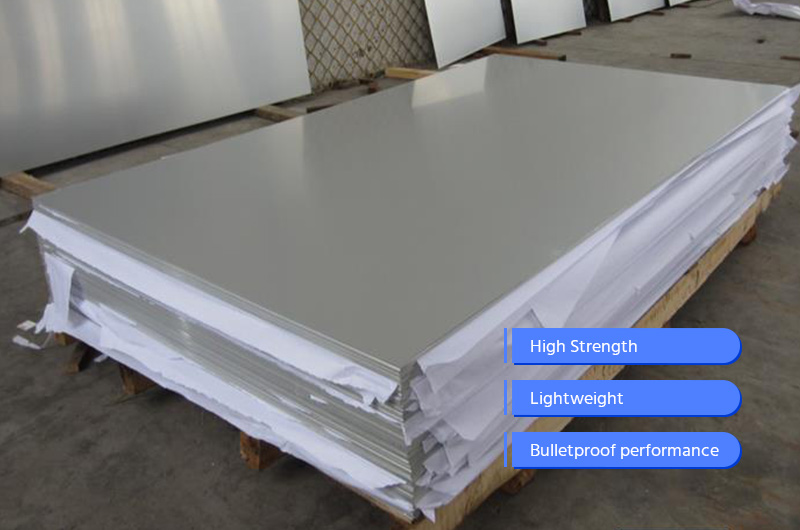
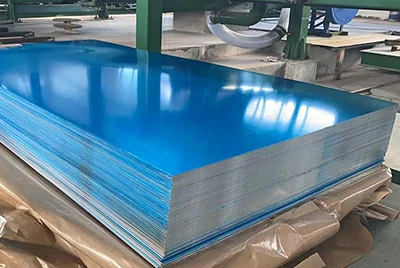
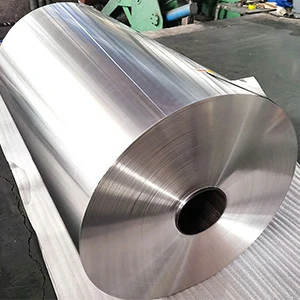
Aluminum Base Copper Clad Laminates (Al-CCL) are high-performance PCB materials designed to solve the biggest challenges for high-power electronics: efficient heat dissipation, reliable performance, and batch-to-batch consistency.
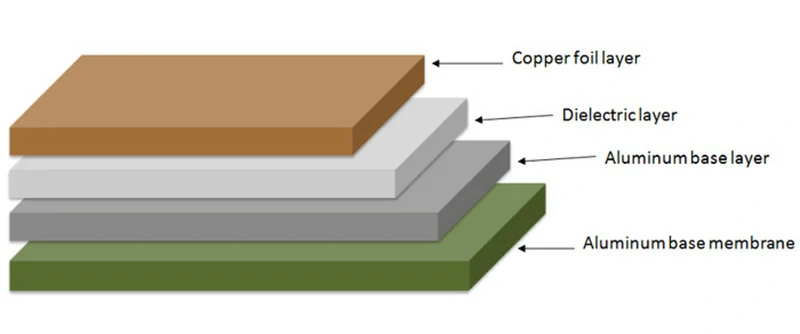
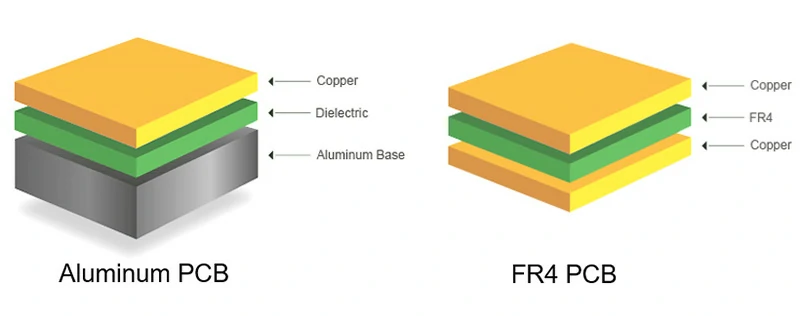
Ideal for applications such as LED lighting, automotive electronics, and power modules, these boards feature a lightweight aluminum core, a ceramic-filled dielectric layer, and a copper circuit layer, delivering up to 60% weight reduction versus FR4 while efficiently dissipating heat.
- Copper layer: 35–105 μm (1–3 oz), up to 10 oz for high-current applications.
- Dielectric layer: 50–200 μm, ceramic-filled epoxy with high insulation and thermal conductivity (1.0–5.0 W/m·K).
- Aluminum base: 1060 or 6061 alloy, providing mechanical support and integrated heat sinking.
Standards & certifications for aluminum base copper clad laminates
Our aluminum-based copper clad laminate (Al-CCL) is manufactured under strict quality control, meeting international standards. It ensures reliability and safety in high-power, high-temperature applications.
- IPC-4101: Performance specification for rigid and multilayer board substrates.
- UL 94 V-0: Flame retardant rating, ensuring self-extinguishing when exposed to heat.
- Peel Strength: Copper foil bonded to substrate ≥ 1.5 N/mm, preventing delamination under thermal shock.
- Thermal Conductivity Test: Measured according to ASTM D5470 standard.
- Hi-Pot High-Voltage Test: Each batch includes a test report, ensuring no leakage in end-use applications.
- Environmental Compliance: Halogen-free, meets RoHS & REACH, compatible with lead-free assembly.
- Certifications: ISO9001, UL, ULC, RoHS, CE, and other recognized certifications.
Aluminum-based copper-clad laminate (Al-CCL) specifications
- Standard size: 330×380mm, 500×600mm, 1000×1200mm, 500×1200mm.
- Aluminum base thickness: 0.5, 0.8, 1.0, 1.5, 2.0, 3.0 mm.
- Copper layer thickness: 18μm, 35μm, 70μm, 105μm, 140μm (0.5–10 oz).
- Insulation layer thickness: 75, 100, 125, 150 μm.
- Thermal conductivity: 1.0, 1.5, 2.0, 3.0, 4.2, 5.0, 7.0 W/m·K.
- Aluminum alloy grade: 1060, 5052, 6061.
- Glass transition temperature: 100, 120, 130 °C.
- Flame retardant rating: UL94 V-0
Advanced Options: Double-sided and multilayer structures are available, with copper layers on both sides of the aluminum base separated by dielectric layers, widely used for high-power thermal management applications.
Popular aluminum-based copper clad laminate types
Available in panel or sheet forms, with single-sided or double-sided constructions, our laminates are designed to provide excellent heat dissipation, electrical insulation, and mechanical stability for demanding electronic systems.
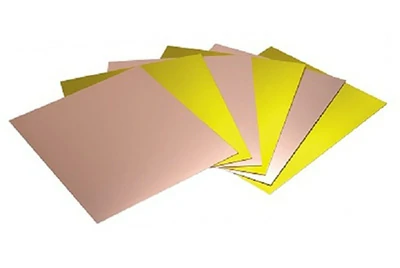
General-purpose aluminum-based copper-clad laminate
Insulation material:epoxy glass fiber prepreg. Typical applications: automotive electronics, office automation, standard power equipment.
general-purpose aluminum-based copper-clad laminate
High thermal conductivity aluminum-based copper-clad laminate
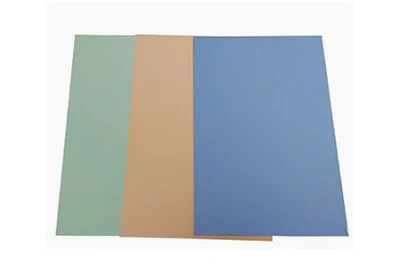
Insulation material:high thermal conductivity epoxy/ceramic-filled resin. Typical applications: LED lighting, high-power power modules, charging stations
high thermal conductivity aluminum-based copper-clad laminate
High-frequency microwave aluminum-based copper-clad laminate
Insulation material:polyolefin or polyimide resin. Typical applications: 5G communications, radar systems, RF amplifiers.
high-frequency microwave aluminum-based copper-clad laminate
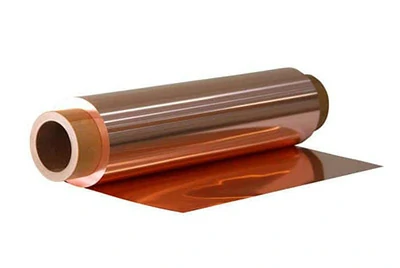
Flexible aluminum-based copper-clad laminat
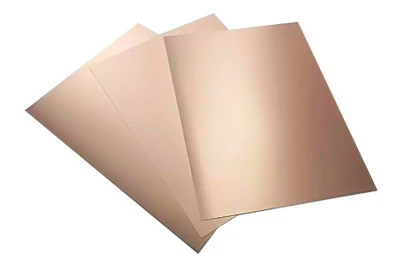
Insulation material:flexible dielectric material.Typical applications: 3D packaging, wearable devices, confined spaces requiring bent installation
flexible aluminum-based copper-clad laminate
By choosing our standard aluminum-based copper-clad laminates, you can:
- Precisely match your application needs (LED, power modules, 5G, automotive electronics, etc.).
- Ensure thermal reliability and mechanical stability in high-power or high-frequency applications.
- Receive products that meet international quality, environmental, and safety standards.
Need help selecting the right type for your application? Contact us for a free consultation and expert recommendation to ensure your Al-CCL board delivers optimal thermal and mechanical performance.
Performance testing of selected Chalco models
Typical performance values for our high thermal resistance Aluminum Base Copper Clad Laminates (Al-CCL) models CCAF-CH01 and CCAF-CH02, based on 35 μm copper, 80 μm dielectric, and 1.5 mm aluminum base, ideal for high-power and thermal management applications.
| Property | CCAF-CH01 | CCAF-CH02 |
| Copper thickness | 35 μm | 35 μm |
| Dielectric thickness | 80 μm | 80 μm |
| Aluminum base thickness | 1.5 mm | 1.5 mm |
| Peel strength | 1.70 N/mm | 1.50 N/mm |
| Peel strength after thermal stress (260°C) | 1.50 N/mm | 1.30 N/mm |
| Thermal resistance | 0.65 °C/W | 0.45 °C/W |
| Thermal conductivity | 1.5 W/m·K | 2.2 W/m·K |
| Flammability | FV-0 | FV-0 |
| Surface resistivity | 5.0×10⁷ MΩ | 3.68×10⁷ MΩ |
| Surface resistivity after humidity treatment | 4.5×10⁶ MΩ | 3.39×10⁶ MΩ |
| Volume resistivity | 1.0×10⁸ MΩ·m | 4.20×10⁸ MΩ·m |
| Volume resistivity after humidity treatment | 1.9×10⁷ MΩ·m | 3.17×10⁶ MΩ·m |
| Dielectric breakdown (AC) | 4.0 kV | 6.0 kV |
| Dielectric constant (1 MHz) | 4.2 | 4.24 |
| Dissipation factor (1 MHz) | 0.02 | 0.033 |
Notes
- Humidity treatment condition: 90% RH, 35°C, 96 h.
- Dielectric constant and dissipation factor measured at 1 MHz, 40°C, 93% RH, 96 h.
- Standard condition: A.
These performance values help engineers and procurement teams select the proper grade for high-power, high-temperature, or high-reliability applications, such as LED modules, power supplies, and EV chargers.
Thermal conductivity grade options
We offer multiple Aluminum Base Copper Clad Laminate (Al-CCL) grades to meet different thermal management requirements.
Choose the appropriate grade based on your device power density, heat dissipation needs, and application environment.
| Grade | Thermal Conductivity | Filler System | Flame Retardancy |
| Standard Thermal Grade | 1.0 W/m·K | Ceramic filled | UL94 V-0 |
| Enhanced Thermal Grade | 1.6 W/m·K | Ceramic filled | UL94 V-0 |
| High Thermal Grade | 2.2 W/m·K | Ceramic filled | UL94 V-0 |
| Ultra-High Thermal Grade | 3.0 W/m·K | Ceramic filled | UL94 V-0 |
Need help selecting the right grade? Contact us or submit your device parameters for a free recommendation to ensure optimal thermal performance and reliability.
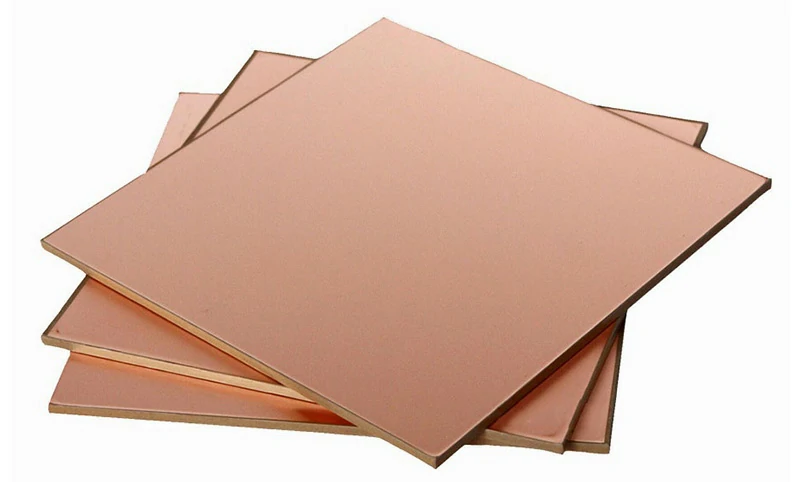
Optional insulation layer (Prepreg)
For customers requiring matching laminating materials, we offer optional prepreg specifications suitable for single-layer structures and filling applications.
These materials ensure lamination stability, reliable insulation, and efficient thermal conductivity. They are precisely matched with our aluminum-based copper-clad laminates of different thermal conductivity grades to achieve optimal heat dissipation.
Material Pressed Thickness Glass Typical Use
| Material | Pressed Thickness | Glass | Typical Use |
| CCAF-PP01 | 75–125 μm | 1080 / 106 | Single layer or filling |
| CCAF-PP02 | 75–125 μm | 1080 / 106 | Single layer or filling |
| CCAF-PP03 | 75–125 μm | 1080 / 106 | Single layer or filling |
Customer note: Please match the prepreg with the selected Al-CCL thermal conductivity grade to ensure optimal heat dissipation and lamination reliability.
Available aluminum base alloys
We offer several aluminum alloy options for our Aluminum Base Copper Clad Laminates (Al-CCL), each suited to different thermal, mechanical, and application requirements.
Choosing the right alloy allows you to optimize thermal conductivity, mechanical strength, and overall reliability of your PCB or power electronics.
| Alloy | Thermal conductivity | Thermal expansion | Tensile strength | Yield strength | Hardness |
| 1100 | 220 | 23.6 | 124 | 117 | 32 |
| 3003 | 163 | 23.2 | 152 | 145 | 40 |
| 5052 | 138 | 23.8 | 262 | 214 | 68 |
| 6061 | 167 | 23.6 | 310 | 276 | 95 |
- High thermal conductivity: use 1000-series aluminum for optimal heat transfer.
- High mechanical strength: 5000- or 6000-series aluminum provides higher tensile strength and durability.
- Corrosion resistance and high-performance applications: 5052 and 6061 are suitable for automotive, aerospace, and marine electronics.
- Cost-sensitive projects: 1050/1060-series aluminum offers excellent thermal performance at an economical price.
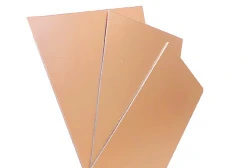
Advantages of aluminum-based copper-clad laminate
Excellent heat dissipation: thermal resistance 1–2°C/W, far lower than FR4 (20–22°C/W), enabling rapid heat transfer.
Mechanical durability: aluminum base provides high rigidity and impact resistance.
Dimensional stability: low thermal expansion prevents warping or delamination.
Lightweight and cost-effective: density is only one-third of copper, reducing material costs.
Electrical insulation with thermal conductivity: ceramic-filled insulation layer offers high thermal performance.
Environmentally friendly and recyclable: halogen-free, compliant with RoHS & REACH.
Aluminum-based copper-clad laminate applications
Our aluminum-based copper-clad laminates (Al-CCL) are designed for high-heat, high-reliability electronic products. They offer excellent flame resistance, high mechanical strength, dimensional stability, thermal performance, electromagnetic shielding, and solderability.
- LED lighting: high-power LED streetlights, industrial lighting, automotive LED lighting, where heat management is critical.
- Power modules and power conversion: inverters, rectifiers, voltage regulators, solid-state relays.
- Automotive electronic systems: ignition devices, spark plugs, power management, and drive systems.
- Industrial automation: power transistors, thermally sensitive mechanical controls, and high-reliability industrial electronics.
- Consumer electronics and audio equipment: speakers, acoustic shielding systems, monitors, and TV driver modules.
Our real-world application cases:
Hong Kong-Zhuhai-Macau Bridge – engineering lighting
Our high-heat aluminum-based copper-clad laminates enable rapid heat dissipation and stable performance for large LED bridge lighting, ensuring long-term reliability.


Shenzhen Bay – engineering lighting
Our aluminum-based copper-clad laminates are used in outdoor industrial lighting, providing excellent thermal and mechanical stability for safe operation in high temperatures and harsh environments, extending LED and module lifespan.
These cases demonstrate the reliability and excellent thermal management performance of our Al-CCL products in high-power, high-heat, and large-scale installation scenarios.
To ensure the aluminum-based copper-clad laminate (Al-CCL) performs reliably in real applications and to avoid procurement risks, we recommend testing a small batch of samples first. Conduct thermal cycling tests (-40°C to 125°C) and temperature rise tests to verify heat dissipation and reliability.
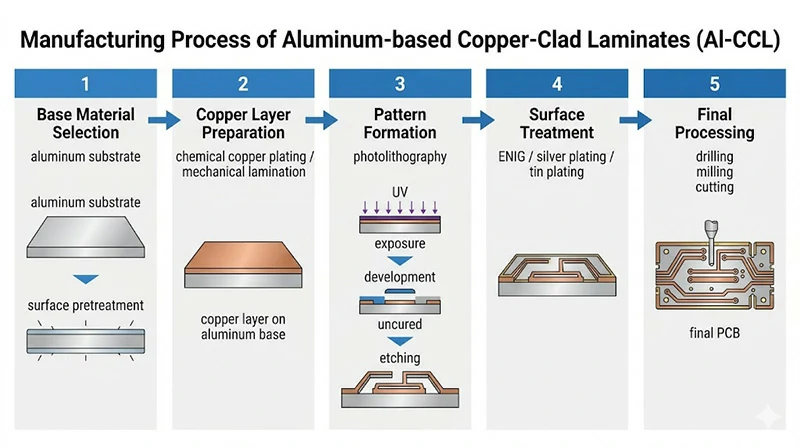
Manufacturing process of aluminum-based copper-clad laminates
Our aluminum-based copper-clad laminates (Al-CCL) are produced using professional, high-precision manufacturing processes to ensure reliable heat dissipation, mechanical strength, and electrical performance.
Base material selection
High-purity aluminum is used for excellent thermal conductivity and mechanical stability.
The aluminum base surface is pretreated to enhance copper layer adhesion.
Copper layer preparation
A copper layer is formed on the aluminum substrate through chemical copper plating or mechanical lamination.
Copper foil thickness can be selected from 15 μm to 140 μm according to application requirements.
Pattern formation
Circuit patterns are created using photolithography or laser direct imaging.
Photolithography involves coating photoresist, exposure, development, and etching to form precise circuits.
Surface treatment
The copper layer surface is treated to improve solderability and prevent oxidation.
Common surface treatments include ENIG (electroless nickel/immersion gold), silver plating, or tin plating.
Final processing
Drilling, milling, or cutting is performed according to application needs to form the final PCB structure.
By combining advanced metal material technology, precise copper lamination, and high-quality surface treatment, we provide reliable aluminum-based copper-clad laminates for high-power LEDs, automotive electronics, industrial power modules, and other high-heat applications.
Chalco quality assurance
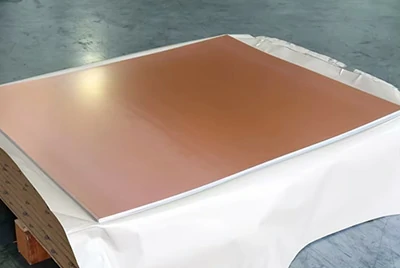
Our aluminum-based copper-clad laminates (Al-CCL) are produced under strict quality control to ensure flatness, clean hole edges, reliable insulation, and stable thermal management performance.
Material and process control
High-purity aluminum substrates with surface pretreatment enhance copper layer adhesion.
Matching prepreg lamination ensures consistent thermal and electrical performance.
Surface protection
Protective films and passivation processes prevent surface damage during production.
These steps improve solderability and oxidation resistance.
Performance testing
Each board undergoes 100% high-voltage (Hi-Pot) testing.
Thermal resistance, peel strength, dielectric strength, and insulation are verified before shipment.
Dimensional and appearance control
Board thickness, flatness, perpendicularity, and warp are precisely measured.
Cracks, scratches, burrs, delamination, and oxide layer integrity are inspected.
Sample validation and batch consistency control
Sample validation is performed for each batch to ensure production consistency.
Thermal, electrical, and mechanical performance indicators are strictly monitored.
Chalco can provide you the most comprehensive inventory of aluminum products and can also supply you customized products. Precise quotation will be provided within 24 hours.
Get a quoteOur custom services
We offer aluminum-based copper-clad laminate (Al-CCL) customization to meet your project requirements:
- Accept Gerber/PCB files for production.
- Provide free design-for-manufacturability (DFM) analysis to ensure optimized, producible designs.
- Customize board size, thickness, copper thickness, and insulation layer thickness.
- Provide key parameters, such as voltage, power, and thermal requirements, if applicable
Our custom services ensure your aluminum-based copper-clad laminates meet specific application needs while maintaining high quality, reliability, and thermal performance.
Packaging and transport protection
Storage conditions
Prepreg:
- Below 23°C (73°F) – shelf life 3 months.
- Below 5°C (41°F) – shelf life 6 months.
- Relative humidity < 55% RH.
Laminate: store at room temperature in airtight packaging – shelf life 12 months.
Packaging protection
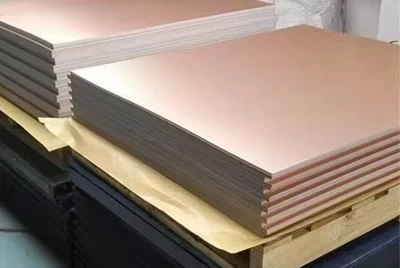
Aluminum-based copper-clad laminates (Al-CCL) are heavy and prone to edge damage, so proper packaging and handling are essential.
Packaging methods:
- Wooden pallet + carton.
- Plastic pallet + carton.
- Wooden pallet + wooden box.
- Customizable per customer requirements.
Surface protection film:
- PET film: standard option, temperature resistance ≤170°C.
- PI film: special option, temperature resistance ≤270°C.
Transport and storage recommendations
- Ensure moisture-proof packaging and pallet protection.
- Use separators to prevent boards from colliding.
- For surface-sensitive projects, confirm the film type and storage conditions.
Frequently Asked Questions (FAQ)
What is the difference between Aluminum CCL and Copper-Clad Aluminum (CCA)?
Aluminum CCL: PCB base material with aluminum core, laminated with dielectric and copper foil.
CCA (Copper Clad Aluminum): Conductor material, aluminum core plated with copper, used for wiring, not PCB substrates.
These two are not interchangeable, mislabeling can lead to incorrect product use.
When should I choose aluminum CCL over copper PCB?
Choose Copper PCB: For extremely high heat flux or current, aggressive thermal management, and when cost is not a primary concern.
Choose Aluminum CCL: When you need a balance of performance and cost, moderate thermal management, and lighter, easier-to-process boards.
When should I choose aluminum CCL over a ceramic substrate?
Choose Ceramic Substrate: For extreme thermal, electrical, or reliability demands, or high-end power modules in harsh environments.
Choose Aluminum CCL: When cost control, mechanical tolerance, and large-scale production feasibility are important.