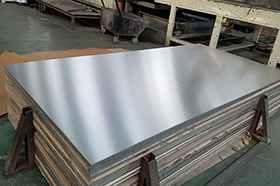
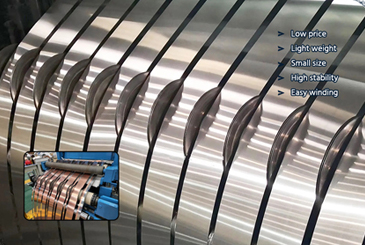
6201 aluminum alloy is a heat-treatable Al-Mg-Si alloy primarily used in power transmission and electrical conductor applications. It provides a well-balanced combination of electrical conductivity and mechanical strength, making it suitable for engineering uses such as overhead transmission lines, power conductor systems, and load-bearing conductive structural components.
Leveraging its extensive experience in electrical aluminum products, Chalco supplies 6201 aluminum alloy products for busbars, conductors, and electrical connection components. Material condition, heat treatment, and processing methods can be configured according to project requirements to ensure stable conductivity and reliable structural performance.
High electrical conductivity for long-term current carrying;
Higher strength than pure aluminum conductors;
Good corrosion resistance for outdoor environments;
Stable and consistent properties after heat treatment;
Suitable for wire drawing and stranding processes.
Product Types of Chalco 6201 Aluminum Alloy
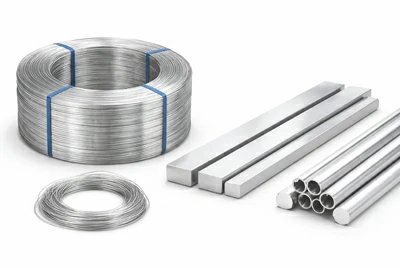
Leveraging the combined advantages of 6201 aluminum alloy in terms of conductivity and mechanical strength, Chalco's product portfolio focuses on electrical conductors and extends to conductive profiles and customized conductive structural components required by power systems, primarily serving power transmission and distribution and power engineering applications.
Power Conductors and Power Transmission Products
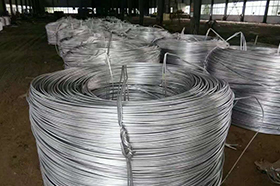
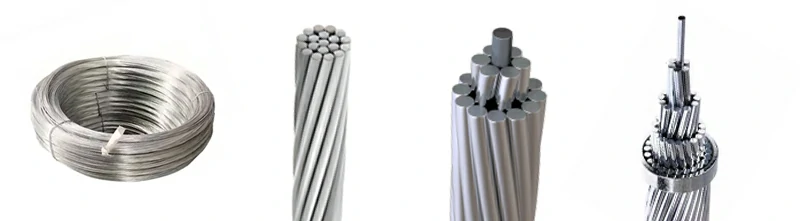
The most important and mature application of 6201 aluminum alloy is in electrical conductors and power transmission systems. Based on the alloy's combined advantages in conductivity and mechanical strength, Chalco provides integrated conductor solutions for power transmission and distribution engineering and overhead line construction, widely used in transmission lines, substations, and distribution systems.
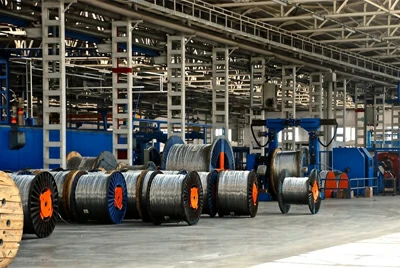
In the conductor manufacturing process, Chalco uses its own 6201 aluminum alloy material to complete the entire production process from raw material preparation, wire drawing to stranding, which helps to achieve stable control in terms of conductivity, mechanical strength and batch consistency, so as to meet the reliability requirements of power engineering.
Product Showcase
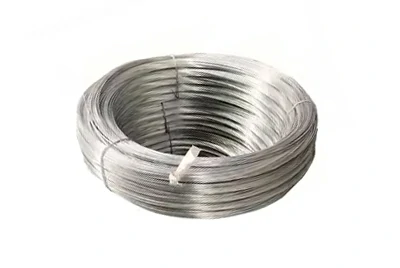
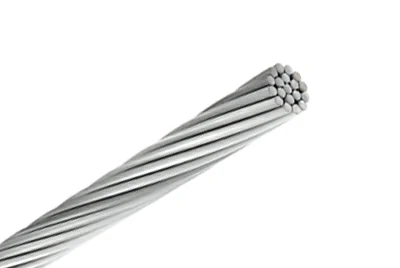
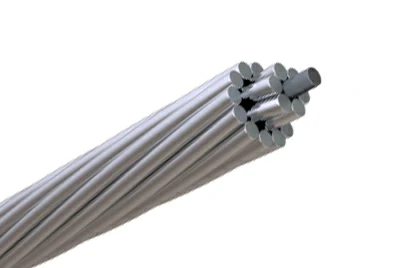
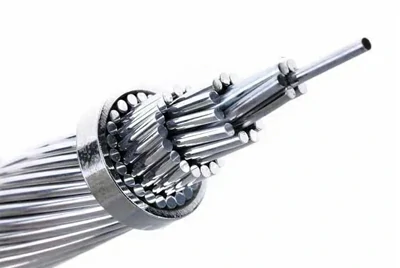
6021 Aluminum Alloy for Electrical Aluminum Busbars and Conductive Profiles
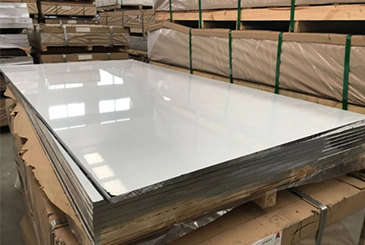
In addition to conductor products, 6201 aluminum alloy can also be used to process aluminum alloy strips and conductive profiles for electrical applications, and is used in components in power systems that have both conductive and structural functions.
The product is suitable for power application scenarios that require both conductivity and structural strength, and is commonly used in auxiliary conductive and load-bearing components in power distribution systems, electrical equipment, and power engineering.
Product Showcase
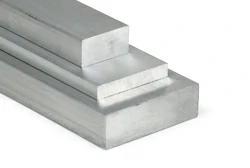
Aluminum conductive busbars
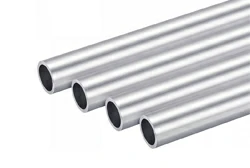
Conductive structural profiles
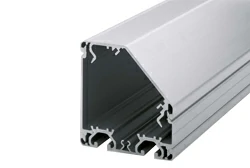
Standardized conductive support profile
6201 Aluminum Alloy for Electromechanical Composite Conductive Structural Components
In some power engineering projects, 6201 aluminum alloy can also be used to manufacture electromechanical composite conductive structural components to meet the customized needs of specific system structures and installation conditions.
The products are typically designed and manufactured according to project requirements and are suitable for customized power structure and conductive system integration scenarios.
Product Showcase
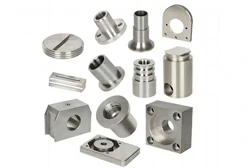
Customized conductive support components
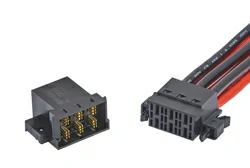
Power system connectors
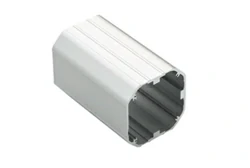
load-bearing conductive components
Chalco 6201 Aluminum Alloy Standard Specifications and Technical Parameters
6201 aluminum alloy is a commonly used high-conductivity aluminum alloy in the field of electrical conductors. Its material composition, mechanical properties and electrical properties usually need to meet the requirements of relevant industry standards and conductor specifications. The following are common reference standards and typical technical parameters.
- ASTM B398-6201-T81/T83 Standard for Aluminum Alloy Wire
- ASTM B399 – AAAC Standard for 6201 Aluminum Alloy Stranded Wire for All-Aluminum Alloy Conductors (Jump to view)
- IEC 61089 – Standard for aluminum and aluminum alloy conductors for overhead lines (jump to view)
- BS EN 50182 — Specification for aluminum alloy conductors for overhead power transmission (jump to view)
- GB/T 1179 — Aluminum and aluminum alloy conductors for overhead wires (jump to view)
The specific standard to be adopted can be determined based on the project's location, voltage level, and design requirements.
| 6201 aluminum alloy chemical composition | |
| Element | Content range (wt.%) |
| Si | 0.30 – 0.70 |
| Mg | 0.60 – 0.90 |
| Fe | ≤ 0.50 |
| Cu | ≤ 0.10 |
| Mn | ≤ 0.03 |
| Cr | ≤ 0.10 |
| Zn | ≤ 0.10 |
| Ti | ≤ 0.10 |
| Al | margin |
| 6201 belongs to a typical aluminum-magnesium-silicon (Al-Mg-Si) alloy system. By rationally controlling the magnesium and silicon content, and combining solid solution and aging treatments, Mg₂Si precipitates are formed in the matrix, thereby achieving a stable strengthening effect. The above is a typical range; actual values can be adjusted according to project standards. | |
| Mechanical properties of 6201 aluminum alloy (typical values) | |||
| Temper | Tensile strength (MPa) | Yield strength MPa | Elongation % |
| T81 | 290 – 330 | 240 – 280 | ≥ 5 |
| T83 | 300 – 340 | 250 – 290 | ≥ 5 |
| T6 | 260 – 300 | 220 – 260 | ≥ 6 |
| Electrical conductivity of 6201 aluminum alloy (typical conductivity) | |
| Temper | Conductivity (% IACS) |
| T6 | 52 – 54 |
| T81 | 52 – 54 |
| T83 | 51 – 53 |
Alloy Selection & Integrated Supply for Power Projects
In actual power engineering projects, the selection of materials for conductors and conductive structures often cannot be covered by a single aluminum alloy. Different applications, stress conditions, and current-carrying requirements place different demands on the conductivity, mechanical strength, and structural stability of materials. Therefore, power projects typically use a combination of multiple aluminum alloys.
While providing 6201 aluminum alloy as the core conductive material, Chalco also has the comprehensive supply capability of a variety of commonly used electrical and structural aluminum alloys, and can coordinate selection and overall supply according to project requirements.
| Alloy grades | Performance characteristics | Typical role in power projects |
| 6201 Aluminum Alloy | A balance between electrical conductivity and strength; can be strengthened by heat treatment. | AAAC Overhead conductor, load-bearing conductive component |
| 6101 Aluminum Alloy | High conductivity and moderate strength | Busbars, power distribution system conductors |
| 1350 / EC Aluminum | High electrical conductivity, low mechanical strength | Low-stress conductors, grounding, and short-span applications |
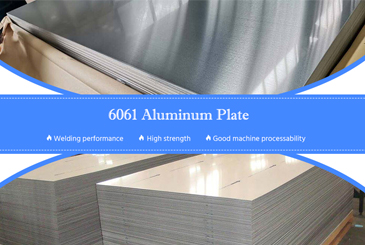
| 6061 aluminum alloy | High strength, good processing performance, and average electrical conductivity. | Power structure support components, frames and non-current-carrying components |
Compared to promoting a single material, Chalco focuses more on material configuration from the perspective of the overall power system, helping customers apply different aluminum alloys to the most suitable locations:
- 6201 Aluminum Alloy: Used for overhead conductors and load-bearing conductive components that require both strength and conductivity.
- 6101/1350 aluminum alloy: Used for busbars and conductive connection parts where higher conductivity is required and the stress is relatively small.
- 6061 aluminum alloy: used for structural supports, mounting components, and mechanical parts in power systems.
By using a reasonable alloy combination, it is possible to achieve comprehensive optimization of structural safety, material utilization, and project cost while meeting electrical performance requirements.
Application Areas of AAAC 6201 Aluminum Alloy
AAAC 6201 aluminum alloy is mainly used in power systems for applications that require a combination of electrical conductivity, mechanical strength, and environmental resistance. It is particularly suitable for overhead power transmission and load-bearing conductive structures.
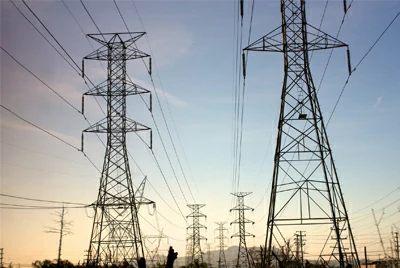
Overhead transmission lines
AAAC 6201 is widely used in medium and high voltage overhead transmission lines. It is suitable for line projects that require conductor strength, sag control and long-term operational stability. It is commonly found in main transmission networks and regional distribution networks.
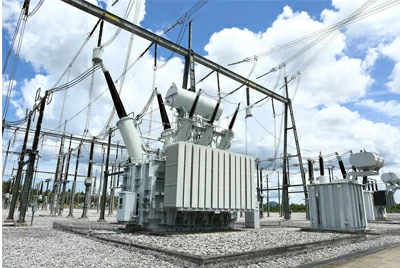
Substation and power facility conductors
It is suitable for overhead connection conductors and conductive connection sections between power facilities in substations, providing reliable mechanical support performance while ensuring current carrying capacity.
Bearing-type conductive structure
In electrical structures that require a combination of electrical conductivity and load-bearing capacity, 6201 aluminum alloy can be used for conductive support components and related structural parts, balancing electrical performance and structural stability.

Power applications in complex environments
With its excellent corrosion resistance, AAAC 6201 conductors are suitable for humid, industrial atmospheres and long-term outdoor exposure environments, meeting the service life and reliability requirements of power systems.
Chalco's Electrical Grade Aluminum Alloy Engineering Capabilities and Project Support
In power engineering projects, 6201 aluminum alloy is often used as a key conductive material for conductors and conductive components that require both high conductivity and mechanical strength. Based on the application characteristics of 6201, Chalco provides project-oriented material support and supply coordination for power systems, covering multiple stages from material selection to project delivery.
- It possesses the basic properties of 6201 aluminum alloy for the production and processing of conductors, stranded wires and related conductive products.
- Familiar with the heat treatment condition control and performance consistency requirements of 6201 aluminum alloy, suitable for power conductor applications.
- Supports project supply of various product forms, including conductors, busbars, conductive profiles, and load-bearing structural components.
- It can be used in conjunction with common standard systems such as IEC, ASTM, EN, and GB for material and specification verification.
- Selection communication and parameter comparison can be conducted based on project drawings, technical agreements, and application conditions.
- Supports project-based production scheduling, batch consistency control, and delivery coordination.
- By coordinating with engineering and technical personnel, we can reduce the risks associated with product selection and supply during project execution.
By combining material capabilities with project collaboration, Chalco helps customers achieve well-coordinated supply, clear execution schedules, and stable project progress in power engineering projects.
AAAC 6201 Aluminum Alloy — Standard-Based Conductor Size & Performance Reference
IEC 61089 — AAAC 6201 Conductor
| Nominal Area (mm²) | No. / Dia. of Wire (No./mm) | Approx. Overall Dia. (mm) | Approx. Weight (kg/km) | Calculated Breaking Load (kN) | Max. DC Resistance at 20°C (Ω/km) |
| 18.4 | 7/1.83 | 5.49 | 50.4 | 5.4 | 1.7896 |
| 28.8 | 7/2.29 | 6.87 | 78.7 | 8.5 | 1.1453 |
| 46.0 | 7/2.89 | 8.67 | 125.9 | 13.6 | 0.7158 |
| 72.5 | 7/3.63 | 10.89 | 198.3 | 21.4 | 0.4545 |
| 115 | 19/2.78 | 13.90 | 316.3 | 34.0 | 0.2877 |
| 144 | 19/3.10 | 15.50 | 395.4 | 42.4 | 0.2302 |
| 184 | 19/3.51 | 17.55 | 505.5 | 54.2 | 0.1800 |
| 230 | 19/3.93 | 19.65 | 631.9 | 67.8 | 0.1440 |
| 288 | 37/3.14 | 22.00 | 791.5 | 85.0 | 0.1153 |
| 361 | 37/3.52 | 24.64 | 992.7 | 106.7 | 0.0919 |
ASTM B399 / ASTM B399M — AAAC 6201
| Total Area (AWG or MCM) | Total Area (mm²) | 1350 Grade Equivalent (AWG or MCM) | No. / Dia. of Wire (No./mm) | Approx. Overall Dia. (mm) | Approx. Weight (kg/km) | Calculated Breaking Load (kN) | Max. DC Resistance at 20°C (Ω/km) |
| 6 | 15.5 | 6 | 7/1.68 | 5.04 | 43 | 4.9 | 2.1588 |
| 4 | 24.7 | 4 | 7/2.12 | 6.36 | 68 | 7.8 | 1.3557 |
| 2 | 39.2 | 2 | 7/2.67 | 8.01 | 108 | 12.4 | 0.8547 |
| 1 | 62.4 | 1 | 7/3.37 | 10.11 | 171 | 18.9 | 0.5365 |
| 2/0 | 78.6 | 2/0 | 7/3.78 | 11.34 | 216 | 23.8 | 0.4264 |
| 3/0 | 125.1 | 3/0 | 7/4.77 | 14.31 | 343 | 37.8 | 0.2678 |
| 4/0 | 158.6 | 4/0 | 19/3.26 | 16.30 | 435 | 46.5 | 0.2112 |
| 266.8 | 199.9 | 266.8 | 19/3.66 | 18.30 | 548 | 58.6 | 0.1676 |
| 336.4 | 236.4 | 336.4 | 19/3.98 | 19.90 | 649 | 69.3 | 0.1417 |
| 397.5 | 283.6 | 397.5 | 19/4.36 | 21.80 | 778 | 83.1 | 0.1181 |
BS EN 50182 — AAAC 6201
| Designation | Nominal Area (mm²) | No. / Dia. of Wire (No./mm) | Approx. Overall Dia. (mm) | Approx. Weight (kg/km) | Calculated Breaking Load (kN) | Max. DC Resistance at 20°C (Ω/km) |
| 50 | 50 | 7/3.02 | 9.00 | 137 | 13.8 | 0.663 |
| 70 | 70 | 7/3.57 | 10.70 | 191 | 18.4 | 0.475 |
| 95 | 95 | 7/4.16 | 12.50 | 261 | 26.1 | 0.351 |
| 120 | 120 | 19/2.84 | 14.20 | 330 | 35.5 | 0.275 |
| 150 | 150 | 19/3.17 | 15.90 | 412 | 44.2 | 0.221 |
| 185 | 185 | 19/3.55 | 17.80 | 510 | 51.7 | 0.183 |
| 240 | 240 | 19/4.01 | 20.10 | 661 | 70.8 | 0.138 |
GB/T 1179-2008 — JLHA1 / JLHA2
| Nominal Area (mm²) | No. / Dia. of Wire (No./mm) | Approx. Overall Dia. (mm) | Approx. Weight (kg/km) | Calculated Breaking Load (kN) | Max. DC Resistance at 20°C (Ω/km) |
| 50 | 7/3.02 | 9.00 | 137 | 13.8 | 0.663 |
| 70 | 7/3.57 | 10.70 | 191 | 18.4 | 0.475 |
| 95 | 7/4.16 | 12.50 | 261 | 26.1 | 0.351 |
| 120 | 19/2.84 | 14.20 | 330 | 35.5 | 0.275 |
| 150 | 19/3.17 | 15.90 | 412 | 44.2 | 0.221 |
| 185 | 19/3.55 | 17.80 | 510 | 51.7 | 0.183 |
| 240 | 19/4.01 | 20.10 | 661 | 70.8 | 0.138 |
Chalco can provide you the most comprehensive inventory of aluminum products and can also supply you customized products. Precise quotation will be provided within 24 hours.
Get a quote